
Achieving a Band 7 on the IELTS (雅思) exam requires more than general English fluency; it demands a precise combination of strategic test-taking skills, deep familiarity with the exam format, and rigorous practice under timed conditions. When preparing for this high-stakes test, candidates in Singapore frequently find themselves choosing between two of the most reputable prep book series on the market: the Cambridge IELTS practice test volumes and the Collins IELTS “Skills for IELTS” bundle. Both series are highly regarded, but they serve fundamentally different purposes in a candidate’s study curriculum.
The direct answer to which bundle is better depends entirely on your current proficiency level and where you stand in your preparation journey. Cambridge IELTS is the gold standard for authentic exam simulation, containing real past papers that are indispensable for final-stage calibration. Collins IELTS, conversely, is a comprehensive skill-building suite designed to teach you the specific methodologies, vocabulary, and grammar required to tackle each section of the test.
To make the right choice, consider this decision framework:
Products mentioned in this guide
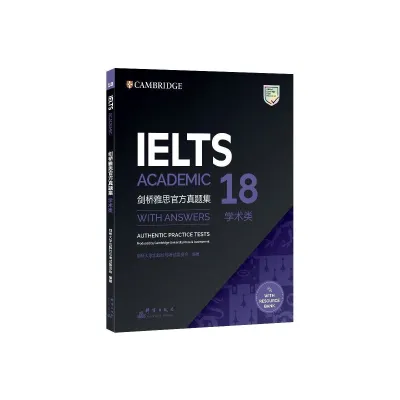
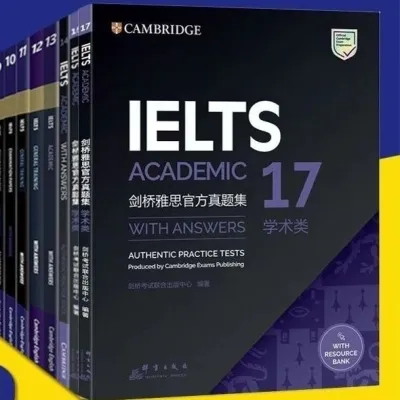
Prices are valid at publication and may change. Please refer to the product page for the latest price.
- Choose Cambridge IELTS if: You are already scoring near Band 6.5 in mock exams, understand the core strategies, and need to refine your time management, adapt to authentic exam difficulty, and build stamina.
- Choose Collins IELTS if: You are building foundational skills, struggle with specific question types (such as True/False/Not Given or Matching Headings), and need step-by-step strategies to elevate your performance toward Band 7.
- Verify first if: You are unsure of your current baseline. Take a diagnostic mock test before purchasing to identify whether your primary gap is strategic knowledge or exam execution.
Practice Test Quality and Authenticity in 雅思 Prep
The realism of your practice materials directly impacts your performance on exam day. Misaligned practice tests can lead to a false sense of security or unnecessary frustration.
Cambridge IELTS: The Cambridge IELTS series consists of actual past examination papers published by Cambridge University Press & Assessment, the co-owners of the IELTS exam. Because these tests were previously administered to real candidates, they offer the highest possible level of authenticity. The vocabulary, sentence structures, and audio recordings are identical to what you will experience on test day. Furthermore, the Writing and Speaking sections feature authentic student responses accompanied by official examiner scripts and detailed band score commentaries. This allows you to see exactly how the assessment criteria are applied in practice. However, because these are compiled past papers, they are designed strictly to assess your level, not to teach you how to improve.
Collins IELTS: The Collins IELTS series features practice tests simulated by highly experienced language instructors and test-prep experts. While these tests are designed to mimic the official exam format as closely as possible, they are fundamentally educational tools. The focus is on skill drilling and scaffolded practice rather than pure simulation. Occasionally, the reading passages or listening audio in simulated tests may differ slightly in nuance, tone, or exact difficulty calibration compared to official past papers. Nevertheless, they remain excellent tools for practicing specific strategies in a controlled manner before testing yourself under exam conditions.
| Dimension | Cambridge IELTS Series | Collins IELTS Series |
|---|---|---|
| Test Source | Official past papers from Cambridge Assessment English | Expert-simulated tests designed by experienced language instructors |
| Primary Use Case | Full exam simulation, accurate timing practice, and diagnostic benchmarking | Targeted skill-building, strategy application, and sectional drilling |
| Feedback Mechanism | Authentic examiner comments, writing sample scripts, and raw score-to-band conversion tables | Step-by-step answer keys, explanatory notes, and vocabulary/grammar tips |
Strategy Coverage and Skill-Building Approach
To bridge the gap between a Band 6.0 and a Band 7.0, you must move past passive comprehension and master the active mechanics of the exam.

Methodology and Question-Type Breakdown
Collins IELTS is built around the “how-to” of the exam. Instead of throwing you directly into a full-length test, the Collins books break down each section (Listening, Reading, Writing, Speaking) into thematic units. For example, in the Reading book, you will find dedicated chapters on how to approach “True, False, Not Given” questions, “Matching Headings,” and “Sentence Completion.” Each unit guides you through a progressive learning path: vocabulary building, skill development, and exam practice. It teaches you how to identify distractors, scan for synonyms, and manage your time within individual question types.
In contrast, Cambridge IELTS offers virtually no strategy instruction. It is a compilation of practice tests. When you open a Cambridge book, you are greeted immediately by Practice Test 1. There are no lessons on how to write an academic essay or how to structure a Speaking Part 2 response. The series assumes that you already possess a robust understanding of the test format and are looking for a reliable way to measure your current performance.
Bridging the Gap to Band 7
Reaching a Band 7 is a significant milestone that represents an “operational user” who has operational command of the language, despite occasional inaccuracies. In the Writing section, this means writing a well-structured essay with clear paragraphing, using a wide range of vocabulary (lexical resource) with some precise collocation, and demonstrating a variety of complex sentence structures. In the Speaking section, it requires speaking at length without noticeable effort, using idiomatic language, and maintaining good grammatical control.
Collins IELTS provides the scaffolding necessary to build these high-level skills. It does not just tell you what a Band 7 essay looks like; it provides exercises that help you rewrite simple sentences into complex ones, expand your vocabulary from basic synonyms to academic collocations, and structure your arguments logically.
Cambridge IELTS, on the other hand, provides the ultimate reality check. The examiner reports included in the back of the Cambridge books are incredibly valuable for candidates aiming for a Band 7. By reading actual student essays that received Band 6.5 or Band 7.5, along with the examiner’s detailed feedback on why those scores were awarded, you can align your writing with the official band descriptors. It allows you to benchmark your progress and identify the exact areas where your execution falls short under exam pressure.
Bundle Structure and Format Verification
Before purchasing any prep materials in Singapore, it is vital to understand what is included in each bundle and how to verify that you are buying the correct, authorized editions.
Cambridge Bundle Structure: The Cambridge IELTS books are published as individual numbered volumes (e.g., Cambridge IELTS 18, Cambridge IELTS 19). Each volume contains four complete practice tests. When purchasing a bundle, you will typically find sets of these numbered books. It is critical to verify whether the bundle is for the Academic or General Training module, as the Reading and Writing sections differ significantly between the two. Additionally, ensure the bundle includes the “with answers” edition, which contains the listening transcripts, answer keys, and writing examiner comments. Some older bundles may still include physical audio CDs; however, newer editions utilize digital download codes or QR codes for audio access.
Collins Bundle Structure: The Collins IELTS bundle is typically structured as a multi-volume set focusing on specific components of the exam. A standard comprehensive bundle includes “Listening for IELTS,” “Reading for IELTS,” “Writing for IELTS,” and “Speaking for IELTS.” Some expanded bundles also include auxiliary volumes like “Vocabulary for IELTS” and “Grammar for IELTS,” along with a dedicated book of practice tests. This modular structure allows you to purchase the entire suite or focus solely on the skills where you need the most improvement.
Pre-Purchase Verification Checklist: To ensure you receive genuine, high-quality study materials and avoid counterfeit copies that often circulate on online marketplaces, use the following verification checklist before completing your purchase:
- Check the Publisher and Edition: Verify that the books are published by Cambridge University Press & Assessment or HarperCollins Publishers. Check the publication years to ensure you are not buying outdated editions that do not reflect current test formats (such as the pre-2020 Listening section format changes).
- Verify Format and Media Access: Confirm whether the bundle provides physical books, digital e-books, or a hybrid format. Ensure that any promised audio tracks are accessible via official download links, QR codes, or companion apps, rather than unverified third-party file-sharing links.
- Confirm Module Compatibility: Double-check that the materials match your target test type (Academic vs. General Training). While Collins books often cater to both modules by highlighting differences within the text, Cambridge books are strictly separated into Academic or General Training volumes.
- Buy from Authorized Sellers: In Singapore, purchase from reputable local bookstores, official publisher storefronts, or authorized educational distributors. This guarantees access to official online resource banks and high-quality printed materials where text and diagrams are clear and legible.
How to Integrate These Books into a Band 7 Study Plan
Achieving a Band 7 requires a structured approach that maximizes the strengths of both book series. Rather than choosing one exclusively, many successful candidates utilize a hybrid strategy that transitions from skill acquisition to rigorous exam simulation.
Using Collins Effectively: Begin your preparation with the Collins IELTS series. Dedicate the first half of your study timeline (e.g., weeks 1 to 6 of a 12-week plan) to mastering the methodologies. Work through the chapters systematically, focusing heavily on your weakest skills. If your diagnostic tests indicate a struggle with Reading time management, use the Collins Reading book to learn skimming and scanning techniques. Do not rush to complete full practice tests yet; instead, focus on executing the step-by-step strategies for individual question types until they become second nature.
Using Cambridge Effectively: Once you have established a solid strategic foundation, transition to the Cambridge IELTS series for the second half of your study timeline (e.g., weeks 7 to 12). Treat these books as formal mock exams. Set a timer, sit in a quiet room, and complete the tests under strict exam conditions without pausing or using external resources. After completing a test, spend an equal amount of time analyzing your mistakes. Do not just check if an answer is right or wrong; investigate why you made the error. Use the listening transcripts to identify missed signpost words and study the writing examiner reports to refine your essay structure.
The Hybrid Approach: For candidates with a preparation window of two to three months, the hybrid approach offers the best of both worlds. If your budget allows, purchasing a combined bundle of Collins (for strategy) and the three most recent Cambridge volumes (for practice) provides a complete, end-to-end curriculum. If you have a limited budget or a short preparation timeline (less than a month) and are already scoring around Band 6.0, prioritize the Cambridge volumes to fine-tune your execution. Conversely, if you have several months to prepare and need to build your English proficiency from a Band 5.5 baseline, start exclusively with the Collins bundle.
Frequently Asked Questions (FAQ)
Do I need to buy the latest edition of Cambridge IELTS?
While the core structure of the IELTS exam remains stable, it is highly recommended to focus on the most recent numbered volumes (such as Cambridge 17, 18, and 19). These books reflect the current formatting of the test—such as the removal of page number references in the Listening section and the modern styling of Reading passages. Older volumes (such as Cambridge 1 to 10) are still useful for general language practice, but their question styles and difficulty levels may not perfectly align with the current exam standards.
Can I reach Band 7 using only practice tests without strategy books?
While it is possible for native or highly proficient English speakers to achieve a Band 7 through practice tests alone, most candidates who rely solely on practice tests eventually encounter a score plateau. Without learning the underlying strategies for managing complex question types or understanding the specific academic criteria examiners use to grade Writing and Speaking, simply repeating tests will only measure your current level rather than improve it. Strategy books like Collins provide the systematic training needed to break through these plateaus.
Community discussion
Share your experience or ask a question. Comments are reviewed before publication.