
Choosing between a case-mounted and a room hygrometer depends on where your violin spends its time. If you store your instrument in its case with localized humidification, a case-mounted hygrometer is essential to track that microclimate. If your violin remains on a stand or hanger in a dedicated practice room, a room hygrometer is the better choice to monitor the ambient air.
Assessing Your Violin Storage and Humidity Control Routine
To determine the best monitoring setup, evaluate your daily storage habits and how you manage the surrounding air. If you pack your violin away immediately after practicing, the air inside the case is what matters most. Conversely, if your instrument sits on an open stand or wall hanger between sessions, it is entirely subject to the room’s climate.
Your climate control strategy also plays a major role. In regions with high humidity or frequent air conditioning use, such as Singapore, indoor environments can fluctuate rapidly. If you rely on a whole-room dehumidifier or humidifier to stabilize your home, a room sensor helps you manage that macro-environment.
Products mentioned in this guide
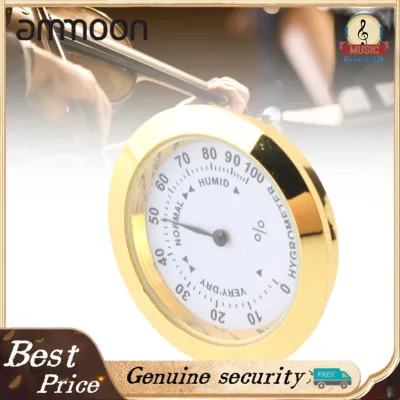
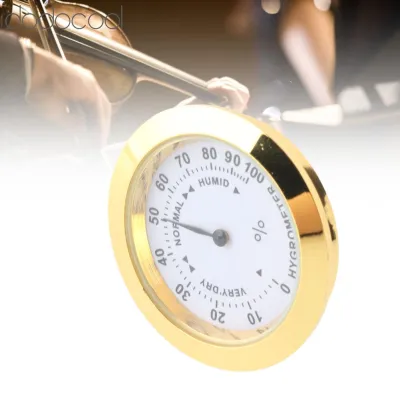
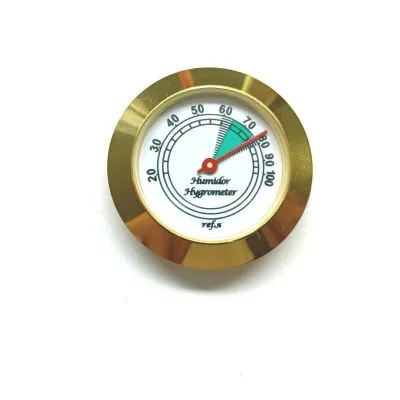


Prices are valid at publication and may change. Please refer to the product page for the latest price.
Travel frequency is another critical factor. If you regularly commute to rehearsals, lessons, or gigs, your violin experiences sudden environmental shifts. A case-mounted monitor becomes vital in these scenarios, as it tracks the immediate microclimate protecting the wood during transit.
Case-Mounted Hygrometers: When to Monitor the Microclimate
Case-mounted hygrometers focus entirely on the microclimate inside your instrument case. This sealed environment can differ significantly from the surrounding room air, especially if you use in-case humidifiers or desiccant packets. Monitoring this space ensures you know exactly what your violin experiences during long periods of storage.

These devices must be exceptionally compact to avoid damaging the instrument. When selecting a case-mounted model, verify its physical dimensions against your case’s accessory compartments or lid space. It is crucial that the device does not press against the violin’s top plate, bridge, or fingerboard when the case is latched shut.
A key limitation of these monitors is real-time readability. Traditional analog or basic digital models only show their readings when you open the case. This means you cannot monitor environmental shifts while playing, nor can you get proactive alerts unless the device features wireless connectivity that syncs with a smartphone application.
Room Hygrometers: When to Monitor the Ambient Environment
Room hygrometers measure the macroclimate of your practice studio, living room, or storage area. This is the ideal setup if your violin is frequently left out on a stand or wall hanger. It allows you to maintain a stable environment across the entire space where you handle and play your instrument.
The primary benefit of a room monitor is continuous, at-a-glance visibility. You can easily check the display from across the room and adjust your air conditioning, humidifier, or dehumidifier before the air becomes dangerously dry or humid. This proactive approach helps prevent sudden wood movement before you even open a case.
However, room readings do not reflect the conditions inside a closed, insulated case. They also fail to capture localized drafts, direct sunlight, or the dry air blowing directly from an air conditioning vent near your instrument stand. If your violin is stored away, a room sensor alone will not tell you if your in-case humidification system has run dry.
Decoding Key Hygrometer Specifications for Wooden Instruments
When comparing different models, understanding technical specifications helps you select a device capable of protecting sensitive wooden instruments. Whether you are looking at a budget-friendly S$15 sensor or a high-end smart monitoring system, several key factors determine its practical usefulness.
Accuracy and margin of error are paramount. Wooden instruments are highly sensitive to humidity fluctuations, which can cause wood expansion, seam openings, or cracks. Look for a hygrometer with a narrow margin of error specified by the manufacturer, as general home comfort sensors often have wider tolerances that are less suitable for delicate string instruments.
Sensor response rates determine how quickly the device registers environmental changes. A fast response time is crucial when you open your case after travel, allowing you to see immediately if the internal climate has drifted. Slow sensors may take too long to adjust, giving you inaccurate readings during critical transition periods.
Calibration options are essential for long-term reliability. Over time, all humidity sensors can drift from their original factory settings. Choosing a user-calibratable unit allows you to perform standard salt tests or reference checks to adjust the reading back to accuracy, extending the useful life of the device.
Data logging and alerts offer peace of mind when you cannot physically check the instrument. Some digital hygrometers record historical data and send high or low humidity alarms to your phone. This is particularly useful for tracking how stable your storage environment remains overnight or during periods when you are away from home.
Frequently Asked Questions (FAQ)
Do I need both a case-mounted and a room hygrometer?
Using both can be highly beneficial if your storage routine is split. For example, if you practice in an air-conditioned room but store your violin in a humidified case, monitoring both environments helps you manage the transition safely. If your violin never leaves its case except for quick practice sessions, a single case-mounted device is usually sufficient to protect your investment.
Where is the safest place to mount a hygrometer inside a violin case?
The safest location is away from the violin’s body to prevent scratches to the varnish or structural damage from physical impact. Excellent spots include the inside of the accessory compartment lid or the upper bout area of the case lid, provided there is clear clearance. Always check the manufacturer’s instructions regarding adhesive backings, magnetic mounts, or hook-and-loop fasteners to ensure they will not damage the case lining or off-gas harmful chemicals.
Community discussion
Share your experience or ask a question. Comments are reviewed before publication.