
Choosing the right drum pedal drive mechanism is one of the most critical hardware decisions a drummer can make, as it directly dictates how physical energy from your foot translates into acoustic volume and speed on the bass drum head. The choice between chain, direct, and belt drives depends on your playing style, musical genre, and personal preference for physical feedback. While a chain drive offers a familiar, powerful whip action suitable for almost any genre, a direct drive provides instantaneous, zero-latency response favored by high-speed technical players. Meanwhile, a belt drive delivers a smooth, quiet, and fluid stroke that is highly valued in studio environments and low-volume settings. Understanding the mechanical differences, maintenance needs, and physical feedback of each drive type will help you select the pedal that most closely aligns with your footwork.
How Chain, Direct, and Belt Drives Transfer Energy
At the core of every drum pedal is the drive mechanism, which physically connects the footboard to the cam and axle assembly holding the beater. When you press down on the footboard, this connection pulls the cam downward, rotating the axle and swinging the beater toward the drumhead. The material and rigidity of this connection determine how much energy is lost during the stroke and how much physical feedback is sent back to your foot.
A chain drive uses one or two metal chains that wrap around the cam. Because the chain is flexible but highly resistant to stretching along its length, it provides a reliable transfer of downward force while allowing the footboard to follow the natural curve of the cam. This creates a slight lag at the very beginning of the stroke, followed by an acceleration of the beater as the chain rolls over the cam profile.
Products mentioned in this guide

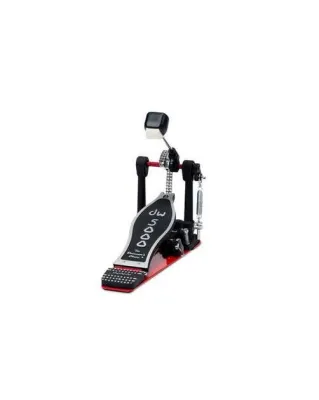


Prices are valid at publication and may change. Please refer to the product page for the latest price.
A direct drive replaces the flexible chain or strap with a solid, rigid metal linkage. This linkage is bolted directly to both the footboard and the cam assembly. Because there is no flexible material to wrap or unwrap, there is zero slack or latency in the mechanism. Every micro-movement of your foot, whether downward or upward, is instantly mirrored by the beater.
A belt drive utilizes a flexible strap made of high-tensile nylon, reinforced rubber, or traditional leather. Like the chain drive, the strap wraps around the cam during the stroke. However, the physical properties of the strap material absorb minor vibrations and eliminate the metal-on-metal friction inherent in chain designs. This results in a highly fluid energy transfer with a slightly cushioned feel at the end of the stroke.
Chain Drive Pedals: Balancing Power and Familiarity
Chain drive pedals are the industry standard for a reason, offering a familiar weight and a natural, powerful response that appeals to a wide range of drummers. The mechanical feedback of a chain drive is characterized by a distinct “whip” action. As you initiate the stroke, the chain slackens slightly before catching and accelerating around the cam, delivering a satisfyingly heavy impact on the bass drum head. This makes chain drives exceptionally well-suited for players who rely on the physical momentum of the pedal to execute powerful, consistent strokes.

Most modern chain pedals are available in either single-chain or double-chain configurations. Single-chain designs are lighter and offer a slightly more responsive feel, but they are prone to lateral play, meaning the footboard can wiggle slightly from side to side during intense playing. Double-chain designs add a second row of links, significantly increasing the lateral stability of the footboard and providing a more solid, durable feel underfoot, though they add a small amount of physical weight to the pedal assembly.
Maintenance is a key consideration for chain drive owners, especially in tropical or high-humidity climates. The numerous small joints in a steel chain can collect dust, wood shavings from drumsticks, and dirt over time. If left uncleaned, this debris can cause friction, squeaking, and premature wear. Drummers should regularly clean the chain with a soft brush and apply a light machine oil or specialized bicycle chain lubricant to keep the links moving smoothly.
This traditional drive mechanism excels in genres that demand raw power, projection, and a solid groove, such as rock, pop, blues, and heavy metal. The physical feedback allows you to feel the weight of the beater throughout its arc, making it easier to maintain a steady tempo and deliver consistent, authoritative downbeats.
Direct Drive Pedals: Maximizing Speed and Precision
Direct drive pedals are engineered for players who prioritize immediate response, absolute precision, and high-speed footwork. By utilizing a solid metal linkage instead of a flexible chain or strap, direct drive mechanisms eliminate the slight lag or slack that occurs at the start of a stroke. The result is a clinical, highly analytical connection between your foot and the drumhead; the moment your toe moves a fraction of a millimeter, the beater responds in kind.
This instantaneous transfer of energy makes direct drive pedals the preferred choice for high-speed drumming techniques, such as the heel-toe method, swivel technique, and rapid double-bass patterns common in extreme metal and progressive fusion. Because there is no energy lost to chain stretch or strap compliance, players can achieve incredible speeds with less physical effort, provided their footwork technique is highly disciplined.
However, this extreme responsiveness comes with a distinct learning curve. Direct drive pedals offer very little physical give or natural whip action, which can make them feel stiff or unforgiving to players accustomed to the weight of a chain. Any unevenness in your foot technique or timing will be immediately translated to the drumhead, leaving no room for sloppy execution. Additionally, because the linkage is rigid, the physical shock of the beater hitting the drumhead can travel back up the pedal and into your foot, which some drummers find fatiguing during long practice sessions.
The physical footprint of direct drive pedals is often sleek and lightweight, as they do not require heavy dual-chain assemblies or wide cams. While they are highly efficient for rapid, precise strokes, they may feel lacking in raw, effortless power for drummers who prefer a heavy, laid-back thud in their bass drum sound.
Belt Drive Pedals: Prioritizing Smoothness and Quiet Operation
Belt drive pedals, often referred to as strap drives, offer a unique combination of fluid action, low maintenance, and exceptionally quiet operation. By replacing the metal chain with a flexible strap made of nylon, Kevlar, or leather, these pedals eliminate the metallic friction and weight of a chain while retaining the natural, curved-cam geometry that many drummers prefer.
The primary appeal of a belt drive is its incredibly smooth, frictionless feel. Because the strap glides silently over the cam without the clicking or clinking of metal links, the pedal feels remarkably light and fluid underfoot. This smooth action allows for highly expressive, dynamic playing, making it easy to execute subtle ghost notes and delicate feathering techniques.
For drummers practicing or recording in noise-sensitive environments, such as high-density apartments, mechanical noise is a major consideration. Chain drives can develop squeaks or metallic clatter over time, and direct drive linkages can develop play in their joints. A belt drive is inherently the quietest of the three mechanisms, minimizing the mechanical vibrations that can transfer through drum mats and floorboards to neighbors below. This also makes them highly desirable in professional recording studios, where sensitive microphones can easily pick up the faint squeak of a pedal chain.
In terms of durability, modern synthetic straps made of reinforced nylon or Kevlar are incredibly tough and resistant to stretching. However, unlike metal chains or solid linkages, straps can eventually show signs of physical wear, such as fraying along the edges or cracking if exposed to extreme temperature fluctuations. Drummers should regularly inspect the strap for any signs of structural compromise, especially near the connection points at the footboard and cam, to avoid a sudden break during a live performance.
Decision Matrix: Matching the Drive Type to Your Playing Style
To help you determine which drive mechanism aligns best with your playing style, budget, and environment, use the comparison table below to evaluate their core characteristics.
| Feature | Chain Drive | Direct Drive | Belt Drive |
|---|---|---|---|
| Primary Feel | Powerful, traditional "whip" | Immediate, rigid, clinical | Fluid, smooth, cushioned |
| Speed Potential | Moderate to High | Very High | Moderate to High |
| Mechanical Noise | Moderate (can squeak/clink) | Low (can click if worn) | Extremely Low |
| Maintenance | High (requires regular oiling) | Low (occasional joint check) | Low (periodic wear inspection) |
| Best Suited For | Rock, Pop, Metal, General Use | Extreme Metal, Fusion, Speed | Jazz, Studio, Low-Volume Practice |
When deciding on a pedal, apply this conditional framework to guide your purchase:
- Choose a Chain Drive if you want a versatile, reliable pedal with a traditional weight and power response, and you do not mind performing regular cleaning and lubrication.
- Choose a Direct Drive if your playing style demands maximum speed, rapid double-stroke techniques, and absolute precision, and you have the disciplined footwork required to handle an unforgiving, zero-latency response.
- Choose a Belt Drive if you prioritize a smooth, frictionless feel, need to minimize mechanical noise for studio recording or apartment practice, and prefer a low-maintenance hardware setup.
It is important to note that if a pedal does not feel right out of the box, the drive type may not be the sole culprit. Adjustments to the cam shape (linear versus offset), beater weight, and spring tension can drastically alter the playability of any pedal, regardless of its drive mechanism.
Final Pre-Purchase Checks for Your Drum Pedal
Before finalizing your purchase from an online music retailer or local showroom, there are several critical hardware compatibility and specification checks you must perform to ensure the pedal integrates seamlessly with your drum kit.
First, verify the hoop clamp compatibility. The clamp mechanism must attach securely to your bass drum’s wooden or metal hoop without causing damage or lifting the front of the drum off the floor. Look for clamps with rubber-lined grips and side-access tightening screws, which allow you to secure the pedal without reaching awkwardly under the footboard.
Second, consider the footboard length. Standard footboards are ideal for traditional heel-down or heel-up playing, while longboard designs omit the physical heel plate to provide a longer, continuous surface. Longboards are highly favored by direct-drive players using heel-toe techniques, as they offer more leverage and physical space for the foot to slide.
Third, assess the baseplate stability. A solid metal baseplate provides excellent stability and prevents the pedal from flexing or sliding on your drum rug, which is essential for heavy playing. However, if you travel frequently or need a highly portable kit, a wire-frame baseplate is lighter and folds down more compactly, though it sacrifices some structural rigidity.
Finally, check the range of spring tension adjustments and beater alignment options. A high-quality pedal should allow you to adjust the spring tension easily and lock it securely in place. It should also offer independent adjustments for the beater angle and footboard height, allowing you to fine-tune the physical geometry of the pedal to your exact physical preferences. Whenever possible, visit a local music showroom to test different drive types in person, or ensure your chosen online retailer offers a flexible return policy so you can evaluate the pedal’s feel underfoot before committing.
Frequently Asked Questions (FAQ)
Can I convert a chain drive pedal to a direct drive?
Whether you can convert a chain drive pedal to a direct drive depends entirely on the design and manufacturer of your specific pedal. Some high-end, modular pedal systems are designed with interchangeable parts, allowing you to purchase official manufacturer conversion kits that replace the chain and cam with a direct-drive linkage. However, most entry-level and mid-range pedals feature fixed frames and non-removable cams, making aftermarket modifications structurally impossible. If your pedal does not officially support modular conversions, attempting a DIY modification can compromise the structural integrity of the frame; in such cases, it is far more practical and safer to purchase a dedicated direct drive pedal.
Does the drive type affect the volume of the bass drum?
The drive type itself does not directly dictate the raw acoustic volume of your bass drum. Instead, volume is primarily determined by the mass of the beater, the beater material (such as hard plastic, wood, or soft felt), the spring tension, and the physical force of your foot stroke. The drive type only influences the speed, efficiency, and consistency with which the beater travels to the drumhead. While a chain drive can help deliver a more powerful whip action that naturally produces a heavier hit, a skilled drummer can achieve identical volume levels on chain, direct, and belt drive pedals by adjusting their playing dynamics and hardware settings.
Community discussion
Share your experience or ask a question. Comments are reviewed before publication.