
Integrating a digital drum set into a live electronic music set or hybrid DJ gig requires a shift in how you evaluate musical gear. Unlike home practice setups where low ambient noise and a compact footprint are the primary concerns, the stage demands extreme physical durability, reliable signal routing, and seamless integration with external hardware. Performing live means operating under intense low-frequency vibrations, dim lighting, and tight schedule constraints that leave little room for technical troubleshooting.
To deliver a flawless performance, you must understand how specific hardware features, module capabilities, and physical designs translate to a high-pressure live environment. Selecting the right equipment ensures that your drum triggers respond instantly, your custom samples load without delay, and your gear remains stable throughout a high-energy set.
Why Live Electronic and DJ Gigs Demand Specific Drum Specs
Performing electronic music live or alongside a DJ set introduces environmental challenges that standard practice kits are not designed to handle. Nightclubs and festival stages are hostile environments for sensitive electronic components. High-powered subwoofers generate massive acoustic energy and low-frequency vibrations that travel through the stage floor, directly affecting physical drum mounts and trigger sensors.
Products mentioned in this guide
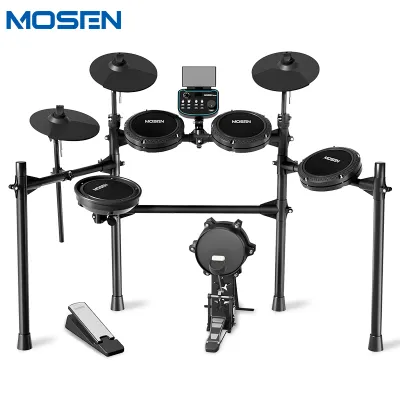
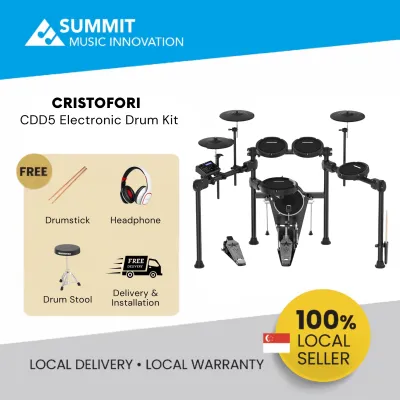
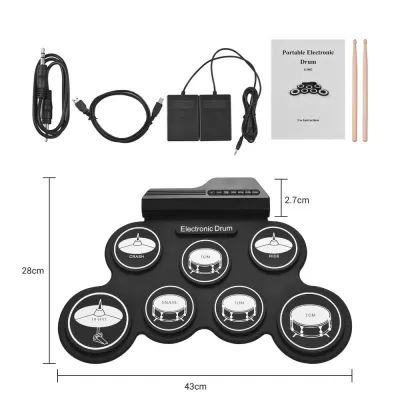
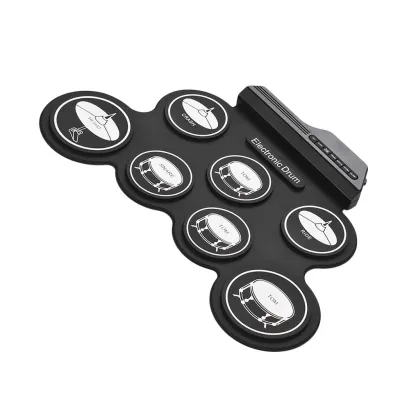
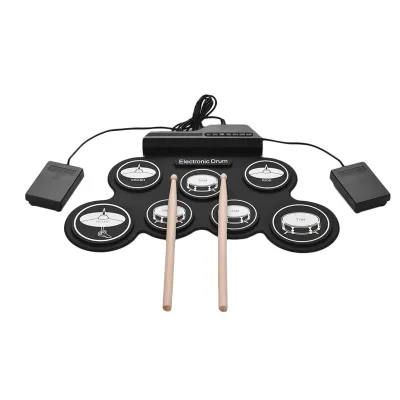
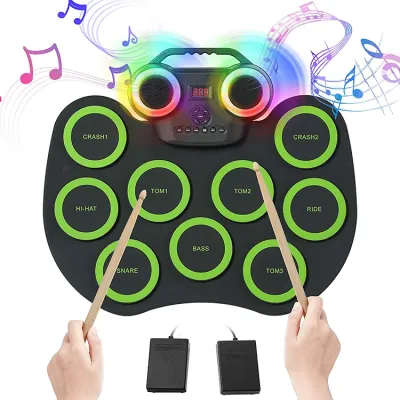
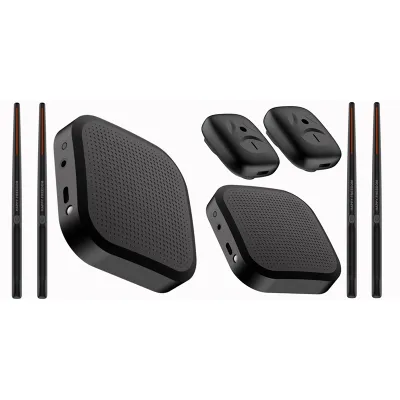
Prices are valid at publication and may change. Please refer to the product page for the latest price.
Logistical constraints also dictate your gear requirements. In busy venues, transition times between performers are often limited to a few minutes. Your setup must be highly portable, quick to assemble, and capable of integrating rapidly with existing venue infrastructure, such as professional mixing consoles, media players, and lighting systems.
Physical durability and consistent triggering are non-negotiable when performing in front of a live audience. A missed trigger or a double-triggering error caused by stage vibrations can disrupt the flow of a continuous electronic set. Choosing a kit with rugged construction and advanced sensor isolation is essential to maintaining professional performance standards under demanding conditions.
Essential Hardware Specs for a Stage-Ready Digital Drum Set
Selecting a digital drum set for live performance requires focusing on specific hardware specifications that directly impact connectivity, response times, and physical playability on stage.

MIDI Connectivity and Low-Latency Triggering
While USB-MIDI is standard for studio environments, relying solely on a laptop during a live performance introduces an additional point of failure. Traditional 5-pin MIDI OUT and THRU ports remain vital for live electronic musicians. These ports allow you to connect your drum module directly to hardware synthesizers, external samplers, and drum machines, keeping the performance running reliably without a computer.
For setups that do require a computer, robust USB-MIDI capabilities are essential. This interface must transmit MIDI data and control change (CC) messages smoothly to your digital audio workstation (DAW) or performance software. This connectivity allows you to trigger software instruments, control live effects parameters, or change scenes in real time directly from your drum pads.
Latency is the ultimate enemy of live performance groove. The time delay between striking a pad and hearing the resulting sound must be virtually imperceptible to maintain natural timing. Before purchasing, verify the manufacturer’s technical specifications regarding trigger scan times and processing latency, aiming for a total latency of under 5 milliseconds to ensure an immediate, responsive feel.
Pad Sensitivity, Dynamics, and Material
The choice between mesh heads and rubber pads significantly impacts both playability and stage sound. Mesh heads offer a realistic physical rebound and adjustable tension, which helps reduce wrist fatigue during long performances. They also produce minimal acoustic noise, preventing mechanical clicking sounds from bleeding into vocal microphones or open stage mics. Rubber pads, though louder acoustically, are highly durable, compact, and resistant to rough handling during transit.
Electronic music genres rely heavily on dynamic expression and tonal variation. High dynamic range and positional sensing are crucial for triggering complex electronic textures. This technology ensures that striking the edge of a pad triggers a different sample layer or control value than striking the center, allowing for expressive, nuanced performances that mimic acoustic instruments.
Crosstalk rejection is another critical factor on loud stages. Crosstalk occurs when striking one pad accidentally triggers an adjacent pad due to shared physical mounts or stage vibrations. Look for modules that offer advanced crosstalk rejection algorithms and individual pad sensitivity adjustments, allowing you to isolate intentional hits from environmental noise.
Module Features and Sound Engine Capabilities
A professional digital drum set must feature a module capable of importing custom user samples. This capability allows you to load signature sounds, vocal chops, and custom DJ drops directly into the module. Before purchasing, verify the supported file formats, bit depth, and sample rates—typically 16-bit or 24-bit WAV files at 44.1kHz or 48kHz—to ensure your custom library loads correctly without requiring tedious file conversion.
Continuous transitions are fundamental to electronic music and DJ sets. The drum module must be capable of switching drum kits instantly with zero load times between songs. Look for modules that support “setlist” modes or seamless kit transitions, which prevent the tail end of delay or reverb effects from being abruptly cut off when a new kit is selected.
Onboard signal processing is essential for shaping your sound before it reaches the front-of-house engineer. Having dedicated compression, EQ, delay, and reverb effects within the module allows you to tailor your drum mix to the venue’s acoustics. This ensures your kick drum retains its low-end punch and your snare cuts through the dense electronic mix without relying entirely on the venue’s sound engineer.
Multi-track USB audio routing provides significant advantages for live mixing and recording. Sending a single stereo mix to the sound console limits the engineer’s ability to balance individual drum elements. A module that supports multi-channel USB audio or offers multiple physical direct outputs allows you to route individual channels—such as the kick, snare, and cymbals—separately for precise live processing.
Build Quality, Portability, and Stage Setup
The physical structure of your kit must withstand the rigors of frequent transport and high-energy performances. Heavy-duty steel racks offer excellent stability but are heavy and difficult to transport. For performers navigating tight urban venues or traveling via ride-sharing services, lightweight aluminum racks or modular setups using standard acoustic hardware clamps offer a practical balance of stability and portability.
Space is often at a premium in DJ booths and on small club stages. A full-sized digital drum set may not fit within these tight environments. Opting for a compact configuration, such as a multi-pad percussion controller paired with a kick trigger and hi-hat pedal, provides comprehensive performance capabilities while maintaining a minimal physical footprint.
Constant setup and teardown put significant stress on physical connections and cables. Look for modules with reinforced metal jacks, secure multi-pin cable harnesses, and built-in strain relief loops. Always check the manufacturer’s instructions for proper cable routing and secure mounting to prevent accidental disconnections or physical damage to the input ports during a live set.
Cross-Scenario Compatibility: Studio, Practice, and Stage
To maximize your investment, choose a kit that transitions smoothly between different playing environments. A digital drum set used for live gigs must also adapt to quiet home practice, especially in high-density residential areas where physical noise isolation is a priority. Look for kits with low acoustic pad noise, high-quality headphone outputs, and auxiliary inputs for playing along to backing tracks.
For studio recording, look for kits that feature integrated USB audio and MIDI interfaces. This allows you to record multitrack MIDI and high-resolution audio directly into your DAW without needing an external audio interface. Expandable memory is also beneficial, ensuring you can store large sample libraries for both studio production and live performance.
Stage Setup and Integration Tips for Electronic Drummers
Running long, unbalanced cables from your drum module to the venue’s stage box can introduce unwanted electromagnetic hum and signal degradation. Always use active or passive direct injection (DI) boxes to convert your module’s outputs to balanced XLR signals. This ensures a clean, noise-free audio path to the main PA system, preserving the clarity of your drum sounds.
Relying on standard floor monitors in a loud club environment can lead to hearing fatigue and poor timing. In-Ear Monitors (IEMs) are highly recommended for live electronic and DJ gigs. They provide passive isolation from ambient stage noise, protect your hearing, and allow you to hear the click track, backing tracks, and your drum mix with absolute clarity.
To enhance the physical feel of your performance without increasing monitor volume, consider using a tactile transducer. A bass shaker mounted to the underside of your drum throne physically transmits low-frequency vibrations directly to your body. This allows you to feel the physical impact of the kick drum and sub-bass frequencies, providing essential performance feedback in loud environments.
Frequently Asked Questions (FAQ)
Can I use an entry-level digital drum set for live DJ gigs?
Entry-level kits often have significant limitations for live performance, including a lack of individual audio outputs, slow kit-switching times, and fragile plastic components that may fail under stage conditions. However, a budget kit can work if used strictly as a MIDI controller connected to a laptop running professional performance software. If you choose this approach, verify device compatibility and use a high-quality, low-latency audio interface to ensure reliable performance.
Do I need a dedicated drum monitor or in-ear monitors on stage?
While dedicated electronic drum amplifiers are suitable for small rehearsals, they add unnecessary weight to your gigging gear and increase overall stage volume. In-ear monitors (IEMs) are the superior choice for live electronic and DJ gigs. They offer excellent hearing protection, clear click-track monitoring, and precise sound isolation, allowing you to perform confidently in loud, high-energy venue environments.
Community discussion
Share your experience or ask a question. Comments are reviewed before publication.