
Learning to play the guitar is one of the most rewarding musical pursuits, but the physical reality of pressing steel or nylon strings can quickly lead to sore fingertips. For many beginners in Singapore, this initial discomfort is a primary reason they put the instrument down before experiencing the joy of playing a full song. Guitar finger protectors offer a practical, temporary solution to bridge this gap, allowing you to build muscle memory and finger strength without being sidelined by pain. Choosing the right protector requires understanding how different materials interact with your strings, how to secure a precise fit, and how to manage your practice routine so you eventually transition to playing with bare fingertips.
Why Beginners Use Finger Protectors and When to Transition
When you first press down on a guitar string, your fingertips experience concentrated pressure. On acoustic guitars, which typically use high-tension steel or bronze strings, this pressure can feel sharp and discouraging. Finger protectors act as a mechanical cushion, distributing this force across a larger surface area and reducing the direct bite of the metal. By mitigating this initial pain, these accessories help you maintain a consistent daily practice schedule, which is crucial for developing hand strength and coordination during your first few weeks.
However, playing with protectors introduces physical trade-offs that affect your technique. Because any physical barrier adds thickness to your fingertips, your fingers become bulkier. This extra width makes it much more difficult to press a single string without accidentally touching and muting adjacent strings—a common frustration when learning open chords. Additionally, materials like silicone have a high coefficient of friction, which can make sliding up and down the fretboard feel sticky or jerky, and can slightly muffle the natural resonance and bright tone of your guitar.
Products mentioned in this guide
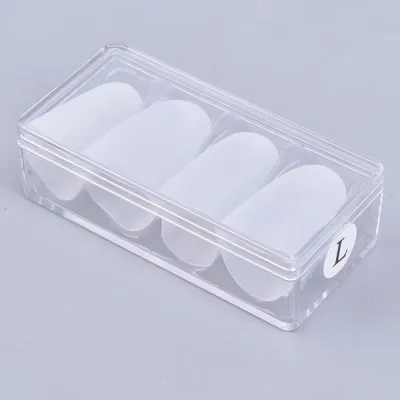
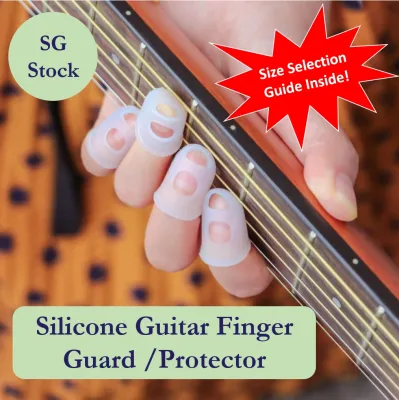
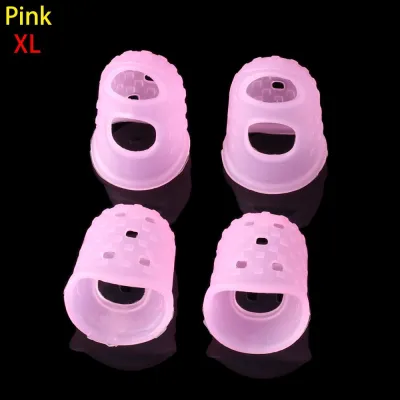
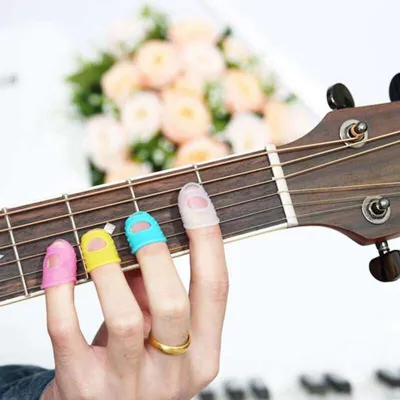
![[SG FREE ] 4Pcs Ultra-thin Left Hand Guitar Fingertip Protector Silicone Finger Guard Cover](https://img.lazcdn.com/g/p/cf434ed6bdaa3d2b74d53e85f05e0d73.jpg_400x400q80.jpg_.webp)
Prices are valid at publication and may change. Please refer to the product page for the latest price.
The key to using finger protectors successfully is viewing them as a temporary training aid rather than a permanent fixture. You should begin planning your transition away from them as soon as you develop basic finger placement habits. Observable signs that you are ready to transition include being able to press strings with minimal effort, feeling less muscle fatigue in your fretting hand, or finding that the protectors are actively hindering your speed and accuracy. To transition smoothly, try practicing without the protectors for the first few minutes of your session when your fingers are fresh, then put them on to finish your practice. Over a few weeks, gradually increase the bare-finger time until your skin naturally toughens.
Types of Guitar Finger Protectors and Their Trade-offs
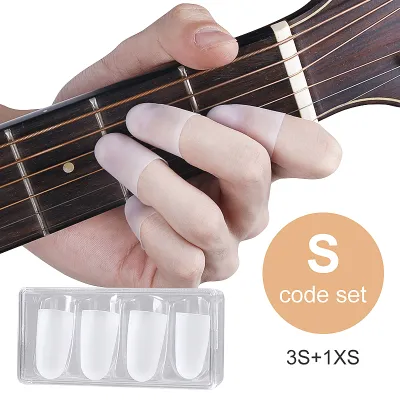
Silicone and rubber caps are the most common protectors available. Molded to fit over individual fingertips, they feature a textured surface to mimic the grip of human skin. Their primary advantage is exceptional durability and cushioning; a single set can last for months of daily practice, and they are easy to clean with simple soap and water. The trade-off, however, is their bulk. Silicone caps are relatively thick, which can severely limit your fretting precision and make complex chord shapes difficult to execute cleanly. They also trap heat and moisture, which can be uncomfortable during long practice sessions.

Liquid skin and glue-based coatings are painted directly onto the fingertips, where they dry into a thin, flexible, and water-resistant protective barrier. Because they add virtually no physical bulk, they preserve your natural fretting accuracy and allow you to feel the strings clearly, providing excellent tactile feedback. The downside is that they are strictly consumable products. The coating wears off gradually as it rubs against the metal strings, requiring reapplication before or even during a long practice session. They also require a few minutes of drying time before you can touch your instrument.
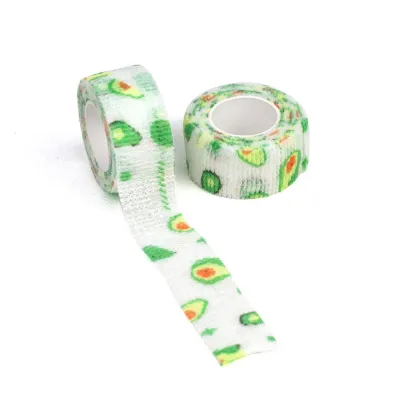
Fabric tapes and adhesive guards are specialized, breathable tapes wrapped around the fingertips or pre-cut adhesive patches designed to stick to the pads of your fingers. They offer a middle ground between silicone caps and liquid coatings. The fabric material provides a softer feel and allows air to circulate, preventing sweat buildup. However, fabric tapes can leave a sticky adhesive residue on your skin and your guitar strings, which can attract dirt and degrade your strings over time. They also tend to produce a distinct scratching noise when moving across wound strings, which can be distracting during quiet practice.
Key Evaluation Criteria for Comfort and Playability
When evaluating protectors, material thickness is the most critical factor influencing your playing technique. A protector that is too thick will cushion your fingers perfectly but will make it nearly impossible to play clean chords, as the material will spill over onto neighboring strings and mute them. Conversely, a protector that is too thin may not provide enough relief from high-tension steel strings. Beginners should look for options that offer a tapered design—thicker on the pad where the string meets the finger, and thinner on the sides to minimize bulk and prevent accidental muting.
Tactile feedback is also essential for building muscle memory. Your brain needs to associate the physical sensation of the string against your finger with the sound produced. If a protector completely numbs this sensation, you may end up pressing down much harder than necessary, leading to hand strain, tension, and even pulling the notes out of tune. Look for protectors that allow some level of tactile transmission. The surface grip should offer enough traction to keep your finger from slipping off the string, but not so much grip that it prevents you from executing basic slides or shifting positions smoothly.
Singapore’s tropical climate presents a unique challenge for guitarists. High humidity and warm temperatures mean your hands are likely to sweat, even when practicing indoors. Non-breathable silicone caps can trap this sweat against your skin, leading to skin maceration—a condition where the skin becomes soft, white, and fragile from prolonged moisture exposure. This actually makes your fingertips more sensitive to pain once the protectors are removed, defeating their original purpose. To combat this, look for silicone caps designed with ventilation holes or consider breathable fabric tapes that allow moisture to evaporate naturally.
How to Measure Your Fingers for a Proper Fit
Finding the correct size is essential for both comfort and functionality. If a finger protector is too loose, it will slip, twist, or slide off entirely when you try to press a string or shift positions. If it is too tight, it will restrict blood circulation to your fingertips, leading to coldness, tingling, or numbness, which can be dangerous and highly uncomfortable. Because human fingers vary widely in shape and size, you cannot rely on generic age recommendations.
To measure your fingers accurately at home, you will need a strip of paper, a pen, and a ruler. Wrap the strip of paper snugly—but not tightly—around the widest part of your fingertip, which is typically just below the fingernail. Mark the point where the paper overlaps with a fine-point pen. Lay the paper flat against a ruler and measure the distance in millimeters to find your fingertip circumference. Repeat this process for each of the four fretting fingers, as your pinky is significantly smaller than your middle finger.
When comparing your measurements to manufacturer sizing charts, pay close attention to the inner diameter or circumference specifications. Many high-quality protector sets come in multi-size packs containing different sizes for each finger. If your measurements fall between two standard sizes, consider the material: silicone has a natural stretch, so choosing the slightly smaller size often results in a more secure fit, whereas rigid or semi-rigid materials will require you to size up to avoid restricting circulation.
Building Your Shortlist: Price and Value Considerations
In Singapore, basic silicone finger protector sets are highly affordable, typically ranging from S$3 to S$10 on local e-commerce platforms and in neighborhood music shops. Specialized adhesive tapes or liquid skin formulas generally cost between S$10 and S$25 per package or bottle. While the upfront cost of all these options is relatively low, it is important to calculate the long-term value based on your expected practice duration.
Reusable silicone caps offer the highest value for budget-conscious beginners, as a single purchase can easily last through your entire transition period. Consumable options, such as liquid coatings or adhesive tapes, require ongoing purchases. If you practice daily for an hour, a single bottle of liquid skin or a roll of tape may only last a few weeks, quickly making them a more expensive choice over time. However, if the improved playability of a liquid coating helps you practice more consistently, the extra cost may be a worthwhile investment in your musical education.
When browsing product listings, be cautious of sellers offering extremely cheap, unbranded multi-packs that lack detailed sizing charts or material safety information. Low-grade silicone can contain harmful chemical plasticizers that may cause skin irritation or have a strong, unpleasant chemical odor. Avoid listings that make unrealistic claims, such as promising complete pain elimination instantly without mentioning the impact on tone or technique, as these are often low-quality products designed without input from actual guitarists.
Purchasing and Post-Delivery Checks
Once your finger protectors arrive, perform a thorough physical inspection before putting them on. Check for any manufacturing defects, such as rough seams, tears, or uneven thickness in the material, which can cause friction blisters during use. Take a moment to smell the product; high-quality, medical-grade silicone should be virtually odorless. If the protectors emit a strong, pungent chemical or gasoline-like smell, wash them thoroughly with mild soap and water, or consider returning them, as this indicates poor material quality.
If you have chosen a liquid skin coating or an adhesive tape, it is highly recommended to perform a quick patch test to rule out allergic reactions. Apply a small dab of the liquid or a tiny piece of the tape to the inside of your forearm and leave it for 24 hours. If you experience any redness, itching, swelling, or burning, discontinue use immediately and wash the area thoroughly.
Slip the protectors onto your fingers and try pressing down on a single string. Pay attention to how the material feels against your skin. Does it pinch, slide around, or cut off your circulation? Try playing a simple scale or a single-note melody to observe how the protector interacts with the fretboard. Ensure that the material does not leave any sticky residue, oil, or marks on your guitar strings or wood. If the fit is uncomfortable or the material feels unstable, do not force yourself to practice with them.
Keep in mind that because finger protectors come into direct contact with your skin and sweat, many local e-commerce platforms and music stores classify them as personal hygiene items. This means they are often non-returnable once the sealed packaging has been opened. To protect your purchase, always verify the seller’s return policy and double-check your measurements before breaking the seal on the product packaging.
Frequently Asked Questions (FAQ)
Do finger protectors work for both acoustic and electric guitars?
Yes, finger protectors can be used on both acoustic and electric guitars, but their performance varies due to differences in string tension and gauge. Acoustic guitars use thicker, high-tension steel strings that exert significant pressure on your fingertips, making the cushioning of a protector highly beneficial. Electric guitars, on the other hand, use much thinner, lower-tension strings. While electric strings can still cause soreness, the added bulk of a thick silicone protector can make it very easy to accidentally bend the thin strings out of tune or mute adjacent strings. If you play an electric guitar, look for ultra-thin silicone caps or liquid coatings to maintain control over the lighter strings.
Can I use finger protectors while playing chords?
You can use finger protectors while playing chords, but it requires a conscious adjustment to your hand posture. The primary challenge is that protectors increase the physical width of your fingertips, making it easy to accidentally touch and mute neighboring strings that need to ring out clearly. To minimize this issue, focus on keeping your wrist dropped and your fingers arched high, pressing down with the very tips of your fingers rather than the pads. If you find that silicone caps make chord practice too frustrating, switching to a thinner alternative like liquid skin or adhesive tape can help restore the precision needed for clean chord shapes.
Will using a protector delay the formation of natural calluses?
Yes, relying entirely on finger protectors will delay the development of natural calluses. Calluses are your body’s natural defense mechanism, forming when the skin is subjected to repeated friction and pressure from the guitar strings. When you use a protector, you eliminate this direct contact, meaning your skin will remain soft. To avoid stalling your long-term progress, use protectors strategically. Think of them as a tool to extend your practice sessions when your fingers become too sore to continue bare-handed, rather than a permanent shield. Gradually reducing your reliance on them over several weeks will allow your fingertips to safely and comfortably build the calluses needed for lifelong playing.
Community discussion
Share your experience or ask a question. Comments are reviewed before publication.