
Selecting a Heart Sutra copying book requires balancing physical construction with your personal practice goals. The ideal book features ink-resistant paper that matches your writing instrument, a layout that supports your current calligraphy skill level, and a lay-flat binding that allows you to write comfortably without fighting the spine. By focusing on these core elements, you can transform a simple writing exercise into a smooth, meditative routine that preserves your work for years to come.
Copying the Heart Sutra, a practice traditionally known as shakyo, serves as both a creative outlet and a form of active mindfulness. The physical book you choose acts as the foundation of this practice, directly influencing how easily you can focus on each stroke. A poorly constructed book with thin paper or a stiff spine can quickly turn a calming ritual into a frustrating experience. Taking the time to evaluate the physical and structural features of a copying book ensures your practice remains a source of clarity and personal growth.
Paper Quality and Ink Compatibility
The paper is the most critical component of any copying book, as it directly interacts with your pen and determines the visual success of your work. When evaluating paper, the weight—measured in grams per square meter (GSM)—is a reliable indicator of thickness and opacity. Standard copy paper is typically around 70 to 80 GSM, which is highly prone to ink bleeding and ghosting. For a satisfying copying experience, look for books featuring paper weights of 100 GSM or higher, which provide the density needed to prevent ink from showing through on the reverse side.
Products mentioned in this guide
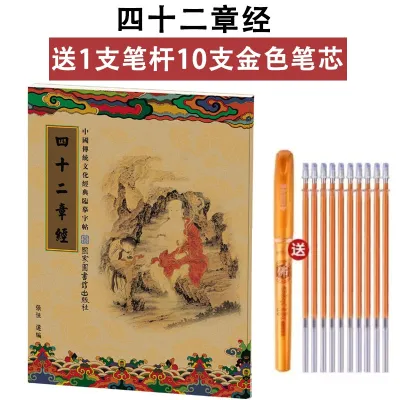
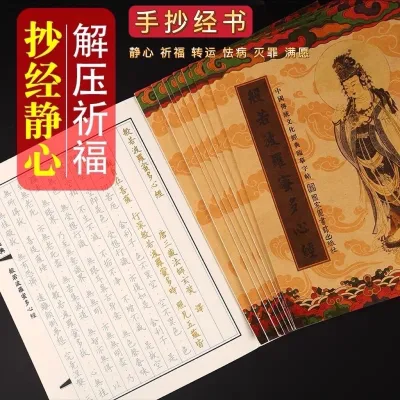
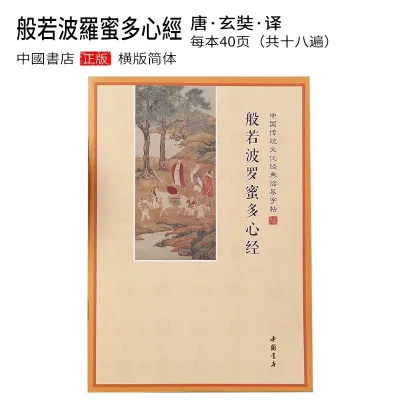
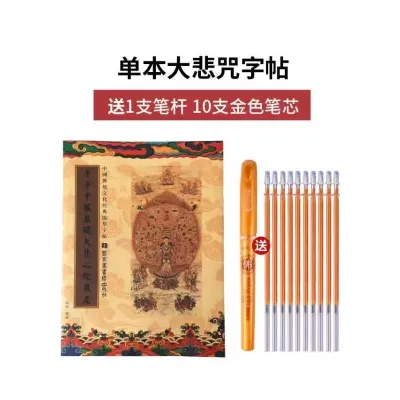
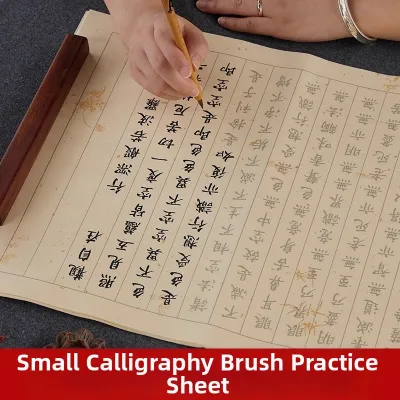
Prices are valid at publication and may change. Please refer to the product page for the latest price.
Beyond weight, the specific type of paper used dictates how ink behaves on the page. Many traditional copying books utilize specialized Chinese art paper, such as ripe Xuan paper (Shu Xuan). Unlike raw Xuan paper, which is highly absorbent and causes ink to spread rapidly, ripe Xuan paper is treated to reduce absorbency, allowing for crisp, clean lines when using traditional brushes or modern brush pens. If you prefer using modern writing tools like gel pens, fine-liners, or fountain pens, look for books made with high-quality wood-free paper (often referred to as Daolin paper), which offers a stable, non-porous surface.
Paper texture also plays a significant role in stroke control and hand comfort. Very smooth paper minimizes friction, allowing gel pens and fountain pen nibs to glide effortlessly across the page without catching. However, if you are practicing brush calligraphy, a paper surface with a slight, natural texture is highly beneficial. This subtle tooth provides the necessary resistance to control the flow of the brush tip, helping you execute precise tapers and sharp turns in your characters.
Finally, consider the long-term preservation of your completed sutras. If you intend to keep your finished books as personal records, frame individual pages, or gift them to family and friends, prioritize acid-free or archival-quality paper. Acid-free paper resists yellowing and degradation over time, ensuring that your mindful efforts remain intact and visually pristine for decades, even when exposed to ambient air and light.
Layout Formats and Guideline Styles
The structural layout of a copying book determines how easily you can maintain character alignment, proportion, and spacing. For beginners, grid-based layouts are incredibly helpful for developing muscle memory and understanding character balance. Common styles include the field grid (Tian-zi-ge) and the rice-character grid (Mi-zi-ge), both of which divide each character space into smaller quadrants or diagonal sections. These internal guidelines help you identify where to place specific strokes relative to the center of the character.

As your confidence grows, you may want to transition to simpler layout styles. A half-grid or nested box grid (Hui-gong-ge) provides an outer boundary and a smaller inner square, helping you maintain consistent character sizing without the distraction of intersecting lines. For advanced practitioners, a simple center-line layout or open vertical columns offer the freedom to write naturally while still providing a basic guide to keep your vertical lines straight and orderly.
Character size is another key factor to match with your chosen writing instrument. Larger grids, typically measuring 2 centimeters to 3 centimeters per square, are highly suitable for brush calligraphy and thick felt-tip brush pens, as they give you ample space to express dynamic stroke weights. Conversely, standard grids measuring 1 centimeter to 1.5 centimeters are better suited for fine-point gel pens, ballpoints, and fountain pens, allowing you to complete the 260-character sutra in a more compact, portable format.
Lastly, consider the orientation of the text within the book. Traditional Heart Sutra copying books feature vertical columns that read from right to left, mirroring historical Buddhist manuscripts and offering an authentic, culturally rich writing experience. However, if you find vertical writing uncomfortable or are left-handed and concerned about smudging fresh ink, horizontal layouts reading from left to right are widely available and offer a highly practical, modern alternative.
Included Guides and Reference Materials
A well-designed copying book does more than just provide blank spaces; it offers educational support that deepens your connection to the text. Before purchasing, verify the completeness of the edition. The standard translation of the Heart Sutra by the monk Xuanzang consists of 260 characters. Ensure the book contains the entire text without omissions. Many comprehensive editions also include traditional opening elements, such as the incense praise (Lu Xiang Zan) and the opening mantra (Kai Jing Ji), along with a dedication of merit (Hui Xiang Ji) at the end to complete the ritual cycle.
For those new to classical Chinese characters, built-in visual aids are invaluable. Look for books that feature faint tracing guides, often printed in light grey or red ink (traditionally called Miao Hong). Tracing directly over these pre-printed characters helps you master the correct proportions and spacing before attempting to write on blank grids. Additionally, books that include stroke-order diagrams or radical breakdowns for complex characters—such as “Guan” (观) or “Zang” (藏)—will save you from having to look up character structures mid-practice.
Understanding the meaning behind the characters you copy can significantly enhance the meditative quality of your practice. Many modern copying books feature side-by-side translations or vernacular interpretations of each line. Having access to clear explanations of core concepts, such as emptiness (Sunyata) and the five aggregates (Skandhas), allows you to contemplate the philosophical teachings of the sutra as you write, turning a physical exercise into a deeply reflective journey.
Binding and Physical Durability
The physical construction of the book determines how comfortable it is to use during long writing sessions. A lay-flat binding is absolutely essential for an uninterrupted practice. Standard perfect binding, which relies on stiff glue along the spine, forces the book to spring shut unless held down with force. This constant tension requires you to use one hand to pin the pages down, disrupting your writing flow and causing hand fatigue. Look for thread-sewn bindings or specialized flexible glue bindings that allow the book to open completely flat (180 degrees) on your desk.
Cover materials also contribute to both the durability and the tactile experience of your copying book. Hardcover editions provide a rigid, stable writing surface, which is highly convenient if you prefer to practice on your lap, while traveling, or in environments without a flat desk. Softcover books, on the other hand, are lightweight, flexible, and easy to slip into a bag for daily commuting. Many practitioners prefer covers wrapped in textured linen, fabric, or embossed paper, as these materials offer a pleasant, tactile sensation that sets a calm, intentional tone before you even open the book.
If you plan to display or share your finished work, look for books that feature perforated pages. High-quality micro-perforations along the inner margin allow you to cleanly detach individual sheets without tearing the paper or compromising the structural integrity of the remaining pages. Detached sheets are much easier to slide into archival protective sleeves, mount on scroll backings, frame for home display, or bring to a local temple as a personal offering.
Building Your Personal Selection Checklist
To find the right Heart Sutra copying book for your needs, start by defining your primary goal. If your main objective is to improve your calligraphy skills, prioritize books with high-quality ripe Xuan paper, detailed stroke-order guides, and structured grids like the Mi-zi-ge. If your goal is daily stress relief and meditative mindfulness, look for user-friendly features such as light grey tracing lines, a lay-flat binding, and clear modern translations that allow you to focus entirely on the calming rhythm of writing.
When browsing online marketplaces or local bookstores, pay close attention to the product specifications rather than relying solely on the cover design. Check the listed paper weight (GSM) and look for explicit mentions of “thread-sewn” or “lay-flat” binding. Reading customer reviews can also provide valuable insights into how the paper handles different types of ink, helping you identify if a particular book is prone to feathering when used with wet fountain pens or heavy gel inks.
If you are undecided between different paper textures or layout styles, it is wise to start with a single, budget-friendly trial booklet rather than committing to a multi-volume set. A modest investment of S$5 to S$15 allows you to test your favorite pens directly on the paper, evaluate the grid size, and experience the binding style firsthand. Once you find a format that feels natural and comfortable, you can confidently invest in premium editions or bulk sets for your long-term daily practice.
Frequently Asked Questions (FAQ)
Do I need a special pen for a Heart Sutra copying book?
You do not need expensive or specialized tools to begin copying the Heart Sutra. Standard gel pens with a 0.5mm or 0.7mm tip, fine-liners, and fountain pens work exceptionally well on most modern wood-free paper. If you prefer using traditional brushes or modern brush pens (fude pens), ensure the book features thicker, bleed-resistant paper like ripe Xuan paper to prevent the ink from spreading. It is always a good practice to perform a quick ink test on a blank corner or a back page of the book to check for bleed-through before starting your first column.
How should I store completed copying books?
In humid tropical climates like Singapore, paper is highly susceptible to moisture, yellowing, and mold over time. Store your completed copying books in a cool, dry place away from direct sunlight, which can fade the ink and yellow the paper. Keeping your books in airtight plastic storage boxes with a few silica gel packets is an effective way to protect them from humidity. If you have detached individual sheets from a perforated book, store them flat inside acid-free archival sleeves or folders to keep them clean, dry, and uncreased.
Community discussion
Share your experience or ask a question. Comments are reviewed before publication.