
Finding the right lightweight music stand is not about searching for a single, universally perfect model. Instead, the ideal choice depends entirely on where and how you play. A student carrying gear on public transit needs a highly collapsible, featherweight design that easily slips into a backpack. A gigging musician performing outdoors requires a stable base and wind-resistant features that prevent sheet music from flying away. Meanwhile, a home player practicing in a compact apartment needs a small footprint and clean aesthetics that blend into a multi-purpose living space. By evaluating your primary playing environment, you can select a portable stand that balances structural stability with convenient portability.
Commuting to Lessons: Prioritizing Foldability and Carry Weight
When your musical routine involves regular travel to lessons or rehearsals, every gram and centimeter matters. Carrying an instrument, sheet music, and accessories is physically demanding, making a heavy, bulky music stand highly impractical. For commuters, the primary design features to evaluate are the folding mechanism and the overall packed dimensions. A highly collapsible tripod base that folds down into a compact, cylindrical shape is essential for fitting into standard backpacks or transit bags. Some stands feature a folding desk that collapses alongside the shaft, reducing the entire unit to a single, streamlined package that is easy to carry on public transport. A dedicated carrying bag constructed from durable, water-resistant nylon with reinforced stitching and an adjustable shoulder strap further ensures comfortable, hands-free transport.
However, choosing an ultra-lightweight stand involves a clear trade-off between portability and structural integrity. Stands made from lightweight aluminum are incredibly easy to carry but may have thinner desk lips and less rigid joints. If you regularly practice with thick music books or heavy folders, you must ensure the desk lip is deep enough and strong enough to support the weight without bending. Opting for a model with a slightly thicker aluminum gauge or reinforced joints can provide the necessary durability without adding significant weight to your daily commute.
Products mentioned in this guide
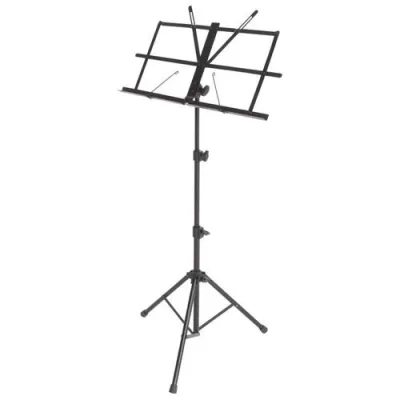


Prices are valid at publication and may change. Please refer to the product page for the latest price.
Outdoor Gigs: Balancing Portability with Wind Stability
Performing outdoors presents a unique set of challenges, with wind being the primary adversary of any lightweight music stand. A sudden gust of wind can easily tip over a top-heavy stand, potentially damaging your sheet music, tablet, or the stand itself. To balance portability with wind stability, musicians must carefully compare base designs. Tripod bases with a wide leg spread offer a much lower center of gravity and superior tip resistance compared to narrow-base designs. When setting up on uneven grass or pavement, a wide, adjustable tripod base allows you to stabilize the stand by extending the legs fully and securing them close to the ground. Additionally, look for stands made from high-grade alloys or powder-coated steel, which provide essential protection against humidity and light moisture while preventing rust over time.

Rather than carrying a heavy, solid-steel stand to every outdoor gig, a practical alternative is to use optional stability accessories. Portable sandbags, water-filled weight bags, or specialized clip-on base weights can be draped over the tripod legs on-site. This approach allows you to enjoy the benefits of a lightweight, easy-to-transport stand during transit, while quickly adding the necessary mass to withstand windy conditions once you arrive at the venue. It is a highly efficient way to achieve professional-grade stability without sacrificing portability.
Small Apartment Practice: Minimizing Footprint and Visual Bulk
For musicians practicing in small apartments or shared living spaces, a music stand must fit comfortably into tight quarters without creating visual clutter. A wide tripod base that is excellent for outdoor stability can easily become a tripping hazard or block narrow walkways in a small room. Look for stands with a compact leg spread or flat, low-profile bases that can slide under desks, beds, or chairs. This allows you to position the stand close to your practice chair or instrument without taking up valuable floor space. Height adjustability is equally important; whether you practice sitting down or standing up, the stand must adjust smoothly to your eye level to maintain proper playing ergonomics and prevent strain during long practice sessions.
The visual profile of the stand also affects how it integrates into your home environment. A bulky, industrial-looking stand can dominate a small room and disrupt the decor. Choosing a stand with a minimalist design, thin tubing, and a matte black or neutral finish helps it blend into the background. Additionally, an adjustable desk tilt angle is crucial; it allows you to angle the music or tablet perfectly for your sightline, reducing the need to place the stand far away from you. When practice is over, a stand that folds down quickly and tucks away into a closet or behind a door keeps your living area tidy and organized.
Cross-Scenario Compatibility: Do You Need One Stand or Two?
Many musicians wonder if a single hybrid music stand can successfully meet all their needs, or if investing in specialized stands is a more practical solution. Hybrid stands attempt to bridge the gap by offering lightweight materials alongside reinforced joints and wider bases. While these models can be highly versatile, they inevitably involve compromises. A hybrid stand may still be slightly too heavy for a daily walking commute, yet not quite stable enough for a windy outdoor gig without extra weights. For multi-instrumentalists or those with diverse playing schedules, modular designs can offer an excellent middle ground, featuring detachable desks and interchangeable bases that allow you to swap components depending on the day’s requirements.
Ultimately, weighing the cost, setup time, and convenience of owning two purpose-built stands versus one compromised multi-use stand is a personal decision. For many, having a dedicated, ultra-lightweight wire stand permanently packed in their transit bag for lessons, and a sturdier, solid-desk stand set up permanently in their apartment, offers the best balance. This setup eliminates the hassle of constantly packing and unpacking your gear, while ensuring you always have the right tool for the specific environment.
Pre-Purchase Checklist: Verifying Specs and Build Quality
Before purchasing a lightweight music stand, it is essential to verify its specifications and build quality to ensure it meets your performance standards. First, test or closely inspect the locking mechanisms for height and tilt adjustments. Whether the stand uses friction collars, thumb screws, or quick-release lever clamps, these joints must hold securely under pressure to prevent a slipping shaft or a tilting desk. Next, check the dimensions of the desk lip and the presence of page retention clips. The lip depth should be sufficient to hold your thickest music books, folders, or tablet in its protective case, and page clips should have enough tension to hold sheets secure without damaging the paper.
Finally, always review the manufacturer’s specifications for maximum load capacity. Do not rely solely on visual thickness or material assumptions; a well-engineered lightweight stand can often support more weight than a poorly constructed heavier model. Checking the rated weight capacity ensures the stand can safely support your music library or digital devices, protecting your valuable equipment from accidental falls.
Frequently Asked Questions (FAQ)
Are wire-frame music stands suitable for heavy textbooks?
Wire-frame music stands are generally not suitable for heavy textbooks or thick music anthologies. Because wire desks lack a solid backing plate and often have shallow, flexible lips, heavy books can cause the desk to sag, bend, or slip off entirely. Furthermore, the concentrated weight of a heavy textbook high up on a lightweight frame raises the center of gravity, significantly increasing the risk of the entire stand tipping over. For heavy books, a stand with a solid or reinforced folding plate desk and a higher load capacity is recommended.
How do I prevent a lightweight stand from tipping over outdoors?
To prevent a lightweight music stand from tipping over outdoors, you can use external weights to secure the base without modifying the stand’s structure. Draping portable sandbags, ankle weights, or water-filled weight bags over the bottom of the tripod legs is a highly effective and safe method. Additionally, ensure the tripod legs are extended to their maximum width to create the widest possible base. Avoid over-tightening the adjustment joints or using makeshift anchors like tape or ropes tied to the stand’s shafts, as this can strip the threads or bend the lightweight tubing.
Community discussion
Share your experience or ask a question. Comments are reviewed before publication.