
Finding the right balance between a featherlight frame and a stable support system is the primary challenge for musicians in Singapore. Whether you are a student commuting on the MRT with an instrument case and a backpack, or a gigging professional navigating tight stage setups in downtown venues, your music stand must be easy to carry without sacrificing its core job: holding your music securely. A stand that is too heavy quickly becomes a burden during daily travel, while one that is too flimsy risks collapsing under the weight of a heavy binder or an expensive digital tablet. To make an informed choice, you must evaluate how materials, base designs, and locking mechanisms interact under real-world conditions.
Core Criteria for Choosing a Lightweight Music Stand
Choosing a portable stand requires a clear understanding of the materials used in its construction, as this directly impacts both its weight and its lifespan. Aluminum is highly favored for its exceptional strength-to-weight ratio. It is naturally resistant to corrosion, which is a significant advantage in Singapore’s tropical, high-humidity climate where sweat and ambient moisture can quickly degrade unprotected metals. However, aluminum is softer than steel, meaning thin-walled aluminum tubes can dent or bend if subjected to rough handling during transit. Steel stands offer unmatched structural rigidity and weight, making them highly stable, but they are significantly heavier and can rust at the joints if the protective powder coating chips off. Engineered plastics are sometimes used for the desk portion or joint collars; while they reduce overall weight and do not rust, low-grade plastics can become brittle over time when exposed to heat and UV light.
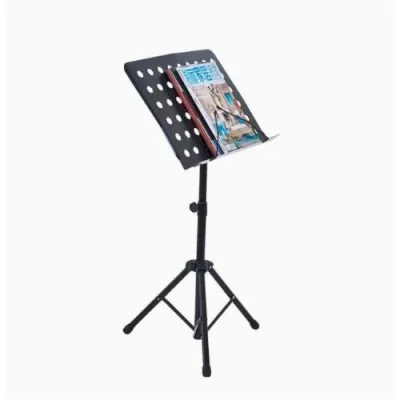
The base design is another critical factor that determines how well a stand resists tipping. The classic tripod base remains the industry standard for portable stands. A wider tripod footprint lowers the center of gravity, providing excellent stability even on uneven surfaces. However, a wide footprint requires more floor space, which can be a challenge in cramped HDB practice rooms or crowded orchestra pits. Some modern portable designs feature a flat-leg tripod design that sits flush with the floor. While these can save space, they often require a heavier central shaft to maintain stability. When evaluating a base, look for the ratio between the leg span and the maximum height; a stand that extends high but has a narrow leg span will be highly susceptible to tipping.
Products mentioned in this guide

Prices are valid at publication and may change. Please refer to the product page for the latest price.
Your reading material dictates the structural support you need from a stand’s weight capacity. A standard 80-page music book or a heavy three-ring binder can weigh upwards of 1 kg, while a large digital tablet with a protective case can easily exceed 800 grams. If your stand is rated for only 500 grams, the desk may tilt unexpectedly, or the telescoping shafts may slowly slide downward during a performance. You must match the manufacturer’s rated weight capacity with your heaviest score. Furthermore, digital tablets concentrate their weight in a smaller, denser area compared to spread-out sheet music, which shifts the center of gravity forward and requires a more robust locking joint at the desk angle adjuster.
Evaluating Portability and Setup Mechanisms
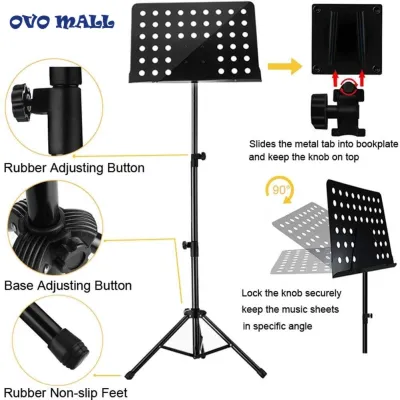
The ease with which a stand transitions from a compact travel size to a fully extended height determines its practical portability. Look for smooth telescoping shafts secured by reliable locking joints. Friction-lock joints, which rely on tight tolerances and sliding collars, are incredibly fast to set up but can wear down over time, leading to slipping. Knob-style tension locks, where a threaded screw presses against the inner shaft, offer a more secure hold but require manual tightening and can strip if over-tightened. Spring-loaded pins provide positive locking at fixed height intervals, offering excellent security against sudden collapse, though they limit micro-adjustability.

A truly portable stand should not feel like an awkward extra piece of luggage. Many lightweight models fold down to a length of 50 centimeters or less, allowing them to fit directly inside a standard backpack or a dedicated instrument gig bag pocket. If the stand is too long for a backpack, a high-quality carrying bag with an adjustable shoulder strap is essential. Look for bags made from heavy-duty, water-resistant fabrics like denier nylon to protect the stand from Singapore’s frequent rain showers. Some premium lightweight stands feature detachable desks, allowing you to pack the flat desk and the collapsed tripod base separately, optimizing packing space.
Your practice posture directly impacts your technique and physical comfort. A versatile stand must adjust smoothly to accommodate both seated practice (such as playing the cello or classical guitar) and standing practice (such as singing or playing the flute). The height adjustment range should ideally extend from around 60 centimeters to at least 120 centimeters to the bottom of the desk. Equally important is the desk angle adjuster. A secure tilt mechanism allows you to position your music at the perfect viewing angle to prevent neck strain, and it must lock tightly enough to resist the downward leverage exerted when you write annotations on your sheet music.
Building Your Shortlist: Use Cases and Scenarios
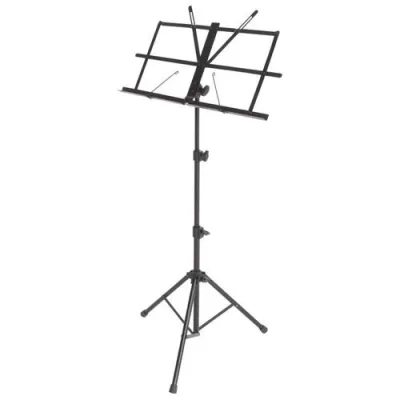
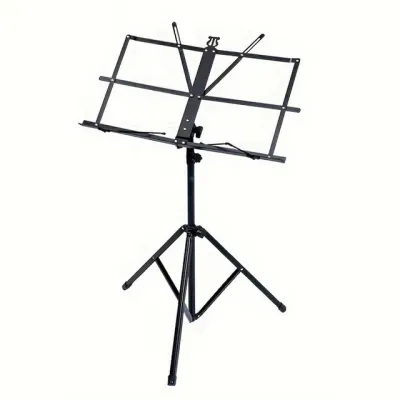
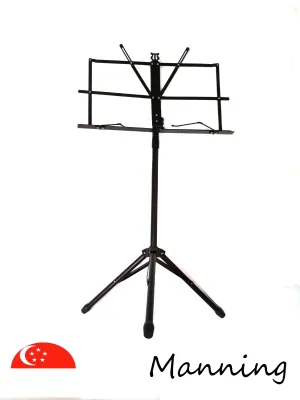
For musicians who rely on public transport, every gram matters. If you are constantly moving between home, school, and rehearsal spaces via the MRT or buses, an ultra-lightweight wire-frame stand weighing under 1 kg is often the most practical choice. These stands fold down into a highly compact, cylindrical shape that slips easily into the side pocket of a gig bag. While they offer less wind resistance and a shallower desk lip, their minimal setup time and negligible weight make them ideal for quick, indoor practice sessions where portability is the absolute priority.
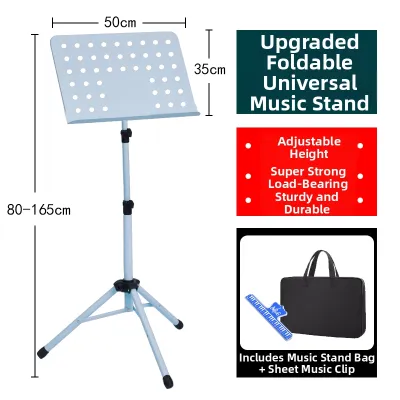
If your stand primarily resides in a study room or bedroom within an HDB flat, you can afford to trade a small amount of portability for enhanced stability and desk space. A lightweight stand with a solid or perforated aluminum desk provides a flat, continuous surface that supports loose sheets, heavy anthologies, and tablets without bending. These stands typically weigh between 1.2 kg and 1.8 kg. They are still light enough to be easily moved from room to room or folded up and tucked behind a wardrobe when guests visit, offering a perfect compromise for domestic use.
Performing outdoors in Singapore—whether at a community plaza, a park, or an open-air pavilion—presents unique challenges like sudden gusts of wind and uneven ground. In these environments, an ultra-light wire stand will easily blow over. Instead, look for a lightweight stand with a slightly heavier tripod base, non-slip rubber feet that grip smooth tiles or concrete, and built-in page retainers or spring clips. A perforated aluminum desk is highly advantageous here; the holes allow wind to pass through the desk rather than acting like a sail, significantly reducing the risk of the stand tipping over during a performance.
What to Verify Before Purchasing Online or In-Store
When browsing online marketplaces or local music shop websites, do not rely solely on promotional photos. Always verify the exact specifications listed by the manufacturer. Pay close attention to the folded dimensions to ensure it fits your existing bags, and check the net weight of the stand. A difference of just 300 grams can feel significant when carried over long distances. Also, check the desk width and lip depth; a lip depth of less than 2 centimeters may struggle to hold thick music books open.
Customer reviews are invaluable for identifying potential long-term issues that are not apparent from product descriptions. Look specifically for feedback regarding joint longevity, thread stripping, and stability at maximum height extension. If multiple users report that the stand wobbles excessively when extended to its limit, or that the locking knobs crack after a few months of use, it is a strong indicator of poor material quality.
Whether purchasing from a physical store in Bras Basah or Peninsula Plaza, or ordering through an online platform, clarify the return policy and warranty terms. A reputable seller should offer a warranty against manufacturing defects, particularly for the locking joints and hinges. Ensure you can return or exchange the stand if it arrives with loose rivets, misaligned shafts, or a warped desk tray.
Maintenance and Care for Folding Joints
To ensure your lightweight stand remains safe and stable for years, establish a simple maintenance routine. Periodically inspect all moving parts, focusing on the rivets, screws, and locking knobs. Over time, the vibrations from transport can loosen screws, while frequent tightening can wear down threads. If you notice a knob starting to feel loose or slipping, gently tighten the connecting screws with an appropriate screwdriver. Avoid over-tightening, as this can strip the threads or crack plastic collars.
Sweat, finger oils, and Singapore’s humid air can leave residue on your stand, potentially leading to corrosion or stiff joints. Wipe down the metal and plastic components regularly with a soft, dry microfiber cloth. For stubborn dirt, use a slightly damp cloth with a mild, pH-neutral soap, then dry the surface immediately. Never use abrasive cleaners, solvents, or harsh chemicals, as these can strip away the protective powder coating or anodized finish, leaving the underlying metal vulnerable to rust.
While many minor adjustments can be made at home, some joint failures pose a safety risk to your instruments or tablets. If a locking collar cracks completely, a thread strips entirely, or a telescoping shaft refuses to hold tension even when fully tightened, stop using the stand immediately. Attempting to force a broken joint to hold can lead to a sudden collapse during practice. Check if the manufacturer sells replacement knobs or collars, or consult a local music technician to see if a repair is feasible before purchasing a new stand.
Frequently Asked Questions (FAQ)
Can a lightweight music stand hold a heavy tablet or thick songbook?
Yes, but it depends entirely on the stand’s rated weight capacity and desk design. Before placing a heavy tablet or a thick songbook on a lightweight stand, verify the manufacturer’s maximum load limit, which should ideally be at least 1.5 kg for heavy media. Ensure the desk lip is deep enough (at least 2 to 3 centimeters) to prevent thick books from sliding off, and adjust the desk angle to a more vertical position to keep the center of gravity directly over the vertical shaft. If you primarily use a heavy tablet, consider using a dedicated tablet clamp that mounts directly to the stand’s central shaft, which provides a much more secure and stable hold than resting the device on a shallow desk lip.
Are wire-frame stands better than solid-desk stands for portability?
Wire-frame stands are generally superior for pure portability, but they come with distinct usability trade-offs. A wire-frame stand folds down into a single, highly compact unit and weighs significantly less than a solid-desk counterpart, making it the ideal choice for students and musicians who travel frequently. However, wire desks offer no support for loose, single-sheet music, which will flop over the edges, and they cannot support heavy tablets or allow you to easily write notes on your scores. Solid-desk stands, even those made of lightweight aluminum, provide a stable, continuous writing surface and excellent support for all media types, but they are bulkier to transport and often require a separate carrying bag. Choose a wire-frame stand if you primarily read from bound books and prioritize low weight, or a solid-desk stand if you use loose sheets, tablets, or need to write annotations during practice.
Community discussion
Share your experience or ask a question. Comments are reviewed before publication.