
Selecting an electronic drum set for both studio production and live DJ sets requires balancing two distinct environments. In the studio, you need deep MIDI integration, precise velocity tracking, and multi-channel routing to shape your digital sounds. On stage, you need a compact footprint, rapid setup times, and robust physical outputs that interface directly with DJ mixers and PA systems. The ideal hybrid setup prioritizes module processing power and flexible input/output (I/O) configurations over traditional acoustic emulation.
Defining the Demands of Studio Production and Live DJ Sets
Studio production demands a high level of control over individual sound elements. When producing an electronic album, you rarely rely on a single stereo mix of your drum performance. Instead, you require multi-track audio routing or detailed MIDI data to separate the kick, snare, hi-hats, and percussion onto individual tracks within your Digital Audio Workstation (DAW). This separation allows for precise equalization, compression, and effects processing on each drum voice.
Furthermore, precise velocity mapping is essential in the studio. Electronic music genres rely heavily on micro-dynamics, where subtle variations in how hard you strike a pad trigger different sample layers or filter modulations. Without accurate velocity tracking, your drum parts can sound flat, robotic, and disconnected from the groove of the track.
Products mentioned in this guide
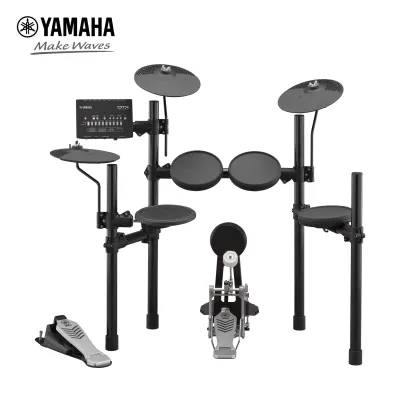
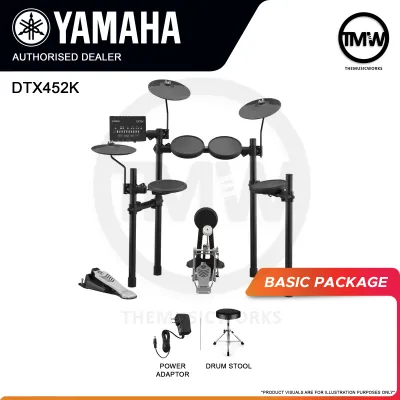
![Roland Electronic Drums TD-02K Digital Drum TD 02K TD02K Absolute Piano The Music Works [LIMITED STOCK]](https://img.lazcdn.com/g/p/0966d0ff6ae7ebb9a7a964c294bbaff5.jpg_400x400q80.jpg_.webp)
![Roland Electronic Drums TD-02KV Digital Drum TD 02KV TD02KV Absolute Piano The Music Works [PREORDER]](https://img.lazcdn.com/g/p/a312f0f427cd970f3c0457a477b0f10d.jpg_400x400q80.jpg_.webp)
![Roland TD313 Compact Electronic Drums 8 Piece Kits V31 Module TD Series [LIMITED STOCK]](https://img.lazcdn.com/g/p/9e7cfb694ee87c61596db7f8fe3db651.jpg_400x400q80.jpg_.webp)
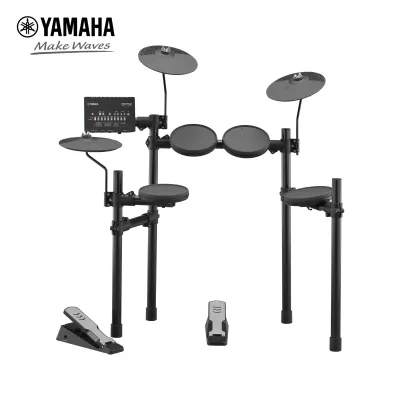
Prices are valid at publication and may change. Please refer to the product page for the latest price.
Live DJ sets present an entirely different set of physical and technical challenges. In a crowded DJ booth or on a festival stage, space is at a premium, and transition times between performers are often measured in minutes. Your drum setup must be highly portable, quick to assemble, and robust enough to withstand the rigors of travel and live performance.
Output compatibility is another critical live factor. While a studio setup can route audio through a complex computer interface, a live DJ setup benefits from direct connections. Your drum module should feature balanced physical outputs that can plug directly into a DJ mixer or a venue’s PA system, minimizing latency and reducing the number of potential failure points in your signal chain.
Deciding which scenario dictates your primary hardware constraints is the first step in making a choice. If you primarily produce in a compact home studio—such as a typical high-rise apartment where space is limited and noise isolation is a priority—a quiet, highly expressive mesh kit is ideal. If live performance is your main focus, a modular multi-pad or a highly collapsible rack system takes precedence, even if it means sacrificing some acoustic playability.
Evaluating MIDI Integration and Sample Triggering Features
The drum module is the brain of your electronic kit, and its digital connectivity determines how well it integrates with your production and performance software. USB MIDI is the standard for connecting directly to a computer running a DAW. This connection allows you to trigger software samplers and virtual instruments with minimal setup, making it the backbone of modern studio production.

However, traditional 5-pin DIN MIDI ports remain invaluable for live performers. If your live setup involves hardware synthesizers, external samplers, or standalone DJ controllers, 5-pin MIDI allows you to route control data directly between hardware units without needing a computer on stage. This hardware-to-hardware connection increases system stability during live sets.
Polyphony limits are a critical technical specification to verify before purchasing. Electronic music often features dense sequencing, rapid-fire rolls, and layered samples with long decay times. If a module has low polyphony, you risk note-dropping, where older sustained sounds—such as a long cymbal decay or a sub-bass sweep—are abruptly cut off when new pads are struck.
For electronic music, the ability to import, assign, and layer custom user samples directly on the module is a game-changer. Look for modules that allow you to load WAV files via SD card or USB drive. The ability to layer a custom electronic clap over an acoustic snare sample directly within the module allows you to perform with your signature studio sounds without relying on an external laptop.
Real-time live remixing demands near-zero latency. Any noticeable delay between striking a pad and hearing the sound can ruin your timing and disrupt the flow of a live mix. Check the manufacturer’s specifications for latency performance and ensure the module supports standard synchronization protocols if you plan to sync internal sequencers or metronomes with your DJ software.
Assessing Pad Responsiveness and Physical Form Factors
The physical interface of your electronic drum set directly impacts your playing technique and the practicality of your setup. Mesh heads offer a realistic rebound and are highly adjustable in tension, making them comfortable for long studio sessions. They are also significantly quieter acoustically, which is a major advantage for home studios where late-night practice must not disturb neighbors.
Rubber pads, while louder and harder on the wrists, offer a distinct, immediate trigger response that some electronic music producers prefer for precise finger or stick work. They are also highly durable and less susceptible to damage during energetic live performances. Many hybrid setups combine a mesh snare for expressive dynamics with rubber pads for auxiliary percussion and sample triggering.
The choice between a compact and a full-size rack is a balance between ergonomic comfort and transport ease. A full-size rack provides excellent stability and a commanding stage presence, but it can be nearly impossible to squeeze into a standard DJ booth. For dual-use setups, look for compact, folding rack designs or modular multi-pads that can be mounted on a single snare stand.
Cymbal pad zones and choke capabilities are vital for expressive electronic hi-hat control and crash articulations. Ensure the cymbal pads support multiple zones (edge, bow, and bell) and reliable choke capabilities. This allows you to perform realistic open-to-closed hi-hat transitions and sudden crash mutes, adding essential human dynamics to your electronic arrangements.
Creating a Cross-Scenario Selection Checklist
When evaluating electronic drum sets for a dual-use workflow, prioritize the module’s processing power, routing flexibility, and digital connectivity over the realism of its built-in acoustic drum library. For electronic music, the ability to manipulate digital signals and route audio flexibly is far more important than how realistically a module emulates a vintage jazz kit.
Before making a purchase, confirm that the drum module is fully compatible with your preferred DAW and your DJ software. Check user forums and manufacturer documentation to ensure class-compliant USB drivers are available for your operating system, which simplifies setup and ensures long-term compatibility.
Budget for high-quality accessories that can handle the wide frequency range of electronic music. Standard consumer headphones or basic guitar amplifiers often distort under the heavy low-end of electronic sub-kicks. Plan on allocating S$200 to S$400 for dedicated monitoring or high-impedance studio headphones, along with robust, shielded MIDI and audio cables to prevent interference on stage.
If a module’s manual does not explicitly state its multi-track routing capabilities or custom sample limits, treat this as a stop condition. Always consult the manufacturer’s official technical specifications or contact an authorized specialist to verify firmware capabilities before committing to a purchase.
Frequently Asked Questions (FAQ)
Can I use acoustic drum triggers instead of a full electronic kit?
Yes, hybrid setups using acoustic drum triggers on acoustic shells are highly viable, but they present distinct trade-offs. While they offer the visual presence and natural feel of an acoustic kit, they require careful calibration of trigger sensitivity and physical dampening to prevent cross-talk, where striking one drum accidentally triggers another. For live DJ environments, a hybrid setup is often less practical due to its large physical footprint, longer setup times, and the difficulty of controlling acoustic stage volume.
Do I need a built-in audio interface for studio recording?
A built-in audio interface in your drum module is highly convenient but not strictly mandatory. If your module has a multi-channel USB audio interface, you can send individual drum tracks directly to your DAW over a single USB cable. If the module only outputs a stereo master mix, you will need an external audio interface with multiple physical inputs to record separate drum tracks simultaneously, or you must rely entirely on recording MIDI data and triggering software instruments inside your computer.
Community discussion
Share your experience or ask a question. Comments are reviewed before publication.