
Selecting the right educational magazines for primary school children in Singapore requires balancing a child’s natural curiosity with the structured demands of the local primary curriculum. While textbooks and assessment books form the core of academic preparation, well-designed periodicals bridge the gap between classroom learning and real-world application. By introducing age-appropriate publications, parents can foster a genuine love for reading, reinforce key subject concepts, and build critical thinking skills in a low-pressure format. The ideal choice depends on your child’s current academic level, specific learning gaps, and personal interests.
Aligning Magazine Content with the Singapore Primary Curriculum
The academic journey of a primary school student in Singapore shifts significantly between the lower and upper primary years. In Primary 1 and Primary 2, the educational focus centers on foundation building, language acquisition, and developing a positive attitude toward reading. Magazines designed for this stage prioritize vibrant illustrations, phonics-based stories, and simple interactive puzzles. These elements help young learners transition from guided reading to independent comprehension without feeling overwhelmed by dense blocks of text.
As students progress to the upper primary levels (Primary 3 through Primary 6), the curriculum demands a deeper level of critical thinking, analytical reasoning, and structured exam preparation. Periodicals targeted at older children introduce complex sentence structures, advanced vocabulary, and real-world case studies. These publications often align their content with the Ministry of Education (MOE) syllabus, helping students apply theoretical concepts to practical scenarios, which is particularly beneficial for the open-ended questions found in upper primary science and English papers.
Products mentioned in this guide
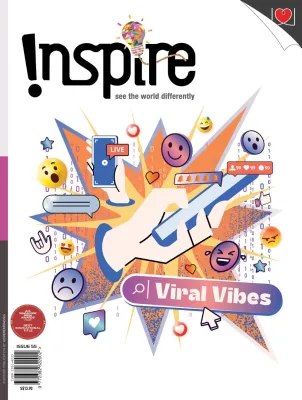
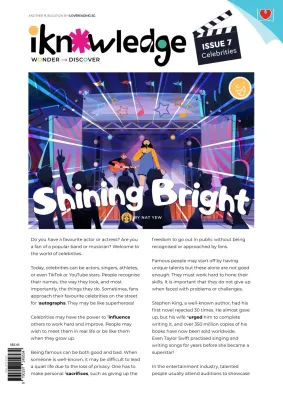
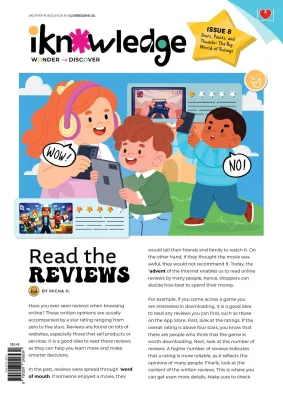
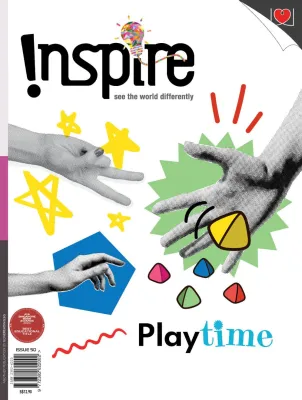
Prices are valid at publication and may change. Please refer to the product page for the latest price.
Different subjects benefit from distinct supplementary reading strategies. For Science, magazines that explain natural phenomena, physics principles, and environmental issues help students master the inquiry-based learning approach favored by local schools. For English and Mother Tongue languages, regular exposure to diverse writing styles, narrative essays, and situational dialogues expands vocabulary and improves comprehension skills. This continuous exposure builds the linguistic stamina required for composition writing and oral examinations.
Beyond strict academic subjects, educational magazines play a vital role in holistic education. They introduce children to global cultures, historical events, and basic financial literacy, which are rarely covered in depth within standard textbooks. By engaging with these broader topics, children develop empathy, global awareness, and soft skills that support their personal growth. This well-rounded knowledge base not only boosts confidence in classroom discussions but also prepares students for the collaborative and critical thinking challenges of secondary school.
Core Criteria for Evaluating Educational Magazines
When evaluating any educational publication for your child, curriculum alignment should be a primary consideration. Parents should verify whether the magazine references local contexts, MOE syllabus topics, or specific exam formats like the Primary School Leaving Examination (PSLE). Look for publishers that explicitly state their alignment with local educational standards or those that collaborate with experienced local educators. A well-aligned magazine will use terminology and conceptual frameworks that mirror what your child encounters in school, reinforcing classroom lessons rather than causing confusion.

Language and readability must match your child’s current reading ability rather than just their chronological age. Examine the vocabulary level, sentence complexity, and the overall density of the text. For language-learning publications, particularly Mother Tongue magazines, check for the inclusion of bilingual support, such as English glossaries, Hanyu Pinyin guides, or digital audio read-alongs. These scaffolding tools allow children to read independently, building confidence as they decode unfamiliar words without constantly asking for parental assistance.
Engagement and interactivity are essential to ensure the magazine does not sit unread on a shelf. High-quality publications balance educational content with interactive elements like quizzes, science experiments, creative writing prompts, and hands-on crafts. Comic-strip formats can be highly effective for reluctant readers, provided the narrative carries genuine educational value. Look for magazines that offer digital extensions, such as interactive portals, video demonstrations of experiments, or online discussion boards, which can further sustain a child’s interest.
Finally, assess the credibility and educational value of the publisher. Research the editorial team’s background, their experience in children’s education, and their processes for ensuring factual accuracy. This is especially critical for science and history magazines, where outdated information or simplified misconceptions can negatively affect a child’s academic understanding. A reputable publisher will often provide clear references, expert contributions, and transparent editorial standards that give parents peace of mind.
Matching Magazine Categories to Specific Learning Goals
To make an effective selection, parents should match specific magazine categories to their child’s academic objectives and personal interests.
STEM and Discovery Publications: These magazines are designed to foster scientific inquiry, logical reasoning, and environmental awareness. They typically break down complex scientific concepts—such as forces, life cycles, and ecosystems—into digestible, visually engaging articles. By presenting science as an ongoing exploration rather than a set of facts to memorize, these publications encourage children to ask questions, formulate hypotheses, and conduct safe home-based experiments. This directly supports the practical and inquiry-based components of the primary science curriculum.
Language and Literature Magazines: If your goal is to improve language proficiency, look for publications that focus on vocabulary expansion, reading comprehension, and creative writing. These magazines often feature short stories, poetry, and essays written by both professional authors and student peers. By analyzing different writing styles and narrative structures, children learn how to construct compelling stories, use figurative language, and vary their sentence lengths. Many of these periodicals also include dedicated sections that break down comprehension strategies, helping students identify main ideas and infer meaning from context.
Current Affairs and General Knowledge Digests: For upper primary students, developing a strong grasp of current affairs is crucial for both English oral exams and general intellectual maturity. Magazines in this category translate complex global news, political developments, and cultural shifts into age-appropriate language. Reading about real-world events helps children connect classroom learning to global issues, fostering critical thinking and media literacy. It also provides them with a rich repository of real-life examples that they can draw upon during composition writing and situational conversations.
Exam Preparation and Practice Periodicals: Some publications are structured specifically to assist with exam preparation and targeted practice. These magazines often feature topical worksheets, exam-style questions, and step-by-step model answers that align with the latest exam formats. While they retain a magazine’s engaging layout, they offer a more structured approach to revision than standard assessment books. They are particularly useful for upper primary students who need regular, bite-sized practice to maintain their exam stamina and refine their answering techniques in the lead-up to major school assessments.
Essential Checks Before Subscribing or Purchasing
Before committing to a long-term subscription, parents should perform several practical and technical checks to ensure a smooth experience. First, consider the format and medium of the publication. While print editions offer a tactile, distraction-free reading experience that minimizes screen time, digital editions often provide interactive features, audio narrations, and instant access to back issues. If opting for a digital subscription, verify device compatibility with your family’s tablets or computers, and establish clear guidelines to manage your child’s daily screen-time limits.
Language and regional editions require careful verification, especially when purchasing international titles. Ensure that the magazine uses the appropriate language variant—such as British English, which is the standard taught in Singapore schools—rather than American English, to avoid confusing your child with spelling differences like “colour” versus “color.” Additionally, confirm that the subscription is not subject to regional licensing restrictions that might block access to digital companion apps or online learning portals from a local IP address.
Subscription terms and flexibility vary widely among publishers, so it is important to read the fine print. Review the auto-renewal policies to avoid unexpected charges, and check if there are any cancellation fees if your child loses interest after a few issues. Understand the delivery schedule, as some magazines are published monthly, bi-monthly, or aligned strictly with the school terms. Always compare the total cost, including local delivery fees, and ensure the pricing is clearly stated in S$ to avoid foreign transaction fees on your credit card.
Lastly, verify the content completeness of the subscription package. Some publishers offer basic tiers that only include the core magazine, while premium tiers bundle supplementary materials such as educational posters, physical science kits, separate answer keys, or premium online access codes. Determine whether these extra resources are necessary for your child’s learning style, and confirm if they are included in the base price or require an additional fee. This prevents disappointment when attempting to complete activities that rely on external components.
Frequently Asked Questions (FAQ)
How many educational magazines should a primary school child read per month?
For most primary school children in Singapore, subscribing to one or two high-quality educational magazines per month is sufficient. Primary students already face a structured schedule filled with school homework, extracurricular activities, and essential rest. Introducing too many publications can turn reading into a chore, leading to academic burnout and resistance.
Instead of focusing on the quantity of issues read, parents should prioritize deep engagement and comprehension. Encourage your child to read at their own pace, revisit favorite articles, and discuss the topics during family meals. A single magazine that is thoroughly read, discussed, and enjoyed offers far greater educational value than multiple subscriptions that remain untouched in a corner.
Can educational magazines replace formal tuition or assessment books?
Educational magazines cannot replace formal tuition, structured assessment books, or school-provided materials. Magazines are designed to be supplementary tools that foster curiosity, build reading stamina, and expand general knowledge. They excel at showing the real-world relevance of academic subjects, which helps keep children motivated and engaged with their schoolwork.
However, magazines lack the systematic, step-by-step syllabus coverage and the intensive drilling required to master specific exam techniques. They do not provide the personalized feedback, targeted error correction, or structured curriculum pacing that a professional tutor or a dedicated assessment book offers. For optimal academic results, parents should use magazines to complement, rather than replace, these structured learning resources.
Community discussion
Share your experience or ask a question. Comments are reviewed before publication.