
For students in Singapore, a Chinese dictionary is far more than a simple reference book; it is a critical tool permitted inside national examination halls for major milestones like the Primary School Leaving Examination (PSLE) and the GCE N-Level, O-Level, and A-Level Mother Tongue papers. However, not every dictionary is allowed. The Ministry of Education (MOE) and the Singapore Examinations and Assessment Board (SEAB) enforce strict regulations regarding which publications students can bring into exams. To be approved, a Chinese dictionary must be a print-only, monolingual volume that conforms strictly to standard Simplified Chinese formats, containing no English translations, supplementary learning aids, or annotations. Purchasing the wrong edition can lead to immediate confiscation at the examination hall door, making it essential for parents and students to understand the official guidelines and verify the exact publication details before buying.
Understanding MOE and SEAB Dictionary Regulations
Navigating the landscape of educational resources in Singapore requires understanding the distinct roles of the Ministry of Education (MOE) and the Singapore Examinations and Assessment Board (SEAB). MOE is responsible for designing the national curriculum, setting syllabus guidelines, and approving instructional materials for daily learning in primary and secondary schools. For classroom work, homework, and general language acquisition, teachers often encourage a wide range of learning aids, including bilingual dictionaries, digital translation tools, and interactive mobile applications. These resources are designed to scaffold learning, helping students bridge the gap between English and Chinese as they build their vocabulary and comprehension skills.
In contrast, SEAB is the statutory board responsible for conducting national examinations. SEAB establishes and enforces the strict operational rules that govern exam conditions, including the exact specifications of materials permitted in the exam hall. While MOE focuses on the broad, supportive journey of daily learning, SEAB focuses on maintaining absolute academic integrity and standardized testing conditions during national exams. Therefore, a dictionary that is perfectly acceptable—and even highly recommended—by a school teacher for daily homework may be strictly prohibited by SEAB during a national examination.
Products mentioned in this guide
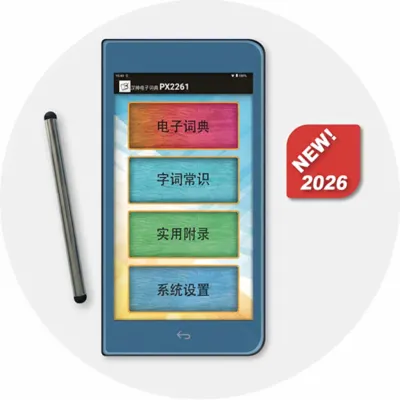
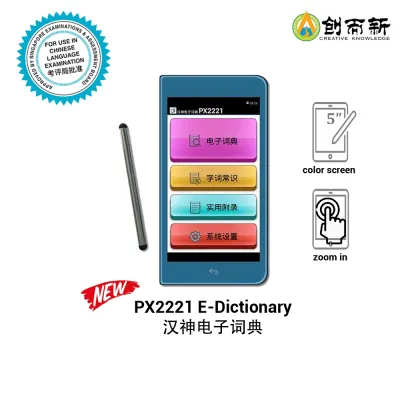
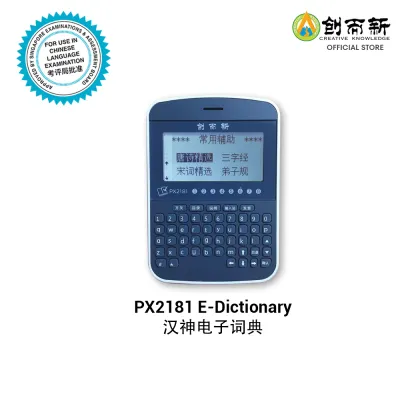
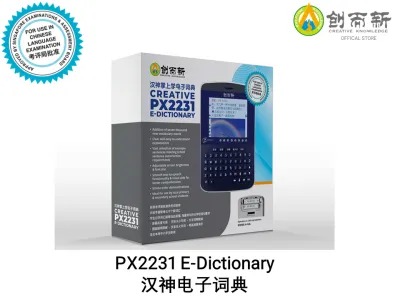
Prices are valid at publication and may change. Please refer to the product page for the latest price.
The rationale behind these strict dictionary regulations is rooted in the fundamental principle of exam fairness. National Chinese language examinations are designed to assess a student’s independent reading comprehension, vocabulary recall, and writing proficiency. If students were allowed to use dictionaries containing extensive supplementary materials—such as grammar cheat sheets, sample sentences, idiom origin stories, or English translations—the exam would no longer measure their genuine language competence. Instead, it would test their ability to locate pre-written answers or rely on bilingual crutches. By restricting candidates to a specific, approved list of monolingual dictionaries, SEAB ensures that all students are evaluated under identical, fair conditions, where the dictionary serves purely as a basic character-lookup tool rather than an unauthorized study guide.
To ensure compliance, parents, students, and educators must consult the official “Approved List of Dictionaries” published annually by SEAB. This comprehensive document is available for download on the official SEAB website and is categorized by examination level, specifying which printed dictionaries are permitted for the PSLE, GCE N-Level, GCE O-Level, and GCE A-Level examinations. Because the approved list is subject to periodic updates—where older editions may be phased out due to changes in syllabus requirements or new publications may be added—relying on outdated school booklists, older siblings’ hand-me-downs, or informal online forums is highly discouraged. Official verification against the current SEAB list is a mandatory step before purchasing any dictionary for exam use.
Identifying Approved Chinese Dictionaries: Key Features
An exam-compliant Chinese dictionary has a highly specific, minimalist profile. While commercial publishers often design dictionaries with vibrant illustrations, color-coded sections, and extensive learning guides to attract buyers, these exact features typically disqualify a book from being allowed in a national examination. An approved dictionary is almost always a standard monolingual volume, meaning that all character entries, definitions, and explanations are written entirely in Chinese. It must function as a passive reference tool, providing only the most essential linguistic information without any pedagogical commentary, test-preparation tips, or external learning aids.

Standard Simplified Chinese Formats
The Singapore Chinese curriculum and national examinations utilize Simplified Chinese (简体字) as the official written script. Consequently, any dictionary brought into an exam hall must focus strictly on standard Simplified Chinese characters. Dictionaries that primarily feature Traditional Chinese characters (繁体字), or those that present a dual-character format where Traditional and Simplified characters are given equal prominence with extensive historical comparisons, are generally not approved. This restriction ensures that students are not confused by variant character forms and are assessed solely on the official local syllabus script.
Furthermore, the physical layout and typography of the dictionary must conform to standard academic conventions. The characters must be printed in standard, clear, and easily legible fonts that do not obscure the correct stroke structures or radical divisions. Dictionaries that use stylized, artistic, or non-standard calligraphic fonts are rejected because they can interfere with a student’s ability to verify correct stroke details. The layout must follow a traditional, structured alphabetical order (based on Hanyu Pinyin) or a radical index system. Any publication that integrates workbook-style spaces, textbook-style annotations, or interactive elements is strictly prohibited, as the book must remain a clean, unannotated reference volume.
Trusted Publishers and Standard Editions
When searching for an approved dictionary, you will frequently encounter publications from long-established academic and linguistic publishers, such as The Commercial Press (商务印书馆), Union Book (联合书局), and other prominent local educational publishers. While these brands are synonymous with quality and linguistic accuracy, and their standard volumes form the core of the SEAB approved list, parents must not assume automatic approval based on the publisher’s name alone. A single reputable publisher often produces dozens of different dictionary models, many of which are designed for international markets or general adult reference and are not certified for Singapore school exams.
The critical factor in determining compliance is the specific edition, print year, and the 13-digit International Standard Book Number (ISBN). Publishers frequently update their dictionaries, and a change in edition can introduce new appendices, formatting styles, or supplementary sections that violate SEAB guidelines. Additionally, parents must be highly wary of “student-enhanced,” “illustrated,” or “exam-prep” versions of standard dictionaries. While these specialized versions are highly beneficial for daily learning because they include grammar summaries, common mistake analyses, and thematic vocabulary lists, these very additions make them strictly illegal in the examination hall. Only the standard, unadorned editions matching the exact approved ISBNs are permitted.
Step-by-Step Verification Before Purchasing
To avoid the distress and panic of having a dictionary confiscated on the morning of a major national examination, parents and students should follow a rigorous, step-by-step verification process before making a purchase. This systematic approach ensures that the reference book brought into the school or exam hall is fully compliant with all current SEAB regulations.
Perform an Exact ISBN Match The single most reliable identifier of any printed book is its 13-digit ISBN, which is typically located on the back cover above the barcode and on the copyright page inside the front cover. Before purchasing a dictionary, open the latest SEAB “Approved List of Dictionaries” PDF on your mobile device. Locate the specific section for your child’s educational level (e.g., Primary/PSLE or Secondary/O-Level). Carefully cross-reference the 13-digit ISBN of the physical book in your hand with the exact ISBN listed in the SEAB document. Every single digit must match perfectly. A mismatch of even one digit indicates a different edition, print run, or regional variation that may not be approved for exam use.
Conduct a Thorough Physical Inspection Even if the bookstore label claims the dictionary is “MOE Approved,” you should always open the book and perform a manual page-by-page inspection. Check the front matter, the main dictionary body, and especially the appendices at the very back of the book. You must verify that the dictionary contains absolutely no prohibited content. Specifically, ensure the book does not contain:
- Bilingual definitions or English translations for any Chinese characters or terms.
- Grammar cheat sheets, parts-of-speech summaries, or punctuation guides.
- Idiom (成语) origin stories, moral fables, or historical anecdotes.
- Cultural knowledge sections, maps of China, or lists of historical dynasties.
- Encyclopedic entries that go beyond basic linguistic definitions.
- Handwritten notes, highlighting, or loose-leaf inserts (especially if purchasing a used copy).
Source from Authorized and Established Retailers Where you buy your student’s dictionary is just as important as the book itself. It is highly recommended to purchase these critical academic tools from established local brick-and-mortar bookstores (such as Popular Bookstore), official school bookshops located within school premises, or the official online flagship stores of reputable educational publishers. These retailers are highly familiar with the Singapore school syllabus and typically stock the exact, compliant editions required for local examinations.
Conversely, you should avoid purchasing dictionaries from unverified third-party online marketplaces or peer-to-peer selling platforms. Sellers on these platforms often use generic cover images, omit the exact ISBN, or mislabel non-compliant international editions as “school-approved” to clear out stock. If you cannot physically inspect the book or obtain a clear, high-resolution photo of the copyright page containing the ISBN, do not proceed with the purchase.
Retain the Receipt and Seek Teacher Verification After purchasing the dictionary, do not immediately write your child’s name, class, or contact details on the inside cover, and do not discard the original packaging. Keep the purchase receipt in a safe place. Have your child take the pristine, unmarked dictionary to school during the first week of purchase and present it to their Chinese language teacher. Chinese teachers in Singapore schools are highly trained in exam regulations and can quickly perform a secondary check to confirm the book’s suitability. If the teacher identifies any compliance issues, having an intact receipt and an unmarked book will allow you to return or exchange the dictionary at the bookstore without any hassle.
Daily Learning vs. Exam Requirements
A common misconception among parents is that a single Chinese dictionary can serve all of a student’s academic needs from primary school through to the final GCE O-Level examination. In reality, the very characteristics that make a dictionary compliant with SEAB exam rules make it highly challenging and inefficient for daily language learning, particularly for younger students or those who are still building foundational language skills.
An exam-approved dictionary is a highly restricted, minimalist tool. Because it must be monolingual and contain no supplementary aids, it offers only brief, standard Chinese definitions for characters and phrases. For a primary school student who is still developing their vocabulary, looking up an unfamiliar Chinese word only to find a definition written entirely in other unfamiliar Chinese words can lead to immense frustration and academic fatigue. Exam-approved dictionaries lack English translations, detailed step-by-step stroke-order diagrams, colorful visual aids, and extensive example sentences that provide crucial context. They also rarely feature prominent Hanyu Pinyin guides beside every sub-entry, which are vital for helping students learn how to pronounce new characters independently.
For daily learning, homework, and essay writing at home, students benefit far more from feature-rich, bilingual dictionaries or digital tools. A high-quality student dictionary designed for home use often includes:
- Clear English translations to bridge the comprehension gap.
- Step-by-step stroke-order guides to teach correct character writing habits.
- Rich example sentences illustrating how words are used in modern contexts.
- Hanyu Pinyin for all entries and definitions to reinforce pronunciation.
- Thematic groupings, illustrations, and cultural notes that make learning engaging.
For home study, parents should consider investing in a secondary, feature-rich bilingual dictionary or an approved electronic dictionary (for daily schoolwork and homework use, if permitted by the school’s daily policy). This allows the student to learn efficiently, grasp meanings quickly, and enjoy the language-learning process without unnecessary friction. Meanwhile, the print, exam-approved monolingual dictionary should be kept in pristine condition, reserved specifically for exam practice sessions and the actual national examinations.
To ensure students are not disadvantaged during timed exams, they must be trained to use their basic print exam dictionaries with high efficiency. In an exam hall, speed is of the essence. If a student only knows how to search for words using Hanyu Pinyin, they will be completely helpless when they encounter an unfamiliar character in a reading comprehension passage whose pronunciation they do not know.
Therefore, parents and teachers should actively train students in the following lookup methods:
- The Radical Lookup Method (部首查字法): Students must learn to identify the correct radical of a character, count the remaining strokes accurately, and locate the character in the radical index. This is the only way to find the meaning and pronunciation of an entirely unknown character.
- The Stroke-Count Lookup Method (笔画查字法): For characters with obscure or non-obvious radicals, students must be proficient in counting the total number of strokes to find the character in the stroke-count index.
- Timed Practice: Incorporate dictionary lookups into timed mock exam practices at home. This helps students build muscle memory, reduce search anxiety, and learn how to budget their exam time effectively between dictionary lookups and actual writing.
Frequently Asked Questions (FAQ)
Can students use electronic or app-based Chinese dictionaries in MOE exams?
Electronic dictionaries, smartwatches, tablets, and mobile applications are strictly prohibited inside SEAB national examination halls. While some schools may permit specific models of approved electronic dictionaries for internal school assessments or daily classroom use, national examinations like the PSLE, GCE O-Level, and A-Level papers do not allow any electronic or digital devices for Chinese language subjects. Only physical, printed dictionaries that appear on the official SEAB approved list are permitted. Parents must ensure their children are fully accustomed to using paper dictionaries well before the exam date.
Are bilingual (Chinese-English) dictionaries allowed in Chinese language exams?
Bilingual dictionaries—such as Chinese-English or English-Chinese dictionaries—are strictly prohibited in all national Chinese language exams in Singapore. The primary purpose of these exams is to assess the student’s direct comprehension, vocabulary usage, and writing ability within the Chinese language itself. Allowing English translations would compromise the integrity of the assessment. Consequently, only standard monolingual Chinese dictionaries (where definitions are written entirely in Chinese) that are explicitly listed on the SEAB approved list are permitted in the exam hall.
What happens if a student brings an unapproved dictionary to an exam?
Before any national examination begins, invigilators conduct a thorough, physical inspection of every dictionary brought into the exam hall. If an invigilator finds a dictionary that is not on the official SEAB approved list, has a mismatched ISBN, or contains prohibited content (such as handwritten notes, highlighted sections, or forbidden appendices), the dictionary will be immediately confiscated. The student will be forced to complete the exam without a dictionary, or, if the exam center has spare standard dictionaries available, they may be allowed to borrow one. This situation can cause immense stress, panic, and a severe disadvantage to the student during a timed paper.
Community discussion
Share your experience or ask a question. Comments are reviewed before publication.