
Finding the right Primary 4 (P4) mathematics practice papers requires matching the material to your child’s current academic standing and learning pace. At this intermediate primary stage, the mathematics curriculum transitions from basic arithmetic to more complex heuristic problem-solving and multi-step word problems. Selecting a resource that is either too simple or excessively challenging can lead to disengagement or unnecessary academic anxiety. By aligning practice papers with your child’s specific proficiency level—whether they require foundational reinforcement, on-level exam preparation, or advanced cognitive extension—you can foster both confidence and genuine mathematical competence.
Assessing Your Child's Current Maths Proficiency
To choose the most effective practice papers, you must first establish an accurate baseline of your child’s mathematical abilities. This assessment should go beyond looking at a single test score, as overall grades can mask specific areas of struggle or strength. A systematic review of recent school exam scripts, class tests, and daily homework assignments is the most reliable starting point. Look closely at where marks are lost: are the errors concentrated in specific topics like fractions, decimals, or area and perimeter, or are they scattered across various topics as recurring careless calculation mistakes? Identifying whether a child struggles with conceptual understanding or execution helps narrow down the type of practice they need.
Observing daily study habits provides critical qualitative data that test scores alone cannot reveal. Pay close attention to how your child approaches their mathematics homework at home. Note the time it takes to complete a standard set of questions and watch for signs of frustration, such as frequent sighing, erasing, or avoiding the task altogether. A child who relies heavily on parental guidance or step-by-step prompting for every problem likely lacks the independence needed for standard exam papers. Conversely, a child who breezes through homework without errors may be under-challenged and ready for more rigorous material.
Products mentioned in this guide


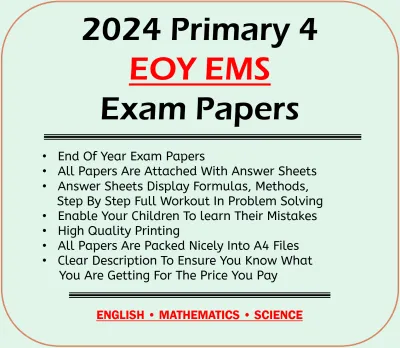

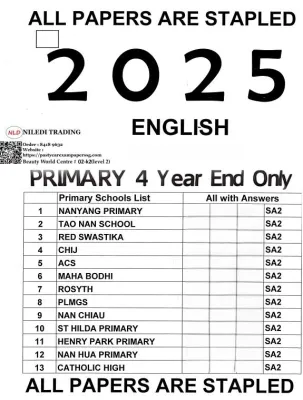
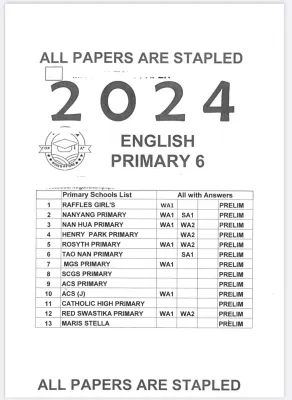
Prices are valid at publication and may change. Please refer to the product page for the latest price.
Consulting your child’s school teacher offers invaluable professional insight into their classroom performance. Teachers observe how students interact with new mathematical concepts in real-time and can identify specific conceptual gaps that might not be obvious at home. Ask the teacher about your child’s participation during lessons, their ability to grasp new heuristics, and how they handle peer-level tasks. This feedback ensures that the practice materials you purchase address the exact areas where your child needs support, aligning home study with classroom instruction.
Selecting Papers for Foundational Reinforcement
For students who struggle to keep up with the standard curriculum, the primary goal of practice papers is to rebuild confidence and secure core conceptual mastery. When browsing assessment books, look for resources that feature comprehensive, step-by-step worked examples at the beginning of each chapter. These examples serve as a visual guide, demonstrating the logical progression of solving a problem before the student attempts it independently. Clear formula summaries, visual aids like bar models, and highlighted key terms help demystify abstract mathematical concepts, making the learning process less intimidating.

Topical drills and bite-sized exercises are far more beneficial for struggling learners than full-length, exam-style papers. Attempting a complete exam paper too early can lead to cognitive overload and severe frustration, which damages a child’s motivation. Instead, prioritize books that break down topics into small, manageable sub-sections. For instance, a chapter on fractions should be split into identifying equivalent fractions, adding fractions, and subtracting fractions. Mastering these micro-skills individually allows the student to build a solid foundation before attempting to integrate them into complex, multi-step problems.
The physical layout and presentation of the practice material play a significant role in reducing visual clutter and anxiety. Children who struggle with mathematics are often overwhelmed by dense pages packed with small text and minimal white space. Look for books printed in larger, clear fonts with generous spacing between questions. There should be ample blank space on the page for the child to draw models, write out workings, and make corrections comfortably. A clean, uncluttered layout helps students focus on one problem at a time, reducing cognitive fatigue and making the practice sessions feel much more achievable.
Selecting Papers for On-Level Practice
Students who have a decent grasp of basic concepts but need to build consistency, speed, and exam stamina require on-level practice papers. These materials should closely mirror the actual format, question distribution, and difficulty level of standard school examinations. A typical P4 mathematics paper consists of multiple-choice questions (MCQs), short-answer questions, and structured word problems. Practicing with papers that replicate this exact structure helps students become familiar with the flow of the exam, reducing anxiety when they sit for actual school assessments.
A balanced on-level practice book must include a healthy mix of routine calculation questions and standard heuristic word problems. Routine questions reinforce procedural fluency, ensuring that basic operations like long division, multiplication, and fraction conversions become second nature. At the same time, standard heuristic problems—such as those involving model drawing, working backwards, or finding patterns—must be introduced systematically. This balanced approach ensures comprehensive coverage of the Ministry of Education syllabus, preparing students to tackle both straightforward and moderately challenging questions with equal competence.
To transition from casual homework to exam readiness, students must practice under simulated test conditions. Using timed, full-length practice papers is an excellent way to build exam stamina and teach effective time management. Primary 4 students often struggle to pace themselves, spending too much time on difficult questions and leaving easier ones unanswered. Setting a timer for a practice paper helps them learn when to move on from a stubborn problem and how to allocate time for checking their work. Regular exam simulations build the mental endurance required to stay focused throughout the duration of a real test.
Selecting Papers for Advanced Challenge
High-achieving students who consistently score well on standard school assessments need materials that stretch their cognitive abilities and prevent boredom. For these learners, standard topical drills are of limited value. Instead, seek out practice papers that focus on non-routine, higher-order thinking, and multi-step heuristic problems. These questions require students to apply mathematical concepts creatively, often combining multiple topics—such as geometry and fractions—within a single problem. Solving these challenges encourages deep analytical thinking and prepares students for the rigorous demands of upper primary mathematics.
When searching for these materials, check if the publisher explicitly labels the series with terms like “advanced,” “challenging,” “heuristics,” or “olympiad-style.” These labels help set appropriate expectations for both you and your child, signaling that the questions will require significant effort and unconventional problem-solving strategies. Olympiad-style books, in particular, introduce mathematical logic and spatial reasoning concepts that go beyond the standard school syllabus, offering an exciting intellectual outlet for students with a strong passion for mathematics.
While challenging materials are excellent for growth, the difficulty progression within the book must remain gradual and logical. Avoid books that jump abruptly from basic calculations to extremely complex problems without intermediate steps. A well-designed advanced practice book should guide the student through a progressive learning curve, starting with moderately challenging application questions before introducing highly complex, non-routine problems. This structured progression ensures that high achievers are stretched intellectually without experiencing sudden burnout or unnecessary frustration.
Essential Checks Before Purchasing Any P4 Maths Paper
Before finalizing your purchase of any P4 mathematics practice papers, several critical checks must be performed to ensure the materials are suitable and effective. First and foremost, verify that the publication year and edition align with the latest Ministry of Education (MOE) syllabus updates. The mathematics curriculum undergoes periodic reviews to refine learning outcomes and adjust topic scopes. Using outdated assessment books can result in your child practicing topics that have been removed, or missing out on new question formats and heuristic methods currently emphasized in schools.
Another vital component of a high-quality practice paper is the inclusion of a comprehensive answer key. Avoid books that only provide final numerical answers, as these offer little educational value when a child gets a question wrong. A proper answer key must feature detailed, step-by-step workings, including model diagrams, algebraic steps, or logical explanations for every problem. This level of detail allows parents to understand the underlying methodology and explain it clearly to their child, and it enables independent learners to self-correct and learn from their mistakes effectively.
Finally, do not overlook the physical format, paper quality, and binding of the book. Primary school students often write with significant pressure, erase frequently, and need to flip back and forth between question pages and working spaces. Books with thin, low-quality paper tear easily under heavy erasing, and tight bindings can make it difficult for the book to lie flat on a desk, causing physical discomfort during long writing sessions. Opt for books with sturdy paper and lay-flat or spiral binding, which provide a comfortable, durable, and hassle-free writing experience throughout the academic year.
Frequently Asked Questions (FAQ)
How many practice papers should a Primary 4 student do per week?
A balanced approach to practice is far more effective than overloading a student with multiple papers. For daily practice, focus on short, topical drills lasting fifteen to twenty minutes to reinforce classroom learning. Full-length, timed practice papers should generally be limited to one per week, or even one every two weeks, depending on the school calendar. The quality of the review process is significantly more important than the sheer volume of completed papers. Spending time analyzing mistakes, understanding where the logic failed, and re-attempting incorrect questions yields much better academic results than rushing through multiple papers without reflection.
Should parents buy school-specific prelim papers or general assessment books?
Both types of materials serve distinct and valuable purposes at different stages of the academic year. General assessment books are ideal for year-round learning, as they offer structured topical mastery, clear explanations, and progressive difficulty levels that align with daily school lessons. School-specific prelim papers, which are compilations of actual exam papers from various primary schools, are best reserved for the weeks leading up to major examinations. These papers provide realistic exam simulation, expose students to different school phrasing styles, and help them adapt to the varying difficulty levels set by different academic departments.
What should I do if my child consistently scores poorly on the practice papers?
If your child is consistently scoring poorly, it is a clear sign that the current practice materials are not aligned with their readiness level. Immediately pause timed exam practice, as continued failure under pressure will only damage their confidence. Shift the focus to untimed, conceptual reviews of the incorrect answers, working through the problems together slowly. If the struggle persists across multiple topics, step down to a more foundational assessment book that focuses on basic concepts and simple calculations. If core mathematical concepts remain misunderstood despite these adjustments, consider seeking targeted tutoring or consulting their school teacher for additional support.
Community discussion
Share your experience or ask a question. Comments are reviewed before publication.