
Secondary 3 is a pivotal year in the Singapore secondary education system. It marks the transition to upper secondary, where students face a significant jump in academic rigor, specialized subject combinations, and the beginning of intensive preparation for national examinations. To study effectively without drowning in a sea of separate assessment books, many parents and students look for a comprehensive sec 3 exam paper bundle. These multi-subject sets compile past-year papers from various schools, offering a realistic preview of exam formats, question types, and grading standards.
Finding a bundle that covers all major subjects—including Mathematics, Sciences, English, and Humanities—requires careful evaluation. Rather than purchasing individual subject booklets that clutter the study desk and increase overall costs, a well-chosen exam paper bundle streamlines revision by consolidating resources into a structured format. This guide will help you understand how to select the right multi-subject bundles, verify their alignment with the current Ministry of Education (MOE) syllabus, and use them to maximize academic performance.
Why Multi-Subject Bundles Streamline Sec 3 Revision
Entering Secondary 3 introduces students to a vastly different academic landscape compared to lower secondary. The curriculum expands to include complex, specialized subjects such as Additional Mathematics, Pure Sciences, and elective Humanities. This sudden increase in both the volume of content and the depth of conceptual understanding can easily overwhelm students. Managing multiple separate subjects requires a highly organized revision strategy, which is where multi-subject bundles play a crucial role.
Products mentioned in this guide
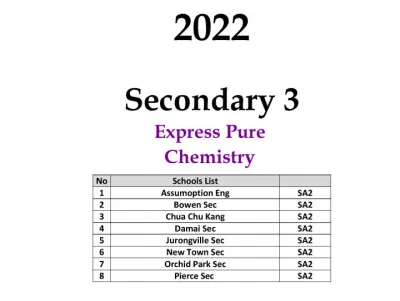
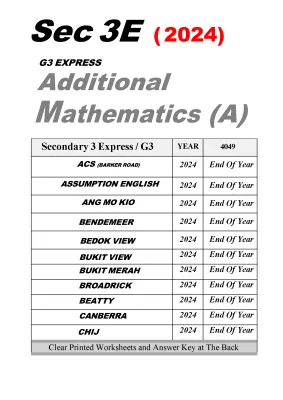
Prices are valid at publication and may change. Please refer to the product page for the latest price.
One of the most immediate benefits of choosing a multi-subject exam paper bundle is the practical convenience and cost-efficiency it offers. Purchasing individual topically-segregated assessment books or single-subject past-year papers from local bookstores can quickly become expensive. It also requires parents to spend considerable time researching and sourcing individual titles for every subject. A bundled set consolidates these essential resources into a single package, often at a lower cumulative price point than buying each component separately.
Furthermore, comprehensive bundles encourage a more balanced and disciplined revision schedule. When students purchase study materials individually, they often succumb to the temptation of buying books only for their favorite or strongest subjects. This tendency can lead to a dangerous imbalance, where weaker subjects are neglected until the weeks leading up to the final examinations. Having a unified multi-subject bundle on hand ensures that practice papers for every subject are readily accessible, prompting students to allocate their study time more equitably across their entire subject combination.
Additionally, having all subjects compiled in one place helps students develop a holistic view of their exam preparation. They can easily transition from a Mathematics practice session to an English comprehension paper, mimicking the actual schedule of a school exam week. This structural consistency builds familiar routines, reduces exam-related anxiety, and helps students view their academic workload as a manageable, unified challenge rather than a series of disconnected hurdles.
What to Expect: Core Subjects in Comprehensive Sets
When shopping for a comprehensive sec 3 exam paper bundle, it is important to understand what “comprehensive” actually means in the Singapore educational publishing market. Because students take highly customized subject combinations in upper secondary, no single bundle can perfectly match every student’s specific subject list. Instead, publishers typically group core subjects into logical compilations or offer modular bundles that allow you to build a complete set. Understanding these groupings is key to ensuring you do not buy redundant materials or miss critical subjects.

Mathematics and Science Compilations
Mathematics and Science form the backbone of most upper secondary subject combinations, and they are almost always the central focus of multi-subject bundles. In these compilations, Mathematics is typically split into Elementary Mathematics (E-Math) and Additional Mathematics (A-Math). Since A-Math involves highly specialized algebraic and trigonometric concepts, publishers usually offer bundles that either include both mathematics subjects or keep them clearly separated. Parents must verify whether the student is taking A-Math before purchasing a bundle that includes it, as the content is not applicable to students taking only E-Math.
Science subjects in these bundles are structured according to the student’s specific academic track. Bundles are generally categorized into Pure Sciences (comprising individual papers for Physics, Chemistry, and Biology) or Combined Sciences (such as Physics/Chemistry or Chemistry/Biology). Because the syllabus depth and exam formats differ significantly between Pure and Combined streams, choosing the wrong compilation will result in practice papers that are either too difficult or missing essential topics. Always check the exact combination listed on the bundle packaging to ensure it matches the student’s school curriculum.
English Language and Humanities Components
English Language papers are a standard inclusion in most comprehensive bundles, focusing heavily on the core components of the national examination format. These papers typically include Paper 1 (continuous writing and situational writing) and Paper 2 (comprehension and summary writing). Because language skills require continuous exposure to diverse texts and question styles, having a wide variety of English papers from different schools in a single bundle is highly beneficial for practicing time management and structural analysis.
Humanities subjects present a unique challenge for publishers because of the wide variety of elective combinations offered across different secondary schools. A student might take Social Studies combined with Geography, History, or Literature. Consequently, comprehensive bundles often treat Humanities as specialized add-ons or separate modular packs rather than including them in a generic all-in-one set. To complete your revision suite, you may need to purchase a core Math and Science bundle and supplement it with a specific Humanities pack that matches the student’s elective choices.
How to Evaluate and Choose the Right Sec 3 Exam Paper Bundle
Not all exam paper bundles are created equal, and selecting the wrong set can lead to wasted study time or, worse, preparing with outdated materials. To ensure you are investing in high-quality, relevant resources, you must evaluate several critical factors before making a purchase. Adhering to a strict checklist will help you identify the most effective bundles for the student’s specific learning goals.
Verifying Syllabus Alignment and Edition Year
The most critical step in evaluating any sec 3 exam paper bundle is verifying its alignment with the latest Ministry of Education (MOE) syllabus. The Singapore curriculum undergoes periodic updates to ensure relevance, which means exam formats, question structures, and even specific topics can change from year to year. Before purchasing, verify the edition details, publication year, content completeness, and authorized source of the publication. A bundle compiled several years ago may contain outdated question styles or topics that have since been removed from the syllabus, leading to unnecessary confusion during revision.
Additionally, you must verify the designated academic stream clearly marked on the cover of the bundle. In Singapore, secondary education is divided into distinct streams, such as Express, Normal (Academic), and Normal (Technical). Each stream follows a different syllabus with varying levels of difficulty and exam durations. Purchasing an Express stream bundle for a Normal (Academic) student, or vice versa, will result in practice papers that do not align with their school assessments. Never infer the exact contents or stream of an edition simply from the cover design or a generic title; always read the detailed publisher specifications and target stream details.
Assessing the Quality of Step-by-Step Solutions
A practice paper is only as valuable as the feedback it provides, making the quality of the answer key a decisive factor when choosing a bundle. Many lower-quality bundles only provide final answers (such as a single numerical value for a math problem or a brief sentence for a science question). For effective self-directed learning, look for bundles that offer comprehensive, step-by-step worked solutions. These solutions should clearly demonstrate the logical progression of formulas, intermediate calculations, and the specific keywords required to secure full marks in open-ended questions.
For English Language and Humanities subjects, where answers are subjective and essay-based, look for bundles that include detailed marking rubrics, examiner reports, or sample high-scoring essays. These resources help students understand how examiners award marks for structure, vocabulary, and critical analysis. Some premium bundles also highlight common student mistakes and misconceptions, which are incredibly valuable for preventing the student from repeating the same errors in their actual school examinations.
Common Formats of Sec 3 Exam Paper Collections in Singapore
Exam paper bundles are compiled in several distinct formats, each designed to support a different phase of the academic year. Understanding these formats allows you to match the purchase to the student’s current study needs, ensuring they are using the right tool at the right time.
Topical Compilations organize past-year exam questions by syllabus topics rather than presenting them as full, unbroken papers. This format is highly advantageous during the early to middle parts of the school year, as students are still learning new content and are not yet ready to sit for a full-length exam. If a student is struggling with a specific topic, such as quadratic equations in Mathematics or electrolysis in Chemistry, they can use a topical bundle to practice targeted questions on that exact area. This focused practice builds conceptual confidence before transitioning to comprehensive papers.
Yearly / Full Paper Compilations feature complete, unaltered exam papers from various Singapore secondary schools, presented exactly as they were administered. This format is ideal for mid-year and end-of-year exam preparation, typically starting a few months before the actual school assessments. Sitting for these full-length papers helps students build physical and mental stamina, practice realistic time management, and learn how to transition smoothly between different topics within a single exam session.
10-Year Series vs. Recent Papers represents a key choice in revision strategy. The traditional 10-Year Series compiles actual national examination papers over a decade, offering a broad historical overview of exam trends. However, for Secondary 3 students, bundles focusing on the last 2 to 3 years of school exam papers are often more useful. Recent school papers reflect the most current exam trends, higher-order thinking questions, and the exact difficulty levels set by top-performing local schools, making them highly relevant for immediate preparation.
Practical Strategies for Using Bundled Papers Effectively
Simply purchasing a high-quality exam paper bundle is not enough to guarantee academic success; students must use these resources strategically to see real improvement. Implementing structured study habits will ensure that the student gets the maximum educational return on your investment.
Simulate Realistic Exam Conditions To get the most out of yearly compilations, students should simulate realistic exam conditions at home. This means finding a quiet, distraction-free study space, removing all reference materials, and setting a strict timer that matches the duration specified on the paper. Simulating these conditions helps students overcome exam anxiety, teaches them how to pace themselves so they do not run out of time, and trains them to maintain focus for several hours.
Maintain an Active Error Log One of the most effective ways to use step-by-step solutions is to maintain an active “error log” or mistake journal. Every time a student completes a practice paper and grades their work, they should write down any incorrect answers in a dedicated notebook. Alongside the mistake, they should write out the correct step-by-step solution and note the specific conceptual error they made (such as a calculation mistake, a misunderstood formula, or a missing keyword). Reviewing this error log before the next practice session helps prevent recurring mistakes.
Pace Revision Throughout the Year Avoid the temptation to save the entire exam paper bundle for a frantic study session right before the final exams. Cramming dozens of papers in a few weeks leads to cognitive fatigue and poor retention. Instead, pace the revision throughout the academic year. Use topical compilations weekly to reinforce what was taught in school, and gradually transition to full yearly papers over several weekends leading up to major examinations. This consistent, spaced repetition builds long-term memory and deep conceptual understanding.
Frequently Asked Questions (FAQ)
Do commercial bundles include actual school prelim papers?
Yes, most commercial exam paper bundles compile actual past-year examination papers, including mid-year, end-of-year, and preliminary papers from various Singapore secondary schools. Publishers obtain these papers and format them into clean, readable books with standardized typography and structured answer sheets. However, the specific schools included in any given bundle will vary depending on the publisher and the edition. Before purchasing, it is highly recommended to check the table of contents or the back cover to verify which schools are represented, especially if you are looking for papers from specific institutions.
Should I buy Express or Normal (Academic) bundles?
You should always purchase the exam paper bundle that exactly matches the student’s current enrolled academic stream. The Ministry of Education designs different syllabi for the Express and Normal (Academic) tracks, meaning the topics covered, the depth of the concepts, and the structure of the exam papers are significantly different. Purchasing a bundle from a different stream will result in practice questions that are either irrelevant to the student’s upcoming school assessments or mismatch the difficulty level they are expected to master. Always verify the stream printed on the cover before finalizing your purchase.
Community discussion
Share your experience or ask a question. Comments are reviewed before publication.