
A reliable table music stand transforms any flat desk into a functional practice space, keeping your sheet music at a readable viewing angle while freeing up valuable desk surface. Choosing the right stand requires balancing stability, page capacity, and the physical constraints of your workspace. Whether you are practicing violin, keyboard, or flute at your desk, a suitable stand must remain steady under the weight of your music without sliding or tipping.
In compact living environments, such as apartments in Singapore, dedicated music rooms are rare. Musicians often practice at their study desks, computer tables, or even dining tables. A table music stand is a specialized accessory designed to bring the utility of a full-sized music stand to these flat surfaces. By understanding the key design elements, you can select a stand that supports your practice habits and protects your sheet music.
Key Features for Stability and Readability
The design of a table music stand directly impacts how easily you can read your music and how secure your scores remain during a practice session. When evaluating different models, three primary features deserve close attention: the panel design, the angle adjustment mechanism, and the page retention methods.
Products mentioned in this guide
![[SG FREE ] Portable Tabletop Music Stand Sheet Book Holder Black For Tablet Reading Piano](https://img.lazcdn.com/g/p/a186ad87cd4f6e12af6b0d1e6a098eeb.jpg_400x400q80.jpg_.webp)

Prices are valid at publication and may change. Please refer to the product page for the latest price.
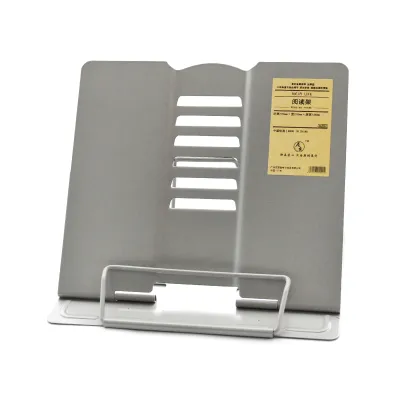
Panel designs generally fall into two categories: wireframe and solid board. Wireframe panels are constructed from thin metal rods welded together. While they are exceptionally lightweight and highly portable, they offer minimal support for single sheets of paper or thin manuscript books. If you try to use loose-leaf paper on a wireframe stand, the pages will bend backward through the gaps, making them difficult to read. Solid board panels, made of wood, heavy-duty plastic, or aluminum, provide continuous support across the entire back of the page. This solid backing prevents paper from sagging and offers a firm surface for writing annotations, such as fingerings or bowings, directly onto your score during practice.
The mechanism used to adjust the viewing angle is critical for maintaining ergonomic posture. Friction hinges rely on tight tolerances and material resistance to hold the panel in place. They allow for infinite, smooth adjustments, letting you dial in the exact angle to avoid glare from overhead lights. However, friction hinges can wear down over time and may sag under the weight of heavy binders. Ratchet joints use interlocking teeth secured by a tightening knob. This design offers positive locking that cannot slip, even under heavy loads, though it limits you to preset angle increments. For musicians who frequently use heavy anthologies, a ratchet joint provides reliable long-term support.
Page retention is another vital consideration, especially when dealing with bound books that tend to spring shut. Many stands feature built-in spring-loaded page arms, often called page fingers, which press against the bottom of the pages to keep them open. When choosing a stand with these clips, look for rubberized or plastic-coated tips to prevent them from tearing or marking your music. Other designs utilize sliding page holders that extend horizontally from the sides of the panel, providing extra support for wide, multi-page sheets. If your preferred stand lacks built-in clips, you may need to rely on external accessories like clear acrylic music clips or weighted page bands to keep your music flat.
Comparing Common Types of Desktop Music Stands
Selecting the right type of table music stand depends heavily on the format of your sheet music and your practice habits. The three most common categories of desktop stands each offer distinct advantages and trade-offs.

Foldable wire stands are the classic choice for musicians on the go. These stands fold down into a compact, baton-like shape that easily fits into a gig bag or backpack. They are ideal for students who travel to lessons or musicians who need to quickly clear their desk after a practice session. However, their lightweight construction limits their stability. When loaded with a heavy, thick music book or a large three-ring binder, foldable wire stands have a high center of gravity and are prone to tipping backward or collapsing. They are most suitable for single sheets, light booklets, or digital tablets in lightweight cases.
Solid panel desktop stands are the workhorses of home practice. Featuring a solid wood, plastic, or metal backing plate, these stands are paired with a heavy, flat metal base or a sturdy easel-style rear support. Because the base is weighted, these stands can easily support heavy anthologies, thick hymnals, and large digital tablets without any risk of tipping. The solid backing also makes it easy to write notes on your music. The primary trade-off is portability; solid panel stands are bulky, do not fold down completely flat, and are heavier to transport, making them most suitable for permanent or semi-permanent desk setups.
Heavy-duty desk mounts with extension arms offer a modern solution for musicians who use their computer desks for practice. These stands feature an articulated arm that clamps directly to the edge of your desk, similar to a computer monitor mount. This design completely frees up your desk surface, allowing you to place a keyboard, synthesizer, or notebook directly beneath your music. The articulated arm offers highly versatile adjustability, letting you pull the music close to your face, push it back, or adjust the height dynamically to match your playing posture. While highly stable and versatile, these mounts are permanent fixtures and cannot be easily moved to another room or packed into a gig bag.
| Stand Type | Recommended Use Case | Weight Capacity Considerations | Desk Footprint |
|---|---|---|---|
| Foldable Wire | Portable practice, travel, single sheets, light booklets | Low; prone to bending or tipping under heavy books | Small, adjustable tripod or wire easel base |
| Solid Panel | Heavy anthologies, binders, digital tablets, writing notes | High; rigid backing supports heavy loads securely | Medium to large flat base or wide easel back |
| Desk Mount / Clamp | Multi-page spreads, permanent desk setups, saving space | Very high; limited only by desk clamp strength | Zero surface footprint; requires edge space |
Matching the Stand to Your Desk Setup
Your physical desk environment and your instrument play a significant role in determining which table music stand is right for you. Before making a decision, consider how the stand will interact with your desk space, your posture, and your other practice accessories.
The base footprint of the stand determines how much desk space you will lose. Tripod-style table bases have three legs that spread outward to create stability. While effective, they occupy a large triangular area on your desk, making it difficult to place other items nearby. Flat, weighted bases have a much smaller footprint, allowing you to slide a computer keyboard or notebook right up to the edge of the stand. Easel-style backs rely on a rear leg that extends backward; this requires sufficient depth behind the stand, which might not be available if your desk is pushed flush against a wall.
Height limitations are a common issue with table music stands compared to traditional floor stands. When practicing an instrument, maintaining proper posture is critical to prevent neck and shoulder strain. If your music stand sits too low on your desk, you will constantly bend your neck downward to read the music. This is especially problematic for instruments like the flute or violin, where the instrument itself can block your downward line of sight. To prevent neck strain, look for table stands with telescoping vertical shafts that allow you to raise the panel several inches above the desk surface. Alternatively, you can place a flat-based stand on top of a sturdy monitor riser to achieve the correct eye-level alignment.
Your practice sessions likely involve more than just sheet music. You may need to accommodate secondary devices like metronomes, tuners, smartphones, or tablets on the same surface. If your music stand has a narrow shelf, these accessories will crowd your music or fall off. Look for stands with a deep shelf (at least 2 inches or 5 centimeters) or those that feature built-in accessory trays. If space is tight, you can use clip-on accessory shelves that attach to the vertical shaft of the stand, keeping your essential tools organized and off your main desk surface.
What to Verify Before You Buy
To avoid compatibility issues and ensure a smooth practice experience, it is essential to verify several product specifications before completing your purchase. Taking a few minutes to measure your gear can prevent the hassle of returning an unsuitable stand.
First, check the maximum panel width and weight limits against the dimensions of your heaviest score books. Measure your largest music books when they are fully open, noting their height, width, and thickness. Ensure the stand’s shelf depth is wide enough to accommodate the thickness of your thickest binder. If the panel is too narrow, the outer pages of a wide book will droop over the sides, making them difficult to read and prone to damage. Also, verify the manufacturer’s specified weight capacity, especially if you plan to use a heavy tablet or a thick binder.
Second, verify the materials used on the base of the stand. A sliding music stand is incredibly frustrating during practice, as every page turn or pencil mark can cause the stand to shift. Look for stands equipped with non-slip materials, such as silicone pads or rubber feet, on the bottom of the base. These pads not only prevent the stand from sliding but also act as a protective buffer, preventing metal or hard plastic bases from scratching delicate wooden or glass desk surfaces.
Finally, review the manufacturer’s specifications regarding joint durability and folding mechanisms. Examine the construction of the adjustment joints; metal-to-metal connections offer far greater durability than plastic adjustment knobs with plastic threads, which are prone to stripping over time if tightened frequently. If you plan to fold and unfold the stand daily for travel, look for robust hinges and locking mechanisms that can withstand repetitive use. Checking the manufacturer’s warranty coverage can also provide insight into the expected lifespan and build quality of the stand.
Frequently Asked Questions (FAQ)
Can I place a floor music stand on a table?
Placing a standard floor music stand on a table is highly discouraged due to safety and stability risks. Floor stands are designed with a high center of gravity and a wide tripod base intended to sit on the floor. When placed on a table, the wide legs occupy an excessive amount of desk space, and the stand becomes highly top-heavy, making it prone to tipping over and damaging your instrument or desk. If you need a stand that can transition between floor and table use, look for a specifically designed convertible stand that features a detachable panel and a separate, weighted desktop base.
How do I keep loose sheet music from sliding off a wire stand?
Loose sheet music frequently slides or sags on wireframe stands due to the gaps in the design. To secure single pages, you can use built-in sliding page clips if your stand has them, or attach standard office binder clips to the top or sides of the wire frame. Another highly effective solution is to place a sturdy piece of cardboard or a plastic clipboard on the wire stand first, creating a temporary solid backing for your loose sheets. If you find yourself constantly dealing with loose pages, upgrading to a solid panel stand will provide a much more stable and frustration-free practice experience.
Community discussion
Share your experience or ask a question. Comments are reviewed before publication.