
A reliable guitar wireless system for beginners must offer a stable signal, low latency, and straightforward operation without requiring complex frequency coordination. For most players starting out, a compact plug-and-play digital system operating on the 2.4 GHz or 5.8 GHz frequency band provides the ideal balance of convenience and affordability. These systems eliminate the clutter of traditional instrument cables, allowing you to practice and perform with greater physical freedom.
However, choosing the right system involves understanding your specific playing environment, your instrument’s hardware, and the technical limitations of wireless transmission. While high-end professional touring rigs can cost hundreds of S$, modern entry-level digital systems offer impressive performance for home practice, rehearsals, and small local gigs. By focusing on key specifications like latency, battery life, and physical plug compatibility, you can find a reliable setup that fits your budget and enhances your playing experience.
Do You Need a Wireless Guitar System Right Now?
Before investing in a wireless setup, it is essential to evaluate whether this upgrade aligns with your current playing habits and budget. For many beginners, the primary motivation for going wireless is the desire to move freely without tripping over cables. If you frequently practice standing up, participate in high-energy band rehearsals, or perform on small local stages, a wireless system can significantly improve your comfort and stage presence.
Products mentioned in this guide
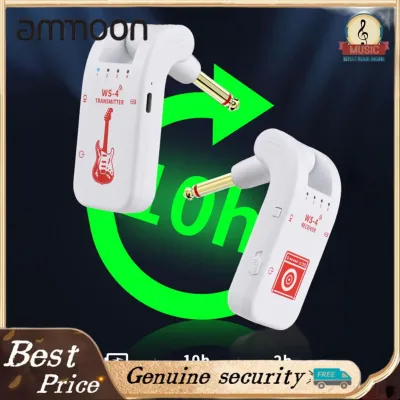
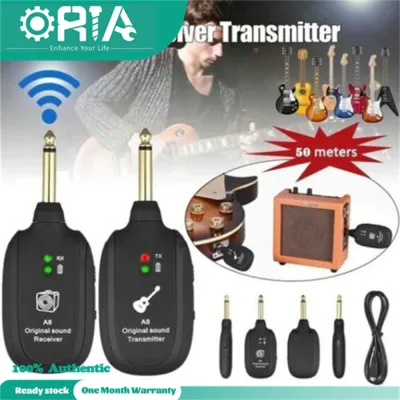
![[Upgraded] ORIA Wireless Guitar System A9 Electric Guitar Receiver and Transmitter With Rechargeable Battery 280°Rotatable Plug for Guitar Keyboard Mixer Violin Drum](https://img.lazcdn.com/g/p/99a7a9cddf3beb385fae23fe83d9408c.png_400x400q80.png_.webp)
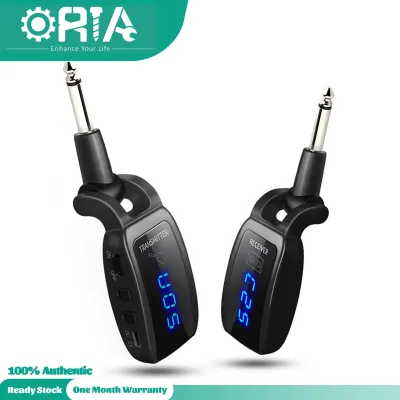
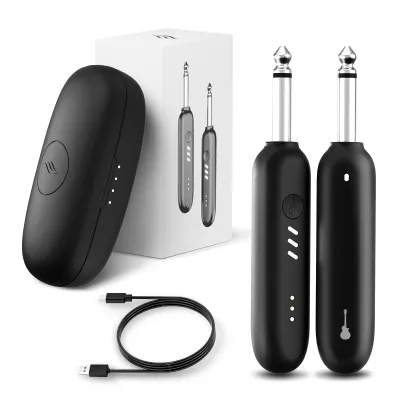
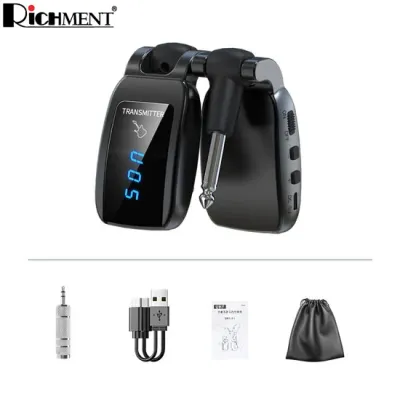
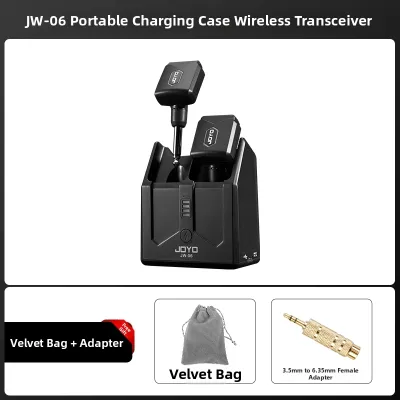
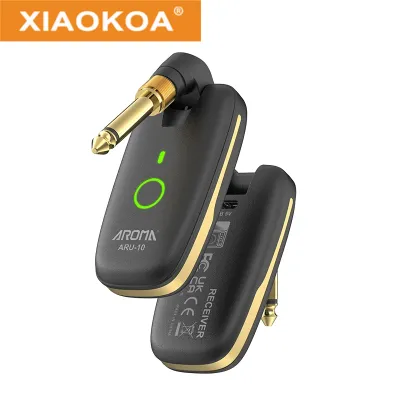
Prices are valid at publication and may change. Please refer to the product page for the latest price.
However, traditional instrument cables remain the gold standard for reliability and simplicity. A high-quality copper cable requires no batteries, is immune to radio frequency interference, and offers zero latency at a fraction of the cost of a wireless system. If you primarily practice sitting down in a bedroom or have a highly restricted budget, dedicating your funds to a better amplifier, effects pedals, or guitar maintenance might yield a more noticeable improvement in your overall sound and playing experience.
Wireless systems also introduce new responsibilities to your routine, most notably battery management. Unlike a passive cable, a wireless transmitter and receiver must be charged regularly to prevent them from dying mid-session. If you are prone to forgetting to charge your devices, you may find yourself tethered to a cable anyway while your wireless units sit on the charger.
For those who decide to make the transition, the benefits in rehearsal spaces and small venues are substantial. Eliminating cables from the floor reduces tripping hazards for you and your bandmates, making the stage safer and less cluttered. It also allows you to step out into the audience area during soundcheck to hear how your guitar actually sounds from the crowd’s perspective, which is an invaluable tool for dialing in your amplifier settings.
Essential Specs to Check Before Buying
When browsing digital wireless systems, the technical specifications can quickly become overwhelming. Understanding a few core parameters will help you filter out unreliable options and select a system that performs consistently in your specific environment.

The first major decision point is the frequency band, typically divided between 2.4 GHz and 5.8 GHz. The 2.4 GHz band is highly common and used by home Wi-Fi routers, Bluetooth devices, microwaves, and smart home accessories. Because this band is crowded, a 2.4 GHz wireless guitar system may experience occasional signal drops or interference in environments with heavy wireless traffic, such as a busy household or a crowded venue. In contrast, the 5.8 GHz band is generally less congested, offering a clearer path for your guitar signal, though it has a slightly shorter physical range and less ability to penetrate solid walls.
Latency is another critical specification that directly impacts your playing experience. Latency refers to the tiny delay between the moment you strike a guitar string and the moment you hear the sound emerge from your amplifier. This delay is measured in milliseconds (ms). For a natural playing feel, look for systems with a latency of less than 5 ms. While professional ears might detect subtle differences, most beginner players will find any latency under 6 ms to be virtually imperceptible, whereas latency exceeding 10 ms can create a distracting disconnect between your hands and your ears.
Battery life and charging convenience are vital for uninterrupted playing sessions. Most modern entry-level systems feature built-in rechargeable lithium-ion batteries that charge via standard USB connections. Look for a system that offers at least four to six hours of continuous operation on a single charge. Some systems utilize dual-ended USB charging cables, allowing you to charge both the transmitter and receiver simultaneously from a single USB port, which is highly convenient for quick turnarounds between sessions.
Finally, pay close attention to the physical plug orientation and how it matches your guitar’s output jack. Guitars feature various jack designs, such as the recessed, angled jack plate of a Stratocaster, the surface-mounted jack of a Les Paul, or the edge-mounted jack of many acoustic-electric guitars. Some wireless transmitters feature a fixed, straight plug that may stick out awkwardly or fail to insert fully into recessed jacks. Look for transmitters with adjustable, swiveling plugs that can fold flat against the guitar body, ensuring a secure fit and reducing the risk of accidental damage if you bump into an obstacle.
Recommended System Profiles for Beginner Setups
To help you navigate the market, we can categorize beginner-friendly wireless systems into three distinct profiles based on their design, intended use, and budget.
The first profile is the Budget-Friendly Plug-and-Play system. These systems consist of two small, matching dongles: one transmitter that plugs into your guitar and one receiver that plugs directly into your amplifier or first pedal. Operating primarily on the 2.4 GHz band, these systems are incredibly compact and feature automatic pairing, making them ideal for casual home jamming, bedroom practice, and small, informal rehearsals. They are highly affordable, but they may struggle with interference if your practice space is located right next to a powerful home Wi-Fi router.
The second profile is the Step-Up Digital System. These units often operate on the 5.8 GHz band or utilize more advanced digital transmission protocols on the 2.4 GHz band. They typically offer extended range, better dynamic range, and multiple selectable channels to help you find a clear frequency. This profile is highly suited for players who are starting to gig locally, join bands, or practice in environments with high wireless congestion. While slightly more expensive than basic plug-and-play models, they provide a more robust connection and better audio fidelity.
The third profile is the Pedalboard-Friendly Transmitter. Unlike dongle-style receivers that plug directly into an amplifier jack, these systems feature a receiver designed to sit securely on your pedalboard, often styled like a standard effects pedal. The receiver is powered by your pedalboard’s power supply, while the transmitter remains a compact unit plugged into your guitar. This design is excellent for players who already have a growing collection of effects pedals, as it integrates cleanly into the signal chain and allows you to use standard patch cables to connect the receiver to your tuner or overdrive pedals.
Before making a final purchase, always verify the current local availability, warranty terms, and exact pricing on authorized music retail platforms in Singapore. Purchasing from authorized local dealers ensures you receive a genuine product compliant with local radio frequency regulations, along with reliable customer support should you encounter any technical issues.
How to Set Up and Avoid Common Signal Issues
Setting up a wireless guitar system is generally straightforward, but following a consistent routine can prevent unexpected signal drops, interference, and loud noises that could damage your equipment or hearing.
Always begin by turning down the volume on your amplifier or audio interface before powering on your wireless units. Once the volume is muted, plug the transmitter into your guitar and the receiver into your amplifier or pedalboard. Turn on the receiver first, followed by the transmitter. Most modern systems will automatically pair within a few seconds, often indicated by a solid LED light on both units. Once the connection is confirmed, slowly raise the volume on your amplifier to your desired playing level. This sequence prevents loud pops or signal spikes from traveling through your speakers.
To minimize interference from other wireless devices, try to maintain a clear line of sight between your guitar’s transmitter and the receiver. Physical obstacles like concrete walls, metal stands, and even other people can weaken the signal. If you are using a 2.4 GHz system at home, position your amplifier and wireless receiver at least a few meters away from your Wi-Fi router and avoid placing active smartphones directly next to the receiver. If your system allows for manual channel selection, cycle through the available channels to find the one with the cleanest signal.
Proper maintenance is key to ensuring the longevity of your wireless system. Avoid leaving your transmitter and receiver plugged into your instruments or chargers indefinitely, as this can degrade the internal lithium-ion batteries over time. Store the units in a cool, dry place away from direct sunlight, and periodically clean the metal jacks with a dry microfiber cloth to prevent dust buildup. If the manufacturer offers firmware updates, check their official website periodically to ensure your system is running the latest software, which can often resolve minor connectivity bugs and improve battery efficiency.
Frequently Asked Questions (FAQ)
Will a wireless system work with my active pickups?
Active pickups and onboard preamps require an internal battery to power their electronics, which can sometimes create compatibility issues with certain wireless transmitters. Some transmitters use a TRS (tip-ring-sleeve) plug design that can accidentally short out the battery switching mechanism inside an active guitar’s output jack, resulting in no sound or a high-pitched whine. Additionally, active pickups output a much stronger signal than passive pickups, which can overload the input stage of a budget transmitter and cause digital clipping. Before purchasing, check the manufacturer’s specifications to ensure the transmitter is compatible with active electronics and offers sufficient headroom to handle high-output signals.
Can I use multiple wireless systems on the same stage?
Yes, you can use multiple wireless systems simultaneously, but it requires careful coordination to avoid signal crossover and interference. If you and your bandmates are using wireless systems, ensure that each unit is set to a different channel. Budget systems with fixed, single-channel designs cannot be used together if they operate on the exact same frequency. For band environments, look for systems that offer multiple selectable channels or feature automatic frequency management, which scans the environment and automatically assigns each transmitter-receiver pair to an open, interference-free channel.
Does going wireless change my guitar tone?
Modern digital wireless systems are highly transparent and generally do not cause noticeable tone degradation for practice and small gigs. Unlike older analog wireless systems that relied on companding (compressing and expanding the audio signal), digital systems convert your guitar’s analog signal into digital data, transmit it, and convert it back to analog at the receiver. This process preserves the full frequency response of your instrument. While extremely high-end systems offer pristine audio fidelity, modern budget digital systems are more than adequate for most players, offering a clean, uncolored sound that closely mimics a high-quality physical cable.
Community discussion
Share your experience or ask a question. Comments are reviewed before publication.