
Selecting the right psle past year paper bundle is a pivotal decision in your child’s primary school journey, as the ideal choice depends directly on their current revision level and target academic goals. Rather than purchasing every available compilation, the most effective approach matches the format of the preparation material to your child’s specific learning needs. For a student working to secure foundational concepts, topical booklets that break down questions by theme prevent discouragement and build core confidence. Conversely, for high-achieving students aiming to refine their exam stamina and master complex problem-solving, full yearly papers and challenging school preliminary compilations offer the necessary rigor.
Navigating the transition to the PSLE requires a clear understanding of your child’s academic profile. By aligning their practice materials with their actual performance on school weighted assessments, you can target specific weak areas without causing unnecessary academic fatigue. This guide outlines how to evaluate your child’s current revision stage, details the differences between the various paper bundles available in Singapore, and provides a structured framework to help you select the most effective prep resources.
How to Assess Your Child's Revision Level Before Buying
Before purchasing any exam preparation materials, you must establish an accurate baseline of your child’s current academic standing. Relying on gut feel or general exam anxiety often leads to buying bundles that are either too advanced, which crushes motivation, or too simple, which fails to stretch their capabilities. The primary tool for this evaluation is your child’s recent weighted assessments (WAs) and mid-year examination results, which map directly to the Ministry of Education (MOE) Achievement Level (AL) scoring system.
Products mentioned in this guide
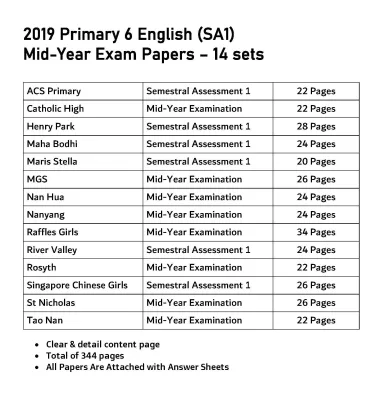
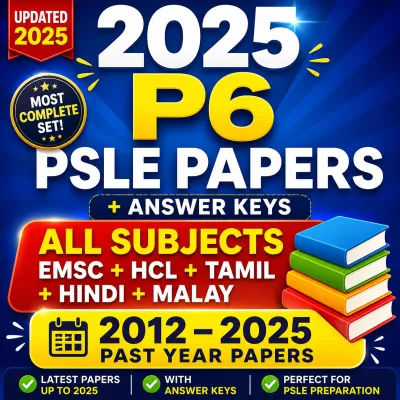
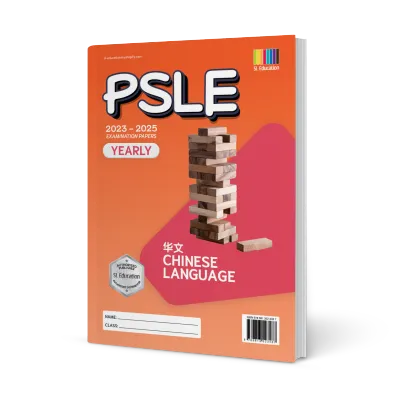
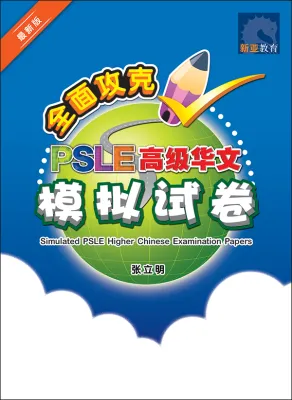
Prices are valid at publication and may change. Please refer to the product page for the latest price.
To structure your assessment, classify your child’s current performance into one of three primary academic bands. Students scoring in the AL 1 to AL 3 range (typically 85% and above) have a strong grasp of core concepts and require materials that challenge their higher-order thinking and application skills. Those in the AL 4 to AL 6 band (approximately 45% to 84%) generally understand the basic syllabus but struggle with consistency, complex multi-step problems, or specific subject components. Students taking Foundation subjects or scoring in the AL 7 to AL 8 range need to focus strictly on fundamental concepts, vocabulary, and basic procedural steps before attempting full-length papers.
Once you have identified the appropriate AL band, analyze the specific nature of your child’s mistakes across different subjects. Review their past exam scripts to distinguish between three common types of errors: careless mistakes, time-management issues, and fundamental conceptual gaps. For instance, if a student consistently leaves the final questions of Math Paper 2 blank, the issue is likely time management or exam stamina rather than a complete lack of mathematical knowledge. On the other hand, if a student repeatedly fails to secure marks in Science open-ended questions despite writing lengthy answers, they likely suffer from a conceptual gap or a failure to use specific scientific keywords.
While analyzing test scripts provides valuable data, consulting your child’s school teachers is an indispensable step before finalizing any purchase. Teachers observe your child’s daily learning habits, classroom participation, and resilience under pressure, offering an objective perspective that test scores alone cannot convey. Ask the teacher if your child struggles more with foundational understanding or exam-day anxiety, and seek their advice on whether a topical or a yearly revision strategy would be more beneficial at their current stage.
Finally, use this collective information to set realistic, incremental revision goals that keep your child motivated. If your child is currently scoring at an AL 5 level, aiming immediately for AL 1 by assigning highly difficult top-school preliminary papers will likely lead to frustration and burnout. Instead, set a realistic target of reaching AL 4 by focusing on consistent topical revision to eliminate conceptual gaps, slowly introducing timed papers only as their confidence and accuracy improve.
Types of PSLE Past Year Paper Bundles Explained
Understanding the distinct formats of exam preparation bundles is essential for selecting the right resource. The market offers a wide variety of compilations, each designed to serve a different phase of the revision cycle. Broadly, these materials differ in terms of origin, organization, answer formatting, and medium of delivery, and choosing the wrong type can result in wasted study hours.

The first major distinction lies between actual PSLE past year papers and school preliminary papers. Actual PSLE papers, which are authorized compilations of past national examinations, are standardized, balanced, and carefully moderated by the Singapore Examinations and Assessment Board (SEAB) to test a fair representation of the syllabus. In contrast, preliminary papers are set by individual primary schools. These prelim papers are notorious for being significantly more challenging than the actual PSLE, often featuring complex, novel scenarios designed to prepare students for the absolute worst-case exam conditions.
The second distinction is how the questions are organized: yearly compilations versus topical or thematic bundles. Yearly compilations present the papers exactly as they were administered in previous national exams, complete with the original layout, question order, and time limits. These are ideal for the final months of preparation, helping students build exam stamina, practice pacing, and experience the transition between different topics under exam conditions. Topical or thematic bundles, however, group past questions by subject chapters (such as “Fractions” in Math or “Interactions” in Science), making them perfect for targeted revision when a student needs to master a specific concept before moving on.
The quality and format of the answer keys provided in a bundle are just as important as the questions themselves. Basic bundles may only offer a simple answer key containing final numerical values or short letters for multiple-choice questions, which does little to help a student who is stuck on a difficult problem. Premium bundles provide comprehensive, step-by-step written solutions, detailed marking schemes that highlight where method marks are awarded, and even access to video explanations where experienced tutors walk through the problem-solving process.
Lastly, parents must choose between physical book formats and digital downloadable bundles. Physical booklets replicate the tactile experience of the actual exam, allowing students to practice writing their answers within the designated spaces and handling physical question sheets. Digital bundles, often sold as downloadable PDFs, offer the advantage of being easily reprinted, allowing your child to attempt the same paper multiple times to track their progress. However, digital formats require access to a reliable printer and lack the authentic feel of a bound exam booklet unless printed and bound manually.
Which Bundle Fits Your Child's Academic Profile?
To maximize the effectiveness of your child’s revision, you must match the specific type of paper bundle to their academic profile. A mismatched prep resource can either lead to boredom from lack of challenge or severe anxiety from excessive difficulty. By tailoring the material to their current performance level, you can ensure that every practice session is highly productive.
For Foundation and Standard Level Students (AL 5 to Foundation)
For students working within the AL 5 to Foundation range, the primary objective is to build confidence, reinforce core competencies, and eliminate basic conceptual errors. At this stage, presenting a child with a full, timed yearly exam paper can be highly counterproductive, often leading to frustration and a refusal to study. Instead, focus almost exclusively on topical bundles that break down the syllabus into manageable, bite-sized chapters. This allows the student to master one concept, such as decimal operations or basic electrical circuits, before moving on to more complex topics.
If your child is officially registered for Foundation-level subjects, it is critical to purchase bundles specifically labeled for the Foundation syllabus. The Foundation Math and Science curricula feature simplified structures, fewer topics, and different question formats compared to the Standard curriculum. Attempting Standard-level papers will only confuse a Foundation student and waste valuable time on topics they are not required to know.
Furthermore, ensure that any bundle you select for this level includes highly detailed, step-by-step written solutions rather than just final answers. Independent learning is incredibly difficult for struggling students if they cannot trace the exact path to the correct answer. Look for publishers that explain the “why” behind each step in simple, accessible language, or opt for bundles that feature QR codes linking to short video explanations, which can act as a patient, on-demand tutor for your child.
For Advanced Students Aiming for AL1 to AL3
Students consistently scoring in the AL 1 to AL 3 range require a completely different revision strategy that stretches their analytical skills and refines their exam techniques. For these high achievers, topical revision of basic concepts is rarely a good use of time. Instead, their revision should center on full yearly actual PSLE papers and top-school preliminary paper bundles. These full-length papers challenge the student’s ability to transition rapidly between different topics and test their mental stamina over a sustained period.
To bridge the gap between a strong standard performance and a top distinction, look for specialized bundles that compile “higher-order” or “application-based” questions. These compilations isolate the most challenging questions from recent exams—such as non-routine heuristics in Math Paper 2 or experimental design questions in Science—allowing advanced students to practice handling novel scenarios that require deep critical thinking.
Additionally, advanced students must pay close attention to official marking schemes. At the AL 1 to AL 3 level, losing a single mark due to a missing unit, a poorly phrased scientific explanation, or an incomplete mathematical method can drop a student’s grade. Choose bundles that feature precise marking guidelines, showing exactly how examiners award method marks and where they penalize candidates for failing to use specific keywords or precise phrasing.
For Targeting Specific Subject Weaknesses
Even high-achieving students often have localized weaknesses in specific subjects or components. If your child is generally strong but struggles with a particular area, buying a complete set of full-subject yearly papers is highly inefficient. Instead, invest in thematic or skill-specific bundles designed to target these precise pain points.
For example, if your child consistently loses marks in Science Section B, look for a bundle dedicated entirely to “Science Open-Ended Questions” that teaches specific answering frameworks like the “Claim-Evidence-Reasoning” (CER) or “Cause-and-Effect” structures. For mathematical difficulties, choose bundles focused on “Math Heuristics and Problem Sums” to help them identify and apply specific problem-solving models. Similarly, for English, seek out targeted booklets for “Synthesis and Transformation” or “Comprehension Cloze.”
Once you have acquired these targeted bundles, integrate them systematically into your child’s weekly revision schedule alongside their regular school homework. Allocate short, focused sessions—such as 30 minutes of targeted heuristics practice twice a week—rather than overloading them with massive study blocks. This consistent, localized practice ensures that weak areas are systematically strengthened without disrupting their overall study balance or causing academic burnout.
What to Check Before Buying an Exam Prep Bundle
With numerous educational publishers and online sellers offering PSLE revision materials in Singapore, parents must be highly selective. Not all bundles are created equal, and purchasing a substandard or outdated product can actively harm your child’s preparation. Use the following practical checklist to verify the quality, accuracy, and suitability of any bundle before making a purchase.
- Syllabus Alignment: The absolute first priority is to verify that the bundle explicitly aligns with the latest Ministry of Education (MOE) syllabus. The Singapore primary school curriculum undergoes periodic reviews, which can lead to changes in topic coverage, scientific terminology, and exam formats. For instance, older Science papers might use outdated terms or include topics that have since been removed from the examinable syllabus. Check the publisher's cover notes or product description to confirm that the material is updated for the current year's examination guidelines.
- Print Quality and Layout: A good exam prep bundle should closely mimic the actual examination conditions, which includes the physical layout of the paper. Avoid bundles that cram multiple questions onto a single page with tiny fonts and minimal working space. The physical layout should provide clear, legible diagrams, readable font sizes to prevent eye strain, and generous blank spaces for students to write out their working steps. If you are purchasing a digital bundle, ensure that the formatting remains clean and properly scaled when printed on standard A4 paper.
- Media and Device Compatibility: If you choose a bundle that includes digital components, such as downloadable PDF files, online marking portals, or video solution access, verify the technical requirements beforehand. Ensure that the hosting platforms do not require specialized software, high-speed connections you do not have, or hidden, recurring subscription fees. The digital files should be easily viewable on standard home tablets or computers, and any accompanying videos should play smoothly without intrusive advertisements or complex login procedures.
- Publisher Reputation and Errata: Before buying, research the reputation of the educational publisher. Established publishers with a history of producing high-quality Singapore school materials are generally more reliable than self-published sellers on online marketplaces. Furthermore, check online parent forums, social media groups, or community reviews for any reported errata. Even minor typographical errors in a Math answer key or an incorrect scientific explanation can cause immense confusion, waste hours of revision time, and damage your child's confidence.
Frequently Asked Questions (FAQ)
Are school preliminary papers harder than the actual PSLE?
Yes, school preliminary exam papers are generally designed to be more difficult than the actual PSLE. Individual primary schools in Singapore set their own preliminary exams with the deliberate intention of preparing students for the most challenging scenarios they might face in the national exams. These papers often feature highly complex problem sums, intricate scientific experiments, and strict marking standards to build academic resilience and highlight any remaining conceptual gaps.
In contrast, the actual PSLE is set and moderated by SEAB and MOE to ensure a balanced, fair, and standardized assessment of the entire student cohort across Singapore. The national exam features a carefully calibrated distribution of easy, moderate, and challenging questions. Therefore, a lower score on a school preliminary paper does not automatically mean your child will perform poorly on the PSLE; instead, use the prelim results as a diagnostic tool to identify areas for final refinement.
Should my child start doing past year papers in Primary 5?
No, Primary 5 students should generally not attempt full, yearly past year PSLE papers. At the Primary 5 level, students have not yet covered several critical topics that are only taught in the Primary 6 curriculum, such as speed, algebra, and pie charts in Mathematics, or forces and energy in Science. Attempting a full national exam paper prematurely will lead to unnecessary confusion, frustration, and a loss of confidence, as they will encounter many questions they simply do not have the tools to solve.
Instead, Primary 5 students should focus on topical past year compilations that align strictly with the chapters they have already completed in school. This targeted approach helps solidify newly learned concepts and introduces them to the format of national exam questions in a controlled, manageable way. Full, timed yearly papers should be reserved for the Primary 6 academic year, specifically during the preliminary preparation and final revision phases leading up to the national exams.
Community discussion
Share your experience or ask a question. Comments are reviewed before publication.