
Practicing drums at home is one of the most challenging scenarios for noise control, as the physical impact of sticks and pedals creates intense vibrations that travel easily through building structures. To keep the peace with family members and neighbors, a high-quality soundproof mat is an essential investment. These mats work primarily by decoupling your drum kit from the floor, which significantly reduces the transmission of low-frequency structural vibrations.
While a soundproof mat is highly effective at dampening the physical thuds of your pedals, it is important to understand its limitations. A mat alone cannot block airborne sounds, such as the high-frequency ring of cymbals or the sharp crack of a snare drum. To achieve a truly quiet practice space, especially in high-density residential buildings like those in Singapore, you must combine a high-density mat with other acoustic treatments.
When selecting a mat, you need to evaluate its material composition, density, thickness, and how well it matches your specific drum setup. By focusing on these physical properties, you can find a solution that keeps your kit stable while protecting your living space from unwanted noise transfer.
Products mentioned in this guide

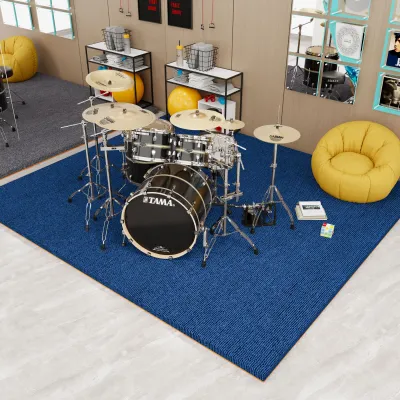
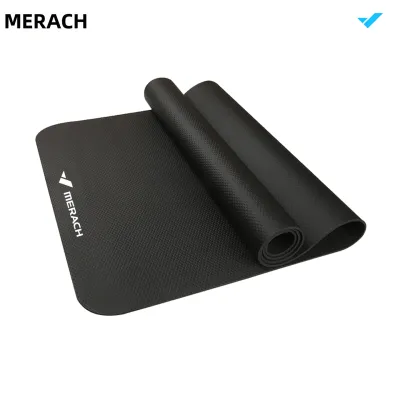
Prices are valid at publication and may change. Please refer to the product page for the latest price.
Understanding Drum Noise and Mat Limitations
To choose the right isolation solution, you must first distinguish between the two types of noise generated during drum practice: airborne noise and structural vibration. Airborne noise consists of the sound waves that travel directly through the air from your cymbals, snare, and tom-toms. This type of sound is highly audible within the room and can escape through open windows, doors, and thin walls.
Structural vibration, on the other hand, is the kinetic energy generated when your sticks strike the pads or when your feet press the pedals. This energy travels down through the drum stands, kick pedal, and hi-hat stand directly into the floor. In multi-story buildings, concrete and wooden floors act as large acoustic transmitters, carrying these low-frequency vibrations into adjacent rooms and the apartments below.
In high-density residential environments, concrete floors are particularly efficient at transmitting low-frequency impact noise. Because concrete is dense and rigid, it acts as an acoustic bridge, allowing the physical thuds of a kick drum pedal to travel multiple floors downward or sideways with very little energy loss. This means a neighbor living two floors below you might hear a distinct, repetitive thumping sound even if they cannot hear the actual acoustic sound of the drums.
Soundproof mats are designed specifically to address this structural vibration through a process called decoupling. Decoupling involves placing a resilient, energy-absorbing material between the vibration source (your drum kit) and the building structure (the floor). This material breaks the direct physical path of the kinetic energy, converting the mechanical vibrations into tiny amounts of heat before they can vibrate the floor.
However, a common misconception is that a soundproof mat will completely silence your drum practice. Because mats only target structural vibration, they have virtually no effect on airborne sound. If you are playing an acoustic kit, the airborne sound will still require wall treatments, heavy doors, and window seals to contain. Even for electronic drum kits, which have very low airborne noise, the physical clicking of plastic beaters and mesh heads can still carry through walls if not paired with appropriate room treatments.
Furthermore, sound can also travel via flanking paths, which are indirect routes such as shared ventilation ducts, pipes, or lightweight partition walls. While a high-quality mat will successfully isolate the floor, it cannot prevent sound from flanking through these other structural elements. Therefore, managing expectations is key; a mat is a foundational component of a larger, multi-faceted soundproofing strategy rather than a single, cure-all solution.
Key Factors for Evaluating Drum Soundproof Mats
When shopping for a drum mat, evaluating product specifications carefully will help you avoid options that fail under the physical demands of drumming. The first and most critical factor is density and mass. In acoustics, mass is the primary weapon against low-frequency sound transmission. Denser materials, such as heavy rubber or mass-loaded vinyl, are far more effective at blocking and absorbing vibration than lightweight, porous materials like standard carpet padding.

When reviewing product specifications, look for indicators of mass, such as the weight per square meter or the overall weight of the mat. A heavier mat is generally a more effective isolator because it requires more energy to set into motion. This inertia helps to damp the rapid, high-energy impulses generated by your kick drum pedal before they can pass into the subfloor.
Thickness and compression resistance are equally important. A mat must be thick enough to provide adequate decoupling, but it must also be firm enough to support the weight of your entire drum kit, including your throne and your own body weight. If a mat is too soft, the heavy hardware and the force of your pedal strikes will cause it to bottom out. Once a material is fully compressed, it loses its elasticity and can no longer absorb vibration, rendering it ineffective.
Your drum throne also plays a significant role in vibration transmission. As you play, your body weight shifts dynamically, transferring energy down through the throne legs into the floor. A high-quality mat must be able to withstand this concentrated, shifting weight without compressing to the point of failure, ensuring that both you and your instrument remain fully decoupled from the building structure.
Size and modularity should match your specific drum footprint. A single, continuous mat is generally preferred because it provides a uniform surface that keeps your entire kit on the same level. This prevents individual stands or pedals from sitting at odd angles, which can cause instability. If you choose modular interlocking tiles, ensure they lock together tightly without gaps, as any separation can allow vibration to bypass the isolation layer.
Finally, consider slip resistance on both sides of the mat. The top surface must have enough texture or grip to prevent your drum spurs, kick pedal anchors, and hi-hat stand from sliding forward as you play. The bottom surface must grip your home flooring securely so the entire setup does not shift during intense practice sessions. A shifting mat not only disrupts your playing but can also scratch delicate flooring underneath.
Comparing Common Mat Materials for Drum Kits
High-density rubber is widely considered the industry standard for drum isolation mats. This material is exceptionally durable, highly resistant to compression, and provides excellent low-frequency vibration dampening. Because rubber is heavy, it stays firmly in place and easily supports the weight of heavy acoustic hardware without bottoming out. The main trade-offs are its weight, which makes it difficult to transport, and a strong initial rubber odor that may require ventilation when first unpacked.
When choosing a rubber mat, you will often encounter recycled crumb rubber and vulcanized virgin rubber. Recycled crumb rubber mats are highly cost-effective and offer excellent vibration isolation, but they tend to have a rougher texture and a stronger, more persistent odor. Vulcanized virgin rubber mats are typically more expensive and have a smoother finish with less odor, making them more suitable for indoor living spaces where ventilation might be limited.
Acoustic foam is highly effective at absorbing high-frequency airborne sound when mounted on walls, but it is generally unsuitable as a primary floor mat for drums. Standard open-cell acoustic foam is far too soft and compresses completely under the weight of a drum kit. Closed-cell foam, such as polyethylene or EVA, offers better compression resistance and can be used as a middle layer in a DIY sandwich-style platform, but it should not be used alone as a top surface where pedals and stands rest directly.
Mass-loaded vinyl (MLV) is an extremely dense, limp-mass material engineered specifically for sound isolation. Because it is thin yet incredibly heavy, it is highly effective at blocking sound transmission across a wide frequency range. MLV is rarely used as a standalone drum mat because its smooth surface does not provide enough grip for drum hardware. Instead, it is best utilized as a foundational underlayment, placed directly on the floor beneath a standard carpet or a high-density rubber mat.
To help you visualize how these materials compare, consider their physical characteristics and typical applications:
| Material Type | Density & Mass | Compression Resistance | Primary Application |
|---|---|---|---|
| High-Density Rubber | Very High | Excellent | Standalone top mat for heavy hardware and pedal stability |
| Closed-Cell Foam | Moderate | Low to Moderate | Middle decoupling layer in multi-layered DIY platforms |
| Mass-Loaded Vinyl | Extremely High | High (Thin Profile) | Foundational underlayment beneath a carpet or rubber mat |
By understanding these material differences, you can select the right combination to build an effective isolation barrier that suits your budget and space constraints.
Matching the Mat to Your Drum Setup
Your choice of soundproof mat should be heavily influenced by the type of drum kit you play. Acoustic drum kits generate massive amounts of both airborne noise and structural vibration. Because the physical energy of an acoustic kick drum is so intense, a standard thin mat is rarely sufficient. For acoustic kits, you should aim for maximum mass and decoupling, which often means using a thick rubber mat laid over a layer of mass-loaded vinyl, or even constructing a dedicated wooden drum riser isolated by rubber pucks.
Electronic drum kits are much quieter in terms of airborne sound, but they still produce significant structural noise. The physical “thump” of the kick pedal and the hi-hat controller travels directly into the floor, creating a repetitive, low-frequency tapping sound that can drive downstairs neighbors crazy. For electronic kits, a high-density rubber mat or a specialized multi-layered isolation board is usually highly effective at neutralizing this specific pedal vibration.
If your setup includes multi-pedal configurations, such as double bass drum pedals or multiple auxiliary percussion pedals, stability becomes paramount. Any soft spots or uneven compression in your mat can cause your pedals to wobble, shift, or catch during play, which can negatively affect your technique. For these setups, look for a highly rigid, high-density rubber mat that covers the entire pedal area, ensuring a completely flat and stable playing surface.
To verify if your chosen mat setup is performing adequately, you can perform a simple physical check. Have a family member or friend play the kick pedal with normal force while you stand in an adjacent room or, if possible, visit the room directly below. Place your hand flat against the floor or walls; if you can feel a distinct vibration or hear a clear, low-frequency thud, your current mat may need to be reinforced with an additional layer of mass-loaded vinyl or a dedicated isolation riser.
Installation and Floor Protection Considerations
Before installing a heavy soundproof mat, it is crucial to consider the type of flooring in your practice space. Heavy rubber mats and mass-loaded vinyl can sometimes contain plasticizers or oils that react chemically with the finishes of hardwood, engineered wood, or laminate floors. This reaction can cause permanent discoloration, staining, or sticking. Always consult your flooring manufacturer’s guidelines, or place a thin, non-reactive felt barrier between the floor and the mat.
In humid climates, such as Singapore, trapping moisture beneath a non-breathable rubber or vinyl mat is a serious concern. If moisture becomes trapped, it can lead to mold growth, musty odors, and warping of wooden subfloors. To prevent this, consider using a breathable rug pad or periodically lifting the mat to allow the floor and the underside of the mat to dry completely.
Safety and cable management should also be addressed during installation. Drum setups, particularly electronic ones, involve a web of cables connecting pads, triggers, and modules. Ensure all cables are routed neatly along the perimeter of the mat and secured with cable ties or floor covers. This prevents tripping hazards and protects your expensive cables from being pinched or crushed under the heavy metal legs of your drum hardware.
Additionally, pay close attention to the edges of your mat. Thick rubber mats or multi-layered setups can create a raised edge that is easy to trip over in a dimly lit room. Using high-visibility tape or low-profile transition strips along the exposed edges of the mat can help define the boundary of your practice space and prevent accidental trips or falls.
Frequently Asked Questions (FAQ)
Can I use a standard gym or yoga mat for drum practice?
Standard yoga mats are designed for bodyweight exercises and are far too thin and soft to support a drum kit. They will compress completely under the weight of your pedals and stands, offering zero vibration isolation. Interlocking gym tiles made of EVA foam are slightly better, but they still tend to compress too much under heavy hardware, leading to an unstable playing surface and reduced decoupling effectiveness over time.
Do I need a separate isolation pad for my kick drum pedal?
The kick drum pedal is the single largest source of low-frequency impact noise in any drum kit. If you find that your main soundproof mat does not fully eliminate the floor vibrations, adding a dedicated isolation pad or a small, extra-dense riser specifically under the kick pedal and bass drum tower can provide the necessary extra decoupling. This targeted approach helps absorb the concentrated downward force of your foot strikes.
How do I clean and maintain a rubber drum mat?
To maintain your mat’s physical properties and prolong its lifespan, always check the manufacturer’s label for specific cleaning instructions. Generally, regular vacuuming or sweeping is sufficient to remove dust and wood shavings from drumsticks. For deeper cleaning, use a damp cloth with mild soap and water, avoiding harsh chemical solvents or petroleum-based cleaners that can break down and degrade the rubber or foam structure over time.
Community discussion
Share your experience or ask a question. Comments are reviewed before publication.