
Practising music in a Singapore HDB flat requires balancing your creative passion with respect for your neighbours. To achieve a balanced acoustic environment within a compact room, choosing the right acoustic sound absorber is essential. Unlike heavy construction materials designed to block sound, acoustic absorbers are lightweight treatments that control sound reflections, flutter echoes, and muddy reverberations inside your room. By selecting the appropriate material density, thickness, and mounting method, you can significantly improve your internal listening accuracy and lower the perceived noise buildup without violating estate guidelines or damaging your walls.
Understanding Acoustic Treatment vs. Soundproofing in HDB Flats
A common misconception among musicians is that installing an acoustic sound absorber on their walls will prevent sound from escaping the room. To set realistic expectations for HDB living, it is crucial to distinguish between acoustic treatment and soundproofing. Acoustic treatment, which utilizes sound absorbers like foam or fiberglass panels, is designed to improve the sound quality inside the room. These materials capture mid-to-high frequency sound waves, preventing them from bouncing off hard concrete walls and creating distracting echoes.
Soundproofing, on the other hand, requires dense, heavy, and decoupled structural barriers to block sound from traveling between rooms or units. Typical HDB flats are constructed with dense concrete walls that easily transmit low-frequency, structure-borne vibrations, such as the thud of a bass drum or the rumble of a bass amplifier. Because acoustic absorbers are lightweight and porous, they cannot stop these low-frequency vibrations from penetrating structural walls. Instead, they act as a supplementary measure that reduces overall room volume and controls internal reflections, making your practice sessions sound clearer and less chaotic.
Products mentioned in this guide


Prices are valid at publication and may change. Please refer to the product page for the latest price.
Key Space and Installation Constraints for HDB Rooms
HDB bedrooms and study rooms are typically compact and often serve multiple purposes, such as a home office or a guest bedroom. This multi-functional nature means that any acoustic treatment you choose must not permanently consume valuable floor space or obstruct daily activities. Large, bulky acoustic structures are rarely practical in these environments, making slim, wall-mounted, or highly portable solutions the preferred choice.

Furthermore, HDB renovation guidelines and standard tenancy agreements strictly regulate structural modifications. Drilling multiple holes into structural concrete walls to hang heavy panels can lead to structural concerns, noise complaints during installation, or the loss of your rental deposit. Damaging existing paint, wallpaper, or wall tiles with permanent adhesives is also a common issue. Therefore, musicians must prioritize reversible, non-destructive mounting methods and lightweight, modular acoustic treatments that can be easily installed, adjusted, or completely removed without leaving a trace.
Types of Acoustic Sound Absorbers Suited for Compact Spaces
Selecting the right format of acoustic sound absorber depends on your room’s layout, your instrument, and how much flexibility you require. Different designs offer distinct trade-offs in terms of spatial footprint, absorption efficiency, and ease of installation.
Wall-Mounted Panels and Foam
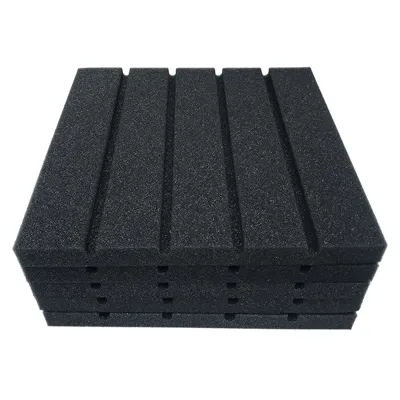
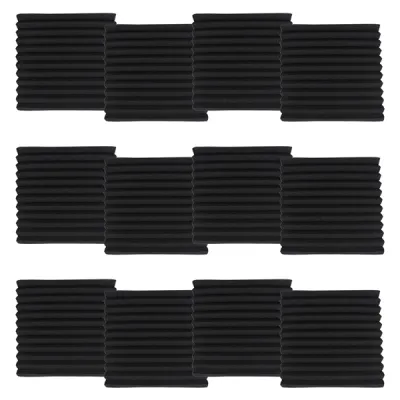
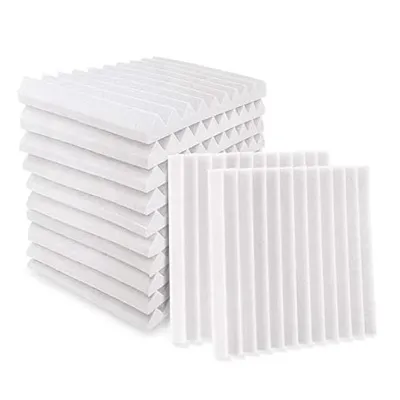
Wall-mounted treatments are the most common way to address flutter echo. When comparing options, consider the spatial footprint of flat fabric-wrapped panels versus thicker, profiled polyurethane foam. Flat panels made of dense fiberglass or rockwool are highly efficient at absorbing mid-to-low frequencies while maintaining a slim profile that sits close to the wall. Profiled foam, such as wedge or pyramid designs, is lighter and easier to handle but often requires greater thickness to achieve the same level of low-frequency control.
Before purchasing, check the product specifications for material density and thickness. For general music practice, panels with a thickness of at least 50 mm are recommended to ensure effective absorption across the mid-to-high frequency spectrum. To avoid permanent wall damage, look for lightweight panels that can be mounted using heavy-duty, damage-free adhesive strips, or consider hanging them from picture rails or tension rods positioned close to the wall surface.
Freestanding Baffles and Portable Vocal Shields
If you use a multi-purpose room that must quickly transition between music practice and daily living, freestanding acoustic baffles and portable vocal shields offer an excellent alternative to wall-mounted treatments. Freestanding baffles can be positioned behind or around your practice area during sessions and folded or stored in a closet when not in use. When evaluating these products, check their stability, weight, and folded dimensions to ensure they fit your available storage space.
Portable vocal shields, which mount directly to a microphone stand, provide targeted treatment by absorbing immediate reflections from the singer’s voice or an acoustic instrument. While these shields are highly effective at preventing dry vocal tracks from capturing room reflections, they have clear limitations. They cannot manage low-frequency buildup or treat the overall room environment, meaning they should be used as localized tools rather than a complete room treatment solution.
Bass Traps for Room Corners
Low-frequency sound waves naturally accumulate in the corners of a room, leading to a boomy, muddy sound that can distort your perception of pitch and volume. Bass traps are specialized, thick acoustic absorbers designed to fit into these corners to manage low-frequency buildup. However, in a small HDB room, corner space is often occupied by wardrobes, desks, or doors, making large corner traps difficult to place.
When choosing bass traps, carefully measure your room’s corners to ensure they will not obstruct traffic flow or door clearance. If floor-standing corner traps are impractical, look for tri-corner traps that mount high up where the walls meet the ceiling. Alternatively, if low-frequency vibration is primarily coming from an amplifier or instrument stand, consider using specialized isolation pads or risers to decouple the equipment from the floor, which can be more space-efficient than large corner absorbers.
Planning Your Acoustic Layout Without Damaging Walls
To get the most out of your acoustic sound absorbers, strategic placement is far more important than covering every square inch of your room. A common method for finding the most critical placement areas is the mirror method. Sit in your primary practice position and have a friend slide a small mirror along the side walls at eye level. Wherever you can see the reflection of your instrument, amplifier, or speakers in the mirror is a primary reflection point. Prioritizing panel placement at these specific spots will yield the greatest acoustic improvement.
When planning your layout, aim for a balance between absorption and diffusion. Covering every wall surface with foam will make the room sound overly dead and unnatural. This lack of natural reverberation can cause ear fatigue and lead you to play or sing louder than necessary, which increases the risk of sound leaking to your neighbours. A good rule of thumb is to start by treating 20% to 30% of the wall surface area, focusing on the primary reflection points and leaving some hard surfaces exposed to maintain a natural room feel.
Before committing to any semi-permanent adhesive mounting, use a step-by-step testing process. Set up your movable absorbers or temporarily secure your panels using low-tack painter’s tape or freestanding stands. Practice your instrument in this temporary configuration to evaluate the change in sound quality. This allows you to adjust the positioning and find the optimal layout before finalizing the installation with stronger, damage-free mounting solutions.
Building a Practical Shortlist for Your Instrument
Different musical instruments generate distinct frequency profiles, meaning your choice of acoustic sound absorber should be tailored to what you play.
- Vocals and Acoustic Instruments: If your primary focus is singing, acoustic guitar, or violin, your sound is dominated by mid-to-high frequencies. Your shortlist should prioritize lightweight, flat acoustic panels positioned at head height on the walls adjacent to your practice spot. A portable vocal shield is also highly recommended for singers to capture clean, dry recordings without room echo.
- Electric Guitars and Keyboards: For amplified instruments, controlling the direct sound from your speakers is key. Focus on using isolation pads to decouple your amplifier or desktop monitors from desks and floors, preventing physical vibrations from traveling through the building's structure. Supplement this with a few strategically placed wall panels directly behind and opposite the amplifier to control the sound bounce.
- Percussion and Bass: Low-frequency instruments like bass guitars and acoustic drums present the greatest challenge in an HDB flat. Standard acoustic absorbers will not stop impact noise or deep bass from traveling through concrete floors. For these instruments, you must combine heavy floor rugs, specialized equipment isolation risers, and corner bass traps. If neighbour complaints persist despite these measures, it is highly recommended to consult an acoustic professional to discuss structural decoupling solutions, such as a floating floor platform.
Frequently Asked Questions (FAQ)
Do acoustic panels stop my neighbours from hearing my music?
No, acoustic panels do not stop sound from traveling through walls. Their primary function is to absorb sound reflections within the room to improve internal sound quality and slightly lower the overall room volume. To minimize neighbour disturbance, you must combine acoustic panels with other practices, such as keeping amplifiers away from shared walls, using rubber isolation pads under equipment, and practicing during non-restricted hours.
Can I use heavy curtains or rugs instead of professional acoustic absorbers?
Thick rugs and heavy curtains can help reduce high-frequency reflections and floor bounce, making them a useful, budget-friendly starting point. However, they lack the density and thickness required to absorb mid-to-low frequencies effectively. For serious music practice, household textiles should be used as a supplementary first step while you plan for dedicated, purpose-built acoustic treatments.
Community discussion
Share your experience or ask a question. Comments are reviewed before publication.