
Finding the right Burmese to English translation tools and dictionaries in Singapore requires balancing your specific learning goals with the practical realities of the language’s unique script, grammar, and regional registers. Whether you are a professional working in regional business, a volunteer engaging with the local community, or a language enthusiast, the choice between a physical dictionary and a digital translation tool depends on how you intend to study and apply the language. By understanding the key features of these resources, you can select tools that offer accurate vocabulary, reliable phonetic guides, and practical usability.
To make an informed decision, you must evaluate resources based on their content depth, format, and technological compatibility. This guide provides a comprehensive framework to help you identify your specific needs, compare physical and digital formats, evaluate mobile applications, and safely source high-quality language materials in Singapore.
Identifying Your Needs: Core Criteria for Burmese to English Resources
Before selecting a Burmese to English dictionary or translation tool, you must clearly define your primary use case. A student aiming for academic fluency requires a vastly different resource than a traveler or a business professional needing quick, situational translations. Identifying your goals early prevents you from investing in tools that are either too simplistic or overly complex for your daily needs.
Products mentioned in this guide
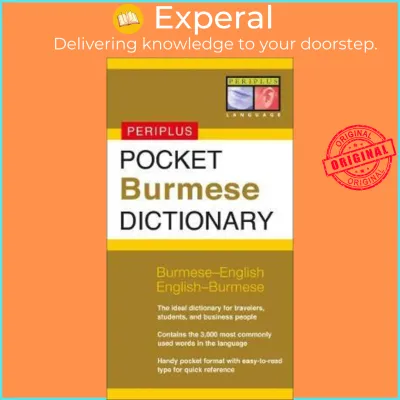
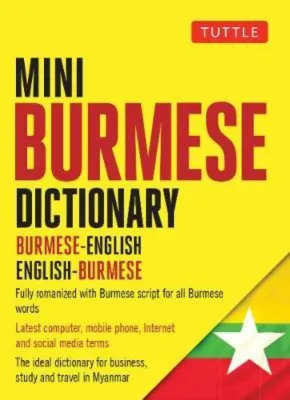
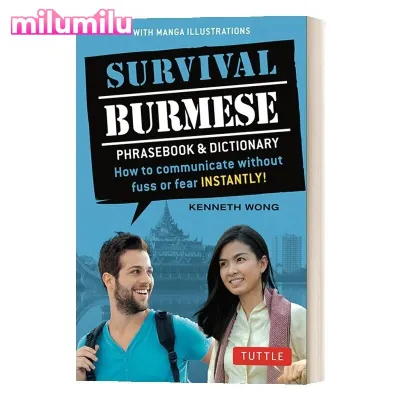
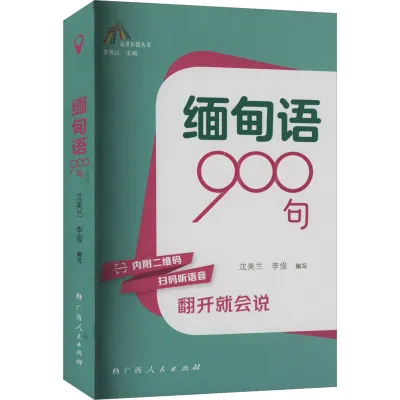
Prices are valid at publication and may change. Please refer to the product page for the latest price.
Defining Your Primary Use Case
Different learning stages and professional scenarios demand specific resource designs:
- Beginner Vocabulary Building: If you are just starting, you need resources that prioritize high-frequency vocabulary, clear phonetic transcriptions, and basic grammatical explanations.
- Academic Translation and Deep Study: Advanced learners require comprehensive dictionaries that include parts of speech, sentence examples, etymology, and distinctions between formal and informal registers.
- Travel and Daily Communication: For quick interactions, portable phrasebooks or fast-loading mobile apps with voice recognition are highly practical.
- Professional Interpreting: Interpreters and business professionals need specialized glossaries covering legal, medical, or commercial terminology, along with rapid search capabilities.
Evaluating Essential Linguistic Features
When comparing dictionaries, look closely at how they present linguistic information. A high-quality resource should offer more than simple word-to-word translations. It must guide you on how to use and pronounce the words correctly within the context of Burmese grammar.
- Bilingual versus Monolingual Entries: While bilingual (Burmese-English) dictionaries are essential for beginners, intermediate and advanced learners benefit from hybrid resources. These provide explanations in simplified Burmese alongside the English translation, helping you think in the target language.
- Romanization and Phonetic Systems: The Burmese script can be challenging for beginners to read quickly. Look for resources that include a consistent romanization system, such as the Myanmar Language Commission Transcription System or a modified International Phonetic Alphabet. This ensures you can pronounce words accurately before you fully master the script.
- Audio Pronunciation Support: For digital tools, high-quality audio recorded by native speakers is invaluable. Avoid tools that rely solely on robotic text-to-speech engines, as they often struggle with the subtle tonal variations inherent in the Burmese language.
Verifying Database and Publication Currency
Language is dynamic, and modern Burmese continues to evolve with technology, global culture, and social changes. When selecting a dictionary, check the publication date of physical books or the last update timestamp of digital databases. Older resources may lack essential modern vocabulary, such as terms related to digital technology, social media, and contemporary business, or they may use obsolete spelling conventions that do not align with modern standards.
Print vs. Digital: Choosing the Right Format for Your Study Habits
Deciding between a physical print dictionary and a digital application involves weighing the benefits of tactile study against the speed and convenience of modern technology. Both formats have distinct advantages and limitations that can significantly impact your learning efficiency and the preservation of your study materials.

Portability, Search Speed, and Offline Reliability
Physical dictionaries offer a focused, distraction-free learning environment. They allow you to browse adjacent entries, which can unexpectedly expand your vocabulary. However, searching for a word in a print Burmese dictionary requires a solid understanding of the traditional alphabetical order of consonants, vowels, and sub-joined letters, which presents a steep learning curve for beginners. Additionally, large academic volumes are heavy and difficult to carry daily.
Digital applications, on the other hand, offer near-instantaneous search speeds. You can type a word in English or Burmese and receive results in seconds. Furthermore, digital tools are highly portable, living directly on your smartphone or tablet. However, they require battery power and, in some cases, a stable internet connection. When evaluating digital tools, always check if the core dictionary database can be downloaded for offline use, ensuring reliability when traveling or in areas with poor network coverage.
Supplementary Digital Features
Modern digital translation tools often include advanced features that go far beyond the capabilities of a traditional print book. These features can accelerate your learning curve and make daily translation tasks much easier:
- Optical Character Recognition (OCR): This technology allows you to point your device's camera at printed Burmese text, such as signs, menus, or book pages, and receive an instant translation. This is incredibly useful for rapid comprehension in real-world environments.
- Handwriting Recognition: Typing in Burmese requires learning specific keyboard layouts, which can be challenging. Handwriting recognition allows you to draw the characters directly on your screen, making it easier to look up unfamiliar words.
- Spaced Repetition Systems (SRS): Some language apps integrate flashcards and SRS algorithms, automatically scheduling reviews of searched words based on how well you remember them.
Long-Term Durability in a Tropical Climate
If you prefer physical books, you must consider Singapore’s tropical climate. High relative humidity and warm temperatures create an environment where paper materials are highly susceptible to deterioration. Over time, physical books can develop foxing, yellowing, mold, and damage from booklice or other pests.
To preserve physical dictionaries in Singapore, store them in well-ventilated, air-conditioned rooms whenever possible. Avoid placing bookshelves against external walls where moisture can trap. For rare or expensive academic volumes, consider storing them in sealed plastic containers with silica gel desiccant packs to absorb excess moisture and prevent mold growth.
How to Evaluate Mobile Apps and Online Translation Tools
With numerous translation apps and online tools available, it is crucial to establish a practical framework for testing and selecting reliable digital resources. Relying solely on app store ratings or download counts can lead to installing inaccurate or poorly designed software.
Testing Translation Accuracy Independently
To assess the reliability of a digital translation tool, perform your own tests using specific linguistic benchmarks rather than relying on simple, single-word queries. Input a variety of sentence structures to see how the tool handles the unique complexities of the Burmese language:
- Complex Grammatical Particles: Burmese relies heavily on postpositional particles to indicate grammatical relationships, tense, and politeness. Test how the tool translates sentences containing particles like de, bi, or me to ensure it accurately captures the intended tense and nuance.
- Colloquialisms and Idioms: Input common everyday phrases to see if the tool provides a natural English equivalent or a confusing, literal word-for-word translation.
- Formal Literary Styles: Burmese has distinct literary (written) and colloquial (spoken) registers. Input a sentence from a formal news article and compare the translation quality with a simple conversational sentence to verify if the tool recognizes these stylistic differences.
Device Compatibility and Technical Standards
Before committing to a digital tool or subscription, verify its technical compatibility with your devices. Historically, digital Burmese text suffered from encoding conflicts between the non-standard Zawgyi font and the international Unicode standard. Ensure that any app or online tool you select is fully compliant with modern Unicode standards to prevent text rendering issues, such as broken characters or misaligned vowel marks.
Additionally, check the operating system requirements and review the developer’s data privacy policies. Some free translation tools upload your search history and inputted text to external servers for machine learning purposes. If you plan to translate sensitive personal documents, business correspondence, or proprietary information, opt for tools that process translations locally on your device or offer clear, enterprise-grade data privacy guarantees.
Understanding the Limits of Machine Translation
While machine translation has advanced significantly, it still has notable limitations when dealing with highly contextual languages like Burmese. Burmese is a pro-drop language, meaning pronouns such as “I,” “you,” “he,” or “she” are frequently omitted when the context is clear. Automated tools often struggle to identify the correct subject or object in these sentences, leading to mistranslations in English.
Recognize that machine translation is best used as a tool for general comprehension and rapid vocabulary lookup. For official, legal, medical, or high-stakes business communications, automated tools cannot replace the accuracy and cultural nuance provided by human-verified glossaries or professional translation services.
Sourcing and Verifying Language Materials in Singapore
Once you have decided on the format and features you need, the next step is safely locating and purchasing these resources in Singapore. Verifying the authenticity and quality of your materials ensures you receive accurate content and avoid low-quality reproductions.
Comparing Prices and Purchasing Channels
Physical Burmese to English dictionaries can vary widely in price depending on their size, academic depth, and publisher. In Singapore, prices typically range from S$15 to S$40 for pocket-sized or introductory dictionaries, while comprehensive academic volumes can range from S$60 to over S$120.
To find these materials, explore local independent bookstores, specialized educational suppliers, and established online marketplaces. When browsing online marketplaces, be cautious of listings with prices that seem unusually low, as these may be unauthorized, low-quality reprints.
Verifying Publisher and Edition Authenticity
To ensure you are buying a reliable, high-quality resource, always verify the publication details before making a purchase:
- Check the Publisher: Look for reputable academic publishers, university presses, or national language commissions. These institutions employ rigorous editorial standards and expert lexicographers.
- Verify the ISBN: Cross-reference the International Standard Book Number (ISBN) online to confirm the book's edition, publication year, and page count.
- Inspect the Print Quality: If purchasing in person, check the clarity of the Burmese script. Low-quality, unauthorized reprints often have blurry text, faint ink, or misaligned characters, making the intricate Burmese script incredibly difficult to read.
Evaluating Digital Licensing and Subscriptions
For digital dictionaries and translation apps, carefully review the licensing terms and subscription models before inputting your payment details. Some applications offer a one-time purchase option for lifetime access to their databases, while others operate on monthly or annual subscription models.
Additionally, check for regional restrictions. Ensure that the digital license or app store download is fully supported in Singapore and compatible with your local app store account. Utilize free trial periods whenever available to thoroughly test the app’s features and database depth on your specific device before committing to a paid plan.
Frequently Asked Questions (FAQ)
Are free online translators reliable for formal Burmese documents?
No, free online translators are generally not reliable for formal, legal, or official Burmese documents. These automated tools often struggle with the complex grammatical particles, honorifics, and formal literary registers characteristic of official Burmese writing. Relying on them can result in severe grammatical errors, reversed meanings, or culturally inappropriate phrasing. For official administrative, legal, or medical purposes, you should always consult a certified human translator or refer to specialized academic glossaries.
How can I check if a physical dictionary includes modern Burmese slang?
To determine if a physical dictionary contains modern vocabulary and slang, start by checking the publication or revision year in the front matter and reading the preface to understand the editorial scope. You can also perform a quick diagnostic test by looking up common modern loanwords or colloquial terms in the index. If contemporary terms related to digital technology, social media, or popular daily expressions are missing or defined using obsolete concepts, the dictionary is likely best suited for classical or formal study rather than modern conversational use.

Community discussion
Share your experience or ask a question. Comments are reviewed before publication.