
Selecting the right Cambridge Science Year 9 textbook for a Secondary 3 student in Singapore requires a clear understanding of how international curricula align with local academic pathways. For many students transitioning into upper secondary education, Year 9 materials serve as an essential bridge, translating general science concepts into the rigorous, specialized disciplines of Physics, Chemistry, and Biology. Because the Singapore-Cambridge GCE O-Level and international equivalents demand deep conceptual clarity and precise application, the textbook you choose must do more than simply present facts. It must match your child’s specific academic track, whether they are taking Combined Sciences or Separate Sciences, and align with their current level of independent study.
To make an effective purchase, parents must look beyond attractive covers and focus on syllabus codes, publication dates, and the structural format of the book. A student struggling with complex terminology will require a different resource than one who has mastered the basics and needs rigorous exam-style practice. By evaluating textbooks based on their alignment with the Cambridge Lower Secondary and IGCSE frameworks, you can ensure that your investment directly supports your child’s preparation for high-stakes examinations. This guide outlines the critical factors to consider, from syllabus verification to matching book formats with individual learning styles, helping you make an informed decision for your child’s academic success.
Understanding the Role of Year 9 Science in O-Level Preparation
The transition from lower secondary science to the specialized demands of upper secondary education is one of the most significant academic shifts a student will encounter. In earlier years, science is often taught as an integrated subject, blending basic concepts of life sciences, physical sciences, and earth sciences into broad thematic units. Upon entering Year 9 or Secondary 3, this integrated approach gives way to distinct, highly structured disciplines: Physics, Chemistry, and Biology. Each of these subjects introduces its own vocabulary, mathematical applications, and experimental methodologies, requiring students to adapt to three different ways of thinking simultaneously.
Products mentioned in this guide
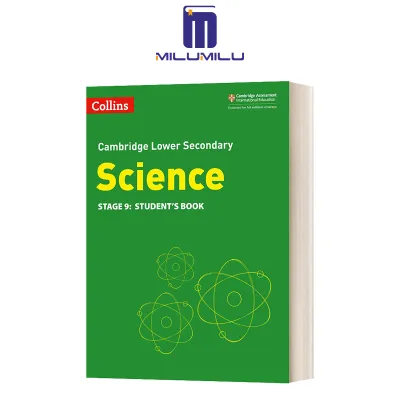
![Cambridge Lower Secondary Science Studentbook +Workbook Stage7/8/9 [ colored reprinted physical book without digital access code]](https://img.lazcdn.com/g/ff/kf/S8bc7264d24394679b60d5a056d3bb020O.png_400x400q80.png_.webp)
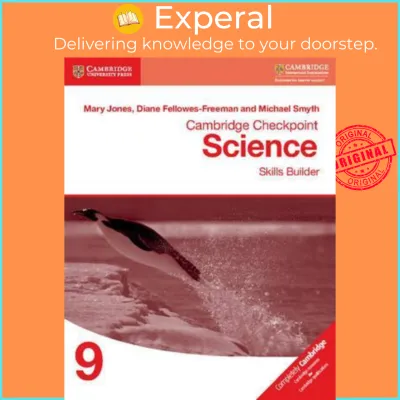
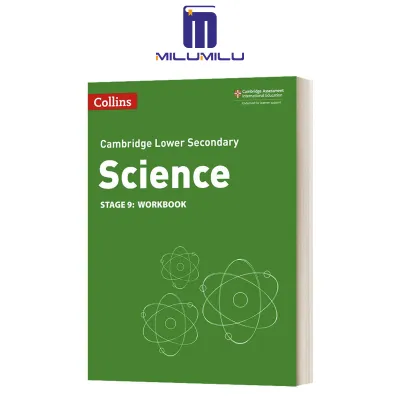
Prices are valid at publication and may change. Please refer to the product page for the latest price.
Cambridge Year 9 science resources are specifically designed to manage this transition by bridging the gap between foundational knowledge and the advanced requirements of the IGCSE or O-Level syllabus. The Cambridge Lower Secondary curriculum framework culminates at Year 9, making these textbooks the final stepping stone before students engage fully with upper secondary exam preparation. A well-structured Year 9 textbook does not merely introduce advanced topics; it systematically builds the cognitive skills needed to analyze complex data, evaluate scientific claims, and construct logical, evidence-based arguments.
One of the most critical decisions parents must make before purchasing any textbook is identifying the specific science track their child is pursuing. Schools typically offer two main pathways: Separate Sciences (often referred to as Pure Physics, Pure Chemistry, and Pure Biology) or Combined Sciences. Separate Sciences require students to study each discipline in full depth, leading to individual grades and certificates for each subject. Combined Sciences, on the other hand, merge content from two or three disciplines into a single, coordinated course of study, resulting in a combined grade. Buying a comprehensive, triple-science textbook for a student enrolled in a combined science track can lead to unnecessary cognitive overload, while purchasing a combined science guide for a pure science student will leave critical gaps in their knowledge.
Understanding how these tracks align with the Cambridge progression is essential for selecting the correct study materials. The Cambridge Lower Secondary Science curriculum for Year 9 provides a unified foundation that supports both pathways, but the depth of application varies significantly as students move forward. By confirming your child’s subject allocation with their school, you can select a textbook that matches the exact scope of their curriculum, ensuring they spend their study time on relevant, examinable material.
Core Criteria for Evaluating Cambridge Science Textbooks
When evaluating Cambridge Science textbooks, the primary consideration must always be syllabus alignment and the publication or edition year. Educational boards update their syllabi periodically to reflect modern scientific advancements and pedagogical shifts, meaning a textbook published a decade ago may contain outdated terminology, obsolete experimental methods, or topics that have since been removed from the exam. Parents should look for books that explicitly state alignment with the current Cambridge Lower Secondary Science curriculum framework or the relevant IGCSE/O-Level transition codes. Checking the copyright page for recent printings or revised editions is a reliable way to ensure the content remains accurate and relevant to upcoming examination cycles.

Another critical factor is the balance between conceptual depth and exam-focused practice. A high-quality textbook should not simply present a list of facts to be memorized; it must explain the underlying scientific principles in a clear, logical sequence. Look for chapters that begin with real-world observations, gradually introducing abstract theories and mathematical formulas. At the same time, the book must provide sufficient opportunities for self-assessment. Effective textbooks include end-of-chapter summaries, progress checks, and structured questions that mimic the format and difficulty of actual exam papers, allowing students to test their understanding as they progress.
The quality of visual aids and practical guides within the textbook is equally important. Science is an observational discipline, and complex processes—such as cellular respiration, chemical bonding, or electromagnetic induction—are far easier to comprehend when accompanied by clear, accurately labeled diagrams. Furthermore, practical work is a core component of the Cambridge science curriculum. The textbook should feature dedicated sections for practical experiments, detailing the apparatus used, safety precautions, observation methods, and data analysis techniques. These practical guides not only prepare students for school-based laboratory assessments but also reinforce theoretical concepts through hands-on applications.
In the modern educational landscape, physical textbooks are increasingly supplemented by digital resources. Many publishers include online access codes inside the front cover, granting students access to interactive quizzes, video animations of complex experiments, downloadable worksheets, and digital editions of the book. When purchasing a textbook, especially from secondary markets or online marketplaces, it is vital to verify whether these digital access codes are unused and still valid. Access to these online portals can significantly enhance a child’s learning experience, providing immediate feedback on practice tests and offering alternative explanations for challenging topics.
Matching Textbook Formats to Your Child's Learning Needs
Every student has a unique learning style, and a textbook format that works perfectly for one child may prove ineffective for another. Comprehensive textbooks are the standard choice for building foundational knowledge from the ground up. These books are highly detailed, offering thorough explanations, historical context, and extensive examples for every topic in the syllabus. They are ideal for students who prefer to study systematically, reading through chapters before classes to prepare or using them afterward to clarify points they did not fully grasp. A comprehensive textbook serves as the primary reference point throughout the academic year, ensuring no detail is missed.
For students who require a more streamlined approach, revision guides offer a highly efficient alternative. Rather than presenting detailed explanations, revision guides condense the entire syllabus into key bullet points, summary tables, and quick-reference diagrams. These books are designed for rapid consolidation, making them invaluable tools in the weeks leading up to examinations. A revision guide helps students quickly recall essential facts, formulas, and definitions without having to wade through hundreds of pages of explanatory text. However, they should not be used as a replacement for comprehensive textbooks, as they assume a baseline level of understanding and do not provide the depth needed to master complex concepts from scratch.
Workbooks and past paper compilations represent another essential category of educational resources, focusing entirely on active recall and exam technique. These books contain little to no explanatory text; instead, they are filled with practice questions, structured exercises, and mock exam papers. Working through these materials helps students develop critical exam skills, such as managing their time effectively, understanding command words (such as “describe,” “explain,” or “evaluate”), and structuring their answers to maximize marks. For a Secondary 3 student preparing for O-Levels, regular practice with a dedicated workbook is often the key to transitioning from theoretical understanding to high exam performance.
Finally, study guides and simplified readers are specifically tailored for students who struggle with the dense, technical language often found in standard science textbooks. These resources use simplified vocabulary, shorter sentences, and highly visual layouts to explain complex scientific phenomena. They frequently include glossaries of key terms with phonetic pronunciations and simple analogies to make abstract concepts more relatable. If your child finds the standard school-issued textbook intimidating or struggles with English as the medium of instruction for science, a simplified study guide can build their confidence and ensure they do not fall behind in their foundational understanding.
Essential Pre-Purchase Checks for Educational Books
Before finalizing the purchase of any Cambridge Science textbook, performing a series of rigorous checks can save you from costly mistakes and ensure your child has the correct study materials. The most critical check is verifying the exact syllabus code and examination year, which are typically printed on the copyright page or the back cover. Cambridge assessment boards use specific codes (such as 0893 for Lower Secondary Science or 5090 for O-Level Biology) to identify their curricula. Cross-referencing these codes with the official school booklist or the Cambridge assessment website ensures that the book matches the exact curriculum your child is studying in school.
Another important consideration is checking for regional editions or international versions of the textbook. Publishers often adapt their books for different global markets, modifying the context of examples, the units of measurement, or even specific content modules to align with local educational standards. For instance, a textbook designed for a UK-specific curriculum may use different terminology or focus on different environmental case studies compared to an international version designed for students in Singapore. Always ensure that the book you are purchasing uses standard metric units and aligns with the international or local Singapore-Cambridge standards required for your child’s exams.
If you are purchasing a physical book, especially a pre-owned copy from an online marketplace or a secondhand bookstore, a thorough inspection of its physical condition is essential. Check for excessive highlighting, notes written in the margins, or missing pages, as these can distract your child or prevent them from reading key information. More importantly, verify the status of any digital components. Many modern textbooks rely on scratch-off codes to access online learning portals, homework platforms, or digital PDF versions. If these codes have already been redeemed by a previous owner, purchasing a replacement code separately can often cost as much as buying a brand-new textbook.
Lastly, be cautious of outdated editions that are sold at steep discounts. While it may be tempting to save money by purchasing an older version of a textbook, even minor changes in a syllabus can have a significant impact on exam preparation. An outdated book might omit newly introduced topics, include concepts that have been removed from the current exam, or use an older format for practice questions that no longer matches the current exam structure. Investing in the most up-to-date edition ensures that your child’s study efforts are fully aligned with what they will actually face in the examination hall.
Frequently Asked Questions (FAQ)
Do I need to buy separate textbooks for Physics, Chemistry, and Biology in Year 9?
Whether you need to purchase separate textbooks depends entirely on the specific academic track your child is enrolled in at school. If your child is taking Separate Sciences (also known as Pure Sciences), they will require three distinct textbooks—one dedicated to Physics, one to Chemistry, and one to Biology—to cover the extensive depth of each individual syllabus. If they are enrolled in a Combined Science pathway, they will typically use a single, integrated textbook that covers all three disciplines at a coordinated level. Always consult your child’s school booklist or contact their subject teachers to confirm their exact science track before making a purchase, as buying the wrong format can lead to gaps in their preparation or unnecessary expenses.
How can I verify if a textbook matches the current Cambridge O-Level syllabus?
To verify if a textbook matches the current syllabus, start by locating the unique syllabus code (such as 5090 for Biology, 5070 for Chemistry, or 5054 for Physics) on the book’s copyright page or back cover. You can then cross-reference this code with the official Cambridge Assessment International Education website to ensure it matches the active syllabus for the upcoming examination year. Additionally, look for an official endorsement badge from Cambridge on the front cover, which indicates that the book has undergone a rigorous quality review process by the exam board to ensure complete coverage of the syllabus. Checking the publication date and ensuring it is the latest revised edition will also help confirm its relevance.
Community discussion
Share your experience or ask a question. Comments are reviewed before publication.