
Selecting your first keyboard is a pivotal step in your musical journey, and the Casio CT series offers a versatile starting point. The best Casio CT model for a complete beginner depends entirely on whether you seek a simple, highly portable instrument for casual play or a touch-sensitive keyboard designed to support structured piano lessons. By understanding how key specifications align with your learning goals, you can choose a model that keeps you motivated without overcomplicating your practice space.
To make an informed decision, you must look past aesthetic designs and focus on the functional capabilities of each model tier. Evaluating features such as key action, touch sensitivity, and digital connectivity will help you select an instrument that matches your current skill level while leaving room for future musical growth.
Quick Guide: Matching Your Goals to Casio CT Features
Before browsing specific models, you must define your primary musical goals. Beginners generally fall into two categories: casual players who want to explore melodies and play popular songs for fun, and structured learners who intend to take formal piano lessons. Identifying your path early prevents you from either overspending on features you will not use or outgrowing a basic keyboard within a few months.
Products mentioned in this guide
![Casio CT-S1-76 Digital Keyboard [FREE X-STAND] Portable 76 Keys Musical Instrument for Beginners](https://img.lazcdn.com/g/p/c7697f8706e7f8db6b627fbc45a2b689.png_400x400q80.png_.webp)
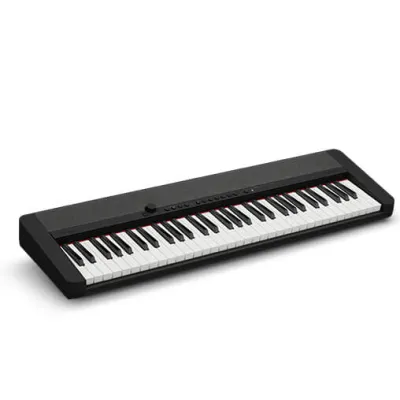
Prices are valid at publication and may change. Please refer to the product page for the latest price.
For casual players, an entry-level keyboard with standard spring-action keys and a 61-key layout is often the most practical choice. These models prioritize ease of use, lightweight portability, and a wide variety of built-in sounds and rhythms. They are excellent for learning basic finger coordination, playing simple melodies, and enjoying music as a hobby without a significant upfront investment.
If your goal is to transition to an acoustic piano or follow a structured curriculum, you will require a model with touch-sensitive keys and expanded polyphony. These advanced features allow you to control the volume and character of each note based on how hard you strike the keys, which is essential for developing proper finger strength and musical expression. Investing in these higher-tier specifications ensures your keyboard remains a viable practice tool as your repertoire becomes more complex.
Core Specifications That Matter for New Players
When evaluating the Casio CT lineup, technical specifications on paper directly translate to how the instrument feels and sounds during daily practice. Understanding these core dimensions helps you look past marketing terms and focus on the actual capabilities of the hardware. Building proper technique requires an instrument that responds predictably to your physical input.

Because features can vary significantly even within the same product family, you should always verify the exact specifications on the manufacturer’s official product sheets before making a purchase. Paying close attention to key action, sound generation technology, and polyphony limits will ensure the keyboard can handle the specific exercises and pieces you plan to study.
Key Count and Touch Response
Most keyboards in the Casio CT series feature a 61-key layout, which spans five full octaves. This size offers an ideal balance between musical versatility and physical portability, making it highly suitable for compact living spaces such as Singapore apartments. While a standard acoustic piano has 88 keys, a 61-key layout is more than sufficient for learning foundational scales, chords, and the vast majority of beginner-to-intermediate sheet music.
Touch response, also known as velocity sensitivity, is perhaps the most critical feature for any student aiming for formal piano training. Without touch response, every key press produces the exact same volume regardless of your physical touch, which can lead to flat, unexpressive playing habits. A keyboard with touch response uses sensors to detect the speed and force of your finger strikes, allowing you to play softly (piano) or loudly (forte) just as you would on an acoustic instrument.
When shopping, you must carefully check the product labels and specifications to confirm if touch response is included. Some entry-level models omit this feature to keep costs low and maximize portability, while mid-to-high-tier models include multi-level sensitivity settings. If your budget allows, prioritizing a touch-sensitive model will significantly extend the lifespan of your instrument as a viable learning tool.
Learning Tools and Connectivity
Modern electronic keyboards offer a variety of built-in educational tools designed to supplement your practice sessions. Features such as integrated metronomes, built-in lesson modes, and visual feedback screens help you maintain steady timing and learn new pieces at your own pace. Some models also feature visual guides on the display to show you which notes to play next, which is highly beneficial for visual learners working without a teacher.
Digital connectivity is another essential consideration for self-guided beginners who want to use modern learning software. Keyboards equipped with a USB-to-Host port or MIDI capabilities can connect directly to smartphones, tablets, or computers. This connection allows you to use interactive learning applications that analyze your playing in real time, offer instant feedback, and guide you through gamified lessons.
Before relying on these digital tools, you must verify that the keyboard’s port type is compatible with your personal devices and operating systems. Some models require specific adapter cables or wireless Bluetooth MIDI adapters to establish a stable connection. Checking these compatibility requirements beforehand prevents technical frustration and ensures a seamless setup process.
Navigating Casio CT Tiers for Different Learning Paths
The Casio CT series is structured into distinct tiers designed to cater to different learning styles, budgets, and portability needs. Rather than simply scaling up in price, each tier focuses on a specific type of user experience. Understanding these distinctions allows you to target the exact category of keyboard that aligns with your daily routine.
To find the most accurate and up-to-date information on model availability, you should consult the official brand website or visit authorized local music retailers. This step is particularly important as product lineups evolve, and newer models may introduce advanced features to existing tiers.
Entry-Level Portability and Basic Practice
Entry-tier Casio CT keyboards are designed with a heavy emphasis on lightweight portability, simplicity, and casual enjoyment. These models typically feature a compact chassis, integrated carrying handles, and the ability to run on standard AA batteries. They offer a straightforward user interface that allows you to select from hundreds of built-in tones and rhythm accompaniment patterns with minimal menu diving.
Key Characteristics of Entry-Level Models:
- Lightweight Design: Easy to carry, store in a closet, or set up on a dining table.
- Battery Power: Allows for practice anywhere without needing to be near a wall outlet.
- Standard Key Action: Uses light, spring-loaded keys that require minimal finger strength.
- Basic Tone Selection: Offers a wide variety of fun sounds, from traditional pianos to synthesizers.
While these models are highly accessible and budget-friendly, they do come with notable trade-offs. The lack of touch-sensitive keys means you cannot practice dynamic expression, and lower polyphony limits may cause sustained notes to cut off prematurely during complex chords. These instruments are ideal for young children, casual hobbyists, or those who prioritize a highly portable, low-cost introduction to music.
Intermediate Expression and Digital Integration
Mid-to-high-tier Casio CT keyboards are engineered for serious beginners who want a more authentic piano-playing experience and robust digital features. These models incorporate advanced sound engines that deliver richer, more detailed acoustic piano tones. They also feature touch-sensitive keybeds that closely mimic the dynamic response required for classical and contemporary piano training.
Key Characteristics of Intermediate Models:
- Touch-Sensitive Keys: Essential for developing dynamic control and expressive playing techniques.
- Higher Polyphony: Allows more notes to ring out simultaneously without cutting off.
- Advanced Connectivity: Features robust USB-MIDI support and compatibility with dedicated learning apps.
- Performance Controls: Often includes pitch bend wheels and assignable knobs for creative sound manipulation.
These models are highly recommended for students enrolled in formal music lessons or those committed to long-term daily practice. The inclusion of touch sensitivity and superior sound quality ensures that the habits you build during practice will translate smoothly to acoustic pianos. Additionally, the advanced digital integration makes these keyboards excellent tools for basic music production and recording.
Pre-Purchase Verification and Setup Checklist
Once you have identified the right Casio CT tier for your needs, completing a thorough pre-purchase check ensures that your new instrument is ready to use the moment it arrives. Many beginners overlook the practical accessories and physical space requirements needed for a comfortable practice environment.
Essential Pre-Purchase Steps:
- Verify Included Accessories: Check the product listing carefully to confirm if a power adapter, music rest, and sustain pedal are included in the box, or if they must be purchased separately.
- Measure Your Space: Confirm the physical dimensions and weight of the keyboard to ensure it fits comfortably on your desk, dedicated stand, or within your storage area.
- Plan Your Stand and Seating: A sturdy, adjustable keyboard stand and a comfortable bench are crucial for maintaining proper playing posture and preventing wrist strain.
- Select Quality Headphones: If you plan to practice quietly, invest in a comfortable pair of over-ear headphones with a standard 3.5mm or 6.35mm jack compatible with the keyboard's output.
- Check Warranty and Return Policies: When purchasing from local music stores or online marketplaces in Singapore, ensure the product comes with a valid local warranty and a clear return policy in case of shipping damage.
Taking the time to prepare your practice space and secure the necessary peripherals will make your initial learning experience much more enjoyable. A dedicated, comfortable setup encourages regular practice and helps you build consistent habits from day one.
Frequently Asked Questions (FAQ)
Do I need an 88-key keyboard to start learning on a Casio CT?
You do not need a full 88-key keyboard to begin your musical journey. A 61-key Casio CT keyboard is highly sufficient for learning basic music theory, finger placement, scales, and playing popular songs or beginner classical pieces. The compact size of a 61-key instrument is also much easier to accommodate in smaller living spaces and is highly portable. However, as you progress to advanced classical repertoire that utilizes the extreme high and low registers of the piano, you will eventually need to transition to a full-sized, 88-key weighted digital piano.
Can I use any sustain pedal with a Casio CT keyboard?
While many universal sustain pedals are physically compatible with the standard 1/4-inch jack on Casio CT keyboards, you must pay attention to the pedal’s polarity. Different keyboard brands use different polarity standards; using a pedal with incompatible polarity will result in reversed behavior, where the notes sustain when the pedal is released and stop when it is pressed. To avoid this issue, look for a sustain pedal that features a physical polarity switch, or consult your keyboard’s user manual to purchase a manufacturer-recommended accessory.
Are Casio CT keyboards suitable for music production?
Yes, Casio CT models equipped with a USB-to-Host port can serve as basic MIDI controllers for music production. By connecting the keyboard to a computer or tablet, you can trigger virtual instruments within digital audio workstations (DAWs). However, keep in mind that these keyboards are primarily designed for learning and portable play. They lack the dedicated control pads, faders, and deep software integration found on specialized studio MIDI controllers, and their spring-action keys may not offer the precise velocity control preferred by professional producers.
Community discussion
Share your experience or ask a question. Comments are reviewed before publication.