
Finding the right drumsticks for a young drummer is more than just scaling down adult equipment. The ideal pair must match your child’s physical development, hand size, and coordination level to prevent fatigue, encourage proper technique, and make practice enjoyable. While it might be tempting to hand a child a standard pair of adult sticks, doing so can hinder their progress and cause physical strain.
Selecting the appropriate stick involves understanding how physical dimensions, materials, and weight distribution interact with a child’s growing hands. By focusing on these core characteristics, you can find a pair that supports their learning journey, whether they are tapping on practice pads or playing a full drum kit.
Core Physical Dimensions to Evaluate
When evaluating drumsticks for children, length and diameter are the most critical dimensions. Standard adult drumsticks are typically around 16 inches long, which can feel like holding batons for a young child. Shorter sticks, usually ranging from 11 to 14 inches, bring the center of gravity closer to the child’s hand, reducing the leverage required to lift and strike. A thinner diameter also allows smaller fingers to wrap completely around the stick, ensuring a secure grip without needing to squeeze too tightly.
Products mentioned in this guide

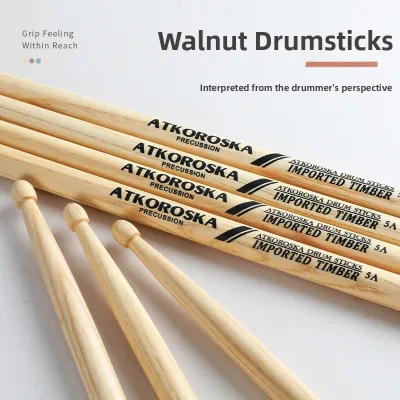
![[SG 🚚] Professional Drum Sticks 5A Hickory Walnut Wood 5A Drumsticks 7A Musical Instruments Drum Sticks One](https://img.lazcdn.com/g/p/a3df44bb9806f0e4860648fe275ccbac.jpg_400x400q80.jpg_.webp)
![[SG Seller] Kaysen Pecan Drum Stick for Drum pad and Drum sets](https://img.lazcdn.com/g/p/87d8922d14e0afaeb2184afab0d36509.jpg_400x400q80.jpg_.webp)
![[ammoon]One Pair of 5B/ 5A/ 7A Wooden Drumsticks Drum Sticks Hickory Wood Drum Set Accessories](https://img.lazcdn.com/g/p/fbbd312af4b3a8d242131818be7fee9a.jpg_400x400q80.jpg_.webp)
![[SG FREE ] Professional Drum Sticks 5A Hickory Walnut Wood 5A Drumsticks 7A Musical Instruments Drum Sticks One](https://img.lazcdn.com/g/p/3dabcb89b8581e32457f201515fa7632.jpg_400x400q80.jpg_.webp)
Prices are valid at publication and may change. Please refer to the product page for the latest price.
Weight and balance play an equally vital role in how a drumstick feels and performs. A stick that is too heavy will quickly tire out a child’s wrists and forearms, leading to poor posture and potential injury. Conversely, a stick that is too light might not provide enough physical feedback, making it difficult for the child to feel the natural rebound off the drumhead. The balance of the stick is determined by its taper—the section that narrows toward the tip—where a longer taper creates a lighter, faster feel, and a shorter taper offers more forward weight and power.
The choice of material and tip shape directly influences both durability and sound. Maple is an excellent wood choice for younger players because it is highly lightweight and absorbs a significant amount of impact shock. Hickory is slightly heavier but offers superior durability and a balanced feel, making it the industry standard as children grow. For the tips, round or ball-shaped tips are highly recommended for beginners because they produce a consistent sound regardless of the angle at which the stick hits the drumhead, while teardrop tips offer a broader range of tonal options.
Matching Stick Profiles to Age and Hand Size
Rather than relying solely on age brackets, it is far more effective to use physical growth markers to determine the right drumstick size. Children develop at different rates, and factors such as hand span, finger length, and arm reach are much better indicators of fit than a birthdate. A child with longer fingers may comfortably handle an intermediate stick early on, whereas a peer of the same age might still need a shorter, thinner model to maintain control.

To assess your child’s grip capacity, have them hold the drumstick at its fulcrum—the pivot point roughly one-third of the way up from the bottom of the stick. Their fingers should wrap naturally around the wood with a relaxed, comfortable grip, leaving a small gap between the palm and the stick. If their fingers cannot meet, or if they must tense their hand muscles to keep the stick from slipping, the diameter is too large.
Recognizing transition points is key to keeping pace with your child’s physical development. If you notice your child naturally choking up on the stick (gripping it much higher than the fulcrum) or if the sticks look disproportionately small in their hands, it is likely time to move up to a larger size. Gradual transitions prevent sudden changes in technique and allow the child’s muscle memory to adapt smoothly.
Toddlers and Early Beginners (Ages 3–6)
For toddlers and very young beginners, the primary goals are safety, comfort, and basic rhythm exploration. Sticks designed for this age group are ultra-short and lightweight, often measuring between 11 and 12 inches. These dimensions prevent joint strain on delicate wrists and accommodate the limited grip strength of early childhood.
At this stage, blunt or rounded tips are highly beneficial. These shapes minimize the risk of damage to practice pads, electronic drum kits, and household furniture during enthusiastic play sessions. Many toddler-specific sticks also feature silicone or rubber tips, which further dampen sound and soften the impact.
Before making a purchase, always check the manufacturer’s age recommendations and safety warnings. Look for explicit labels regarding choking hazards, particularly if the sticks have nylon tips that could potentially detach. Opting for single-piece wood construction or securely molded designs ensures a safer playing experience for young children.
Young Children (Ages 7–10)
As children reach primary school age, their coordination, grip strength, and musical understanding improve significantly. This stage warrants a transition to intermediate-length drumsticks, which typically measure between 13 and 14 inches. These models bridge the gap between toddler toys and standard adult gear, offering a more realistic playing experience.
When evaluating grip comfort for this age group, ensure the back end of the stick does not extend too far past the child’s wrist. An excessively long stick can catch on clothing or strike the child’s forearm during play, leading to awkward striking angles and frustration. The stick should feel like a natural extension of their arm.
This is also the ideal time to introduce standard wood types, particularly maple. Maple 7A sticks are slightly thinner and lighter than the standard 5A models used by adults, making them highly manageable. They provide excellent physical feedback and natural rebound, helping children develop proper wrist-driven strokes on acoustic or mesh-head electronic kits.
Pre-Teens and Early Teens (Ages 11+)
By the time children reach their pre-teen years, many are physically ready to transition to standard adult drumsticks. This transition should be based on hand size and the child’s ability to execute more complex rudiments and patterns. If their hands are comparable in size to an adult’s, standard models will offer the best balance and reach.
As young players progress, their playing volume and striking force naturally increase, especially if they are practicing on full acoustic drum kits. Standard adult sticks, particularly those made of hickory, are built to withstand this increased physical demand. Hickory provides the necessary durability to handle rimshots and cymbal strikes without splintering prematurely.
During this transition, closely monitor your child for signs of wrist fatigue or changes in their playing technique. If they begin dropping their wrists or complaining of discomfort after short practice sessions, the standard sticks may still be too heavy. In such cases, switching to a lighter wood like maple in the same standard size can offer a comfortable middle ground.
Adapting Choices to Skill Level and Playing Style
A child’s skill level and the musical genres they are exploring should also guide your drumstick selection. For absolute beginners, the focus should remain on durability, comfort, and versatility. A standard teardrop wood tip is highly forgiving and works well across all types of practice surfaces, allowing the student to focus entirely on building foundational hand technique and timing.
As students progress to an intermediate level, they may begin exploring different tapers and tip materials to achieve specific tonal goals. For example, if your child is learning jazz or orchestral percussion, a stick with a longer taper and a small round tip will provide the delicate rebound and clear cymbal definition required for those styles. Conversely, if they are leaning toward rock or pop, a shorter taper and a larger oval tip will offer the durability and power needed for heavier playing.
When browsing options, always check the product descriptions and manufacturer specifications for the intended use cases. It is important to avoid purchasing specialty sticks, such as heavy marching sticks or thin orchestral sticks, for standard drum set practice. Marching sticks are designed for outdoor projection and are far too heavy for a child’s wrists, while delicate orchestral sticks may break quickly under the force of drum set playing.
Pre-Purchase Safety and Quality Checklist
To ensure you are buying a safe, high-quality product, it is helpful to run through a quick checklist before completing your purchase. Whether shopping at a local music store or ordering from an online marketplace, keeping these quality markers in mind will help you avoid sub-par equipment.
- Material Safety and Finish: Verify that the drumsticks are made from non-toxic materials and feature a safe, lead-free finish. The wood should be perfectly sanded and smooth to prevent splinters. Avoid sticks with thick, glossy painted finishes, as these can become slippery when hands sweat, leading to a tight, tense grip.
- Grain Alignment: If you are buying in person, look at the grain of the wood. The grain lines should run straight from the butt of the stick all the way to the tip. Sticks with grain that runs diagonally across the shaft (cross-grain) are structurally weak and are highly prone to snapping during play.
- The Roll Test: Place the drumsticks on a flat counter or table and roll them with your hand. If they roll smoothly without any wobbling or lifting, the sticks are perfectly straight. Warped sticks will not rebound predictably, which can severely hinder a child's technical development.
- Weight Matching: Hold both sticks in your hands to check if they feel identical in weight. High-quality manufacturers pitch-match and weight-match their sticks in pairs. If one stick feels noticeably heavier than the other, it can cause an imbalance in your child's hand development.
- Specification Verification: When shopping online, do not rely on generic labels like "junior" or "kids size," as these terms are not standardized. Always look for the exact length and diameter measurements in the product specifications. A quality pair of junior sticks typically costs between S$10 and S$25, making them an affordable investment in your child's musical education.
Frequently Asked Questions (FAQ)
Can kids use standard adult drumsticks if they are tall for their age?
While a child’s overall height and arm length might suggest they can handle adult-sized gear, their hand span, finger length, and grip strength are much more critical factors. A tall child may still have relatively small hands and developing wrist muscles. Forcing them to use standard adult sticks too early can lead to rapid fatigue, poor grip habits, and a lack of control over the stick’s rebound.
Watch for physical cues during their practice sessions. If you notice their wrists stiffening, their grip sliding down to the very bottom of the stick, or a visible loss of control during faster patterns, the sticks are likely too long or heavy. It is always better to prioritize grip comfort and control over overall body height when choosing drumsticks.
How often should I replace my child's drumsticks?
Drumsticks are consumable items and will eventually need to be replaced, but the lifespan depends heavily on playing frequency, striking force, and the type of practice surface. If your child is practicing on soft rubber or mesh electronic pads, a single pair of sticks can last for several months or even a year. However, playing on acoustic kits with metal cymbals will wear down wood sticks much faster.
Perform regular visual and tactile checks on your child’s sticks. You should replace them immediately if you notice deep dents, splintering along the shaft, severe deformation of the tip, or structural cracks near the shoulder. Playing with damaged or splintered sticks not only ruins the rebound but can also damage electronic drum pads and pose a safety risk from flying wood chips.
Community discussion
Share your experience or ask a question. Comments are reviewed before publication.