
Selecting the ideal electronic drums efnote model for electronic music production requires a clear understanding of your studio workflow. Unlike traditional acoustic drummers who prioritize raw acoustic emulation, electronic music producers and DJs look at a drum kit as a hybrid instrument. The ideal kit must serve as a highly responsive MIDI controller, a source of high-quality internal drum samples, and a seamless physical interface that integrates directly with a Digital Audio Workstation (DAW) or live performance setup.
For producers working within the typical space constraints of a Singapore home studio or HDB apartment, the EFNOTE 3 or 3X offers an exceptionally compact footprint while retaining the brand’s signature multi-sensor triggering technology. For professional project studios or hybrid live DJ sets where physical presence, advanced analog routing, and dedicated outputs are paramount, the EFNOTE 5 or EFNOTE 7 series becomes the logical choice. By evaluating your specific production environment, connectivity needs, and performance style, you can select the precise model that elevates your electronic music tracks.
Key Evaluation Criteria for Electronic Music Production
Sound Module and Synthesis
Electronic music genres—ranging from House and Techno to Drum & Bass and Dubstep—rely heavily on the texture, punch, and editability of drum sounds. When evaluating electronic drums efnote modules, look beyond the factory presets. You must assess how deeply you can manipulate the internal sound engine. The ability to adjust parameters such as pitch tuning, muffling, transient attack, and virtual room resonance is critical for shaping a generic kick or snare into a genre-specific electronic element. Furthermore, verify the module’s capacity for sample management, including whether it allows you to layer internal acoustic samples with synthetic textures to create hybrid drum sounds.
Products mentioned in this guide
![Donner DED-200 Complete Set 8 Pieces Electronic Drums Foldable DED 200 Series [LIMITED STOCK]](https://img.lazcdn.com/g/p/b56f9621dde549e8f01fd41c8394ef65.png_400x400q80.png_.webp)
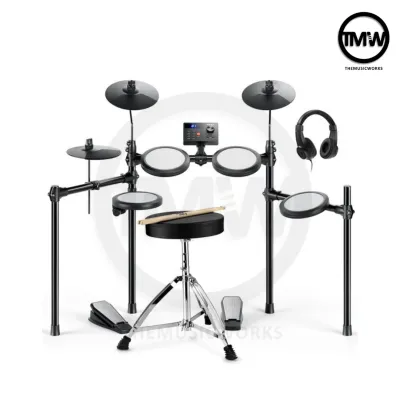
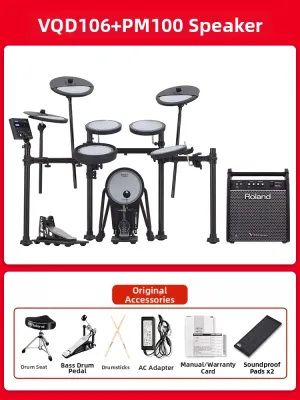
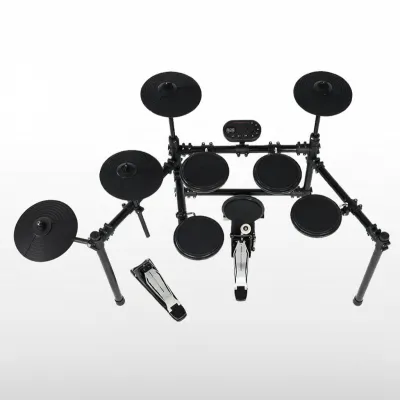


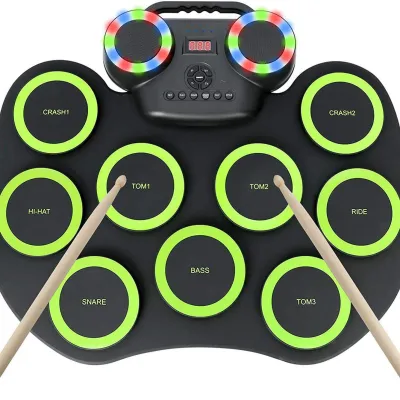

Prices are valid at publication and may change. Please refer to the product page for the latest price.
Connectivity and Routing
In a modern electronic music production suite, a drum kit cannot operate in isolation. It must function as a core component of your digital ecosystem. High-speed USB MIDI connectivity is essential for sending high-resolution performance data directly to your DAW to trigger software samplers and virtual instruments. Equally important is the routing of audio signals. While a simple stereo output is sufficient for basic monitoring, professional production requires multi-channel audio routing. This allows you to send individual drum pads (kick, snare, hi-hat, and percussion) to separate tracks in your DAW mixer, enabling precise EQ, compression, and effects processing on each individual instrument.
Triggering and Dynamics
To prevent electronic beats from sounding robotic, producers rely on the natural dynamics and micro-timings of a live human performance. This is where advanced triggering technology becomes indispensable. High-resolution multi-sensor pads capture the exact position and velocity of every strike, translating subtle ghost notes and aggressive accents into accurate MIDI velocity values (ranging from 0 to 127). Customizable velocity curves within the drum module allow you to tailor the pads’ responsiveness to your specific playing style, ensuring that your physical performance is captured with absolute precision and expressive detail.
Navigating the EFNOTE Product Tiers
Entry-Level vs. Professional Modules
EFNOTE structures its product lineup to deliver consistent triggering performance across all models, but the control modules differ significantly in physical interface, processing power, and input/output (I/O) capabilities. The entry-level modules, such as the one paired with the EFNOTE 3 series, feature a streamlined, touchscreen interface designed for quick navigation and intuitive sound editing. While highly capable, these modules typically offer fewer physical analog outputs, relying more on USB connectivity for multi-channel routing.

In contrast, the professional-tier modules found in the EFNOTE 5 and EFNOTE 7 series provide expanded physical routing options, including dedicated analog line outputs and advanced onboard processing menus. These professional modules are designed for environments where you need to route physical audio signals directly into external mixing consoles, analog outboard gear, or complex studio patch bays without relying solely on a computer interface.
Bedroom Producer vs. Studio/Touring Setup
Your physical production environment plays a major role in determining which EFNOTE tier is most suitable. For a bedroom producer operating in a compact space, minimizing the physical footprint of the kit is often a primary concern. The EFNOTE 3 and 3X kits utilize elegant, space-saving tripod stands and compact pad dimensions, making them easy to position in tight corners or small spare rooms. In these setups, a single USB cable is often all that is required to handle both MIDI transmission and multi-channel audio routing directly to a laptop.
For commercial recording studios or touring electronic artists who perform live hybrid DJ sets, physical stability and stage presence are crucial. The EFNOTE 5 and 7 series feature full-sized, real birch wood shells and heavy-duty, double-braced acoustic-style hardware. While these kits require a larger footprint and are heavier to transport, they offer the physical resistance needed for high-energy live performances and the extensive analog connectivity required to interface seamlessly with professional venue sound systems.
Expansion and Upgradability
Electronic music production is a constantly evolving field, and your instrument should be capable of adapting to new trends and sound design techniques. Before finalizing your selection, verify the module’s capacity for firmware updates and sound library expansion. EFNOTE frequently releases official firmware updates that optimize trigger algorithms, introduce new features, and expand the internal sound library.
Producers should consult the official manufacturer documentation to understand how the module interfaces with external storage, such as SD cards or direct computer connections, for loading user settings or system updates. Additionally, check the availability of expansion trigger inputs on the back of the module, which allow you to add extra pads or cymbals to your kit as your production setup grows.
Integrating Electronic Drums EFNOTE Kits with DAWs and DJ Software
MIDI Controller Workflow
Using your electronic drum kit as a master MIDI controller is one of the most powerful workflows for electronic music production. By connecting the EFNOTE module to your computer via USB, you can bypass the internal sound engine entirely and use the physical pads to trigger external software samplers, such as Native Instruments Battery, Ableton Drum Racks, or specialized drum synthesizers.
In a live performance or DJ mixing context, these pads can be mapped to trigger loops, launch audio clips, or control real-time effects parameters within software like Serato or Traktor. For example, you can map an auxiliary cymbal pad to activate a high-pass filter sweep or trigger a vocal sample right before a track drop. This integration transforms the drum kit from a simple recording instrument into an interactive performance workstation.
Audio Recording and Monitoring
When recording your drum performances, you must choose between capturing the raw MIDI data or recording the actual audio generated by the EFNOTE sound engine. Many EFNOTE modules feature built-in multi-channel USB audio interfaces, which allow you to stream individual drum tracks directly into your DAW over a single USB cable. This eliminates the need for a separate, expensive multi-channel audio interface if you want to record the module’s internal sounds.
However, if your studio workflow involves routing the drums through external analog compressors, preamps, or hardware effects units, you will need to utilize the module’s physical analog outputs. In this scenario, verify that your external audio interface has a sufficient number of analog inputs to capture the individual drum channels simultaneously, ensuring you maintain complete control over the mix during the post-production phase.
Latency and Driver Support
Latency—the time delay between striking a drum pad and hearing the resulting sound from your software—is a critical factor that can disrupt your timing, especially when playing fast-tempo electronic genres like Drum & Bass, Footwork, or Techno. To ensure a seamless, low-latency playing experience, you must verify the official driver compatibility for your computer’s operating system.
Most modern EFNOTE modules are class-compliant, meaning they offer plug-and-play functionality with macOS CoreAudio, which naturally provides low-latency performance. For Windows-based production environments, it is highly recommended to use dedicated ASIO drivers or route the module through a professional external audio interface with proprietary low-latency drivers. Keeping your computer’s buffer size optimized (typically at 64 or 128 samples) ensures that the physical response of the pads remains perfectly synchronized with your digital environment.
Pad Feel and Hardware Responsiveness for Electronic Genres
Mesh Heads vs. Rubber Pads
The physical feel of your drum pads directly impacts your playing dynamics, speed, and overall comfort. EFNOTE electronic drum kits feature multi-ply mesh heads on the snare, tom, and kick pads. Compared to traditional rubber pads, mesh heads provide a realistic rebound that closely mimics the tension and feel of an acoustic drum shell.
This realistic rebound is particularly beneficial for executing rapid double-strokes, rolls, and intricate syncopated patterns common in complex electronic beats. Additionally, mesh heads are exceptionally quiet when struck, making them ideal for late-night production sessions in high-density residential areas where noise control is a priority. Producers should consult the manufacturer’s care instructions to adjust the tension of the mesh heads properly, ensuring optimal rebound without putting unnecessary strain on the internal trigger sensors.
Hi-Hat and Cymbal Control
The hi-hat is the driving force behind the groove in genres like House, Techno, and UK Garage. The subtle transition from a tightly closed hi-hat to a loose, open sizzle defines the energy and flow of a track. EFNOTE kits feature advanced multi-sensor optical hi-hats that deliver continuous control, capturing the finest gradients of pedal movement with incredible accuracy.
This continuous control allows you to program highly expressive, humanized hi-hat patterns that feel alive rather than static. Furthermore, the multi-zone cymbals provide 360-degree flat sensing and highly responsive choke functions. This allows you to abruptly mute a crash or ride cymbal to emphasize a sudden drop, structural transition, or rhythmic stop in your electronic mix.
Rack Stability and Footprint
Electronic music performance can be physically demanding, often requiring fast, repetitive, and heavy-hitting patterns. A loose or unstable rack system can cause the pads to shift during a session, leading to missed triggers or accidental crosstalk (where striking one pad causes another nearby pad to trigger unintentionally).
EFNOTE kits are paired with engineered, heavy-duty racks or independent, double-braced acoustic-style stands that provide exceptional stability. When assembling your kit, ensure that all memory locks and T-clamps are securely tightened according to the assembly manual. Using a high-quality, non-slip drum mat on your studio floor is also highly recommended to prevent the bass drum pedal and stands from sliding during intense tracking sessions.
Pre-Purchase Verification Checklist
Official Specifications
Before making a final purchase decision, it is essential to look past marketing materials and verify the exact technical specifications of your chosen EFNOTE model on the official manufacturer website or through an authorized local retailer. Pay close attention to the following technical details:
- Maximum Polyphony: Ensure the module's polyphony limit can handle complex, fast-rolling patterns and long cymbal decays without cutting off active voices.
- Physical Connections: Confirm the exact number and type of physical inputs and outputs, including MIDI (USB and 5-pin), analog line outs, and headphone jacks.
- Included Accessories: Verify exactly what hardware is included in the package (such as kick pedals, hi-hat stands, or snare stands) to avoid unexpected additional costs.
- Physical Dimensions: Measure your available studio space and compare it against the fully assembled footprint specifications of the kit.
Software Bundles and Licenses
Many electronic drum packages include introductory software bundles, such as lite versions of popular DAWs, virtual drum instruments, or educational applications. When purchasing your EFNOTE kit, verify what software licenses are included in the box. Check the compatibility of these software packages with your current computer operating system, and review the manufacturer’s terms regarding license activation, transferability, and future upgrade paths to ensure you can fully utilize these digital tools in your production workflow.
Local Warranty and Support
Investing in a professional electronic drum kit represents a significant financial commitment. To protect your investment, ensure that you purchase your EFNOTE kit from an authorized distributor or local retailer. This guarantees access to official warranty coverage and professional technical support. Before completing your purchase, verify the duration of the warranty, the location of the authorized local service center, and the procedure for obtaining replacement parts, hardware repairs, or official firmware assistance.
Frequently Asked Questions (FAQ)
Can I use EFNOTE drums as a MIDI controller for DJ software?
Yes, EFNOTE drum modules transmit standard MIDI data over USB or traditional 5-pin MIDI connections, allowing them to function as highly responsive MIDI controllers. To use the kit with your preferred DJ software, you must verify the software’s MIDI mapping capabilities. Most professional DJ platforms allow you to manually map incoming MIDI Note and Control Change (CC) data to specific software functions. This enables you to assign different zones of your drum pads and cymbals to trigger samples from a remix deck, start or stop loops, or control real-time effects parameters. Refer to the MIDI implementation chart in your EFNOTE user manual to identify the specific MIDI notes assigned to each pad zone.
Do I need an external audio interface to record EFNOTE drums into my DAW?
Whether you need an external audio interface depends entirely on your recording workflow. If you plan to use the EFNOTE kit strictly as a MIDI controller to trigger virtual instruments or software samplers inside your DAW, a single USB cable connected directly from the drum module to your computer is all that is required; no external audio interface is needed.
If you want to record the high-quality internal sounds of the EFNOTE module, many models feature built-in multi-channel USB audio interfaces, allowing you to stream individual drum tracks directly to your DAW over a single USB connection. However, if your specific EFNOTE module only supports stereo USB audio and you require individual analog track separation, or if you need to integrate external studio monitors, microphones, and other analog studio gear, you will need to route the module’s physical analog outputs into an external multi-channel audio interface.
Community discussion
Share your experience or ask a question. Comments are reviewed before publication.