
Choosing the right electric guitar strap in Singapore is a foundational step for any beginner. It is not just an aesthetic accessory; it is a critical piece of ergonomic equipment that directly influences how quickly you learn, how long you can practice without pain, and how safe your instrument remains. An ideal beginner strap balances breathability for Singapore’s warm climate, provides adequate weight distribution to prevent shoulder strain, and features secure attachment points to protect your investment. By focusing on adjustable, durable, and comfortable materials, you can establish a healthy playing posture from day one.
Why the Right Strap Matters for Beginner Guitarists
When you first pick up an electric guitar, your primary focus is naturally on finger placement, fretboard patterns, and strumming techniques. However, the physical relationship between your body and the instrument dictates how easily you can execute these movements. A high-quality guitar strap acts as the anchor for your playing posture. By holding the guitar at a consistent height and angle, it allows your fretting hand to move freely along the neck without having to support the weight of the instrument. This mobility is essential for executing clean chord transitions and avoiding awkward wrist angles that can hinder your progress.
Electric guitars are significantly heavier than their acoustic counterparts, often weighing between 3 and 5 kilograms. Supporting this weight during long practice sessions can quickly lead to physical fatigue. Without proper support, the downward pull of the guitar concentrates pressure on the trapezius muscle and neck, leading to muscle tension, shoulder strain, and even tension headaches. A well-designed strap distributes this weight evenly across your shoulder and back, allowing you to practice for extended periods without discomfort or the urge to cut your session short.
Products mentioned in this guide
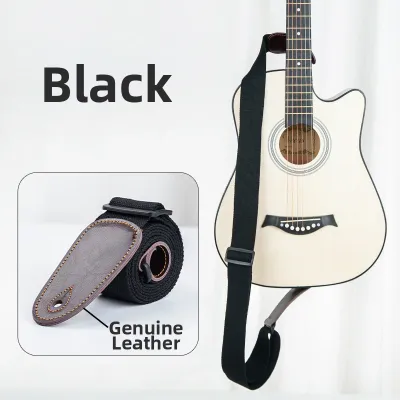
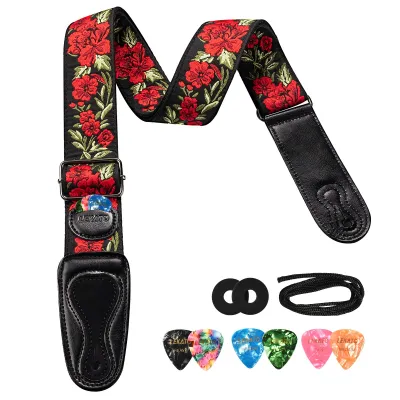
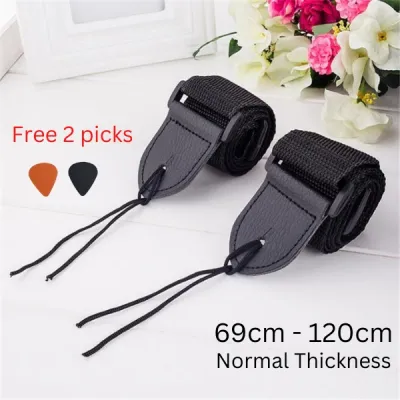
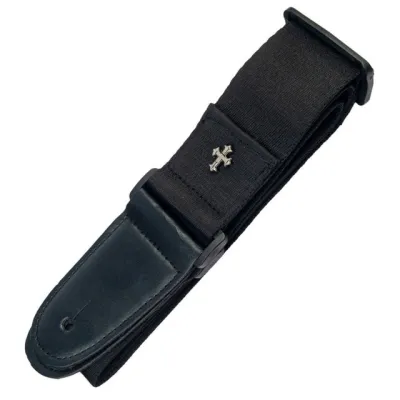
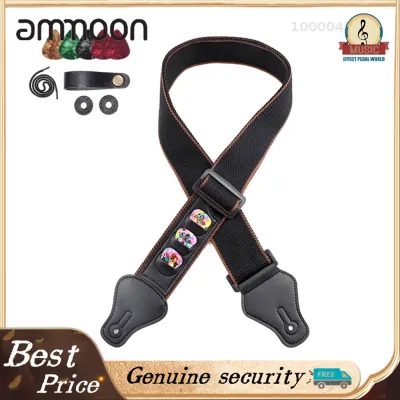
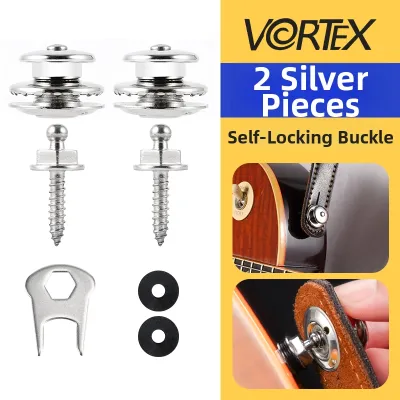
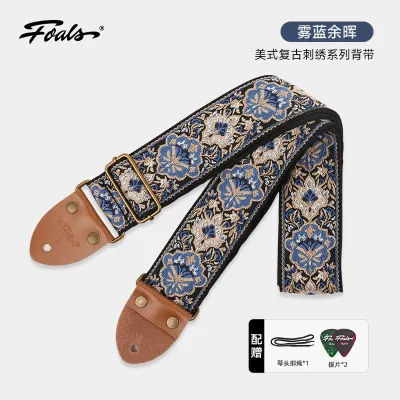
Prices are valid at publication and may change. Please refer to the product page for the latest price.
Beyond comfort and ergonomics, a reliable strap is your primary defense against accidental damage. Electric guitars are highly susceptible to gravity; a single slip from your hands can result in cracked finishes, broken headstocks, or damaged electronics. Standard strap buttons on beginner guitars are often basic, and a worn or poorly fitted strap can easily slip off these buttons during movement. Investing in a secure, properly fitted strap ensures that your instrument remains safely attached to your body, whether you are practicing sitting down or standing up.
Key Features to Look for in a Beginner Electric Guitar Strap
Selecting your first strap requires looking past appealing designs and focusing on the technical specifications that impact daily use. The ideal beginner strap must withstand regular adjustments, resist wear at the attachment points, and remain comfortable against your skin. Because everyone has a unique body shape and playing style, understanding these key features will help you identify which specifications align with your personal needs.

Material and Comfort
The material of your strap determines its durability, flexibility, and how it reacts to your body heat. In Singapore’s humid climate, material choice is particularly important for maintaining comfort and hygiene during long practice sessions.
Nylon and polyester are highly popular for beginner straps due to their exceptional durability, lightweight nature, and affordability. These synthetic woven materials are easy to clean and resist moisture, making them highly practical. However, they can sometimes have rough edges that irritate the neck if worn with a collarless shirt, and their slick texture means the strap may slide easily across your shoulder.
Cotton and canvas straps offer a softer, more breathable alternative. They provide excellent friction, which helps keep the guitar in a stable position and prevents “neck dive”—a common issue where the headstock of the guitar pulls downward. While cotton absorbs sweat and requires occasional washing to prevent odors, its natural fibers are gentle on sensitive skin.
Leather and suede straps are prized for their classic aesthetic, exceptional grip, and long-term durability. A high-quality leather strap will mold to the shape of your shoulder over time, offering a highly personalized fit. However, leather requires regular maintenance in humid environments; without proper ventilation and occasional conditioning, it can harbor mold or become stiff and cracked.
Neoprene and memory foam straps represent the pinnacle of modern ergonomic design. These materials offer built-in stretch and cushioning, which significantly reduces the perceived weight of the guitar by absorbing the shock of your movements. They are highly recommended for players experiencing shoulder or back discomfort, though they tend to be thicker and less breathable than simple woven straps.
Width and Weight Distribution
The width of a guitar strap directly correlates with how effectively it distributes the weight of the instrument across your shoulder. Standard straps typically measure around 2 inches (approximately 5 centimeters) in width. This size is highly versatile and perfectly adequate for lightweight electric guitars, such as double-cutaway solid bodies or hollow-body models. They offer excellent freedom of movement and do not feel overly bulky on smaller body frames.
For heavier solid-body electric guitars, a wider strap measuring 3 inches (approximately 7.5 centimeters) or more is highly beneficial. By spreading the downward force over a larger surface area, a wider strap prevents the material from digging into your shoulder muscles. This simple physical adjustment can make a heavy instrument feel significantly lighter and more manageable.
However, wider straps do come with trade-offs. They can sometimes restrict neck movement or rub uncomfortably against your collarbone, especially if the material is stiff. Additionally, high-friction materials on a very wide strap can grab your clothing, causing your shirt to bunch up as you move. Beginners should weigh these factors against the actual weight of their specific guitar before choosing an ultra-wide model.
Adjustability and Length
A guitar strap must be highly adjustable to accommodate different body heights, torso lengths, and playing preferences. The ideal resting height for an electric guitar is one that allows you to maintain a similar wrist angle whether you are sitting or standing. If the strap is too long, the guitar sits too low, forcing your fretting wrist into a sharp, uncomfortable bend. If it is too high, your strumming arm may feel cramped.
When evaluating a strap, inspect the adjustment mechanism. Tri-glide sliders, commonly found on nylon and cotton straps, allow for quick, continuous adjustments to find the exact millimeter of comfort. Ladder-style adjustments, typical of leather straps, use a series of slots to adjust length in fixed increments; while highly secure, they take longer to adjust. Ensure the mechanism holds firmly under tension and does not slip gradually while you play.
Most standard straps offer an adjustable length range between 40 and 60 inches (approximately 101 to 152 centimeters). If you are particularly tall or prefer to wear your guitar lower, look for extra-long (XL) models. Conversely, younger players or those with smaller frames should verify that the strap can be shortened sufficiently without the excess material bunching up or interfering with the guitar’s hardware.
Comparing Common Strap Types for Electric Guitars
To help you visualize the differences between these options, the table below compares the primary categories of electric guitar straps based on their material properties, ideal use cases, and maintenance needs.
| Strap Type | Primary Materials | Best Use Case | Weight Support Capacity | Maintenance Level |
|---|---|---|---|---|
| Standard Woven | Nylon, Polyester, Cotton | Lightweight guitars, daily practice, budget-conscious beginners | Moderate (Suitable for standard electrics) | Low (Easy to wipe clean or hand wash) |
| Padded Ergonomic | Neoprene, Memory Foam, Lycra | Heavy solid-body guitars, long practice sessions, players with shoulder pain | High (Excellent shock absorption) | Moderate (Requires air drying after heavy use) |
| Classic Leather | Genuine Leather, Suede | Heavy guitars, players seeking long-term durability and classic style | High (Molds to body shape over time) | High (Requires conditioning to prevent mold in humidity) |
| Vintage Style | Thin leather with a shoulder pad | Retro aesthetics, lightweight or vintage-style guitars | Low to Moderate (Pad must be positioned correctly) | Moderate (Leather care required for the strap ends) |
Standard woven straps are the most common entry point for beginners due to their versatility and low cost. They are highly adjustable and come in a vast array of colors and patterns, allowing you to personalize your look. Padded ergonomic straps are a functional upgrade focused entirely on physical comfort, making them ideal if you practice standing up for hours. Leather straps represent a long-term investment that ages beautifully, while vintage-style straps offer a distinct retro look but may require more effort to keep comfortable.
Securing Your Guitar: Strap Locks and Safety Checks
Even the most comfortable strap is useless if it fails to keep your guitar secure. Standard strap buttons on electric guitars are simple metal pegs with a flared end. Over time, the buttonholes on a standard strap will stretch, soften, and lose their grip. This wear is accelerated by frequently taking the strap on and off the guitar. When the holes become too loose, the strap can easily slip off the button, especially when you tilt the guitar neck upward.
To prevent catastrophic drops, beginners should consider using strap locks or safety retainers. Mechanical strap locks replace your guitar’s factory strap buttons with a locking mechanism that semi-permanently attaches to your strap. These systems lock securely into place with a spring-loaded pull-pin, ensuring the strap cannot release unless you manually disengage the lock. While highly secure, they require basic tools to install on your guitar.
For a simpler, low-cost alternative, rubber strap blocks (often called strap washers) are incredibly effective. These are flexible rubber rings that you stretch over your existing strap buttons once the strap is already attached. They sit tightly against the button, blocking the strap from slipping over the flange. They require no modifications to your guitar, cost very little, and provide excellent peace of mind for home practice.
In addition to using safety retainers, make it a habit to perform regular safety checks on your guitar’s hardware. The screws holding your guitar’s strap buttons into the wood can loosen over time due to the constant movement and tension of the strap. Gently wiggle the buttons before each practice session. If you notice any play or spinning, use a screwdriver to tighten the screw gently. If the screw hole has stripped, consult a local guitar technician to repair the wood safely before continuing to use a strap.
Building Your Shortlist: What to Check Before Buying
Before you make a purchase online or head down to a local music store in Singapore, preparing a checklist will ensure you select a strap that fits both your body and your instrument perfectly. Taking a few minutes to verify these details will save you the hassle of dealing with returns or ending up with a strap that sits unused in your gig bag.
First, measure your required strap length. You can do this easily by taking a piece of string, draping it over your shoulder, and holding the ends at the points where your guitar’s strap buttons sit when you are in a comfortable playing position. Measure the length of the string with a tape measure. Ensure that your preferred length sits comfortably within the middle of the adjustment range of any strap you are considering, leaving room to adjust both higher and lower.
Second, pay close attention to the construction of the strap ends, often called the leather tabs or “ears.” This is the area of the strap that experiences the most stress. Look for thick, double-stitched leather or reinforced synthetic materials. If the material around the buttonhole is too thin or single-layered, it will stretch out rapidly, compromising the security of your guitar. The slot should be snug; it should require a small amount of effort to push over your guitar’s strap buttons the first few times.
Finally, check the return and exchange policies of the retailer, especially when shopping on e-commerce platforms. Because comfort is highly subjective, a strap that looks perfect online might feel too stiff, too slippery, or too wide once you actually wear it with your guitar. Having the option to exchange the strap after a brief home trial ensures you can find the perfect ergonomic match without financial risk.
Frequently Asked Questions (FAQ)
Can I use an acoustic guitar strap for an electric guitar?
Yes, you can generally use an acoustic guitar strap for an electric guitar, provided it has the correct attachment holes at both ends. Many acoustic straps feature a shoelace or string at one end designed to tie around the headstock behind the nut. For an electric guitar, you will not need this tie; instead, you will attach both ends of the strap directly to the two strap buttons installed on the guitar’s body. Keep in mind that acoustic guitars are much lighter than electric guitars. A thin, unpadded strap that feels perfectly comfortable on a light acoustic guitar may dig into your shoulder when supporting a heavier electric guitar, so upgrading to a wider or padded strap is often recommended.
How do I clean a padded or leather guitar strap?
Cleaning methods depend entirely on the material of your strap. For synthetic materials like nylon, polyester, and neoprene, you can wipe them down with a damp cloth and a small amount of mild dish soap to remove sweat and oils, then allow them to air dry completely away from direct sunlight. Cotton straps can often be hand-washed in cool water with mild detergent. Leather and suede straps require specialized care, especially in Singapore’s humid climate. Never submerge leather in water. Instead, wipe it down with a dry or very slightly damp microfiber cloth. Apply a high-quality leather conditioner once or twice a year to keep the leather supple and prevent cracking, and always store your leather strap in a well-ventilated area to prevent mold growth.
Do I need strap locks for a beginner electric guitar?
While strap locks are not strictly mandatory for beginners, some form of strap security is highly recommended. If you primarily practice while sitting down, the risk of your guitar slipping off the strap is relatively low. However, if you practice standing up, move around while playing, or plan to perform, the risk increases significantly. You do not need to purchase expensive mechanical locking systems right away. A simple, budget-friendly set of rubber strap blocks (washers) will slide over your existing strap buttons and provide excellent security, keeping your instrument safe from accidental drops without requiring any modifications to your guitar.

Community discussion
Share your experience or ask a question. Comments are reviewed before publication.