
Selecting the right English vocabulary workbooks for your child’s Primary School Leaving Examination (PSLE) preparation is a nuanced task that goes far beyond picking the most popular title off a bookstore shelf. In Singapore’s rigorous educational landscape, a strong vocabulary is not merely about memorizing long lists of complex words; it is about the precise, contextual application of language across multiple exam papers. The ideal workbook is one that aligns perfectly with the latest Ministry of Education (MOE) syllabus, targets your child’s specific linguistic gaps, and offers structured, progressive practice. Rather than searching for a single “magic” book, parents should look for resources that systematically build contextual understanding, descriptive writing capabilities, and exam-taking stamina.
To make an informed decision, you must first understand how vocabulary is integrated into the assessment criteria and how different publications address these demands. A well-chosen workbook acts as a personal tutor, guiding your child through the subtleties of collocations, phrasal verbs, and idiomatic expressions. By matching the right material to your child’s current proficiency level, you can transform vocabulary study from a tedious chore of rote memorization into an engaging process of language mastery. This comprehensive guide will help you evaluate the available options, identify the most suitable workbook types for your child’s needs, and establish an effective study routine that yields tangible results in the examination hall.
Understanding PSLE Vocabulary Expectations
To select the most effective vocabulary workbook, it is essential to first understand how vocabulary is evaluated in the PSLE English syllabus. The examination does not test vocabulary in isolation through simple definition matching. Instead, vocabulary is woven into almost every component of the English papers, demanding a deep, functional understanding of words and how they behave in sentences.
Products mentioned in this guide
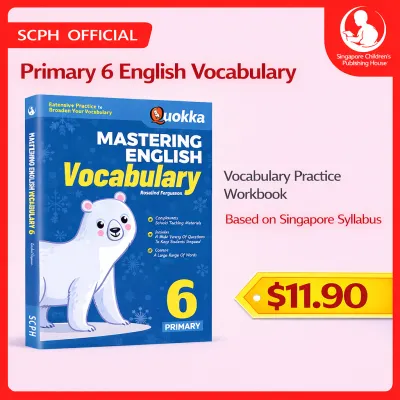
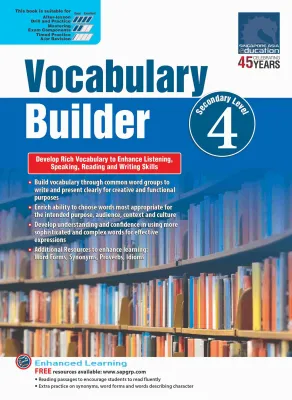
Prices are valid at publication and may change. Please refer to the product page for the latest price.
In Paper 1 (Writing), vocabulary plays a decisive role in the “Language and Organization” component of the rubric. Students must demonstrate a wide range of vocabulary used accurately to convey subtle nuances, set the mood, and describe characters or settings vividly. However, examiners frequently caution against the mechanical insertion of “bombastic” words. Using complex words incorrectly or in a forced manner often detracts from the clarity of the narrative and can result in lower marks. The focus must always be on precise, natural, and contextually appropriate word choices.
In Paper 2 (Language Use and Comprehension), vocabulary is tested directly and indirectly. The Vocabulary MCQ section explicitly assesses word meanings, synonyms, and antonyms within short sentence contexts. The Vocabulary Cloze section requires students to select the most appropriate words to fill blanks in a continuous passage, testing their grasp of contextual clues and semantic fit. Furthermore, components like Grammar Cloze and Synthesis and Transformation heavily rely on a student’s familiarity with phrasal verbs, prepositions, and collocations—word pairings that sound natural to native speakers but often trip up students who rely solely on direct translation or rote learning.
Before purchasing any materials, it is highly beneficial to assess your child’s current vocabulary baseline. Review their recent school test papers and worksheets to identify where they lose marks. Are they struggling with the literal meanings of words in the MCQ section, or are they failing to apply descriptive vocabulary in their compositions? Pinpointing these specific weaknesses allows you to select a workbook that directly addresses their learning gaps rather than wasting time on areas they have already mastered.
What to Look for in a PSLE Vocabulary Workbook
When browsing the extensive selection of assessment books in local stores, having a clear evaluation checklist will prevent you from making impulse purchases based on attractive covers or generic marketing claims. The first and most critical criterion is strict alignment with the latest Ministry of Education (MOE) English syllabus. The local curriculum undergoes periodic refinements to ensure relevance, and a workbook that does not reflect these updates may focus on obsolete question formats or outdated vocabulary lists. Look for clear indications on the cover or in the preface that the content is designed specifically for the current PSLE format.

A high-quality vocabulary workbook must strike a healthy balance between isolated word lists and contextual exercises. While thematic word lists are useful for initial exposure, they are insufficient on their own. The workbook should feature a variety of exercise formats, including cloze passages, sentence completion, matching exercises, and error identification. These varied formats force the student to actively retrieve and apply the words in different sentence structures, reinforcing retention and deepening their understanding of how words function in diverse contexts.
Another indispensable feature of a superior workbook is a comprehensive answer key that goes beyond merely listing the correct options. For vocabulary practice to be truly educational, the answer key should provide detailed explanations for why a particular word is correct and, ideally, why the other options are incorrect or inappropriate in that specific context. This level of detail supports self-directed learning, allowing your child to understand their mistakes independently, and provides invaluable guidance for parents who may be coaching their children at home.
Finally, evaluate the progression of difficulty within the workbook. The transition from Primary 5 to Primary 6 involves a significant step up in linguistic complexity and cognitive demand. A well-designed workbook should feature a logical, scaffolded progression, starting with foundational vocabulary and gradually introducing more sophisticated terms, complex sentence structures, and challenging exam-style passages. This gradual increase in difficulty helps build your child’s confidence and prevents them from becoming overwhelmed by excessively difficult exercises too early in their preparation.
Matching Workbook Types to Your Child's Learning Gaps
Vocabulary workbooks are not all created equal; they are often designed with different pedagogical focuses to target specific areas of language acquisition. Understanding these categories will help you select the right combination of books to address your child’s unique learning profile.
Thematic vocabulary books are organized around specific topics, such as environmental issues, technology, personal values, emotions, and travel. These books are exceptionally beneficial for improving Paper 1 performance. By grouping words and phrases under common narrative and situational themes, they help students build a rich repository of descriptive language that they can readily deploy during their composition writing. For instance, learning a cluster of words related to “fear” or “excitement” allows a student to write more engaging and evocative stories.
Specialized workbooks, on the other hand, focus on specific linguistic elements such as phrasal verbs, idioms, collocations, and word forms. These are highly targeted resources designed to tackle the trickier parts of Paper 2. Phrasal verbs and collocations are notorious for tripping up students because their meanings cannot always be deduced from the individual words. A workbook dedicated to these structures provides the focused, repetitive practice needed to master these idiomatic aspects of the English language.
Comprehensive drill books are designed for the final stages of exam preparation. These books contain full-length practice papers that mimic the actual PSLE English paper format, complete with strict time limits. They are excellent for building exam stamina, teaching time management, and helping students become familiar with the overall layout and pressure of the examination. However, these should generally be introduced only after your child has built a solid vocabulary foundation through thematic and specialized books.
To create a balanced and holistic study routine, consider combining these workbook types strategically. For example, you might use a thematic vocabulary book during the earlier part of the academic year to enrich your child’s writing, while concurrently using a specialized collocation workbook to patch up specific grammar and vocabulary gaps. As the examination approaches, you can gradually transition to comprehensive drill books to practice under timed conditions.
Building an Effective Vocabulary Study Routine
Acquiring a robust vocabulary is a gradual process that requires consistent, long-term exposure and active recall. Simply purchasing the best workbooks will not yield results unless they are integrated into a structured and sustainable study routine.
First, establish a realistic and manageable practice schedule. Cramming dozens of vocabulary words over a single weekend is highly ineffective, as the human brain struggles to retain large volumes of abstract information without regular reinforcement. Instead, aim for short, focused sessions of 15 to 20 minutes, three to four times a week. This consistent, bite-sized approach keeps the material fresh in your child’s mind and prevents the cognitive fatigue and burnout often associated with long, intensive study sessions.
Second, encourage active learning techniques rather than passive reading. When your child completes an exercise in their workbook, they should not simply check the answer and move on. Encourage them to maintain a personal vocabulary journal. In this journal, they can record new words, write down their definitions, note common collocations, and, most importantly, write their own original sentences using those words. This process of active generation helps transfer the words from their short-term passive memory into their long-term active vocabulary, making them much more likely to use the words correctly in their own writing.
Finally, manage the transition from guided practice to independent, exam-condition exercises carefully. In the initial stages of using a new workbook, allow your child to work at their own pace, and feel free to discuss difficult questions together. This collaborative approach builds confidence and ensures they understand the underlying concepts. However, as they become more proficient and the exam date draws nearer, introduce timed, closed-book sessions. This transition is crucial for helping them adapt to the time constraints and psychological pressure of the actual PSLE.
Where to Buy and What to Verify Before Checkout
When you are ready to purchase your selected vocabulary workbooks, taking a few moments to perform physical and administrative checks will ensure you are investing in authentic, high-quality, and relevant educational materials.
Always verify the exact edition and publication year of the workbook. Because the local curriculum and exam formats are subject to periodic updates, older editions may contain outdated question formats or vocabulary lists that do not align with current assessment standards. Check the copyright page or the publisher’s notes to confirm that the book is designed for the current syllabus. Additionally, pay close attention to the publisher’s reputation. Established local educational publishers have a proven track record of aligning their content with official guidelines and maintaining rigorous quality control.
It is highly recommended to source your workbooks from established local brick-and-mortar bookstores, official publisher websites, or reputable online marketplaces. Purchasing from unauthorized sellers or unverified online listings carries the risk of acquiring low-quality, unauthorized reprints, which may suffer from missing pages, illegible printing, or incorrect answer keys. Furthermore, avoid generic international vocabulary workbooks that are not explicitly tailored to the local educational context, as they often focus on different spelling conventions, vocabulary priorities, and exam formats that do not align with the specific requirements of the PSLE.
Frequently Asked Questions (FAQ)
Can digital apps replace physical workbooks for PSLE prep?
While digital vocabulary apps and online learning platforms offer interactive features, gamified quizzes, and convenient on-the-go practice, they cannot fully replace physical workbooks for PSLE preparation. The actual PSLE English examination is a pen-and-paper test that requires physical handwriting, sustained focus on printed text, and manual writing stamina. Working with physical books helps children develop the spatial awareness, handwriting neatness, and tactile focus needed for the exam hall. Digital apps are best utilized as supplementary tools for quick revision, vocabulary games, or auditory pronunciation checks during travel or leisure time, rather than as the primary medium for exam preparation.
How many workbooks should a Primary 6 student complete?
There is no fixed number of workbooks a student must complete to achieve success; quality of learning always triumphs over the sheer quantity of completed pages. Rushing through multiple workbooks without proper review often leads to superficial learning and repeated mistakes. It is far more beneficial for a student to thoroughly complete one or two well-chosen workbooks, ensuring they understand every error, record new words in a journal, and actively apply them in their writing. Signs that a student has mastered the material include consistently high scores in vocabulary sections of practice papers, the natural and accurate use of varied vocabulary in their compositions, and the ability to explain why specific words are chosen over others in contextual exercises. At this stage, time is better reallocated to other weaker areas of the English paper or other subjects.
Community discussion
Share your experience or ask a question. Comments are reviewed before publication.