
Choosing the right EZ Complete assessment books for your child’s Primary School Leaving Examination (PSLE) preparation depends on identifying their specific academic gaps, understanding the structure of each subject’s papers, and verifying that the publications align with the latest Ministry of Education (MOE) syllabus. Rather than buying every book on the shelf, a targeted selection strategy ensures that your child practices the exact skills needed for English, Mathematics, Science, and Mother Tongue. By evaluating the format, difficulty level, and answer keys of these books, you can construct a highly effective study plan that builds exam confidence and stamina.
To make an informed purchase, you must look beyond the cover design and examine how the content is structured. High-quality assessment books should serve as a bridge between classroom learning and the actual exam environment. By selecting books that match your child’s current learning phase, you can avoid overwhelming them with repetitive drills and instead focus on targeted skill acquisition.
Understanding the Role of Complete Assessment Books
Complete assessment books serve a distinct purpose in a student’s academic journey, differing significantly from topical worksheets or daily homework. While topical books are designed to reinforce specific concepts immediately after they are taught in class, complete assessment books compile the entire syllabus into full-length mock exam papers. This holistic approach is essential for training the brain to retrieve information from different topics rapidly, mimicking the cognitive demands of the actual PSLE.
Products mentioned in this guide
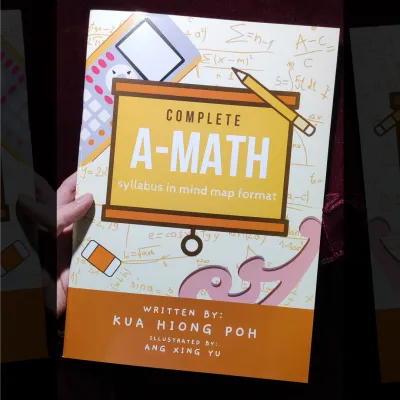
Prices are valid at publication and may change. Please refer to the product page for the latest price.
Introducing full-syllabus practice at the wrong time can lead to unnecessary frustration. If a student attempts a complete mock paper before they have covered all the topics in school, they will encounter questions they cannot answer, which can damage their confidence. The optimal timeline to introduce these comprehensive books is usually during the school holidays between Primary 5 and Primary 6, or during the lead-up to the Primary 6 preliminary examinations when the entire syllabus has been taught.
When evaluating the EZ Complete series, parents should carefully check the publisher’s stated target audience and difficulty level. Some books are designed for foundational practice, focusing on helping students secure passing grades or achieve a solid Achievement Level (AL) 5 or 6. Other books are tailored for higher-order thinking, featuring challenging, non-routine questions aimed at students striving for AL1 or AL2. Matching the book’s difficulty with your child’s current performance ensures that the practice remains constructive rather than discouraging.
Furthermore, complete assessment books help students develop essential exam-taking strategies that topical books cannot provide. These include learning how to allocate time across different sections, deciding which questions to answer first, and building the physical stamina required to sit through a paper lasting nearly two hours. By treating these books as simulated exams, students become familiar with the pacing and pressure of the actual exam hall.
Selecting Language Books for English and Mother Tongue
Selecting the right language assessment books requires a close examination of how well they cover the diverse components of the PSLE language papers. For English, a comprehensive complete assessment book must address both Paper 1 (Writing) and Paper 2 (Language Use and Comprehension). Look for books that offer structured guidance for Situational Writing and Continuous Writing, including planning frameworks and high-quality model essays that demonstrate good plot structure and vocabulary usage.

For Paper 2, the book should feature robust sections dedicated to the most challenging components, such as Synthesis and Transformation, and Comprehension Cloze. Synthesis and Transformation questions test a student’s grasp of complex grammatical rules, direct and indirect speech, and active and passive voice. Comprehension Cloze, on the other hand, requires a deep understanding of contextual vocabulary and grammar. The practice passages in the assessment book should match the thematic variety and vocabulary density found in actual PSLE papers.
When it comes to Mother Tongue (Chinese, Malay, or Tamil), you must verify that the assessment book aligns precisely with your child’s specific language stream and the latest MOE vocabulary lists. The book should incorporate the exact vocabulary words prescribed in the primary school textbooks and test them through realistic comprehension formats. Look for exercises that practice both MCQ-based comprehension and open-ended comprehension, ensuring that the questions test deep understanding rather than simple literal retrieval of information.
An often-overlooked feature of high-quality language assessment books is the quality of the answer keys and marking rubrics. For languages, a simple answer key that only provides the correct option is of limited use. The book should offer detailed marking rubrics for writing components, explaining how marks are awarded for content and language. Model essays should include annotations highlighting excellent vocabulary choices, varied sentence structures, and cohesive devices, allowing parents to provide meaningful feedback and guidance at home.
Selecting STEM Books for Mathematics and Science
Mathematics and Science demand a high level of analytical thinking, and the assessment books you choose must reflect these cognitive requirements. For Mathematics, a complete assessment book should go beyond standard calculation drills and simple single-step word problems. The PSLE Mathematics paper heavily emphasizes problem-solving heuristics and multi-step problem sums that require students to apply mathematical concepts to novel, real-world scenarios.
When reviewing a Mathematics assessment book, check if it includes a healthy mix of non-routine questions and common heuristics such as model drawing, working backwards, systematic listing, and algebraic representation. The book should also prepare students for the transition between Paper 1 (where calculators are not allowed and speed is crucial) and Paper 2 (where calculators are permitted and complex problem-solving is tested). The practice papers should accurately reflect the distribution of marks and question types across both papers.
For Science, the primary challenge for many students lies in Section B, which consists of Open-Ended Questions (OEQs). Many students understand the scientific concepts but struggle to secure full marks because they do not use the correct scientific keywords or structured answering techniques. A good Science assessment book must focus heavily on these OEQs, teaching students how to identify the “aim” of an experiment, analyze variables, and construct logical explanations using the Claim-Evidence-Reasoning framework or similar structured methods.
To facilitate effective learning, both Mathematics and Science assessment books must offer step-by-step worked solutions rather than just the final answers. For Mathematics, the solutions should show the logical progression of the heuristic used, making it easy to spot where a calculation or conceptual error occurred. For Science, the answer key should highlight the essential keywords and phrases required to earn full marks, explaining why certain common student answers are considered incomplete or incorrect.
How to Verify Syllabus Alignment and Edition Year
Using an outdated assessment book can actively hinder your child’s PSLE preparation by forcing them to study obsolete topics or practice outdated question formats. The MOE syllabus and PSLE exam formats undergo periodic reviews to ensure they remain relevant to contemporary educational goals. Therefore, verifying the syllabus alignment and edition year of any book before purchase is a critical step in your selection process.
Always begin by checking the copyright page, preface, or front cover for the publication year and edition number. Look for explicit statements such as “Aligned with the Latest MOE Syllabus” or “Based on the Current PSLE Examination Format.” If you are purchasing books from online marketplaces or secondhand sources, be particularly cautious, as older editions may still be in circulation despite changes to the official curriculum.
To ensure the book is truly aligned, you can cross-reference its table of contents with the official syllabus documents available on the MOE website. For instance, check if specific topics in Science or Mathematics have been shifted to different primary levels or removed entirely. In languages, verify that the comprehension formats and writing prompts match the current exam guidelines, as even minor changes in mark allocation or question structure can affect how your child manages their time during the actual exam.
Avoid relying on books that contain removed topics or obsolete question formats, as practicing these can confuse students and waste valuable revision time. If a book contains topics that are no longer examinable, your child may experience unnecessary stress trying to master concepts they do not need to know. Keeping your practice materials strictly aligned with the current syllabus ensures that every hour of study is productive and directly contributes to exam readiness.
Integrating Assessment Books into a Revision Plan
Once you have selected the appropriate EZ Complete assessment books, the next step is to integrate them systematically into your child’s revision schedule. Rather than forcing your child to complete the books cover-to-cover in a linear fashion, adopt a targeted approach. Use the initial practice papers as a diagnostic tool to identify specific areas of weakness, then focus your revision efforts on those particular topics or question types.
To build exam stamina and time management skills, use the complete assessment papers to conduct timed practice sessions under simulated exam conditions. Find a quiet study space, remove all distractions, and set a timer that matches the official PSLE duration for that paper. This practice helps students get used to the physical and mental demands of the exam, teaching them how to pace themselves and avoid spending too much time on any single difficult question.
After completing a practice paper, the marking and review process is just as important as the practice itself. Sit down with your child to review the mistakes systematically, using the detailed answer keys to understand where they went wrong. Keep a dedicated “mistake log” where your child can record the questions they missed, the correct solutions, and the underlying concepts they need to revise. Reviewing this log regularly prevents the repetition of the same errors in the actual exam.
Finally, remember to balance rigorous practice with adequate rest to prevent student burnout. A study plan that includes regular breaks, physical activity, and sufficient sleep is far more effective than consecutive hours of non-stop drilling. By using high-quality assessment books strategically and maintaining a healthy study routine, you can help your child approach the PSLE with confidence, competence, and peace of mind.
Frequently Asked Questions (FAQ)
Do I need to buy both topical and complete assessment books?
Yes, because they serve different purposes at different stages of the academic year. Topical assessment books are designed for immediate reinforcement, helping students master individual concepts as they are taught in school. Complete assessment books, on the other hand, are intended for the later stages of revision. They help students integrate different topics, practice switching between different concepts rapidly, and develop the time management skills necessary for the actual full-syllabus exam.
Are EZ Complete books sufficient for PSLE preparation on their own?
While high-quality commercial assessment books like the EZ Complete series provide excellent supplementary practice, they should not be used as a total replacement for school-provided materials. School worksheets, teacher feedback, and official past-year PSLE papers remain the primary benchmarks for exam standards. Use these commercial books to reinforce learning, identify specific conceptual gaps, and provide extra practice in areas where your child needs additional support.
Community discussion
Share your experience or ask a question. Comments are reviewed before publication.