
Starting your guitar journey with a Fender instrument means choosing between a rich heritage of classic designs and a modern array of entry-level options. For most beginners, the ideal starting point is not a single universal model, but rather a choice that aligns with your budget, physical comfort, and musical preferences. By understanding how different neck shapes, pickup configurations, and body styles affect your daily practice, you can select an instrument that feels natural to play and keeps you motivated. Whether you opt for an accessible Squier model or invest in a standard Fender series, focusing on playability and a proper initial setup is the key to long-term learning success.
Understanding the Fender Ecosystem for Beginners
Navigating the Fender catalog requires understanding the distinction between the parent brand and its subsidiary, Squier. Squier by Fender serves as the primary entry point for beginners, offering authorized versions of classic Fender designs at a more accessible price point. These instruments are manufactured in various facilities across Asia, utilizing cost-effective tonewoods, hardware, and electronics to keep costs manageable for those who are still testing their commitment to the instrument.
The Squier lineup is divided into several distinct series, each catering to different budgets and preferences. The Sonic series represents the entry level, featuring lightweight bodies, thin neck profiles, and basic hardware designed to minimize physical barriers for new players. Moving up, the Affinity Series introduces slightly more robust hardware, traditional body thicknesses, and a wider variety of pickup configurations. For beginners with a slightly larger budget who appreciate vintage aesthetics and upgraded components, the Classic Vibe series offers reliable build quality, gloss-finished necks, and proprietary pickups that closely mimic historical Fender tones.
Products mentioned in this guide
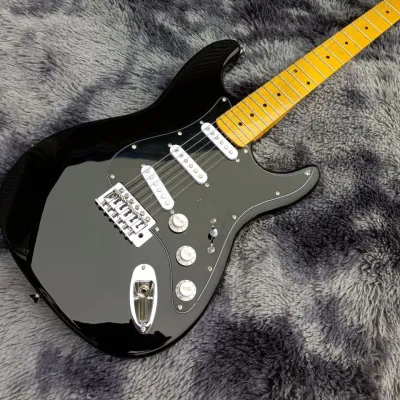
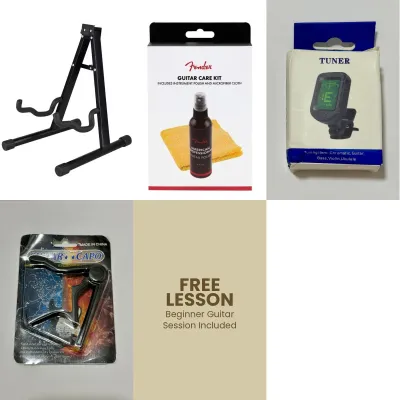
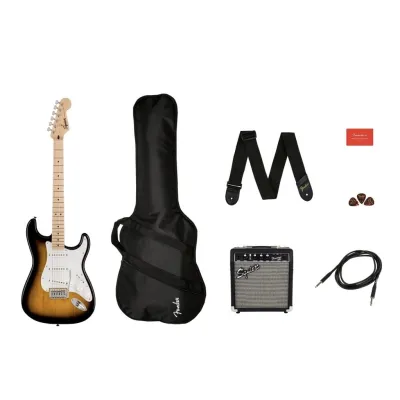
Prices are valid at publication and may change. Please refer to the product page for the latest price.
In contrast, standard Fender lines, such as the Player Series and Performer Series, represent a significant step up in both financial investment and construction quality. Primarily manufactured in Mexico and the United States respectively, these guitars feature higher-grade tonewoods, more durable hardware, upgraded electronics, and refined fretwork. The hardware on a standard Fender, from the tuning machines to the bridge saddles, is engineered for greater tuning stability and longer operational life under heavy use.
Choosing between Squier and standard Fender lines is not merely a matter of budget, but also of long-term expectations. While a Squier Sonic or Affinity is an excellent, low-risk way to start, intermediate series like the Squier Classic Vibe or Fender Player Series offer better longevity. These mid-tier instruments are built to standards that can easily accompany a player from their first chords to live stage performances. Furthermore, standard Fender guitars tend to retain their resale value much better on the secondary market, making them a safer investment if you eventually decide to upgrade or trade in your gear.
Key Specs to Check for Playability and Comfort
When you are first learning to form chords and transition between frets, the physical dimensions of the guitar neck play a massive role in how quickly you progress. The neck profile, which refers to the cross-sectional shape of the neck, determines how the instrument rests in your hand. Most modern Fender and Squier beginner models utilize a modern “C”-shaped neck profile. This design is widely favored because it offers a balanced, neutral feel that accommodates both small and large hands, reducing thumb strain during long practice sessions.

Alongside the neck profile, the fretboard radius—the curvature of the fretboard surface—affects your playing comfort. A smaller radius, such as 7.25 inches, is highly curved and makes barre chords easier to grip because it matches the natural curve of your index finger. However, modern beginner guitars typically feature a flatter 9.5-inch or 12-inch radius. These flatter surfaces are generally preferred for lead playing and string bending, as they prevent bent notes from choking out or buzzing against adjacent frets.
Scale length, which is the distance between the nut and the bridge saddles, is another critical specification that influences string tension and finger stretch. Standard Fender models like the Stratocaster and Telecaster feature a 25.5-inch scale length. This longer scale creates higher string tension, resulting in a bright, snappy tone, but it also requires slightly more finger strength to press down the strings. Conversely, short-scale models like the Squier Mustang or Duo-Sonic feature a 24-inch scale length. This shorter distance reduces string tension, making the strings feel softer and easier to bend, while also placing the frets closer together for easier finger reaches.
Environmental factors are equally important to consider, especially in regions with high humidity like Singapore. Extreme moisture and temperature fluctuations can cause the wood of the guitar neck to expand, contract, or warp over time. This movement can lead to sharp fret ends protruding from the sides of the fingerboard, or cause the neck to bow, raising the string height to an uncomfortable level. Because of these local climate conditions, verifying that a guitar has received a proper setup—or planning to have one performed immediately after purchase—is essential to ensure the instrument remains playable year-round.
Matching Body Shapes and Pickups to Your Musical Goals
The two most iconic shapes in the Fender lineup, the Stratocaster and the Telecaster, offer distinct physical and sonic characteristics. The Stratocaster is famous for its ergonomic body contours, featuring a belly cut and an arm bevel that allow the guitar to sit comfortably against your body whether you are sitting or standing. Its double-cutaway design also provides easy access to the highest frets. The Telecaster, with its solid, slab-body design, is simpler and heavier, offering a straightforward, no-nonsense playing experience that many beginners find less distracting.
Your choice of pickups will dictate the genres of music your guitar can easily replicate. Single-coil pickups, standard on traditional Stratocasters and Telecasters, produce a bright, clear, and articulate sound that is well-suited for clean tones, pop, funk, and classic rock. However, single-coils are inherently susceptible to 60-cycle hum, which is an audible buzz that becomes more pronounced when you use high-gain distortion or play near electronic devices.
To combat this hum and achieve a thicker, warmer tone suitable for hard rock, metal, or jazz, many beginners opt for humbucking pickups. A humbucker uses two coils wound in opposite directions to cancel out the unwanted noise while delivering a more powerful output. Fender offers versatile hybrid configurations, most notably the HSS (Humbucker-Single-Single) layout on select Stratocaster models. This setup places a humbucker at the bridge for heavy rhythm playing and single-coils in the middle and neck positions for classic, sparkling clean tones, giving you a highly versatile combination.
Physical comfort during practice should not be overlooked when selecting a body shape. Heavy instruments can quickly cause shoulder and back fatigue, especially during extended standing sessions. While a standard Telecaster or Stratocaster typically weighs between 3.2 and 3.8 kilograms, lightweight alternatives like the Squier thin-line models or offset bodies like the Jazzmaster and Mustang can offer a more balanced distribution of weight. Trying different shapes in a seated position will help you identify which body contours feel most natural for your posture.
Pre-Purchase Inspection and Buying Checklist
Before finalizing your purchase, whether at a local music shop in Singapore or through an authorized online retailer, conducting a thorough physical inspection is vital. Start by running your fingers gently along both sides of the neck to check for sharp fret ends. If the metal frets protrude past the wood, it indicates that the fingerboard has dried out, which can cause discomfort or even minor cuts while playing. Next, look down the edge of the neck from the headstock to the body to check for any obvious bowing or twisting, and verify that the truss rod adjustment nut is clean and undamaged.
Electronics must be tested systematically to avoid future repair costs. Plug the guitar into an amplifier and turn all the knobs. Listen closely for any scratchy or crackling noises when rotating the volume and tone pots, which usually indicates dust or oxidation inside the components. Toggle the pickup selector switch through every position to ensure there are no sudden drops in volume or dead spots, and gently wiggle the instrument cable inside the output jack to confirm the connection is tight and free of grounding hum.
Finally, ensure that you receive all the appropriate documentation and accessories that come with a new instrument. Authorized dealers should provide a manufacturer’s warranty card, an owner’s manual, and any adjustment tools, such as the hex keys used for adjusting the truss rod and bridge saddles. If you are purchasing a model with a tremolo system, verify that the tremolo arm is included in the packaging. Keeping these original items intact not only helps you maintain your guitar but also preserves its value should you choose to sell it later.
Essential Accessories and the First Setup
Buying the guitar is only the first step; you will also need a few essential accessories to begin practicing effectively. A small, low-wattage practice amplifier is highly recommended for home use, allowing you to hear your playing clearly without disturbing neighbors. Look for an amplifier that includes a headphone output for silent practice and a built-in tuner to simplify your daily routine. Along with the amp, invest in a durable, shielded instrument cable to prevent unwanted interference, a comfortable guitar strap, and a variety pack of picks of different thicknesses so you can experiment with what feels best.
Even a brand-new guitar straight from the factory rarely plays optimally out of the box. Wood is a natural material that shifts during shipping and storage, meaning a professional setup is highly recommended for any new instrument. A professional guitar technician will adjust the action (the height of the strings above the fretboard) to make fretting notes easier, set the intonation so the guitar stays in tune all the way up the neck, and file the nut slots to prevent tuning slips. This relatively small service investment can transform a stiff, frustrating instrument into a smooth, inspiring tool.
Establishing good maintenance habits early will extend the life of your guitar and keep it playing beautifully. High humidity can accelerate string corrosion and tarnish hardware, so keeping a microfiber cloth in your gig bag to wipe down the strings and neck after every practice session is a simple but effective habit. Additionally, having a basic string winder makes changing strings much faster, while a specialized fretboard conditioner can be applied occasionally during string changes to keep rosewood or laurel fingerboards from drying out and cracking.
Frequently Asked Questions (FAQ)
Is a Squier by Fender suitable for learning, or do I need a standard Fender?
A Squier by Fender is an excellent and highly suitable option for learning. Modern Squier instruments, particularly those in the Affinity and Classic Vibe series, are manufactured with strict quality control standards that rival entry-level standard Fender models. They offer authentic Fender designs, comfortable neck profiles, and reliable hardware at a fraction of the cost. Starting with a Squier allows you to focus on developing your technique without a massive initial financial commitment, and many players continue to use their Squier guitars long after they have advanced past the beginner stage.
Which pickup configuration is most versatile for a beginner?
For maximum versatility, an HSS (Humbucker-Single-Single) pickup configuration on a Stratocaster is highly recommended for beginners. This layout features a humbucking pickup in the bridge position, which provides a thick, powerful sound that handles high-gain distortion without buzzing—ideal for rock, metal, and punk. The middle and neck positions feature traditional single-coil pickups, which deliver the bright, clear, and glassy tones excellent for pop, blues, funk, and clean rhythm playing. This combination allows you to explore almost any musical genre with a single instrument.
What adjustments are included in a standard professional guitar setup?
A standard professional guitar setup typically includes several precise adjustments to optimize playability and tone. The technician will adjust the truss rod to set the correct amount of neck relief, ensuring the neck is straight with just enough curve to prevent fret buzz. They will also adjust the saddle heights at the bridge to set the string action to a comfortable level, file the nut slots if the strings sit too high at the first fret, and adjust the bridge saddles to correct the intonation so the guitar plays in tune across the entire fretboard. Finally, they will balance the pickup heights to ensure an even volume output across all strings.

Community discussion
Share your experience or ask a question. Comments are reviewed before publication.