
Embarking on a personal finance journey can feel overwhelming, especially when confronted with thousands of books promising wealth and financial freedom. For beginners in Singapore, the challenge is twofold: finding a book that matches your current level of financial literacy and ensuring the advice can actually be applied within our local economic framework. The most effective financial literacy books for beginners are those that focus on building sustainable, everyday habits, explaining core concepts without dense jargon, and offering principles that translate smoothly to Singapore’s unique system of public housing, national savings, and healthcare.
By focusing on foundational education rather than speculative shortcuts, you can build a resilient financial plan. The key is to approach financial literature with a critical eye, learning how to extract universal truths while filtering out region-specific advice that does not apply to your local context. This guide outlines a practical framework to help you evaluate personal finance books, identify the core topics you need to prioritize, and adapt global investment strategies to fit your life in Singapore.
How to Evaluate Finance Books for Your Current Level
Before purchasing or borrowing any personal finance book, it is essential to assess whether the content aligns with your current knowledge level and learning goals. Start by researching the author’s background and professional credentials. Look for writers who emphasize sustainable daily habits, long-term wealth accumulation, and realistic budgeting rather than those who promote complex, high-risk trading strategies or overnight success. An author who focuses on behavioral changes and steady progress is far more valuable to a beginner than a speculative trader offering volatile market tips.
Products mentioned in this guide
![[SG Local Stock]Childrens Books On Money And Saving Builds Cores Financial Literacy For Daily Reading](https://img.lazcdn.com/g/p/bb9997e5ec6a119d701c0122fa338f9d.png_400x400q80.png_.webp)
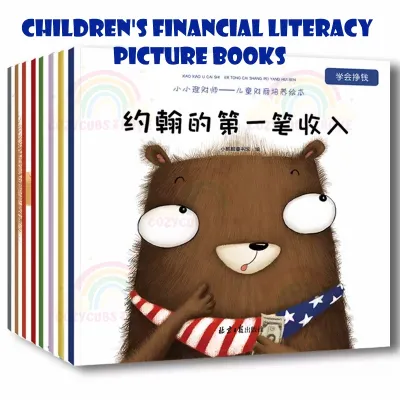


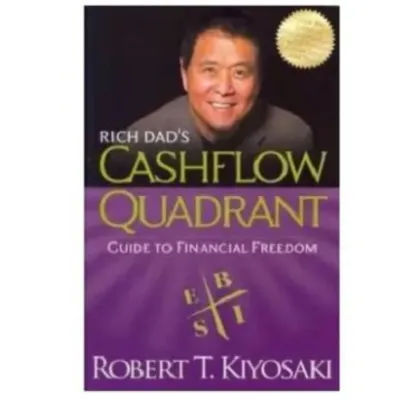
Prices are valid at publication and may change. Please refer to the product page for the latest price.
Next, examine how the book explains basic financial concepts. A well-written introductory book should define terms like inflation, compound interest, and asset allocation clearly, without assuming you already have a degree in economics. If the first few chapters are filled with dense, unexplained jargon or assume prior knowledge of advanced market mechanics, the book is likely to cause frustration rather than build confidence. The best educational resources simplify complex ideas using relatable analogies and straightforward language.
Finally, evaluate the book’s structure and practical utility. Theoretical knowledge is only useful if you can translate it into action. Look for books that feature interactive elements, such as budgeting templates, goal-setting worksheets, or self-assessment quizzes. These tools allow you to apply the concepts directly to your own financial situation, turning passive reading into an active planning session. A book that guides you through creating your first personal balance sheet or calculating your net worth provides far more long-term value than one that only offers abstract motivational advice.
Core Money Topics to Target in Your Reading List
To build a comprehensive understanding of personal finance, your reading list should cover several distinct pillars of money management. Rather than trying to learn everything at once, focus on books that address your most immediate financial gaps and goals.

Budgeting and Daily Cash Flow
Budgeting is the cornerstone of financial stability, and beginners should prioritize books that demystify cash flow management. Look for resources that teach flexible, adaptable frameworks rather than highly restrictive spending bans that are difficult to maintain over time. Popular methods like zero-based budgeting or percentage-based allocation rules (such as putting 50% of income toward needs, 30% toward wants, and 20% toward savings) offer practical structures that can be customized to your lifestyle.
Your chosen reading material should also address the realities of modern urban living. In a high-cost city like Singapore, managing fixed expenses like housing and transport requires strategic planning. Look for books that offer advice on automating your savings transfers, which helps remove the temptation to spend excess cash. Additionally, if you are a freelancer, gig worker, or entrepreneur, seek out chapters that specifically address managing irregular income and building a cash buffer to smooth out leaner months.
Investing Basics and Long-Term Wealth
Once you have control over your daily cash flow, the next step is learning how to grow your savings to beat inflation. Beginners should focus on books that explain sustainable wealth accumulation through passive investing. Look for titles that cover foundational concepts such as compound interest, diversification, and the mechanics of broad-market index funds or exchange-traded funds (ETFs). These instruments allow you to participate in global economic growth without the high risks associated with picking individual stocks.
It is equally important to understand your personal risk tolerance before committing any capital to the markets. A good introductory investing book will guide you through assessing how much volatility you can comfortably handle based on your age, financial goals, and investment horizon. Avoid any materials that heavily promote high-leverage day trading, options trading, or cryptocurrency speculation. These strategies require advanced market knowledge and carry a high probability of capital loss, making them entirely unsuitable for foundational learning.
Financial Psychology and Behavioral Habits
Successful money management is often less about mathematical calculations and more about managing your own behavior. Understanding the psychological drivers behind your spending habits is crucial for long-term success. Look for books that explore the emotional roots of debt, the phenomenon of lifestyle creep—where your spending increases automatically alongside your income—and the cognitive biases that prevent people from saving for the future.
In a highly connected society, social pressure can significantly influence how we spend our money. Reading about financial psychology can help you recognize the urge to keep up with peers or make purchases solely for status. A valuable personal finance book will offer strategies for redefining personal success based on financial security and freedom rather than material possessions. By mastering the behavioral side of money, you can build habits that protect your wealth over the long term.
Adapting Global Financial Advice to the Singapore Context
The vast majority of popular personal finance books are written by international authors, primarily from the United States. While the core principles of saving and investing are universal, the specific financial systems, tax laws, and retirement structures mentioned in these books do not apply directly to Singapore. To get the most value from global bestsellers, you must learn how to translate these concepts into local equivalents.
For example, when an international book discusses retirement accounts like the 401(k) or a Roth IRA, you should map these concepts to Singapore’s Central Provident Fund (CPF) and the Supplementary Retirement Scheme (SRS). Understanding how your CPF Ordinary Account (OA), Special Account (SA), and MediSave Account (MA) accumulate interest and how they can be used for housing, healthcare, and retirement is essential. Similarly, the SRS offers tax-deferred investment opportunities that function in a comparable way to foreign retirement schemes, allowing you to optimize your local tax liabilities.
Healthcare financing is another area where global advice diverges significantly from local reality. American personal finance books often place a heavy emphasis on saving massive emergency funds specifically to cover potential medical crises or navigating complex private health insurance networks. In Singapore, national healthcare schemes like MediShield Life and CareShield Life, supplemented by private Integrated Shield Plans, provide a robust safety net. Understanding how these local policies work allows you to size your emergency fund more accurately without over-allocating cash that could otherwise be invested.
Real estate investment advice in global books must also be approached with extreme caution. International authors frequently advocate for highly leveraged property portfolios, house flipping, or purchasing cheap foreclosure properties. In Singapore, the real estate market is highly regulated to ensure stability. Local buyers must navigate strict Housing & Development Board (HDB) eligibility rules, the Total Debt Servicing Ratio (TDSR), and significant upfront costs such as the Additional Buyer’s Stamp Duty (ABSD). Applying foreign real estate strategies without adjusting for these local regulations can lead to severe financial strain.
What to Check Before Buying or Borrowing a Finance Book
Before you invest your time and money in a financial literacy book, performing a few quick checks can ensure you select a high-quality, relevant resource. First, verify the publication date and the specific edition of the book. Financial regulations, tax laws, and digital investment platforms change rapidly. While timeless classics on financial psychology remain relevant for decades, books that discuss specific investment platforms, tax brackets, or interest rate environments should be as recent as possible to ensure the advice is still accurate.
Next, consider the format that best suits your learning style and the book’s content. If a book is highly interactive, featuring detailed charts, financial tables, and worksheets that you need to fill out, a physical copy or a tablet-friendly e-book is usually the best choice. Audiobooks are excellent for narrative-driven books that focus on mindset and motivation, but they can be incredibly difficult to follow when the author begins explaining complex mathematical formulas or referencing detailed budgeting layouts.
You should also pay close attention to regional editions and authorized sources. Some publishers release international editions of popular finance books that adapt terminology for global audiences, which can make the reading experience much smoother. When purchasing digital books or audiobooks, ensure you are buying from authorized platforms to guarantee you receive the complete, unabridged text. This also helps you avoid poorly formatted, unauthorized copies that might contain errors or missing chapters.
Finally, make use of local public resources to preview books before making a purchase. The National Library Board (NLB) in Singapore offers an extensive collection of personal finance books in physical, e-book, and audiobook formats. Borrowing a book or reading a sample chapter online allows you to assess the author’s writing style and ensure the content matches your current learning needs before you commit to buying a personal copy for your permanent library.
Frequently Asked Questions (FAQ)
Are US-centric finance books useful for Singaporean beginners?
Yes, US-centric personal finance books are highly valuable for establishing the right financial mindset, understanding behavioral psychology, and learning basic budgeting techniques. Core principles such as living below your means, avoiding high-interest consumer debt, and understanding the power of compound interest are universal and apply regardless of where you live.
However, you must ignore their specific advice regarding tax-advantaged accounts, healthcare insurance, and real estate strategies. Always cross-reference these technical sections with local guidelines from official Singapore government portals or qualified local financial professionals to ensure you are making decisions based on accurate, local regulations.
Should I read books on active stock picking as a beginner?
It is generally not recommended for beginners to start their financial literacy journey with books on active stock picking. Foundational financial education should focus on securing your cash flow, building an emergency fund, and establishing a passive, diversified investment portfolio using index funds or ETFs.
Active stock picking and day trading require a deep understanding of corporate financial statements, market valuation techniques, and advanced risk management. Attempting to trade individual stocks without this foundational knowledge carries a high risk of capital loss, so it is best to master the basics of passive investing before exploring active strategies.
Community discussion
Share your experience or ask a question. Comments are reviewed before publication.