
Selecting the most suitable foldable music stand requires matching the physical design of the accessory to your specific playing environment and the type of music media you use. A stand that works well in a quiet home studio may fail on a windy outdoor stage, while a highly portable travel stand might buckle under the weight of a heavy classical anthology. By understanding the structural differences between lightweight wire frames, solid-desk hybrids, and heavy-duty orchestral stands, you can make an informed decision that protects your sheet music, digital devices, and instruments from accidental damage.
Identifying Your Primary Usage Scenario
To find the right balance between portability and stability, you must first analyze where and how often you will use your music stand. Musicians who primarily practice in a single location can prioritize weight and desk size, as the stand will rarely need to be folded or transported. A heavier, more robust stand provides a reliable writing surface for taking notes and easily supports large binders. However, if you regularly commute to rehearsals, music lessons, or gigs, transportability becomes your primary concern. In cities with extensive public transit networks like Singapore, carrying a heavy, bulky stand alongside an instrument case can quickly lead to physical fatigue.
Environmental factors also play a critical role in your choice of gear. Indoor environments offer flat floors and controlled climates, allowing you to use lighter stands with smaller footprints. Outdoor performances, on the other hand, introduce unpredictable elements such as wind, uneven ground, and direct sunlight. A stand used outdoors must have a wide, stable base to prevent tipping and features that keep loose sheet music from blowing away. Additionally, the physical space available in your performance venues—such as tight orchestra pits or crowded restaurant stages—will dictate how compact the stand’s base must be.
Products mentioned in this guide
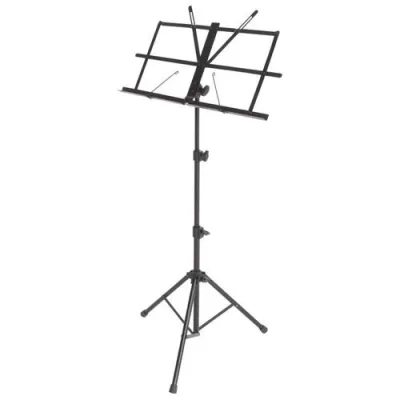
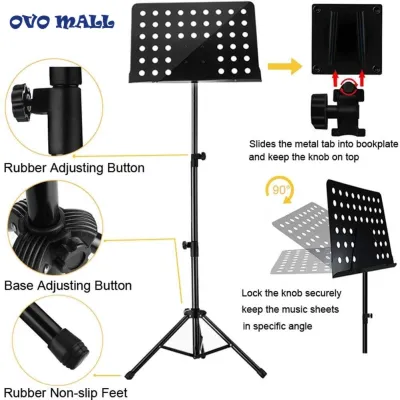
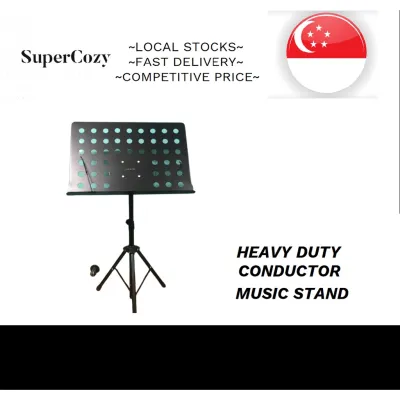
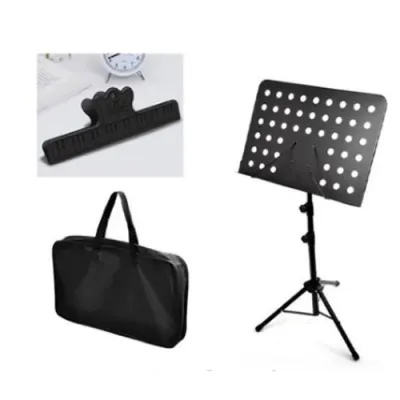
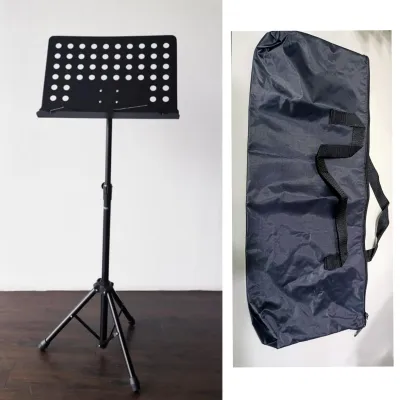
Prices are valid at publication and may change. Please refer to the product page for the latest price.
Finally, evaluate the specific materials the stand must support. Standard sheet music is light but requires a flat backing to prevent the pages from bending or sagging. Thick, bound music books or heavy reference anthologies demand a strong desk plate and a secure locking collar that will not slip under weight. If you have transitioned to digital sheet music, your stand must be capable of safely holding a tablet or e-reader. This requires checking the depth of the shelf lip and ensuring the tilt mechanism can be locked securely to prevent the device from falling.
Key Features for Home Practice Stands
For a dedicated home practice space, stability and ergonomic adjustability should be your top priorities. A stable stand allows you to focus entirely on your technique without worrying about the structure wobbling when you turn a page or make a pencil notation. Look for stands that feature a solid, weighted base or a wide tripod design constructed from thick steel tubing. These designs provide a low center of gravity, ensuring the stand remains upright even if it is accidentally bumped in a busy household.

The dimensions of the desk plate and the depth of the shelf lip are critical for supporting diverse practice materials. A wide desk plate provides continuous support for multi-page layouts, preventing the outer edges of your sheet music from drooping. If you frequently practice from thick instructional books, fake books, or heavy binders, verify that the shelf lip is at least five centimeters deep. A shallow lip will cause thick books to spring closed or slide off the front of the stand, disrupting your practice flow.
Ergonomics are vital for maintaining proper posture during long practice sessions. The height adjustment mechanism must allow you to position your music at eye level, whether you are sitting on a low stool or standing up to play. Look for smooth, reliable adjustment collars—such as friction-lock systems or secure screw knobs—that let you fine-tune the height easily. If you are a tall instrumentalist who prefers to practice standing, check the maximum extension height of the stand to ensure you do not have to strain your neck or hunch forward to read your music.
Essential Traits for Gigging and Live Performances
Gigging musicians need a music stand that combines durability with rapid setup and teardown capabilities. When evaluating folding mechanisms, you will generally choose between fully collapsible wire stands and detachable two-piece designs. Fully collapsible stands fold down into a single, highly compact unit, making them exceptionally easy to pack into a gig bag. Detachable designs, where the desk plate separates from the vertical shaft, offer a much stiffer writing surface but require a slightly larger carrying case.
Before making a purchase, carefully verify the folded dimensions and the overall weight of the stand. It should fit comfortably inside standard instrument cases, gig bags, or the trunk of a vehicle. A stand that is excessively long when folded or too heavy to carry comfortably over long distances will quickly become a hassle during late-night load-outs. Many manufacturers offer dedicated carrying bags with shoulder straps, which can make transporting your stand much more convenient.
Durability is essential for gear that is constantly loaded in and out of venues. Look for stands made from high-grade steel or heavy-duty aluminum, and pay close attention to the joints and locking mechanisms. Plastic collars and knobs are prone to cracking under pressure or stripping their threads over time. Metal locking screws, spring-loaded pins, or high-tension friction joints are far more durable and can withstand the frequent adjustments required on professional stages. Additionally, a durable powder-coated finish will protect the metal from scratches and corrosion.
Navigating Outdoor Performance Challenges
Performing outdoors presents unique physical challenges that can easily disrupt a musical set. Wind is the most common issue, as even a gentle breeze can catch sheet music like a sail and tip over a lightweight stand. To prevent this, look for stands with a wide-base tripod design or double-braced legs. These features distribute the weight over a larger surface area and lower the center of gravity, providing much greater resistance to wind gusts and stability on uneven outdoor surfaces like grass or gravel.
Securing your sheet music is another critical requirement for outdoor gigs. While some collapsible wire stands feature built-in page retainers, these are often too weak for strong winds. For outdoor use, look for stands with robust, spring-loaded page clips or a deep retaining lip that can accommodate external wind clips. Many professional musicians use transparent acrylic sheets, heavy-duty elastic bands, or magnetic page holders to keep their music flat and secure without blocking their view of the musical notation.
The finish and color of the stand also play a role in outdoor usability. Matte black or non-reflective powder-coated finishes are highly recommended because they prevent distracting glare from direct sunlight. Shiny chrome or polished metal stands can reflect bright light into your eyes or toward the audience, making it difficult to see. Furthermore, ensure the stand’s materials are rust-resistant or treated with a weather-resistant coating, as outdoor performances often expose gear to high humidity, morning dew, or sudden light rain.
Cross-Scenario Compatibility: Can One Stand Do It All?
While it is tempting to look for a single music stand that can handle home practice, gigging, and outdoor performances, doing so involves clear trade-offs. An ultra-lightweight wire stand is incredibly easy to transport but lacks the stability needed for heavy books or windy outdoor stages. Conversely, a professional, solid-desk orchestral stand offers unmatched stability and a perfect writing surface but is highly impractical to carry on public transit or pack into a compact gig bag.
For musicians who require a single, versatile solution, hybrid designs offer an excellent compromise. These stands often feature a perforated aluminum desk plate, which significantly reduces weight while still providing a solid, flat surface for writing and supporting loose sheets. They typically pair this lightweight desk with a sturdy, medium-weight tripod base that folds down compactly. This combination provides enough stability for home use and moderate outdoor conditions while remaining light enough to carry in a shoulder bag.
You can also adapt a single stand for different environments using targeted accessories. If you need to use a lightweight stand outdoors, adding manufacturer-approved leg weights or a small sandbag to the base can greatly improve its wind resistance. For digital users, investing in a secure, dedicated tablet mount that clamps directly to the stand’s vertical shaft allows you to bypass the desk plate entirely. This setup keeps your expensive device secure and lowers the overall center of gravity, making the entire rig much more stable.
Frequently Asked Questions (FAQ)
How do I prevent a lightweight foldable stand from tipping over?
To improve the stability of a lightweight portable stand, start by widening the tripod base to its maximum footprint. Position one of the three legs directly forward, underneath the weight of the desk plate, to help balance the forward pull of your music. You can also drape a small, weighted bag or a specialized water-weight bag over the base joints to lower the center of gravity. Additionally, tilting the desk plate slightly backward rather than keeping it completely vertical keeps the weight centered over the shaft. Finally, position the stand away from high-traffic walkways, open doors, or direct air conditioning vents to minimize the risk of accidental bumps.
Are foldable music stands suitable for holding heavy tablets or laptops?
Foldable music stands can support digital devices, but you must verify the manufacturer’s physical specifications before use. Standard lightweight wire stands are generally not recommended for heavy tablets or laptops, as their thin frames and friction joints can easily slip or bend under concentrated weight. If you plan to use a digital device, choose a heavy-duty foldable stand with a solid or reinforced perforated desk plate and secure, screw-tightening collars. Ensure the shelf lip is deep enough and ideally padded to prevent the device from sliding off. For maximum safety, consider using a dedicated tablet clamp that attaches directly to the vertical pole of the stand, which provides a much more secure connection than simply resting the device on the sheet music shelf.
Community discussion
Share your experience or ask a question. Comments are reviewed before publication.