
Finding the ideal foldable music stand requires balancing physical stability, weight, and collapsed dimensions against your primary practice environment. If you practice in a compact apartment, your priority is a small floor footprint and easy storage. For outdoor busking, you need a heavy, wind-resistant frame that can withstand public spaces. For traveling to lessons, a lightweight, ultra-compact design that fits into a backpack is essential. Because no single stand excels in every category, the best choice is one that aligns with your most frequent playing scenario while offering the specific adjustments your instruments require.
Compact Apartments and Small Indoor Spaces
In tight living areas, such as modern apartments or HDB flats, floor space is at a premium. A music stand with an excessively wide base can easily block narrow walkways or clutter a multi-use room. When evaluating a foldable music stand for indoor use, pay close attention to the base design. Tripod bases with adjustable leg spreads allow you to narrow the footprint when placing the stand against a wall, though this slightly reduces overall stability. Flat-base designs or low-profile bases are excellent alternatives because they can slide partially under sofas or chairs, maximizing your usable floor area.
Height adjustment ranges are equally critical in multi-use rooms where you might practice both seated and standing. If you play a variety of instruments—such as the violin standing up and the classical guitar seated—the stand must adjust smoothly across a wide vertical range. Check the minimum and maximum height specifications before buying. A stand that cannot lower enough for a low chair or raise enough for a tall standing player will disrupt your posture and technique.
Products mentioned in this guide
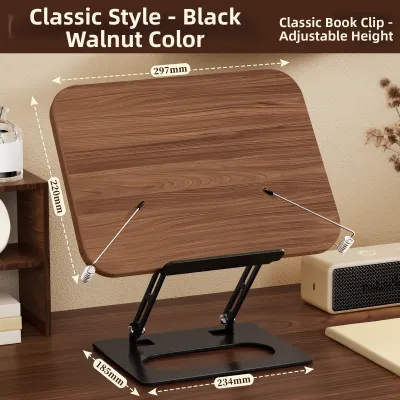
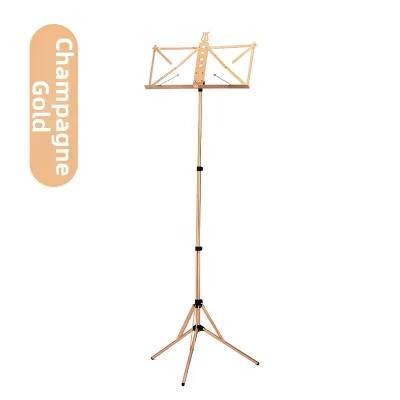
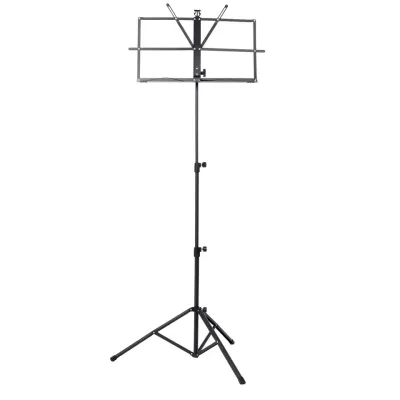
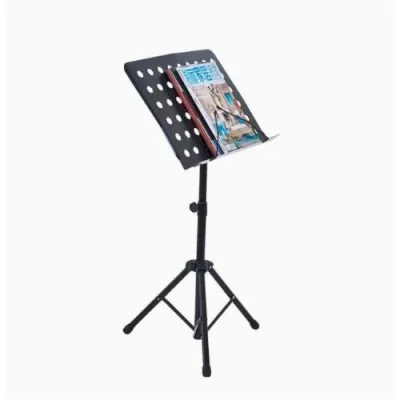
Prices are valid at publication and may change. Please refer to the product page for the latest price.
Storage convenience is the final consideration for small indoor spaces. A truly space-saving stand should fold down into a neat, compact cylinder or a flat package. This allows you to slide it under a bed, tuck it into a shallow wardrobe, or store it behind a door when not in use. Examine the folding mechanism carefully; quick-release clamps are generally faster and easier to operate daily than multiple screw-threaded joints that require significant effort to tighten and loosen.
Outdoor Busking and Street Performances
Busking introduces environmental challenges that indoor players rarely encounter, such as wind gusts, uneven pavements, and crowded public spaces. A lightweight wire stand that works perfectly in a bedroom will easily topple outdoors, potentially damaging your sheet music or an expensive tablet. For outdoor performances, stability and weight must take priority over extreme portability.

Look for a stand constructed from heavy-duty steel rather than thin aluminum. The extra weight acts as a natural anchor, lowering the center of gravity and keeping the stand upright in breezy conditions. A wide, stable tripod base with a low center of gravity is essential for coping with uneven street surfaces. Some professional busking stands feature weighted legs or allow you to hang a gear bag from the center column for added stability.
Weather resistance is another crucial factor for outdoor gear. Prolonged exposure to humidity, direct sunlight, and sudden rain can quickly ruin cheap materials. Powder-coated finishes or anodized metals resist rust and corrosion far better than bare metals or basic chrome plating. Additionally, ensure that any plastic adjustment collars are UV-resistant so they do not become brittle and crack after hours in the sun.
Finally, assess the tray design for securing your music. A solid-plate tray blocks the wind from behind your sheet music, whereas an open wire tray allows wind to pass through but offers no support for loose sheets. The tray lip should be deep enough—ideally at least 5 cm—to accommodate thick binders, heavy music books, or a tablet in a protective case. Built-in spring arms or page retainers are also highly beneficial for keeping pages flat in windy conditions.
Travelling to Lessons and Rehearsals
For musicians who are constantly on the move, portability is the defining factor. Carrying an instrument, sheet music, and a heavy, bulky stand on public transport or during a long walk can quickly lead to physical fatigue. The ideal travel stand must be light enough to carry effortlessly without sacrificing reasonable stability.
Compare the collapsed length and weight of different models. A travel-friendly stand should fold down to under 50 cm, allowing it to fit easily inside a standard backpack, a tote bag, or a dedicated compartment in your instrument gig bag. Weight should ideally be kept under 1.5 kg. Aluminum stands are particularly popular for travel because they offer an excellent strength-to-weight ratio, though they are generally more expensive than steel alternatives.
Setup and teardown speed are vital when transitioning between lessons, rehearsals, and home. You do not want to spend ten minutes assembling a complex puzzle of tubes and screws before every practice session. Look for stands with friction-fit joints or single-button release mechanisms that allow for rapid deployment. Smooth, intuitive joints make the transition seamless and save valuable lesson time.
Frequent travel subjects a music stand to constant impacts, vibrations, and wear. Plastic joints and thin tension screws are the most common failure points on cheap travel stands. Inspect the build quality and look for metal collar joints, reinforced rivets, and robust locking levers. Investing a bit more upfront—perhaps budgeting around S$30 to S$80 for a quality travel stand—can save you from having to replace a broken stand after just a few months of commuting.
Cross-Scenario Compatibility and Trade-offs
Because a single music stand cannot be both feather-light for travel and rock-solid in a gale, you must navigate these trade-offs systematically. An ultra-lightweight travel stand will struggle outdoors, while a heavy-duty professional stand will feel like a burden during a long commute. Understanding these limitations helps you make a realistic choice.
If you need a single stand to cover multiple scenarios, look for modular designs or useful accessories. For example, you can purchase a lightweight travel stand for daily portability and use a separate weighted bag or sandbag over the base legs when playing outdoors. Alternatively, some modular stands allow you to swap a lightweight wire tray for a solid desk depending on where you are playing, giving you the flexibility to adapt the stand to your environment.
When a perfect hybrid does not exist, apply a simple decision framework based on your weekly routine. If 80% of your playing happens in a small bedroom and 20% is traveling to lessons, prioritize a compact footprint and easy storage over extreme lightweight portability. If you busk regularly, never compromise on stability, even if it means carrying a heavier load. Prioritizing your most frequent use case ensures you get the most value from your purchase.
Pre-Purchase Verification Checklist
Before purchasing a foldable music stand from an online marketplace or local music shop, verify these key specifications to ensure a proper fit:
- Load Capacity: Check the manufacturer's specifications for the maximum weight limit, especially if you plan to use a heavy tablet or thick anthology books.
- Tray Dimensions: Ensure the tray width and lip depth match your largest music books or tablet sleeve.
- Joint Mechanisms: Look for robust locking collars (metal is preferred over plastic) and slip-resistant rubber feet to protect your floors and prevent sliding.
- Return Policy: Confirm the retailer's return policy. This allows you to test the folded dimensions against your backpack or instrument case before committing to the purchase.
Frequently Asked Questions (FAQ)
Can I use a standard indoor foldable stand for outdoor busking?
Using a lightweight indoor wire stand outdoors is highly risky due to wind and uneven ground. If you must use one temporarily, only do so in calm weather with minimal wind. To prevent tipping, secure the base by placing heavy items, such as your instrument case, a water bottle, or a small sandbag, across the tripod legs to lower the center of gravity safely.
How do I secure sheet music or tablets to the tray in windy conditions?
To secure paper music, use wind clips, elastic page bands, or heavy-duty clothes pegs that hold the pages flat without tearing them. For tablets, use a dedicated mounting bracket or a tray with built-in spring-loaded retention arms. Ensure the tray has sufficient lip depth and a high-friction surface to prevent the device from sliding off sideways.
Community discussion
Share your experience or ask a question. Comments are reviewed before publication.