
Choosing the right guitar hard case requires matching the exact physical dimensions, structural contours, and weight distribution of your specific instrument to the interior architecture of the case. A properly fitted hard case immobilizes the guitar, cushions it against impact, and shields it from environmental hazards like high humidity. Buying a generic or mismatched case risks severe damage, including broken headstocks, cracked neck heels, and warped soundboards. To secure your investment, you must evaluate body shapes, neck joint locations, and shell materials to find a secure home for your acoustic, electric, or classical instrument.
Before making a purchase, always verify the exact model specifications of both your guitar and the case. General brand names or generic category terms do not guarantee compatibility, and relying on them can lead to a costly return process or, worse, an instrument that is damaged during transit. By understanding how your guitar’s physical build interacts with a case’s structural design, you can make an informed decision that ensures long-term protection.
Understanding How Guitar Body Shape Dictates Case Compatibility
Every guitar family features unique dimensional characteristics—such as lower bout width, upper bout contours, body depth, and headstock angles—that dictate case compatibility. For instance, a dreadnought acoustic requires deep body clearance, whereas an electric guitar needs a shallow, highly stabilized cavity. If the body depth of a case is too shallow, closing the lid exerts dangerous downward pressure directly onto the bridge and top soundboard, which can crack the internal bracing.
Products mentioned in this guide
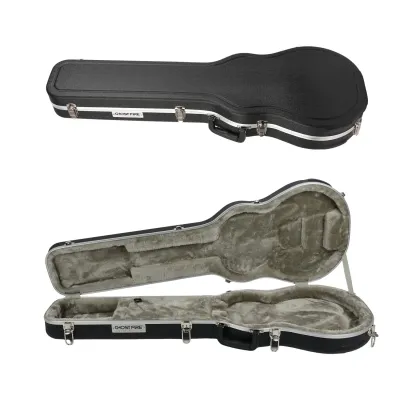
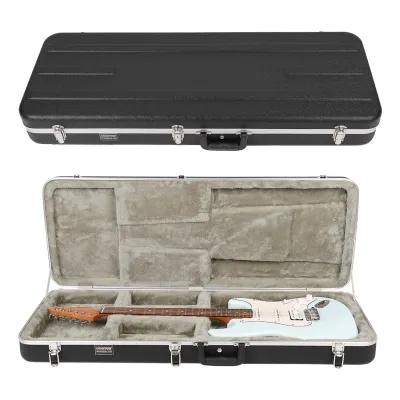
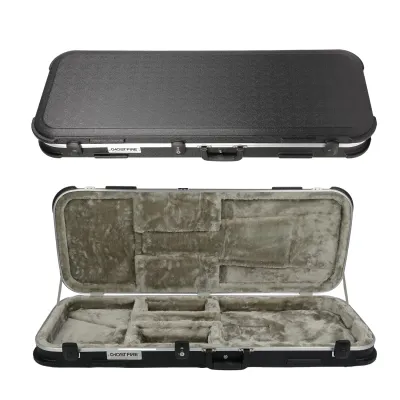
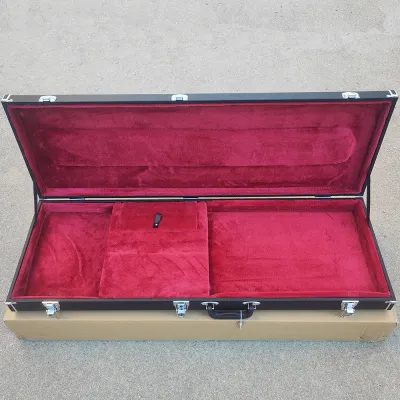
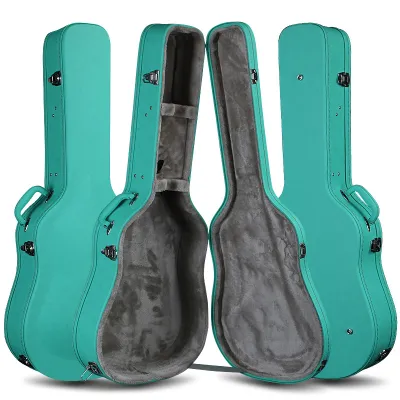
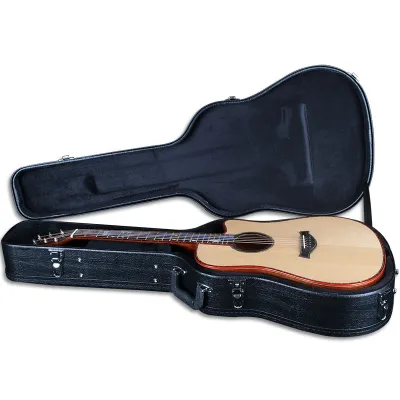
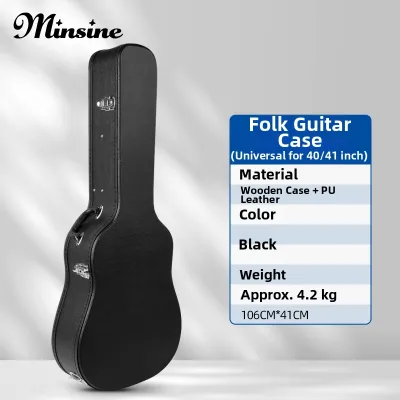
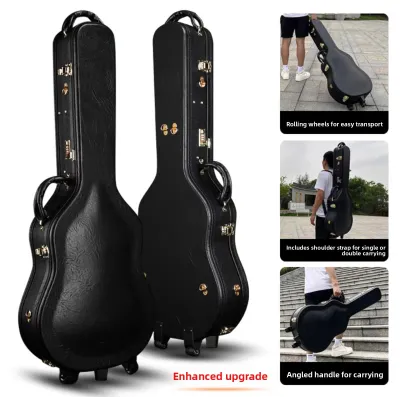
Prices are valid at publication and may change. Please refer to the product page for the latest price.
A tilted headstock is a major point of structural vulnerability on many guitars, particularly those with a pitch angle between 3 and 17 degrees. If a case does not feature a sufficiently deep headstock well, the headstock will rest directly on the bottom floor of the compartment. In the event of a drop, the kinetic energy is transferred straight to this vulnerable point, often resulting in a clean break at the nut. A properly designed case ensures the headstock remains completely suspended and untouched by the interior walls.
A “one-size-fits-all” approach to guitar protection is a recipe for structural failure. If the lower bout of a case is too wide for the guitar, the instrument will slide laterally during transit. This movement shifts the impact energy of a drop directly to the neck and headstock, rather than dispersing it safely through the outer shell. Conversely, forcing an oversized guitar into a tight case puts constant stress on the neck heel and the sides of the body, leading to structural fatigue and finish cracks over time.
The neck heel is the thickest part of the neck where it joins the body, acting as a critical anchor point. In a properly designed case, the neck support block sits directly under the neck near the heel, transferring any downward force safely to the back of the case. If the support is misaligned, it acts as a pivot point, turning a minor bump into a snapping force on the headstock or the neck joint.
When selecting a case, you will choose between brand-specific molded cases and universal rectangular or shaped cases. Molded cases are engineered for specific models or common silhouettes, offering a glove-like fit that supports the neck and body uniformly. Universal cases offer broader compatibility but rely heavily on internal foam padding, adjustable inserts, or straps to secure the instrument. Selecting between them requires balancing the exact geometry of your guitar against the versatility of a multi-fit design.
Essential Protection Features to Evaluate Before Buying
The outer shell material is your first line of defense against physical impacts and environmental elements. Molded ABS (Acrylonitrile Butadiene Styrene) plastic offers an exceptional balance of impact resistance, lightweight handling, and weather sealing. Traditional multi-ply wood cases provide classic aesthetics and excellent structural rigidity but are significantly heavier and susceptible to moisture absorption over time. Heavy-duty aluminum or carbon fiber flight cases provide the ultimate crush protection for touring musicians, though they represent a premium investment.

The interior of the case must feature dense, shock-absorbing foam—such as expanded polystyrene (EPS)—covered in a non-abrasive plush fabric. A rigid, form-fitting neck support block is non-negotiable. This block cradles the neck near the headstock joint, preventing headstock whiplash, where a sudden drop causes the heavy headstock to snap forward or backward under its own momentum. Additionally, check that the interior materials are compatible with your guitar’s finish, as certain adhesives or synthetic fabrics can react chemically with nitrocellulose finishes, causing clouding or melting.
Hardware quality directly impacts the longevity and reliability of a hard case. Latches must close securely without play, and hinges must align perfectly to prevent the lid from twisting. Look for reinforced, through-bolted handles that can withstand the leverage of a heavy instrument. Heavy-duty butterfly latches or TSA-approved trigger release latches are highly recommended for travel, ensuring the case remains closed even during rough handling.
In tropical environments like Singapore, where relative humidity routinely exceeds 80%, a hard case acts as a critical climate buffer. High-quality cases feature rubber gaskets or tight-fitting valances to seal out ambient moisture, paired with dedicated compartments for humidity-control packs or digital hygrometers. For air travel, TSA-accepted locking latches allow airport security to inspect the instrument without damaging the locking mechanism.
Recommended Hard Case Styles for Acoustic Guitars
Acoustic guitars are structurally fragile due to their thin, hollow construction and large surface areas. Finding a case that supports the body without putting pressure on the delicate soundboard is essential.
Dreadnought and Jumbo Acoustics
Dreadnoughts and jumbo acoustics feature deep, resonant bodies with wide lower bouts. Because of their large surface area, the thin solid-wood soundboards are highly vulnerable to crushing forces. A dedicated molded ABS or heavy-duty plywood case with a deep body cavity is essential to protect these instruments.
Avoid using soft-sided gig bags or poorly padded universal cases for these large shapes. If a case lacks sufficient depth, the lid will press down on the bridge, transferring stress directly to the internal soundboard bracing. Ensure the case has a dedicated neck cradle that keeps the heavy body from shifting and putting leverage on the neck joint.
Concert, Auditorium, and Parlor Acoustics
Smaller-bodied acoustics, such as Grand Auditorium, concert, and parlor guitars, have narrower waists and shallower depths. Placing a concert guitar into a standard dreadnought case is highly risky; the excess space allows the instrument to slide side-to-side and back-and-forth during transport.
For these smaller models, select a case specifically scaled to OM/000 or parlor dimensions. If you must use a universal case, ensure it includes adjustable internal foam blocks or thick, high-density padding that matches the narrow waist. This maintains a snug fit while preserving the lightweight, portable advantages of a smaller instrument.
Recommended Hard Case Styles for Electric Guitars
Electric guitars are solid and heavy, but their weight distribution and unique silhouettes require specialized support.
Standard Solid-Body Shapes
Solid-body electrics are heavy and often feature asymmetrical body contours or angled headstocks. An angled headstock requires a deep headstock well so the tuning pegs do not touch the bottom of the case, which would detune the strings or snap the wood upon impact.
Look for form-fitting molded cases designed for your specific scale length and body silhouette. Always verify clearance for aftermarket modifications, such as oversized strap buttons, locking tuners, or taller replacement bridges. The case interior must support the body flatly while keeping the neck perfectly aligned in its cradle.
Semi-Hollow and Hollow-Body Electrics
Semi-hollow and hollow-body electrics present a unique challenge: they have the wide lower bout of an acoustic but the thin body depth and neck angle of an electric. Standard electric cases are too narrow, while standard acoustic cases are too deep, leaving the neck unsupported.
Choose a case designed specifically for semi-hollow or archtop dimensions to ensure proper center-block support. This prevents downward pressure from flexing and cracking the fragile, hollow wings of the body. Because these instruments combined with a hard case can be heavy and cumbersome to carry on public transport like the MRT, look for cases featuring comfortable, padded backpack strap attachments.
Recommended Hard Case Styles for Classical Guitars
Classical and nylon-string guitars have distinct dimensions that set them apart from steel-string acoustics. They typically feature a wider nut, a broader and flatter neck profile, and a different body-to-neck ratio. A standard steel-string acoustic case will rarely fit a classical guitar properly, as the neck channel is usually too narrow to accommodate the wide classical neck.
Crucially, classical guitars are built with a 12-fret neck joint, unlike the 14-fret joint standard on most modern steel-string acoustics. If you place a 12-fret classical guitar into a 14-fret acoustic case, the internal neck support block will align with the wrong part of the neck, putting dangerous leverage on the heel joint. Over time, or during a minor impact, this misalignment can crack the heel or warp the neck angle.
Always select a case explicitly labeled for classical or nylon-string dimensions. Verify that the interior neck cradle supports the neck directly behind the headstock while allowing the wide body to rest flat against the bottom padding without any lateral play.
How to Measure Your Guitar for a Universal or Custom Fit
To guarantee a perfect fit when buying a universal or third-party hard case, you must take four critical measurements using a flexible measuring tape. First, measure the total length from the very tip of the headstock to the bottom strap button. Second, measure the body length from the neck joint to the bottom edge. Third, measure the lower bout width at its absolute widest point. Finally, measure the maximum body depth at the side of the body, adding the height of the bridge to ensure the lid won’t compress the top.
Once you receive your case, perform the “shake test” to verify the fit before traveling. Place the guitar inside, close and latch the lid, and gently tilt the case from side to side and end to end. If you feel or hear the instrument sliding, shifting, or knocking against the sides, the fit is insecure, and you must add high-density foam inserts to fill the gaps.
If your guitar’s physical measurements exceed the manufacturer’s listed internal dimensions by even a few millimeters, or if the internal neck support does not align perfectly with your guitar’s neck heel, do not force the lid shut. Forcing a tight fit can warp the wood, crack the finish, or damage the internal bracing. Stop immediately and consult the case manufacturer or a qualified luthier to find a compatible model or arrange for custom interior modifications.
Frequently Asked Questions (FAQ)
Can I use a hard case for a guitar with a built-in pickup system?
Yes, hard cases are highly recommended for acoustic-electric guitars, but you must ensure the interior padding does not press against external preamp controls, knobs, or side-mounted jacks. Check that the case interior features a recessed area or soft, compressible foam where these components rest. If the fit is too tight, constant pressure can damage the electronics or crack the wood surrounding the preamp cavity.
Is a hard case better than a gig bag for everyday local transport?
A hard case is essential for vehicle transport, air travel, or any scenario where your instrument might be stacked under other gear. It offers unmatched crush resistance and environmental sealing, which is vital in Singapore’s humid climate. However, for short, active commutes on foot or public transit where you keep the instrument in hand, a premium, heavily padded gig bag with backpack straps offers superior portability and adequate protection against minor bumps.
How do I maintain the interior humidity of my guitar case?
To protect solid-wood guitars from Singapore’s high humidity, use a hard case with a tight rubber valance seal to isolate the interior environment. Place a digital hygrometer inside the accessory compartment to monitor the relative humidity, aiming for a stable range between 45% and 55%. Utilize specialized, two-way humidity control packs inside the case to absorb excess moisture, and always follow the manufacturer’s instructions to prevent water leakage or over-saturation.
Community discussion
Share your experience or ask a question. Comments are reviewed before publication.