
Starting your guitar journey is an exciting milestone, but choosing your first amplifier can feel overwhelming with the sheer variety of options available. Joyo has established itself as a prominent brand for budget-conscious musicians, offering a wide range of compact, feature-rich amplifiers designed specifically for home practice and skill development. Finding the right model requires balancing your immediate practice environment, your musical goals, and the specific features that will keep you motivated to play every day. By focusing on how and where you plan to practice, you can select an amplifier that supports your learning without cluttering your living space or disturbing those around you.
Understanding Your Practice Needs as a Beginner
Before diving into technical specifications, you must evaluate the physical space where you will practice. In densely populated urban environments, such as high-rise apartments or shared housing, managing volume is often the most critical factor. Sound travels easily through concrete walls and floors, meaning a high-wattage amplifier run at high volume can quickly lead to noise complaints. Assessing your room size, the presence of soft furnishings that absorb sound, and the general household noise limits will help you determine the maximum volume level you can realistically use.
Your daily practice routine also dictates the type of amplifier you need. If you primarily practice late at night or in a shared bedroom, an amplifier that excels at silent headphone practice is indispensable. Conversely, if you have dedicated hours during the day when you can play aloud, a low-wattage bedroom amplifier that delivers full, satisfying tones at lower volumes is ideal. For those who plan to join school clubs, attend lessons, or participate in small group rehearsals, portability becomes a primary concern. A lightweight, battery-powered, or highly compact amplifier allows you to transport your gear easily without straining your back or requiring a vehicle.
Products mentioned in this guide
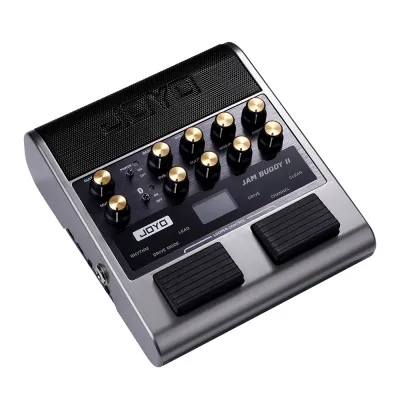
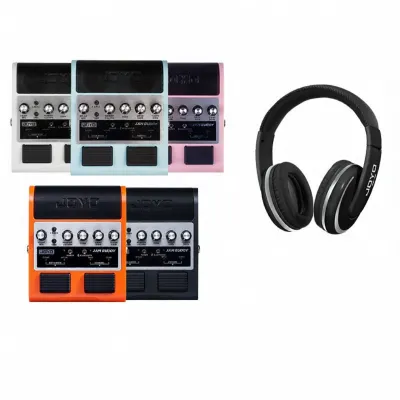
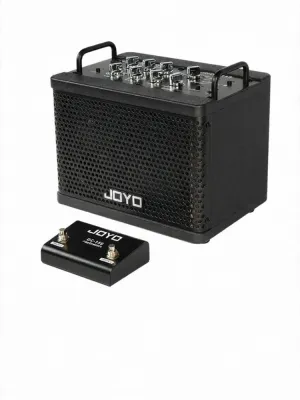
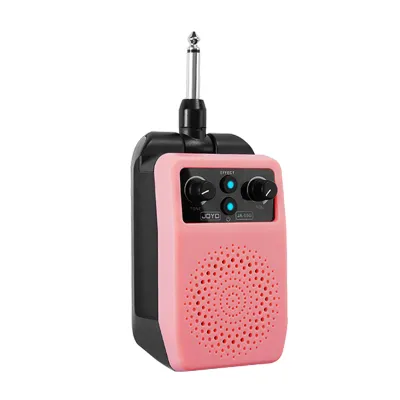
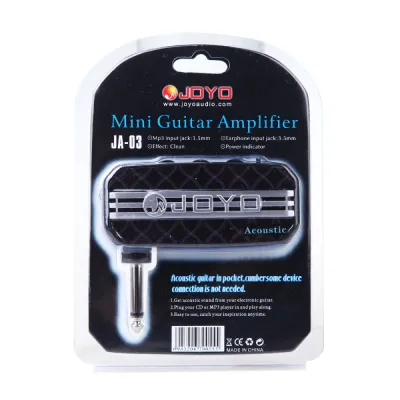
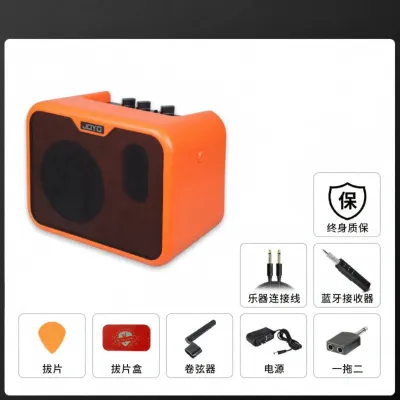
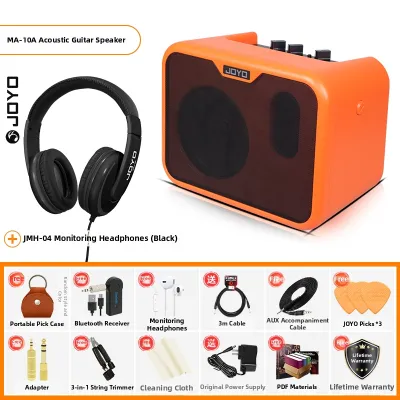
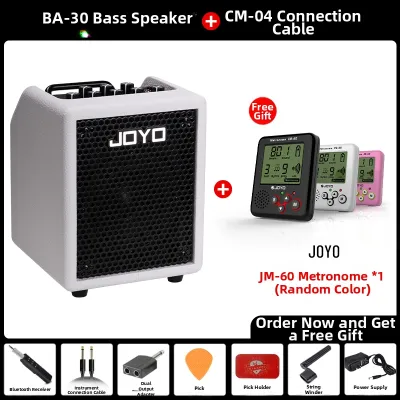
Prices are valid at publication and may change. Please refer to the product page for the latest price.
Key Features to Evaluate in a Joyo Amplifier
When browsing Joyo amplifiers, understanding the relationship between wattage and speaker size is fundamental. For home practice, high wattage is rarely necessary; amplifiers ranging from 3 to 15 watts are generally more than sufficient to fill a bedroom with sound. Speaker size also plays a major role in the overall tone. Smaller speakers, such as those measuring 3 to 5 inches, are highly portable and excellent for low-volume practice, though they may lack deep bass response. Larger speakers, such as 8-inch or 10-inch models, provide a fuller, more balanced sound profile with richer low-end frequencies, making them more satisfying for playing aloud but less convenient to move around.

Another critical decision is choosing between a straightforward analog amplifier and a digital modeling amplifier. Digital modeling amplifiers come equipped with built-in effects and simulations of various classic amplifier tones. This capability allows beginners to explore different musical genres—from clean jazz to heavy metal—without purchasing external effects pedals. However, if you prefer a traditional learning experience where you focus purely on your playing technique, a simple solid-state amplifier with minimal effects might be more appealing. This approach lets you learn the fundamentals of tone shaping using basic controls before introducing the complexity of digital menus.
Connectivity options can significantly enhance your practice sessions. Look for an amplifier with an auxiliary input (Aux In) or wireless Bluetooth connectivity, which allows you to play backing tracks or metronome apps directly from your smartphone or tablet through the amplifier speaker. A dedicated headphone output is essential for silent practice, ensuring the speaker mutes automatically when headphones are plugged in. Additionally, some modern amplifiers feature USB ports or line-out jacks, which are incredibly useful if you plan to connect the amplifier to a computer for basic home recording or online guitar lessons.
Finally, pay close attention to the tone-shaping controls on the control panel. A basic equalizer (EQ) consisting of bass, middle, and treble controls allows you to adjust the warmth and brightness of your guitar’s sound. Some compact models may feature a single “tone” knob instead, which simplifies adjustments but offers less precise control. Having a dedicated gain control is also important, as it allows you to adjust the amount of distortion or overdrive in your signal independently of the master volume, giving you access to gritty rock tones even at whisper-soft levels.
Comparing Joyo Amplifier Categories for Beginner Scenarios
Joyo offers several distinct categories of amplifiers, each tailored to specific practice scenarios and space constraints. Desktop and micro amplifiers are the smallest options available, often designed to sit on a desk, bookshelf, or even clip onto a belt. These units typically run on batteries or USB power, making them incredibly portable. They are highly suited for players who have extremely limited space or who travel frequently. While their small speakers cannot replicate the deep bass of a larger cabinet, they excel at delivering clear, low-volume tones and convenient headphone outputs for private practice.
Compact modeling combo amplifiers represent a highly versatile category for beginners. These amplifiers combine digital signal processing with a modest speaker cabinet, offering a wide array of built-in amp models, modulation effects (like chorus, flanger, and phaser), and time-based effects (such as delay and reverb). This category is ideal for beginners who want to experiment with different sounds and discover their personal tonal preferences. The ability to switch from a clean acoustic-like tone to a high-gain metal distortion at the press of a button keeps practice sessions engaging and educational.
For players who prefer a traditional, plug-and-play experience, standard solid-state combo amplifiers are an excellent choice. These amplifiers focus on delivering a reliable, clean tone and a straightforward user interface. Without the distraction of digital menus or dozens of preset options, you can focus entirely on your finger placement, picking dynamics, and basic tone-shaping controls. They are generally robust, easy to operate, and serve as an excellent platform if you plan to build a physical pedalboard with external effects pedals in the future.
To help you visualize how these categories compare, the following matrix outlines the typical specifications and primary use cases for each amplifier type based on standard manufacturer designs:
| Amplifier Category | Typical Wattage Range | Typical Speaker Size | Primary Use Case | Key Advantage |
|---|---|---|---|---|
| Desktop / Micro | 3W to 10W | 3" to 5" | Desktop practice, travel, silent headphone use | Extremely portable, battery-powered options |
| Compact Modeling | 10W to 20W | 5" to 8" | Multi-genre practice, tone exploration, home use | Built-in effects, versatile amp simulations |
| Solid-State Combo | 15W to 40W | 8" to 10" | Traditional practice, pedal platform, small jams | Simple controls, robust build, fuller bass |
When choosing between these categories, consider which trade-offs align best with your current living situation and learning style. A desktop amplifier is unmatched for convenience, but a compact modeling or solid-state combo will provide a more immersive and physically resonant playing experience as your skills progress.
What to Check Before Buying Your First Amplifier
Before finalizing your purchase, there are several practical details you must verify to ensure a smooth setup and avoid compatibility issues. First, check the power supply voltage requirements and regional plug compatibility. In Singapore, the standard domestic voltage is 230V at 50Hz, and electrical appliances typically use the Type G three-pin plug. If you are purchasing an amplifier online from an international seller, verify whether the unit comes with a compatible power adapter or if you will need to purchase a separate, certified local power supply to avoid damaging the internal electronics.
Second, evaluate the warranty coverage and after-sales support offered by the seller. Purchasing from an authorized local music store or a reputable online retailer ensures that you receive a genuine product backed by a valid manufacturer warranty. Check the duration of the warranty and the process for claiming repairs or replacements. Having access to local customer support can save you significant time and shipping costs if you encounter any technical issues or manufacturing defects during your first year of ownership.
If you are considering an open-box, display model, or used amplifier to save money, perform a thorough physical inspection before handing over any payment. Inspect the exterior cabinet for cracks, dents, or loose joints that could cause unwanted vibrations when playing. Check the speaker cone through the front grille to ensure it is free from tears, punctures, or moisture damage. Turn every control knob and flip every switch while the amplifier is powered on and connected to a guitar; the sweep should be smooth, and there should be no crackling, popping, or static sounds coming from the speaker, which could indicate dirty or worn-out potentiometers.
Frequently Asked Questions (FAQ)
Can I use a standard Joyo electric guitar amplifier for an acoustic guitar?
While you can physically plug an acoustic-electric guitar into a standard Joyo electric guitar amplifier, the resulting tone may not be ideal. Electric guitar amplifiers and their speakers are specifically voiced to color the sound, rolling off high frequencies and boosting mid-range tones to suit electric pickups. This coloring can make an acoustic guitar sound muddy, boxy, or unnaturally harsh. Additionally, acoustic guitars are highly prone to unpleasant feedback when played through high-gain electric guitar channels. If you want to use an electric amplifier, ensure you use the cleanest channel available and keep the gain low. For natural, transparent acoustic tone reproduction, a dedicated acoustic amplifier or a portable PA system is highly recommended.
Do I need to buy external effects pedals if the amplifier has built-in effects?
If your Joyo amplifier features built-in digital effects, you do not need to purchase external effects pedals immediately. Built-in effects are highly convenient and cost-effective for beginners, allowing you to learn how different effects—such as delay, reverb, and chorus—interact with your playing without the added expense of patch cables, power supplies, and individual pedals. However, built-in effects often have limitations, such as simplified control parameters and the inability to easily switch effects on and off mid-song with your feet. As your playing skills develop and you establish specific tonal preferences, you can gradually transition to external pedals for greater customization and tactile control.
How should I store and maintain my amplifier in a humid environment?
Singapore’s tropical climate features high relative humidity, which can pose a risk to the electronic components and wooden cabinets of musical equipment. To protect your amplifier, store it in a well-ventilated room away from direct sunlight, open windows, and air conditioning units that blow cold air directly onto the gear, as rapid temperature changes can cause condensation. Placing silica gel packets inside the rear of the amplifier cabinet or using a room dehumidifier can help manage ambient moisture levels. When cleaning the amplifier, always unplug it from the wall first. Use a dry, lint-free microfiber cloth to wipe down the exterior and control panel, and avoid spraying any liquid cleaners or water directly onto the chassis or speaker cone. Consult the manufacturer’s manual for specific maintenance instructions.
Community discussion
Share your experience or ask a question. Comments are reviewed before publication.