
Selecting the right Malay dictionary is a foundational step in mastering the language, whether you are a student preparing for school examinations, a professional working in regional trade, or a casual learner exploring conversational Malay. The Kamus Dewan, published by the official national language board, Dewan Bahasa dan Pustaka, stands as the definitive authority on the Malay language. However, because this dictionary exists in several print editions, abridged formats, and digital platforms, finding the version that aligns with your current proficiency and study habits is essential. The ideal choice depends on how you plan to navigate the complex system of Malay affixes, your need for portable reference tools, and the specific requirements of your academic or professional environment.
Matching Your Malay Proficiency to the Right Print Edition
To select the most effective print edition, you must first evaluate your current command of Malay grammar and vocabulary. The Malay language is highly agglutinative, meaning that words are constructed by adding prefixes, suffixes, and circumfixes to a core root word. For beginners and primary school students, navigating a comprehensive dictionary organized strictly by root words can be incredibly challenging. If you do not yet know that a specific prefixed word originates from a particular root, looking it up in a standard academic dictionary can lead to frustration. For this level, abridged student editions or school-specific dictionaries are highly recommended. These versions often list words alphabetically by their complete prefixed forms rather than forcing the reader to identify the root word first. They also feature simplified definitions, clear sentence examples, and focus primarily on high-frequency vocabulary used in daily communication and standard school curricula.
As you progress to an intermediate or advanced level, your learning needs shift toward understanding word derivation and precise contextual usage. This is where the standard comprehensive editions of Kamus Dewan become indispensable. These volumes are designed for secondary school students, tertiary learners, and individuals who already possess a functional grasp of basic Malay grammar. In these editions, entries are organized systematically under their root words, with all derivative forms listed beneath them. This structure allows you to see the entire family of a word at a glance, helping you understand how different prefixes and suffixes alter the meaning of a single root. These comprehensive editions also include a wider range of idioms, proverbs, and formal vocabulary that are essential for writing essays, reading literature, or participating in professional discussions.
Products mentioned in this guide
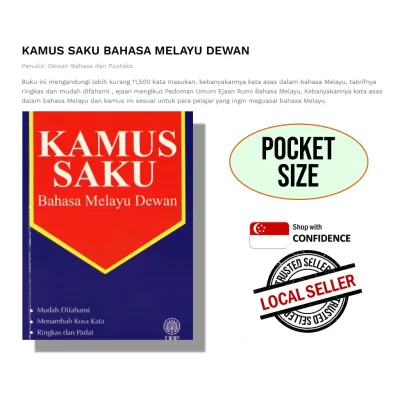
![[SINGAPORE SELLER] Kamus Pelajar Bahasa Melayu Dewan Edisi Kedua (MOE APPROVED FOR PSLE)](https://img.lazcdn.com/g/p/765d85a4b312a69f440dc22605b2a13b.png_400x400q80.png_.webp)
![[SG SELLER] KAMUS MELAYU - INGGERIS DEWAN | Kamus Linguistik (Dewan Bahasa Pustaka)/ MALAY ENGLISH DICTIONARY](https://img.lazcdn.com/g/p/60cb8a5c1938178e447e912eafbd47e8.png_400x400q80.png_.webp)
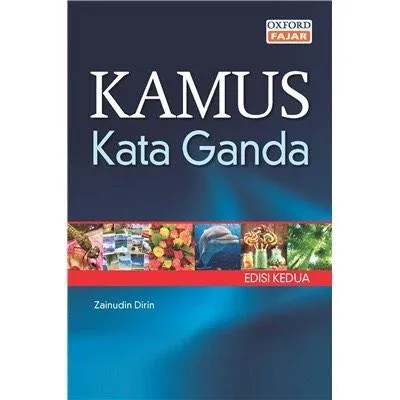
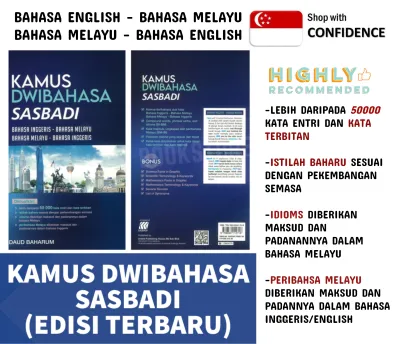
Prices are valid at publication and may change. Please refer to the product page for the latest price.
For academics, professional translators, and advanced researchers, the premier, fully expanded editions of Kamus Dewan are the only tools that provide the necessary depth. These extensive volumes contain classical Malay terms, historical etymologies, regional variations, and highly specialized terminology spanning scientific, legal, and literary fields. If you are analyzing classical texts or translating complex documents, you require a dictionary that documents the historical evolution of words and includes loanwords from Arabic, Sanskrit, English, and Portuguese. These premier editions serve not just as spelling references, but as comprehensive linguistic archives that capture the full breadth of the language across different eras and regions.
Physical Books vs. Digital Access: Aligning With Your Study Routine
Once you have identified the appropriate level of detail, the next step is deciding between a physical book, an official web portal, or a mobile application. Each medium offers distinct advantages depending on how, where, and why you study. Physical dictionaries remain the preferred choice for deep, focused study sessions. The tactile experience of flipping through pages encourages cognitive retention and allows you to stumble upon related words, which naturally expands your vocabulary. Furthermore, physical books are entirely free from digital distractions, such as social media notifications or incoming emails, allowing you to maintain deep concentration. Many serious learners also prefer physical copies because they can make pencil annotations, highlight challenging words, and use physical bookmarks to track their progress.

For quick lookups and real-time writing assistance, official online portals are unmatched in convenience and accuracy. These web-based databases are maintained directly by the language board, ensuring that you always have access to the most current spelling standards, newly coined terms, and official neologisms. Online portals are particularly useful when you are working on a computer and need to verify a word quickly without breaking your workflow. Many of these digital platforms also feature advanced search functions, allowing you to search for words by their definitions, find synonyms, or explore related phrases. This makes them an excellent companion tool for intermediate and advanced writers who need to cross-reference terms rapidly.
Mobile applications bridge the gap between physical books and online portals, offering portable, on-the-go access that is ideal for daily commutes or travel. A verified mobile app allows you to carry a comprehensive dictionary in your pocket, making it easy to look up unfamiliar words the moment you encounter them in conversation, on street signs, or in local media. Many official apps also offer offline functionality, which is incredibly valuable when traveling or studying in areas with limited internet connectivity. However, when using mobile apps, it is crucial to ensure that you are using an official, authorized application to avoid inaccurate databases, intrusive advertisements, or outdated search algorithms that could hinder your learning progress.
Recommended Kamus Dewan Setups for Specific Learner Profiles
To help you finalize your decision, let us look at three common learner profiles and the specific dictionary setups that best support their goals. If you are a casual learner, a tourist, or someone learning Malay for basic social integration, your primary need is speed and portability. For this profile, a lightweight setup is ideal. You should rely primarily on official mobile applications for quick, on-the-go translations. If you prefer a physical book, opt for a pocket-sized abridged dictionary. This combination keeps your study tools highly portable while ensuring you have access to essential vocabulary for daily interactions without carrying a heavy academic volume.
If you are an examination candidate preparing for national school exams or official language proficiency tests, your setup must align strictly with educational guidelines. In Singapore, physical dictionaries are often permitted in specific language examination components, provided they meet the approved criteria set by the examining authority. For this reason, examination candidates must rely on the standard comprehensive print edition approved by local educational syllabi. Studying with the exact physical book you will use during exams is critical; it helps you build muscle memory and speed when looking up words under pressure. Supplement this physical book with official online portals during your home revision sessions to quickly verify spelling and practice sentence construction.
For translators, professional writers, and academic researchers, a multi-layered setup is necessary to ensure absolute accuracy and depth. Your primary tool should be the premier print edition of Kamus Dewan, which provides the comprehensive etymological and historical context required for high-level translation work. Alongside this physical volume, you should maintain active access to the official online portals and digital databases. This dual-system setup allows you to cross-reference classical terms in the print edition while simultaneously verifying modern terminology, administrative jargon, and newly standardized words on the digital platform, ensuring your translations are both accurate and contemporary.
What to Verify Before Purchasing or Downloading
Before you spend money on a physical book or download a digital application, there are several critical factors you must verify to ensure you are getting an authentic, high-quality resource. First, always confirm the publisher’s authenticity. The official Kamus Dewan is published exclusively by Dewan Bahasa dan Pustaka. Be cautious of unauthorized reprints, low-quality bootlegs, or dictionaries with similar-sounding titles published by independent entities. These counterfeit versions often contain typographical errors, missing pages, or outdated definitions that can severely disrupt your learning.
Second, carefully check the edition and print year. Language is dynamic, and Malay spelling standards, loanwords, and definitions are updated periodically. When purchasing a physical book, look at the copyright page to ensure you are buying the most recent edition or reprint. Buying an obsolete edition might mean missing out on modern vocabulary or studying spelling rules that have since been updated. For digital apps, check the version history in the app store to confirm that the developers regularly update the database to reflect current linguistic standards.
Third, compare pricing and availability across reputable local retailers. In Singapore, authentic copies of Kamus Dewan can be found at major academic bookstores, specialized language bookshops, or official online distributors. Be sure to check the current S$ pricing to avoid overpaying through unauthorized third-party resellers on online marketplaces. If a price seems unusually low, it may indicate a counterfeit print or a heavily damaged secondhand copy.
Finally, for digital applications, verify device and operating system compatibility before downloading. Ensure that the app is compatible with your smartphone’s current operating system and check whether it requires a continuous internet connection or offers full offline functionality. Some apps may require a one-time purchase or a subscription fee to unlock advanced features, so read the product description carefully to understand what is included in the basic download.
Frequently Asked Questions (FAQ)
Do I need to upgrade to the newest edition if I own an older comprehensive version?
Whether you need to upgrade depends entirely on your learning goals and how old your current edition is. If you own a comprehensive edition that is only a few years old and you are using it for general language learning, conversational practice, or secondary school studies, your current copy is likely more than adequate. The core vocabulary and grammatical structures of the language do not change overnight. However, if you are an academic, a professional translator, or a student preparing for advanced examinations, upgrading to the latest edition is highly recommended. Newer editions incorporate thousands of updated terms, modern administrative words, and revised spelling standards that are essential for professional accuracy.
Are third-party dictionary apps reliable alternatives to the official digital portal?
Generally, third-party dictionary apps should be approached with caution. While some independent developers create user-friendly interfaces, many third-party apps rely on outdated, scraped databases that do not reflect current official spelling standards. Furthermore, these apps are often monetized through intrusive advertisements that can disrupt your study flow, and they may lack the sophisticated search algorithms needed to navigate Malay’s complex affix system. To ensure absolute accuracy and a distraction-free learning experience, it is always best to rely on the official digital portals and verified mobile applications provided directly by the national language board.

Community discussion
Share your experience or ask a question. Comments are reviewed before publication.