
The best keyboard stand for your first digital piano depends on your instrument’s weight, your available home space, and your playing posture. For beginners in compact living spaces, a double-X stand offers a portable and budget-friendly starting point, while Z-stands and table-style stands provide superior stability and legroom for dedicated, seated practice. If you have a heavy 88-key weighted action piano, a furniture-style base or a heavy-duty column stand ensures the instrument remains secure during enthusiastic play. Choosing the right support is not just about keeping your instrument off the floor; it directly impacts your physical comfort, your playing technique, and the safety of your equipment.
Assess Your Digital Piano and Playing Environment
Before browsing online marketplaces or visiting a local music showroom, you must gather the physical specifications of your digital piano. Check the manufacturer’s manual or official product page to find the exact weight and width of your instrument. A lightweight 61-key keyboard has vastly different support requirements than a fully weighted 88-key digital piano, which can easily weigh over 15 kilograms. Placing a heavy instrument on an inadequate stand can lead to bowing, instability, or even a catastrophic collapse.
Next, evaluate your physical practice space. In compact apartments or HDB flats, floor space is at a premium, making a collapsible stand highly desirable. Measure the footprint where the stand will sit, ensuring there is enough clearance for a comfortable bench, power cables, and sustain pedals. You should also consider your primary playing posture; if you plan to practice seated, legroom and knee clearance become critical factors for long-term comfort. If you plan to practice standing, you will need a stand that can extend to a comfortable height without losing its structural integrity.
Products mentioned in this guide
![[SG Seller] Double X Adjustable Portable Self-installation piano Keyboard Stand](https://img.lazcdn.com/g/p/b80c0e4f73cccbdb23d62602c484413c.jpg_400x400q80.jpg_.webp)

Prices are valid at publication and may change. Please refer to the product page for the latest price.
Additionally, consider the climate and flooring of your practice environment. In humid climates, metal stands with high-quality powder coating resist rust better over time, while rubberized feet prevent the stand from slipping on polished tile or wooden floors. If you plan to move your setup frequently between rooms, the weight of the stand itself becomes an important factor in your daily routine.
Compare Keyboard Stand Types for Beginners
Different stand designs offer distinct trade-offs between stability, portability, and ergonomics. Understanding these structural differences will help you choose a model that matches your daily practice habits and budget.

X-Style and Double-X Stands
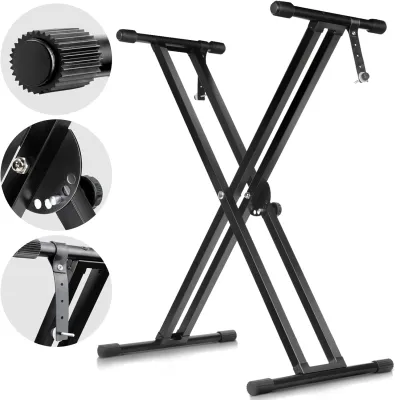
X-stands are among the most common options for beginners due to their simple folding mechanism and affordability. They feature a scissor-like design that allows for quick height adjustments and easy storage when not in use. A single-X stand is lightweight and suitable for basic, low-weight keyboards, while a double-X stand features reinforced bracing that significantly increases weight capacity and lateral stability.
However, the primary drawback of any X-style stand is the lack of legroom. Because the support bars cross directly in the center, they block your knees when you sit down to play. This restricted space can force you into an awkward posture, causing you to sit too far back or hunch over the keys during extended practice sessions. These stands are best suited for players who stand while performing, have highly constrained spaces, or need to pack up their gear frequently for travel.
When evaluating X-stands, always check the locking mechanism. Higher-quality models use a pull-pin or clutch system that locks securely into pre-set holes, whereas cheaper models may rely on friction grips that can slip over time under heavy loads.
Z-Style and Table-Style Stands
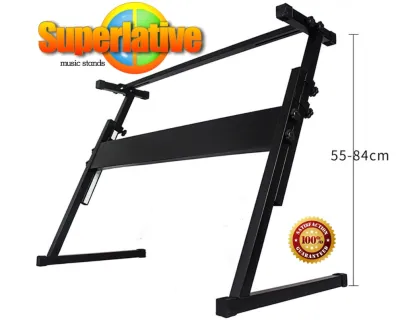
Z-style and table-style stands are designed with an open-center frame that prioritizes player comfort and stability. Z-stands feature a heavy-duty steel frame shaped like the letter Z, providing excellent support for heavier digital pianos. Table-style stands resemble a four-legged utility table with adjustable legs, offering a highly stable platform that resists wobbling even during intense playing.
The open-center design of these stands maximizes legroom, allowing you to slide a standard piano bench completely underneath. This setup mimics the ergonomics of an acoustic piano, promoting proper posture and preventing back strain. You can easily access your sustain and expression pedals without hitting your knees on the frame.
While they have a wider footprint and are less convenient to transport than X-stands, they are the ideal choice for a dedicated home practice corner where stability is paramount. Many Z-stands also allow for width adjustments, making them highly versatile if you decide to upgrade to a wider keyboard in the future.
Column Stands and Furniture Bases
Column stands feature a central vertical column with protruding arms to hold one or more keyboards. They offer a sleek, modern aesthetic and are highly favored for stage performances. However, they can be expensive and may require careful balancing, making them less common for absolute beginners unless space or multi-tier setups are a priority.
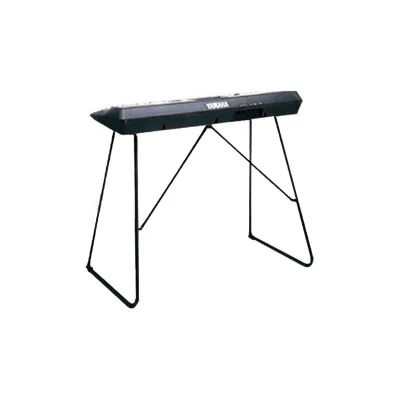
For a permanent home setup, many manufacturers offer proprietary wooden furniture bases designed specifically for certain digital piano models. These bases bolt directly into the underside of the keyboard, transforming the instrument into a cohesive, upright piano look. While furniture bases offer unmatched stability and aesthetic appeal, they are generally expensive, lack portability, and are only compatible with the specific piano model they were designed for.
If you choose a furniture base, keep in mind that it often requires assembly and is not easily moved once put together. However, they provide the most authentic piano-playing experience, especially when paired with a matching three-pedal unit that mimics the soft, sostenuto, and damper pedals of an acoustic grand piano.
Match the Stand to Your Setup and Budget
To make the final decision, cross-reference your instrument’s specifications with the stand’s rated weight capacity. Always choose a stand that supports well above your digital piano’s weight to ensure a safe margin of stability. A top-heavy setup on an underrated stand poses a serious tipping hazard, especially if you have pets or young children at home.
Height adjustability is another critical factor for ergonomic alignment. Ensure the stand can be adjusted so that your forearms sit parallel to the floor when your hands are on the keys. If you are purchasing a budget-friendly stand, verify that the locking mechanism is robust and easy to operate.
Finally, balance your budget against your long-term musical goals. While a basic X-stand might cost under S$40, investing a bit more in a sturdy Z-stand or a dedicated furniture base can significantly improve your playing comfort and protect your instrument from accidental falls. Consider the stand as a long-term investment in your musical journey; a high-quality stand can easily outlast your first keyboard.
Setup and Safety Checks for Your New Stand
Once your new stand arrives, careful assembly is essential to protect your investment. Inspect all locking pins, tightening knobs, and rubber end caps before placing your digital piano on top. Ensure that all screws are securely tightened according to the manufacturer’s instructions, but avoid over-tightening, which can strip the threads.
Place the assembled stand on a flat, level surface. If your floor is slightly uneven, adjust the leveling feet if your stand is equipped with them, or use a thin, non-slip mat to stabilize the base. The stand should not rock or wobble when you apply gentle pressure to the sides.
Before mounting your digital piano, perform a quick stability check by pressing down on the center and outer edges of the stand. Once the piano is in place, double-check that it sits securely on the rubber grip pads and does not slide. If your stand includes safety straps, secure them to the mounting holes on the underside of your keyboard for added peace of mind.
Frequently Asked Questions (FAQ)
Can I use a generic keyboard stand for a branded digital piano?
Yes, most generic flat-top stands, such as universal X-stands, Z-stands, and table-style stands, are compatible with any brand of digital piano. However, you must check the underside of your instrument to ensure it has a flat surface that can rest securely on the stand’s support arms. If you prefer a seamless look or want to attach integrated pedals, you will need to purchase the proprietary furniture stand designed specifically for your piano model.
How do I stop my keyboard stand from wobbling?
To eliminate wobbling, first ensure that all connection joints and locking knobs are fully tightened. If the stand is on an uneven floor, adjust the leveling feet on the bottom of the stand legs. If your model does not have adjustable feet, placing a small piece of cardboard or a rubber mat under the uneven leg can help stabilize the setup. Additionally, ensure your digital piano is centered perfectly on the stand to distribute the weight evenly.
Community discussion
Share your experience or ask a question. Comments are reviewed before publication.