
Finding the right music notes stand is essential for maintaining proper playing posture, protecting your sheet music, and ensuring your practice sessions run smoothly. The ideal choice depends on a balance between your instrument’s physical requirements, the space available in your practice environment, and whether you need to transport your gear to rehearsals or gigs. By matching the structural design of the stand to your specific routine, you can prevent physical strain and focus entirely on your performance.
Choosing a stand involves evaluating three primary categories: heavy-duty orchestral stands, lightweight portable folding stands, and compact desktop stands. Each type serves a distinct purpose, offering varying levels of stability, height adjustment, and portability. Understanding how these designs interact with your instrument and practice space will guide you to the most reliable setup for your musical journey.
Assessing Your Practice Space and Posture Needs
Before browsing specific models, evaluate the physical environment where you will practice most frequently. A dedicated music room or a spacious studio can easily accommodate a heavy, wide-legged floor stand that remains permanently assembled. Conversely, if you practice in a multi-purpose living area, a bedroom corner, or a shared apartment, space is at a premium. In these compact settings, a collapsible stand that can be tucked into a closet or a desktop stand that sits on an existing table is often more practical.
Products mentioned in this guide
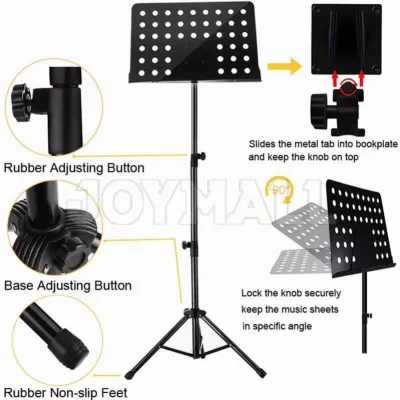
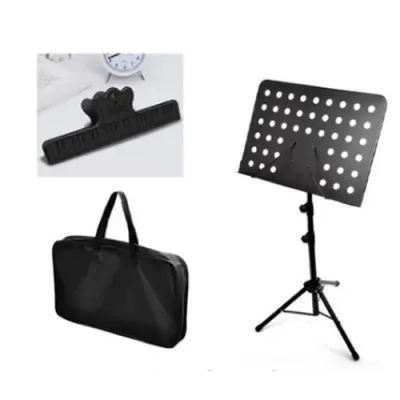
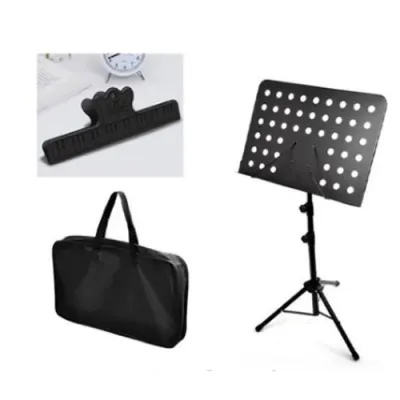
Prices are valid at publication and may change. Please refer to the product page for the latest price.
Your primary playing posture dictates the height adjustment range your stand must support. Seated musicians, such as cellists, classical guitarists, or pianists, require a stand that can adjust to lower heights to keep the music within their natural line of sight without blocking their view of the instrument. Standing players, including vocalists, flute players, and violinists, need a stand that extends high enough to keep the sheet music at eye level, which promotes an open chest and healthy spinal alignment.
The nature of your musical activities also determines the level of durability and portability you require. If your routine consists solely of stationary home practice, a heavier stand with a solid desk provides a stable and reliable platform. However, if you regularly travel to music lessons, ensemble rehearsals, or community gigs, portability becomes your primary concern. For these mobile scenarios, you must balance the need for a lightweight, easily transportable design with the structural stability required to hold your music securely in different venues.
Orchestral, Portable, or Desktop: Choosing Your Stand Type
Orchestral stands are a standard choice for stability and durability, making them a common option for permanent practice spaces, schools, and professional rehearsal halls. These stands feature heavy-duty steel or aluminum construction, a thick vertical shaft, and a solid, non-folding desk that can support heavy anthologies, thick binders, and digital tablets without bowing. The base is typically a heavy, welded tripod or a weighted cast-iron disc, which keeps the center of gravity low and helps prevent the stand from tipping over if accidentally bumped.

Portable folding stands are designed specifically for musicians on the move who need a highly collapsible and lightweight option. These stands feature wireframe desks and thin, telescoping metal tubes that fold down into a compact shape, often fitting inside a small carrying bag. While they excel in portability and are easy to store in tight spaces, they have a much lower weight capacity than orchestral stands. They are best suited for single sheets of music, thin booklets, or lightweight folders, and they can be prone to wobbling in drafty rooms or on uneven floors.
Desktop stands offer a compact, non-freestanding alternative for musicians with limited floor space or those who practice at a desk. These small frames are made of wire, plastic, or wood and sit directly on a flat surface, such as a table, desk, or the top of a digital keyboard. They are highly favored by music producers, keyboardists, and students who study music theory alongside their instrument practice. While they offer practical space savings, they lack height adjustment and rely entirely on the height of the surface they rest upon.
| Stand Type | Base Stability | Weight Capacity | Portability | Best Use Case |
|---|---|---|---|---|
| Orchestral | High | High | Low | Permanent home studios, schools, heavy binders |
| Portable Folding | Low to Medium | Low | High | Traveling musicians, rehearsals, light folders |
| Desktop | Medium | Medium | High | Keyboard setups, study desks, limited floor space |
Key Build Features to Check Before You Buy
When evaluating a music notes stand, the design of the desk is one of the most critical features to consider. A solid back desk provides a continuous, flat surface that fully supports single sheets of paper, preventing them from sagging or falling through. It also allows you to easily write notes and markings on your sheet music during practice. Wireframe desks, while lightweight, require you to use a rigid folder or a backing board to support loose sheets, and they are less secure for holding expensive digital tablets.
The height and angle adjustment mechanisms are vital for ensuring ergonomic comfort and long-term durability. Look for stands with robust locking mechanisms, such as secure knob-tightened collars or reliable friction-clutch systems. Knob-tightened systems use threaded screws to clamp the telescoping tubes in place, which provides a very secure lock but can wear out if over-tightened. Friction-clutch systems allow for quick, one-handed height adjustments without turning knobs, but you must verify that the clutch tension is strong enough to hold heavy music without slipping.
Base stability is determined by the footprint size of the tripod and the overall weight distribution of the stand. A wider tripod footprint provides a more stable foundation, reducing the risk of the stand tipping over when holding heavy music or when fully extended. Some stands feature weighted bases or double-braced legs to enhance stability. When checking product specifications, look for the overall weight of the stand and the diameter of the base footprint to ensure it matches your stability requirements.
Useful accessories and add-ons can significantly improve your practice experience, especially in challenging environments. Built-in page pegs or spring-loaded page arms are highly useful for holding pages open on thick books or securing sheet music in drafty rooms. A dedicated carrying bag protects portable stands from scratches and makes transport much easier. Additionally, some stands offer attachable utility shelves to hold pencils, tuners, reeds, or valve oil, keeping your essential tools within arm’s reach during practice.
Matching the Stand to Your Specific Instrument
String and woodwind players, such as violinists, cellists, flutists, and clarinetists, often work with thick method books, heavy solo anthologies, or multi-page orchestral parts. These instruments require a stable, high-capacity stand that can hold heavy materials at a precise height to maintain proper playing posture. Because these musicians frequently need to make quick, one-handed page turns while holding their instrument, a solid-desk stand that does not wobble during fast transitions is highly recommended.
Brass and percussion players require robust stands that can withstand physical movement and the vibrations of loud, low-frequency tones. Trumpet, trombone, and French horn players often stand while practicing and need a heavy-duty base that won’t tip over if bumped by an instrument bell in a tight space. Percussionists, who often move between multiple instruments, need tall, highly stable stands that can be positioned at various heights and angles to remain visible over drums and mallet instruments.
Keyboardists and digital piano players often face unique setup challenges, as many digital keyboards do not come with integrated music rests. A desktop stand can be placed directly on the flat top surface of the keyboard chassis, providing a clean and integrated look. Alternatively, a low-profile floor stand with a flat, heavy base can be positioned behind the keyboard stand, allowing you to adjust the sheet music to the optimal height and angle without interfering with your pedal setup.
Vocalists have specific ergonomic needs that require a highly adjustable and quiet music stand. To maintain an open chest, proper breath support, and excellent vocal projection, singers must keep their sheet music or tablet at eye level. A stand with smooth, quiet height adjustment is essential to avoid creating distracting noises during performances or recording sessions. A solid desk is also preferred to securely hold lyric sheets, heavy choir folders, or digital tablets without any risk of slipping.
Frequently Asked Questions (FAQ)
Can a Wireframe Stand Hold Heavy Sheet Music Books?
Standard wireframe folding stands have strict structural limits and are generally not designed to support heavy sheet music books, thick binders, or large anthologies. The thin wire support arms can bend under excessive weight, and the lightweight telescoping joints may slip, causing the desk to slide downward during practice. If you must use a wireframe stand with heavier materials, check the manufacturer’s weight specifications first. To make a wire stand more usable, you can place a rigid clipboard or a heavy plastic folder behind your music to distribute the weight more evenly, though upgrading to a solid-desk orchestral stand is a safer option for heavy loads.
How to Keep a Portable Folding Stand from Tipping
To prevent a lightweight portable folding stand from tipping over, ensure that the tripod base legs are fully extended to their widest position to maximize the footprint. Keep the center of gravity as low as possible by only extending the vertical shaft to the minimum height required for your playing posture. Always check that all locking knobs and collars are securely tightened before placing any music on the desk. Avoid placing the stand on uneven surfaces, such as thick carpets or outdoor grass, and use spring-loaded page clips or wind clips to secure your music if you are practicing in a drafty room or an outdoor environment.
Community discussion
Share your experience or ask a question. Comments are reviewed before publication.