
The right music sheet folder is an essential tool that directly impacts your focus, performance quality, and organization. For stage performances, a matte, non-reflective black folder with secure page-retaining bands prevents distracting glare and accidental drops. For daily practice, a lightweight, flexible folder allows for quick page swaps and easy transport between rehearsal spaces. For teaching, a high-capacity folder with multi-pocket dividers and a write-on surface supports diverse student curricula and real-time annotations. Choosing the right folder is not just about holding paper; it is about ensuring seamless page turns, protecting your scores, and maintaining focus during critical musical moments.
Key Features to Check When Buying a Music Sheet Folder
When selecting a music sheet folder, the physical construction and finish dictate how well it performs under different lighting and environmental conditions. One of the most critical aspects is the exterior and interior finish. Glossy plastic surfaces reflect overhead lights, creating harsh blind spots on your sheet music. Opting for matte, textured, or leatherette finishes diffuses light, ensuring your notes remain legible under bright stage spotlights or fluorescent classroom tubes.
The binding mechanism is another vital feature that influences your page-turning speed and noise level. Standard ring binders allow pages to lie completely flat, but the metal rings can clatter loudly during quiet rests. Prong fasteners offer a secure hold but make swapping pages a slow process. Slip-in plastic sleeves protect paper from wear and tear, but they can make writing quick notes impossible unless they feature a specialized design. Band-style or corner-tab folders hold the paper securely along the margins, leaving the center of the page exposed for direct annotation while keeping page turns silent.
Products mentioned in this guide
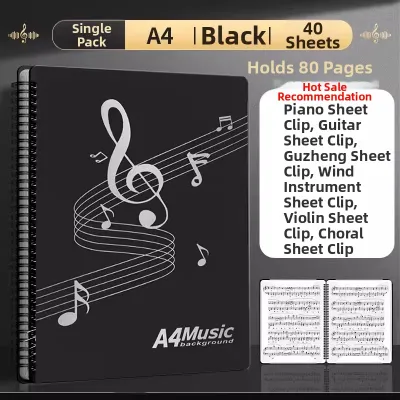
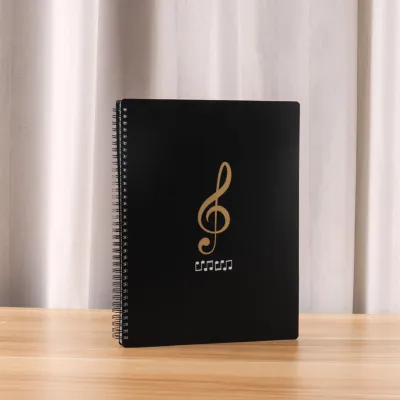

Prices are valid at publication and may change. Please refer to the product page for the latest price.
Size and capacity constraints must also align with your specific sheet music collection. Standard sheet music is often larger than standard A4 or US Letter office paper, frequently printed in concert size (9 by 12 inches) or B4 dimensions. A folder that is too small will allow the edges of your scores to fray, bend, or overhang. Additionally, verify the spine width of the folder; an excessively thick or heavy spine may not sit securely on a narrow wire music stand, increasing the risk of the stand tipping over during a session.
Choosing a Folder for Stage Performances
Stage performances demand absolute reliability, minimal visual distraction, and silent operation. The visual appearance of your folder is the first detail to consider. Standard performance etiquette typically requires a dark, non-reflective exterior—usually matte black—to ensure the folder blends into the background. This prevents the folder from catching bright stage lights and reflecting distracting glare into your eyes or toward the audience, maintaining a professional aesthetic.

Structural rigidity is equally important when performing in diverse venues. Flimsy folders can droop or fold backward when placed on a music stand, especially when subjected to the draft of venue air conditioning, heating vents, or outdoor breezes. A folder with a heavy-duty cardboard core or a rigid polymer backing acts as a stable shield, keeping your scores perfectly upright and flat so you can read them without interruption.
Secure page-holding mechanisms are essential to prevent embarrassing mishaps during a live show. Sudden drafts or rapid page turns can easily dislodge loose sheets. Performance-focused folders often feature bottom pockets, elastic retaining bands, or built-in cords that anchor the center seam of booklet-style scores. If you prefer loose sheets, look for folders with corner tabs or margin-only sleeves that lock each page in place while allowing you to slide your fingers underneath for rapid, silent page turns.
Selecting a Folder for Daily Practice
Daily practice sessions require a folder that prioritizes portability, flexibility, and ease of use. If you commute frequently between home, school, rehearsal spaces, and private studios, a heavy, rigid folder becomes an unnecessary burden. A lightweight, flexible plastic or thin cardboard folder reduces the overall weight of your gear bag, making it much easier to carry alongside your instrument and other accessories.
Practice rooms are often cramped, featuring smaller music stands or compact tabletop surfaces. A folder with a highly flexible spine or one that can fold completely back on itself (offering 360-degree rotation) is ideal for these tight spaces. This design allows you to display only the active page or system, saving valuable horizontal space on your stand and preventing the folder from crowding your workspace.
Because your practice repertoire changes constantly, you need a system that allows you to add, remove, or rearrange sheets in seconds. Standard ring mechanisms or open-pocket folders are excellent for this purpose, as they accommodate rapid updates to your daily exercises, warm-ups, and sight-reading pieces. Avoid folders that require tedious threading or complex fastening systems for daily use, as they slow down your practice setup and interrupt your workflow.
Picking a Folder for Music Teaching
Music educators manage multiple students, levels, and curricula simultaneously, which requires a highly organized and durable storage solution. A single-performance folder is rarely sufficient for the sheer volume of material a teacher handles daily. Educators benefit most from high-capacity folders equipped with multi-section dividers or color-coded tabs, allowing them to keep lesson plans, student progress charts, and various exercises neatly categorized and easily accessible.
Real-time annotation is a constant requirement during music lessons. Teachers must be able to write fingering corrections, dynamic markings, and breath indicators instantly without disrupting the flow of the lesson. Folders with standard plastic sleeves force you to slide the paper out every time you want to write, which wastes valuable lesson time. Instead, look for specialized “write-on” music folders that feature top and bottom retaining bands, leaving the center of the page completely exposed for quick pencil or dry-erase marker notes.
Durability is paramount for teaching tools that undergo heavy daily use. These folders are opened, closed, packed, and unpacked dozens of times a day, often shared with students or transported in crowded bags. Reinforced corners, heavy-duty vinyl covers, and tear-resistant pocket seams prevent the folder from wearing out prematurely, ensuring it remains a reliable asset in your teaching studio for years to come.
Cross-Scenario Compatibility: Can One Folder Do It All?
For hobbyists or generalists, purchasing multiple specialized folders may seem unnecessary. A hybrid folder can bridge the gap between different environments. Look for a matte black, medium-capacity folder with write-on plastic sleeves. This style provides the glare reduction needed for occasional performances, the annotation ease required for daily practice, and enough storage capacity to hold a modest repertoire.
However, using a single folder across all scenarios involves clear trade-offs. A high-capacity teaching folder is usually too bulky and heavy for a sleek stage performance, while a minimalist choral folder lacks the storage space needed for a full semester of teaching materials. Using an oversized or reflective folder on stage can look unprofessional and crowd your music stand, while using a delicate performance folder for daily practice can lead to premature wear.
A highly effective strategy is to adopt a modular organization system. Keep a large, multi-ring binder at home or in your studio to serve as your master archive for all sheet music. When preparing for a specific performance, rehearsal, or lesson, transfer only the active sheets into a slim, lightweight, non-reflective performance folder. This keeps your main library organized and protected while ensuring your active setup remains professional, lightweight, and agile.
Frequently Asked Questions (FAQ)
How do I prevent my sheet music from falling out of the folder?
Check the binding mechanism regularly to ensure it remains secure. If you use prong fasteners or ring binders, verify that the prongs are aligned and tightly closed. For punched paper, apply adhesive reinforcement labels around the punched holes to prevent the paper from tearing under the tension of rapid page turns. For unpunched sheets or fragile historical scores, use clear corner mounts or non-glare sheet protectors that grip the page edges securely without damaging the paper fibers.
Can I use a standard office binder for sheet music?
While a standard office binder is inexpensive, it presents several challenges for musicians. Office binders are typically designed for standard A4 or Letter paper, whereas many professional music scores are printed on wider or taller sheets that will overhang the edges, leaving them vulnerable to damage. Additionally, standard binders often have bulky, wide spines and highly reflective plastic covers that catch stage lights, and their heavy metal rings can clatter loudly during a quiet performance.
Community discussion
Share your experience or ask a question. Comments are reviewed before publication.