
Selecting the right music stand is one of the most critical yet frequently overlooked decisions for your daily practice routine. The ideal stand does far more than simply hold your sheet music upright; it directly influences your physical posture, reduces eye strain, protects your valuable scores or digital tablets from accidental damage, and seamlessly fits into your living environment. Whether you are practicing classical violin, learning jazz piano, or annotating complex orchestral scores, the physical structure of your stand dictates how comfortably and productively you can practice.
Finding the perfect match requires balancing several practical factors, including your primary practice location, the weight and format of your reading material, and your local environmental conditions. A heavy-duty, solid-desk stand that remains permanently assembled is highly stable but impractical for transport, while a lightweight folding stand offers excellent portability at the expense of structural rigidity. By understanding the mechanical differences in base designs, adjustment mechanisms, and materials, you can select a stand that enhances your focus and elevates your musical development.
Quick Guide: Matching Music Stand Designs to Your Practice Space
Your physical practice environment is the primary factor that should guide your choice of a music stand. In many urban environments, such as compact apartments in Singapore, floor space is highly prized, and rooms often serve multiple functions. If your practice area doubles as a living room or bedroom, a highly collapsible folding tripod stand or a compact desktop stand is often the most practical choice. These space-saving designs can be quickly assembled for a practice session and then packed away into a closet or drawer, keeping your living area clean and clutter-free.
Products mentioned in this guide
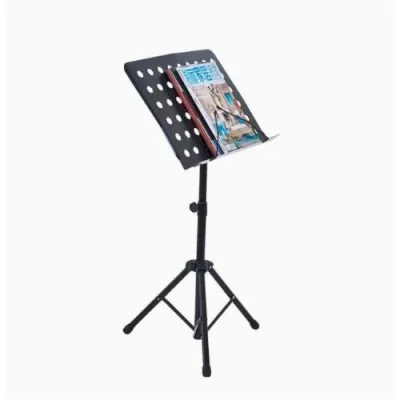
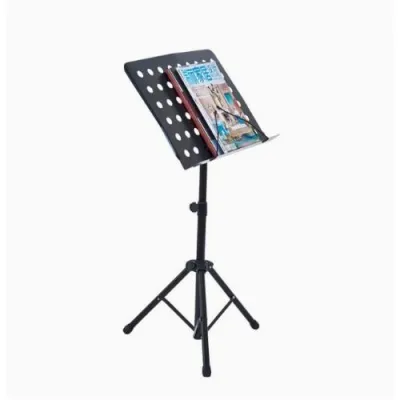
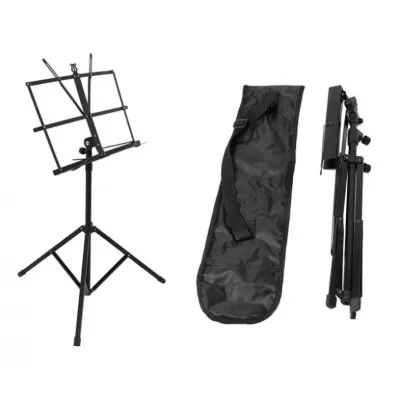
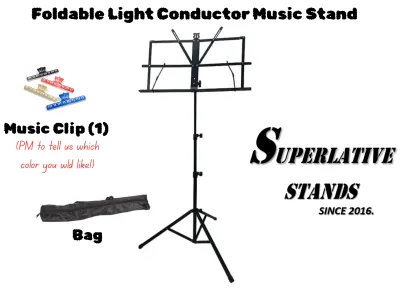
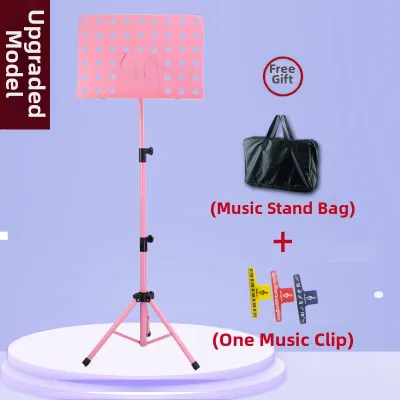
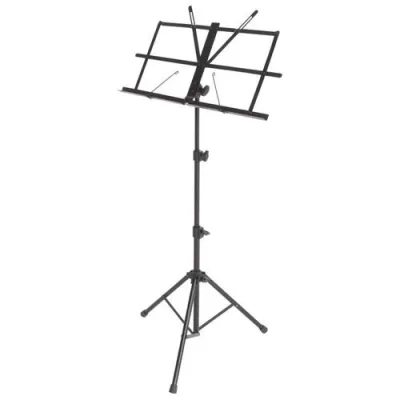
Prices are valid at publication and may change. Please refer to the product page for the latest price.
Conversely, if you have a dedicated home studio, music room, or a permanent corner next to a piano, a heavy-duty, fixed-base stand is the superior option. These robust stands do not need to be collapsed daily, allowing them to offer maximum stability and a wide, solid desk that can support heavy three-ring binders, thick anthologies, or large digital tablets without wobbling. For traveling musicians, music students commuting to lessons, or ensemble players who regularly move between rehearsal spaces, a lightweight aluminum folding stand with a dedicated carrying bag is indispensable for easy transport on public transit.
Key Features to Evaluate for Daily Practice Comfort
Stability and Base Design
The foundation of any music stand is its base, which determines how well the structure resists tipping when loaded with heavy music books or subjected to accidental bumps. Tripod bases are the most common design, utilizing three splayed legs to distribute weight over a wide surface area. While tripod bases are highly effective at stabilizing stands on slightly uneven floors, they do require a larger physical footprint. Within tripod designs, you will find both flat-leg configurations, which sit flush against the floor, and dome-leg configurations, which arch upward slightly before touching the ground. Flat-leg tripods are generally more stable and less likely to be tripped over, making them excellent for tight spaces.

Heavy, flat cast-iron bases offer an alternative to tripods, featuring a compact, circular, or U-shaped plate that sits directly on the floor. These bases have a exceptionally small footprint, allowing you to position the stand closer to your chair or instrument. Because the bulk of the weight is concentrated at the absolute bottom of the stand, they provide a very low center of gravity, which is highly effective at preventing tipping when holding top-heavy items like large tablets or thick binders. However, these solid bases are heavy and difficult to move, making them strictly suited for permanent setups.
Height Adjustment Mechanism
A reliable height adjustment system allows you to transition seamlessly between seated and standing practice positions while ensuring the stand remains securely locked at your desired height. Telescopic poles typically rely on one of three locking mechanisms: screw-tightening knobs, friction-grip clutches, or spring-loaded pins. Screw-tightening knobs are simple and common on budget-friendly stands, but they require physical effort to tighten and can strip their threads over time if overtightened.
Friction-grip clutches, frequently found on professional orchestral stands, allow you to raise or lower the shaft simply by pulling up or pushing down on the desk. This design is incredibly fast and eliminates the need for knobs, though it relies on high-quality manufacturing to prevent the shaft from slipping over years of use. Spring-loaded pin systems use pre-drilled holes along the shaft, locking the stand into discrete height intervals. While exceptionally secure and incapable of slipping, they do not allow for micro-adjustments between the designated holes. Always check the manufacturer’s minimum and maximum height specifications to ensure the stand can accommodate your physical height in both seated and standing positions.
Tray and Desk Design
The desk is the surface that directly supports your sheet music, and its design impacts both readability and usability. Solid metal or heavy-duty plastic desks provide a continuous, rigid surface that is ideal for writing annotations, bowing marks, or fingerings directly onto your sheet music during practice. They also prevent single sheets of paper or thin booklets from sagging or falling through. Perforated or wireframe desks, on the other hand, feature cutouts or open wire patterns that significantly reduce the overall weight of the stand, making them much easier to carry. However, writing on a wireframe desk is highly difficult without a solid backing board, and single sheets can easily slip through the open spaces.
The depth of the bottom lip is another critical specification to check before purchasing. A shallow lip of 2 to 3 centimeters is sufficient for single sheets of paper or thin octavos, but you will need a deeper lip of 5 centimeters or more to securely hold thick music anthologies, heavy binders, or tablets in protective cases. Additionally, evaluate the tilt adjustment mechanism. A secure, adjustable tilt allows you to set the perfect viewing angle, preventing neck strain and reducing glare from overhead lights. Look for desks with robust tilt joints—such as friction-tilt joints or geared locking knobs—that will not sag under a heavy load.
Accessory Integration
Daily music practice often requires a variety of auxiliary tools, including metronomes, tuners, pencils, rosin, reed cases, or digital tablets. A well-designed music stand should accommodate these accessories without overcrowding your sheet music or compromising the stand’s balance. Many heavy-duty stands feature built-in accessory shelves or double-lipped desks, providing a dedicated space to keep pencils and tuners within arm’s reach.
For stands without built-in shelves, verify if the vertical shaft is compatible with clamp-on accessory trays or specialized tablet mounts. These add-ons allow you to secure your digital devices or metronomes directly to the pole, keeping them centered over the base to maintain a safe center of gravity. When integrating accessories, always ensure that the combined weight of your sheet music and tools does not exceed the manufacturer’s recommended weight limit, as overloading the top of the stand can make it highly unstable.
Material and Build Quality
The materials used in a music stand’s construction dictate its durability, weight, and suitability for different environments. Steel is the most common material for heavy-duty stands, offering exceptional rigidity and resistance to bending. However, steel stands are heavy and can be prone to rust in highly humid climates, such as Singapore’s tropical environment, if the protective powder coating is chipped or scratched. Aluminum stands offer an excellent alternative, providing a highly lightweight structure that is naturally resistant to corrosion, making them ideal for humid conditions and frequent travel.
When evaluating build quality, pay close attention to the joints and connection points. Metal-to-metal connections reinforced with nylon or rubber washers are far more durable than cheap plastic collars, which can easily crack under tension or degrade when exposed to heat and humidity. High-quality stands use robust rivets and heavy-duty welds that can withstand the daily stress of height adjustments and heavy music books, ensuring the stand remains a reliable fixture in your practice routine for years to come.
Comparing the Main Types of Music Stands for Daily Use
To choose the best music stand for your specific routine, it is helpful to understand the distinct advantages, limitations, and target audiences of the three primary categories available on the market. Each type represents a different set of trade-offs between portability, stability, and space efficiency.
Folding and Tripod Stands (Portable)
Portable folding stands are designed with highly collapsible frames, featuring telescopic shafts and folding desks that allow the entire unit to shrink into a compact, rod-like shape. These stands are typically constructed from lightweight aluminum or thin steel tubing, making them incredibly easy to transport in a backpack or a dedicated carry bag.
- Advantages: These stands offer outstanding portability and a very compact storage footprint. They are highly affordable, with budget-friendly options typically ranging from S$15 to S$35, making them accessible for students and beginners. Their adjustable tripod legs allow them to be set up quickly in multi-purpose rooms and packed away just as fast, leaving no permanent footprint in your living space.
- Limitations: The primary trade-off of a portable stand is its limited weight capacity and stability. The thin wire desks and lightweight shafts can easily flex or wobble under the weight of heavy, hardbound music books or large binders. Because they are top-heavy when loaded, they are highly susceptible to tipping if bumped. Additionally, the narrow desk width means that multi-page spreads or wide sheet music can hang off the sides, making page turns difficult and clumsy.
- Ideal User: This type is best suited for music students commuting to weekly lessons, gigging musicians who require a highly portable stand for travel, and home practitioners who practice in shared living areas where the stand must be packed away after every session.
Heavy-Duty and Fixed Stands (Studio/Home)
Heavy-duty stands, often referred to as orchestral or studio stands, are built for permanent or semi-permanent installation. They feature thick metal shafts, heavy cast-iron or wide steel tripod bases, and solid, non-folding desks made of steel, aluminum, or heavy-duty engineered plastics.
- Advantages: These stands provide the absolute maximum level of stability and weight capacity. You can confidently place heavy three-ring binders, thick anthologies, or expensive digital tablets on the solid desk without any fear of wobbling or tipping. The wide, continuous desk surface fully supports your sheet music, making it easy to write clear annotations during practice. These stands are incredibly durable, often built to withstand decades of daily use in professional music schools and orchestras.
- Limitations: Heavy-duty stands are bulky, heavy, and highly impractical to transport. They do not fold down into a compact shape, meaning they require a dedicated, permanent footprint in your practice room. They are also more expensive, with mid-range options starting around S$40 to S$80, and premium professional-grade studio stands exceeding S$120.
- Ideal User: This option is perfect for musicians with a dedicated home studio or practice room, keyboardists, cellists, vocalists, or anyone who primarily practices using heavy bound books, large binders, or expensive digital devices where a fall would cause significant damage.
Desktop and Attachable Stands (Space-Saving)
Desktop and attachable stands are compact, floorless alternatives designed to sit directly on top of existing furniture or clamp onto other musical equipment, such as keyboard stands, microphone poles, or digital piano music rests.
- Advantages: These stands have a virtually zero floor footprint, making them the ultimate space-saving solution for small rooms. They are highly cost-effective, with basic wire desktop stands starting as low as S$10, and heavy-duty clamp-on models ranging up to S$45. By utilizing your existing desk or keyboard stand, they allow you to keep your sheet music directly in your line of sight without cluttering your floor space.
- Limitations: The major limitation of a desktop or attachable stand is its complete dependency on the height, stability, and placement of the underlying surface. If your writing desk is too low or your keyboard stand is unstable, you cannot easily adjust the stand's independent height or tilt to achieve an ergonomic viewing angle. They also offer limited desk space, making them unsuitable for large, multi-page orchestral scores.
- Ideal User: This category is ideal for music producers working at a computer desk, keyboardists using multi-tier setups, and individuals with severe floor space limitations who practice their instrument while seated at a desk.
Optimizing Your Stand Setup for Posture and Readability
Ergonomic Alignment
Maintaining proper physical posture during daily practice is essential for preventing repetitive strain injuries, muscle fatigue, and long-term back or neck pain. To optimize your setup, start by adjusting the height of your music stand so that the center of the sheet music is aligned just below eye level. This allows you to read the notation clearly while keeping your head in a neutral, upright position, preventing you from hunching forward or straining your neck.
For standing instrumentalists, such as violinists, flutists, or singers, the stand should be set high enough that you can look across at the music while maintaining an upright spine and keeping your instrument properly aligned with your body. For seated players, such as cellists, classical guitarists, or pianists, lower the stand and tilt the desk upward at a comfortable angle. This configuration allows you to glance down at the music using only your eyes, keeping your neck and shoulders completely relaxed. Always position the stand directly in front of you, rather than off to one side, to avoid twisting your spine during long practice sessions.
Lighting and Glare Management
Proper lighting is crucial for reducing eye strain and maintaining focus during extended practice sessions. However, bright overhead lights or direct sunlight can cause harsh glare on glossy sheet music pages or digital tablet screens, making the notation difficult to read. To minimize glare, position your music stand at a 45-degree angle relative to direct light sources, or adjust the tilt of the desk slightly downward to redirect reflections away from your eyes.
For consistent, high-quality illumination, consider using a dedicated clip-on LED music stand light. Look for lights that offer adjustable brightness levels and color temperature settings; warm light is generally gentler on the eyes during late-night practice, while cool white light provides high contrast for reading complex, densely packed scores. Before purchasing, verify that the light’s clamp is compatible with the thickness of your stand’s desk and that its weight does not exceed the stand’s capacity, which could cause a lightweight stand to become top-heavy and tip over.
Managing Page Turns and Stability
Thick, bound music books and newly printed anthologies often have a strong tendency to self-close, which can disrupt your practice flow and cause frustration. To keep your books open flat without damaging their bindings, avoid forcing them open with excessive pressure. Instead, utilize practical, low-risk page holders, such as transparent acrylic page clips, weighted page bands, or spring-loaded music pegs. These accessories keep your pages securely in place without blocking your view of the musical notation.
If you prefer reading digital sheet music on a tablet, safety and stability are paramount. Rather than resting a heavy, expensive tablet directly on a narrow stand lip, use a secure, custom-fit tablet holder that clamps directly to the stand’s vertical pole. This keeps the heavy device centered over the base, lowering the center of gravity and significantly reducing the risk of the stand tipping over. Always consult your stand’s manufacturer instructions to verify its maximum load capacity before adding heavy binders or clamping multiple accessories to the shaft.
Routine Maintenance
To protect your investment and ensure your music stand operates smoothly for years, establish a simple routine of basic, reversible maintenance. In humid environments, sweat, hand oils, and ambient moisture can accumulate on metal surfaces, leading to corrosion or rust. To prevent this, wipe down the metal shaft, desk, and joints with a clean, dry microfiber cloth at the end of every week. Avoid using harsh chemical solvents or abrasive cleaning pads, which can strip the protective powder coating and leave the underlying metal exposed to moisture.
Periodically inspect all tightening screws, adjustment knobs, and joint collars to ensure they are functioning correctly. If a knob feels loose, gently tighten it to secure the joint, taking care not to overtighten and strip the threads. If you encounter a squeaking joint or a stiff telescopic shaft, consult the manufacturer’s manual before applying any lubricants. Applying household oils or WD-40 to friction-based joints can cause them to lose their grip, leading to a slipping shaft that can no longer support the weight of your sheet music.
Frequently Asked Questions (FAQ)
Can I use a microphone boom stand as a music stand?
While you can physically attach a music desk to a microphone boom stand using a thread adapter, it is generally not recommended for daily practice. Microphone stands are engineered to support narrow, balanced vertical loads, whereas a wide music desk shifts the center of gravity outward. This uneven weight distribution significantly increases the risk of the stand tipping over, which can damage your instruments or digital devices. Always check the manufacturer’s weight capacity and ensure the tripod legs are fully extended if you must use this setup.
How do I prevent a lightweight tripod stand from tipping over?
To maximize the stability of a lightweight tripod stand, always ensure the legs are fully extended to their widest possible stance. Position the stand so that one of the three legs points directly forward, underneath the desk; this structural alignment counteracts the forward pull of heavy sheet music. For added security, you can drape a low, stable weight, such as a small sandbag or a weighted ankle strap, over the lower collar of the tripod base. Avoid hanging heavy bags or instrument cases from the upper adjustment knobs, as this raises the center of gravity and increases tipping risk.
What is the best way to store a folding music stand to prevent joint damage?
To prevent joint damage, always collapse your folding stand completely by following the manufacturer’s specific folding sequence, and never force a stiff joint. Store the collapsed stand in a dry, well-ventilated indoor environment—ideally in an air-conditioned room or a dedicated storage closet—to protect the metal hinges and screws from rust. Using a padded carrying bag is highly recommended, as it protects the desk surface from scratches and keeps the legs securely bound, preventing accidental unfolding and joint strain during transport.
Community discussion
Share your experience or ask a question. Comments are reviewed before publication.