
A reliable music stand is the foundation of an organized practice space. When your daily routine involves balancing heavy method books, sheet music, a physical metronome, a clip-on tuner, and a pencil, a flimsy stand quickly becomes a source of frustration. Choosing the right stand requires looking beyond basic height adjustments to evaluate how well the equipment supports your entire array of practice tools.
By focusing on structural stability, desk design, and accessory integration, you can create a seamless setup that keeps your focus entirely on the music. Whether you practice in a compact HDB flat or carry your gear to rehearsals across Singapore, understanding these key features ensures your sheet music and electronics remain safe and accessible.
Desk Size and Lip Design for Secure Sheet Music Holding
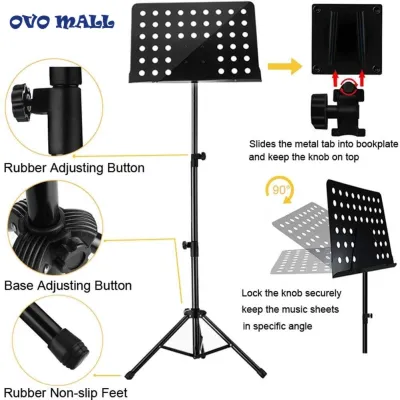
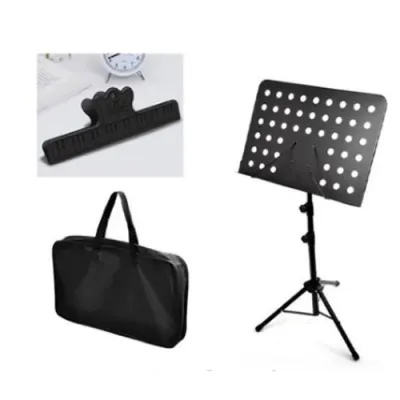
The desk is the primary interface of your music stand, and its design determines what kind of media it can support. Solid metal desks offer a continuous, rigid surface that easily handles single sheets of paper, heavy binders, and thick instructional books without bending. They also provide a firm backing if you need to write annotations directly onto your sheet music during practice.
Products mentioned in this guide
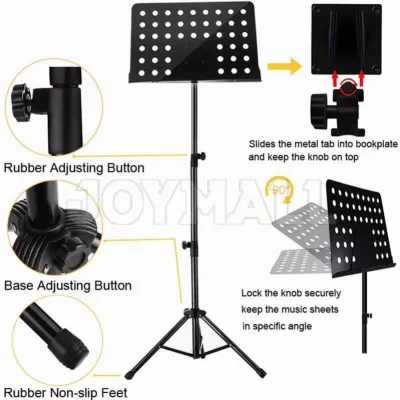

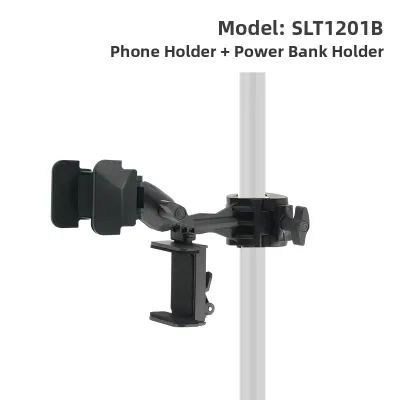
Prices are valid at publication and may change. Please refer to the product page for the latest price.
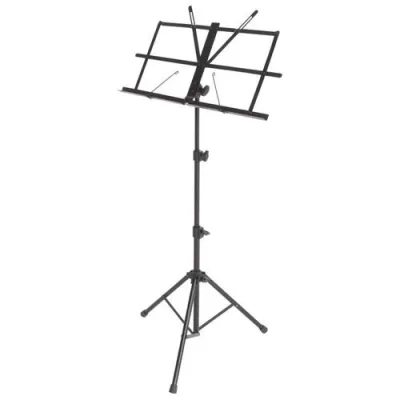
In contrast, lightweight wireframe desks are highly portable but lack a solid backing. While they work well for lightweight folders, they can cause single sheets of paper to sag and offer little support for heavy, multi-page books. If you frequently use digital tablets alongside physical sheets, a solid desk provides the flat, secure surface needed to prevent devices from slipping through open gaps.
Beyond the desk surface, the bottom lip requires close inspection. A deep lip of at least 4 to 5 centimeters is ideal for holding thick anthologies or holding a tablet and a notebook simultaneously. Look for a lip with slightly upturned edges or integrated page retainers—often called music stand clips or spring arms—to keep pages from curling or blowing away when practicing near an open window or fan.
Accessory Trays and Mounting Options for Tuners and Metronomes
A dedicated space for your secondary tools keeps your practice area organized and prevents expensive electronics from falling. Many professional stands feature built-in accessory shelves or add-on trays that clamp directly onto the vertical shaft. These trays are perfect for holding physical metronomes, clip-on tuners, pencils, rosin, or reed cases within arm’s reach.

When evaluating accessory trays, check the depth and lining of the shelf. A tray lined with felt or foam dampens vibrations, preventing your tuner or smartphone from rattling when you play loud passages. It also prevents items from sliding around when you adjust the stand’s height or angle.
If your stand does not have a built-in tray, look for models with compatible mounting points or round shafts that accept aftermarket clamp-on utility trays. Ensure that any mounted tray sits low enough on the shaft so it does not block your view of the sheet music or interfere with the tilt mechanism of the main desk.
Base Stability and Weight Capacity for Complete Setups
The stability of your music stand depends heavily on its base design and overall weight distribution. Tripod bases with wide footprints offer excellent stability on various floor surfaces, making them a reliable choice for busy rehearsal rooms. A wider leg spread lowers the center of gravity, reducing the risk of the stand tipping over if bumped.
For permanent home setups where floor space is limited, a flat, heavy cast-iron base is often preferred. These bases take up less floor area than tripods, making them easier to position close to chairs or other instrument stands. However, because they are heavy, they are less practical if you need to transport your gear frequently.
To support a complete setup of heavy books and mounted accessories, inspect the locking collars and joints. High-quality stands use robust metal clutches or heavy-duty tension knobs to lock the telescoping shafts in place. Avoid stands with thin plastic collars, which can crack over time under the weight of heavy music books, causing the desk to slide downward mid-performance.
Adjustability and Ergonomics for Comfortable Practice
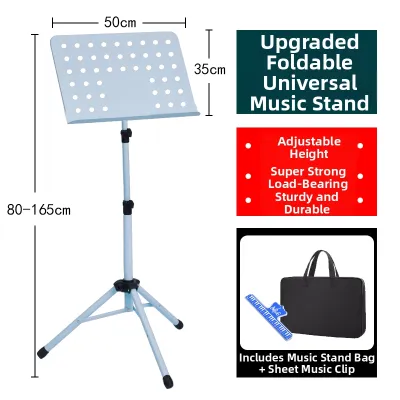
Ergonomic adjustability is crucial for maintaining good posture, whether you play standing up or sitting down. A high-quality stand should offer a wide height range that accommodates your specific playing position. For example, wind players and singers require a stand that extends high enough to keep the music at eye level while standing, whereas cellists and classical guitarists need a lower range.
The tilt mechanism of the desk must be strong enough to hold its angle under load. Friction-tilt designs allow for quick, tool-free adjustments, but they must be rated to support the weight of heavy binders without drooping. For maximum security with heavy books, a mechanical locking knob that physically tightens the tilt joint is generally more reliable.
When testing adjustments, ensure the knobs and levers are large enough to grip comfortably. Smoothly operating clutches prevent sudden drops that can pinch fingers or damage delicate instruments resting nearby. The adjustment mechanisms should lock securely without requiring excessive physical force to tighten.
Portability and Folding Mechanisms for Musicians on the Go
For musicians who travel to lessons, community orchestras, or gigs, portability is just as important as stability. Folding music stands typically feature collapsible desks and telescoping legs that fold down into a compact, linear shape. These models are easy to slip into a gig bag or carry alongside your instrument case on public transport.
However, ultra-lightweight folding stands often compromise on stability and desk space. They are easily affected by wind during outdoor performances and may wobble when supporting heavy books. If you need to travel but still require a sturdy setup, look for a medium-weight folding stand that features a detachable solid desk and a folding tripod base.
When choosing a portable model, consider the overall weight and whether it comes with a dedicated carrying bag. A padded bag protects the stand’s finish from scratches and prevents the metal legs from damaging other gear in your car trunk or bag. Balancing these trade-offs ensures you have a reliable setup wherever you perform.
Frequently Asked Questions (FAQ)
Can I use a wireframe music stand for heavy sheet music books?
Wireframe stands are generally not recommended for heavy sheet music books or thick binders. Their lightweight construction and open-frame desks lack the structural support needed for heavy loads, which can cause the desk to bend or the entire stand to tip over. If you must use a wireframe stand, place only lightweight folders on it, and ensure the tripod legs are fully extended to their widest footprint to maximize stability.
How do I prevent my music stand from slipping when adjusting the height?
To prevent slipping, regularly inspect the locking knobs and telescoping shafts. Wipe down the metal shafts with a dry microfiber cloth to remove any dust, oil, or rosin residue that can reduce friction. If your stand uses tension knobs, ensure they are tightened securely but avoid over-tightening, which can strip the threads. For stands with nylon collar inserts, check for wear and replace the inserts if they no longer grip the shaft firmly.
Community discussion
Share your experience or ask a question. Comments are reviewed before publication.