
Selecting the ideal Oxford English Dictionary edition depends on matching your current language proficiency with the specific design purpose of each book. While a language learner requires clear, simplified definitions and extensive sentence examples, an advanced academic needs historical etymologies and exhaustive word lists. Choosing the wrong edition can lead to frustration, either from overly complex explanations that require looking up even more words, or from a lack of specialized vocabulary. By understanding how Oxford structures its dictionary lines, you can make an informed investment that directly supports your educational or professional goals.
Understanding the Core Oxford Dictionary Lines
To choose the right dictionary, you must first understand that “Oxford” is not a single book, but a brand encompassing several distinct product lines designed for entirely different audiences. A common mistake is assuming that any book bearing the Oxford name offers the same type of definition or vocabulary coverage.
The most critical distinction lies between the historical, academic “Oxford English Dictionary” (OED) and the modern “Oxford Dictionaries” or “Oxford Learner’s Dictionaries” lines. The OED is a historical record of the English language. It documents how words have entered the language, how their spellings have evolved over centuries, and how their meanings have shifted. It is an invaluable tool for historians and literary scholars, but it is highly impractical for daily language learning.
Products mentioned in this guide
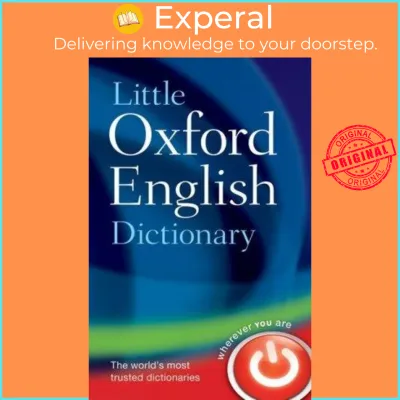
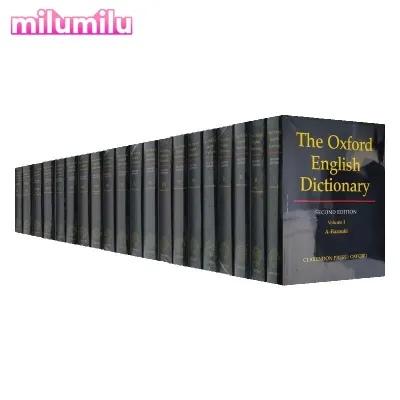
Prices are valid at publication and may change. Please refer to the product page for the latest price.
In contrast, the modern “Oxford Dictionaries” line focuses on contemporary, everyday English. These editions, such as the Concise Oxford English Dictionary, provide current spellings, modern definitions, and standard usage guides. They are designed for native speakers or highly fluent users who need a quick, reliable reference for professional or academic writing.
For those actively studying English as a second or foreign language, the “Oxford Learner’s Dictionaries” line is the most appropriate choice. These books are engineered specifically to facilitate language acquisition. Instead of using complex academic language in the definitions, they employ a restricted “defining vocabulary”—a curated list of common words—to explain more complex terms.
Across these product lines, Oxford dictionaries are published in several physical formats that dictate their size and scope:
- Pocket: Highly portable, containing brief definitions and focusing on high-frequency words.
- Compact: Offering a comprehensive word list similar to larger editions but printed in a smaller font on thin paper to reduce physical bulk.
- Concise: The standard single-volume reference that balances depth of coverage with a manageable physical size.
- Learner's: Focused on usage, grammar patterns, pronunciation, and active vocabulary building.
- Complete: Multi-volume historical records containing millions of illustrative quotations spanning over a thousand years.
Matching Editions to Your English Proficiency Level
Finding the right dictionary requires evaluating your current reading comprehension, your primary study goals, and where you plan to use the book. The following sections break down which Oxford editions align with specific proficiency levels, helping you transition smoothly from foundational learning to advanced academic research.

Beginner to Intermediate Learners
If you are building your foundational vocabulary, mastering English grammar, or preparing for secondary school exams, a learner-focused edition is indispensable. The flagship option in this category is the Oxford Advanced Learner’s Dictionary (OALD).
The defining feature of the OALD is its use of a restricted defining vocabulary, typically limited to the most common words in the English language. This ensures that when you look up an unfamiliar word, the definition itself is easy to comprehend without requiring you to look up additional terms. Furthermore, these editions place a heavy emphasis on active language production. They do not just tell you what a word means; they show you how to use it correctly in a sentence.
Learner’s dictionaries are packed with pedagogical tools that standard dictionaries omit. You will find detailed phonetic transcriptions using the International Phonetic Alphabet (IPA) to guide your pronunciation, clear indicators of whether a noun is countable or uncountable, and lists of common collocations (words that frequently go together). Many entries also include synonyms, antonyms, and notes on common grammatical mistakes to avoid.
However, these editions do have limitations. Because they prioritize high-frequency, practical vocabulary, they intentionally omit highly specialized technical jargon, obscure archaic terms, and rare regional dialects. If you are reading classic literature or advanced scientific papers, you may occasionally encounter words that a learner’s dictionary does not cover.
Advanced Learners and Fluent Users
As your language skills progress, you will eventually reach a transition point where a learner’s dictionary no longer meets all your needs. This typically happens when you are reading complex academic texts, professional reports, or classic literature, and you find that the specialized or literary words you encounter are missing from your learner’s edition. At this stage, transitioning to a standard native-speaker dictionary is highly beneficial.
For advanced learners and fluent users, the choice generally comes down to the Concise, Compact, or Pocket editions of the Oxford English Dictionary.
The Concise Oxford English Dictionary is the premier single-volume reference for contemporary English. It offers extensive coverage of scientific, technical, and historical terms, using precise, unsimplified definitions. It is an excellent tool for university students and professionals who need to write essays, reports, or research papers with high lexical precision.
The Compact Oxford English Dictionary offers a similar level of vocabulary coverage to the Concise edition but is designed with a smaller physical footprint. It achieves this by using a smaller font size and thinner paper. This makes it an excellent choice for a home study desk where space is limited, though the smaller print may cause eye strain during prolonged reading sessions.
The Pocket Oxford English Dictionary prioritizes portability and quick reference. It is ideal for carrying to classes or keeping in an office drawer. However, to maintain its small size, it sacrifices detailed usage notes, extensive etymologies, and less common vocabulary. It is best suited for quick spelling checks and verifying basic definitions rather than deep linguistic study.
Academic and Professional Researchers
For those engaged in deep linguistic research, historical literary analysis, or professional etymological study, the complete, multi-volume Oxford English Dictionary (OED) is the ultimate authority.
The complete OED is unique because of its historical focus. Rather than simply telling you what a word means today, it provides a chronological history of the word’s development, illustrated by millions of quotations from literature, historical documents, and popular media. This allows researchers to see exactly when a word first appeared in print and how its meaning has shifted over the centuries.
Because of its massive scale—spanning twenty physical volumes in its printed form—the complete OED is highly impractical and prohibitively expensive for individual purchase. Today, most researchers access the OED digitally. Many universities, schools, and public libraries provide their students and patrons with institutional digital subscriptions, allowing them to search the entire database online.
It is important to warn against purchasing the complete OED for general language learning. The sheer volume of historical data, obsolete definitions, and Middle English spellings can be overwhelming and confusing for someone trying to master modern English. For daily communication, academic writing, and professional work, a single-volume contemporary dictionary is far more effective.
Essential Checks Before Purchasing Your Dictionary
Once you have identified the right line of Oxford dictionaries for your level, you must verify several critical product specifications before making a purchase. This ensures you do not end up with an outdated version, an uncomfortable physical format, or an incompatible digital product.
First, verify the publication year and edition number. Language is dynamic, with new words, technical terms, and shifts in usage occurring constantly. A dictionary printed a decade ago will lack modern digital terminology, contemporary slang, and updated grammatical standards. For the Oxford Advanced Learner’s Dictionary or the Concise Oxford English Dictionary, always look for the most recent edition available to ensure your reference material remains accurate and relevant.
Second, carefully check the physical dimensions, weight, and font size of the book. This is especially important if you are purchasing online from an online marketplace or ecommerce platform where you cannot physically handle the book. A hardcover Concise edition can weigh over a kilogram, making it highly impractical to carry in a backpack around a campus in Singapore. Conversely, a Pocket or Compact edition might have a font size so small that it causes visual fatigue during extended study sessions. Balance your need for portability with your comfort during long reading periods. While a standard paperback learner’s dictionary might cost around S$30 to S$50, a comprehensive hardcover reference can be a larger investment, making it crucial to verify these details beforehand.
Third, confirm the medium of the dictionary. Many modern Oxford dictionaries are sold as print volumes, digital apps, or hybrid products that include a print book with an online access code. If you prefer a digital format, verify the device compatibility and operating system requirements. Some digital editions may require a specific mobile operating system or web browser to function correctly. Additionally, check for any regional restrictions that might prevent you from activating a digital license outside the country of purchase.
Finally, review the inclusion and active status of supplementary materials. If you are purchasing a secondhand print dictionary, be aware that any bundled online access codes or digital subscription vouchers have likely already been redeemed or have expired. Even when buying new, older print runs may contain access codes for online portals that the publisher has since discontinued or replaced. Always verify with the seller or the publisher’s official website to confirm whether the associated digital services are still active and supported for the specific edition you are buying.
Frequently Asked Questions (FAQ)
Is the Oxford Advanced Learner's Dictionary better than the Concise Oxford Dictionary for students?
The Oxford Advanced Learner’s Dictionary is generally better for students who are learning English as a second language or those building foundational writing skills. It uses a simplified defining vocabulary and provides extensive example sentences, pronunciation guides, and grammatical patterns. The Concise Oxford English Dictionary is better suited for advanced students, native speakers, and those writing academic papers who require a much larger vocabulary database with precise, unsimplified definitions and detailed etymologies.
Can I use a physical Oxford dictionary for exam preparation like IELTS or TOEFL?
Using a physical Oxford dictionary during your preparation phase is highly beneficial for building deep vocabulary retention. The physical act of turning pages and scanning columns encourages active cognitive engagement, helping you remember word families, synonyms, and grammatical structures more effectively than quick digital searches. However, because standardized exams like IELTS and TOEFL are strictly timed and increasingly computer-based, you should transition to digital practice tools as your exam date approaches to build reading speed and simulate actual testing conditions.

Community discussion
Share your experience or ask a question. Comments are reviewed before publication.