
Selecting the right regime change book requires aligning your existing political science background with your specific analytical goals. Whether you are a self-taught enthusiast seeking historical narratives, an undergraduate student looking for foundational democratization frameworks, or a graduate researcher analyzing quantitative datasets, the literature offers vastly different entry points. To avoid books that are either too simplistic or overly dense, you must evaluate how a text’s methodology, theoretical depth, and historical scope match your current academic training. By systematically mapping your profile to the right sub-genres, you can build a reading list that deepens your understanding of how states transition between authoritarianism and democracy.
Assess Your Political Science Background and Reading Goals
Before purchasing or borrowing a book on regime change, take an honest inventory of your academic foundation. If you are a self-taught enthusiast, you might find highly technical, regression-heavy monographs dry and inaccessible. Conversely, if you hold a degree in political science, a broad-market narrative history might lack the theoretical rigor and causal mechanisms you expect. Identifying where you fall on this spectrum prevents frustration and ensures that the material challenges you without becoming overwhelming.
Your primary reading goals should dictate the types of texts you prioritize. If your objective is to understand the underlying structural causes of political transitions, you will want to focus on books that emphasize democratization theory and institutional design. If you are more interested in the human element, contingency, and specific historical events, you should seek out detailed case studies. For those focused on policy application, books analyzing contemporary state-building, foreign intervention, and modern democratic backsliding will offer the most practical utility.
Products mentioned in this guide


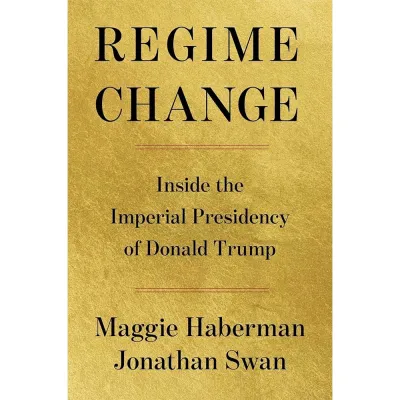




Prices are valid at publication and may change. Please refer to the product page for the latest price.
Finally, consider your comfort level with different methodological approaches. Political science literature on regime change is broadly divided into qualitative, quantitative, and mixed-method studies. Qualitative works often rely on deep archival research, process tracing, and comparative case studies, which are excellent for understanding the “how” and “why” of specific transitions. Quantitative works utilize large datasets to identify statistical correlations across dozens of countries, offering broader but less context-specific insights. Knowing which methodology aligns with your training will help you select books that you can critically evaluate rather than just passively read.
Map Regime Change Book Categories to Your Profile
Once you have assessed your background, you can begin mapping specific categories of regime change literature to your academic profile. For readers seeking foundational academic frameworks, comparative politics and democratization theory books are the logical starting point. These texts typically focus on structural variables such as economic development, class conflict, social movements, and institutional design. They provide the conceptual vocabulary—such as “hybrid regimes,” “competitive authoritarianism,” and “democratic consolidation”—that is essential for any serious study of political transitions.

If you prefer a context-rich, event-driven approach, historical case studies and narrative non-fiction are highly valuable. These books focus on the specific historical trajectories of individual nations or regions, detailing the decisions of key actors, the role of local culture, and the unique contingencies that led to a regime’s collapse or survival. While these texts may not always aim to build universal political theories, they provide the deep empirical grounding necessary to test and challenge broader comparative models.
For readers with advanced training in statistics and research design, quantitative and empirical studies offer a rigorous way to examine regime transitions. These books often analyze global datasets spanning decades, testing hypotheses about the relationship between regime survival and variables like natural resource wealth, military spending, or international pressure. Engaging with these texts requires a solid grasp of statistical modeling, but they offer some of the most robust, generalizable findings in contemporary political science.
Lastly, contemporary geopolitical analysis bridges the gap between academic theory and real-time global shifts. These books apply established democratization and authoritarian survival theories to ongoing events, such as the rise of digital authoritarianism, modern populist movements, and foreign electoral interference. This category is particularly suited for readers who want to understand how classic political science concepts manifest in today’s rapidly changing international landscape.
Key Criteria for Evaluating Specific Titles
To ensure that a specific regime change book is worth your time and financial investment, it is crucial to vet it using a clear set of academic criteria. Start by verifying the author’s academic credentials and institutional affiliations. Authors who hold doctorates in political science, history, or sociology and who actively teach or research at accredited universities are more likely to produce peer-reviewed, methodologically sound work. While journalists and policy practitioners can write highly engaging accounts, their work may lack the theoretical framing and systematic evidence required for academic analysis.
Next, examine the publication date and the presence of subsequent editions. The study of regime change has evolved significantly over the last few decades, particularly following the Third Wave of democratization, the post-Cold War era, and the more recent global trend of democratic backsliding. A book written in the 1990s may offer brilliant historical insights but fail to account for modern authoritarian survival strategies or the role of social media in mobilizing opposition. Checking for updated editions ensures you are engaging with the most current theoretical debates.
Methodological transparency is another critical indicator of a book’s quality. A reputable academic book will clearly outline its research design, data collection methods, and potential limitations. Whether the author relies on archival documents, elite interviews, or statistical datasets, they should provide clear citations and bibliographies that allow you to trace their sources. Be cautious of books that make sweeping, causal claims about regime change without presenting a transparent, verifiable chain of evidence.
Finally, gauge the scholarly reception of the book before making a decision. You can easily check this by looking up the title on academic databases to see how frequently it has been cited by other researchers. Reading book reviews in prominent political science journals, such as World Politics, Comparative Politics, or the American Political Science Review, will give you a sense of how the academic community received the author’s arguments. If a book is frequently included in university syllabi, it is a strong indicator that the text is considered a foundational or highly significant contribution to the field.
Strategies for Sourcing and Building Your Reading List
Building a coherent and intellectually stimulating reading list requires a strategic approach to sourcing and sequencing your books. Rather than relying solely on general online marketplaces, utilize academic databases, university press catalogs, and specialized political science journals. University presses—such as those of Cambridge, Oxford, Princeton, and Harvard—are the primary publishers of cutting-edge political science research. Browsing their catalogs under comparative politics or international relations will introduce you to peer-reviewed titles that rarely make it to mainstream bestseller lists.
When structuring your reading list, sequence your books logically to build a cumulative understanding of the subject. Start with broad, foundational overviews that introduce major theories of democratization and regime stability. Once you have a firm grasp of these core concepts, move on to specialized case studies that apply, modify, or challenge those theories in specific regional contexts. Finally, tackle methodology-heavy or highly specialized quantitative studies that require a deeper analytical focus. This step-by-step progression prevents cognitive overload and allows you to see how different texts converse with one another.
Accessing academic books can sometimes be challenging due to high pricing or limited print runs. To overcome this, make full use of library networks and interlibrary loan systems, which can often source specialized academic monographs from partner institutions at no cost to you. Additionally, keep an eye out for open-access academic repositories and digital libraries that offer free, legal access to scholarly monographs and journal articles. Many university presses now offer select titles in open-access digital formats, making high-quality political science research more accessible than ever.
Frequently Asked Questions (FAQ)
How can I tell if a regime change book is too outdated for current research?
To determine if a book’s theoretical framework is outdated, check whether it accounts for major 21st-century political developments, such as democratic backsliding, competitive authoritarianism, and the digital tools used for state surveillance and control. If a book assumes that democratization is an inevitable, one-way process—a common perspective in some late-20th-century literature—it may not reflect contemporary scholarly consensus. You can also search for the book on academic databases to see if recent journal articles still actively cite its thesis or if they treat it primarily as a historical artifact. If current researchers are still debating the book’s core arguments, the text remains highly relevant to modern academic discourse.
Should I prioritize books by political scientists or historians?
Your choice between political scientists and historians should depend on whether you prioritize structural theory or deep narrative context. Political scientists focus on identifying generalizable patterns, building comparative models, and testing hypotheses across multiple cases using quantitative or qualitative variables. If you want to understand the systemic causes of regime transitions, political science books are indispensable. Historians, on the other hand, excel at providing deep archival research, detailed chronological narratives, and a rich understanding of the unique cultural and social factors of a specific time and place. For the most comprehensive understanding, look for interdisciplinary works where political scientists utilize historical methods, or where historians frame their narratives around political science concepts.
Community discussion
Share your experience or ask a question. Comments are reviewed before publication.