
Quick Answer: How to Pick Your First Enya Ukulele
Selecting your very first ukulele can feel overwhelming given the wide array of materials, sizes, and designs available today. For a complete beginner, the ideal Enya ukulele is one that balances physical comfort with your daily playing environment. The primary decision axes you need to consider are scale length—specifically choosing between a Soprano and a Concert model—and the body material, which ranges from traditional wood to modern carbon fiber composites and High-Pressure Laminate (HPL).
As a general starting recommendation, entry-level players should prioritize comfortable neck profiles and low string action over advanced, expensive tonewoods. A neck that fits comfortably in your hand and strings that are easy to press down will do far more to help you stick with the instrument than a premium wood grain. Before making any purchase, always check the manufacturer’s official specifications to verify the exact dimensions of the model and confirm what accessories are included in the bundle.
Soprano vs. Concert: Finding Your Ideal Scale Length
The physical size of a ukulele directly impacts how it feels in your hands, how easy it is to play, and the kind of sound it produces. For beginners, the choice almost always comes down to two primary sizes: the 21-inch Soprano and the 23-inch Concert. Understanding the physical differences in fret spacing and overall scale length is the first step in finding your perfect match.
Products mentioned in this guide
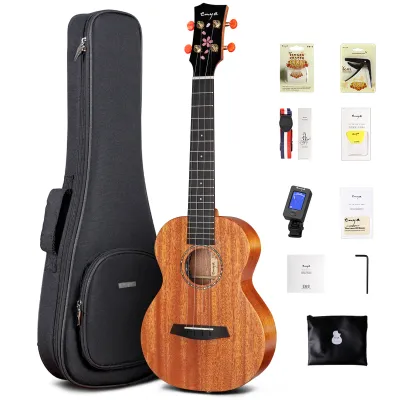
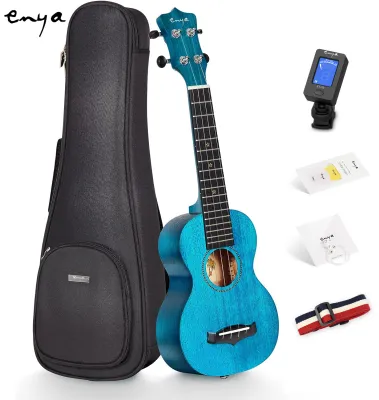
Prices are valid at publication and may change. Please refer to the product page for the latest price.

Soprano models represent the traditional ukulele size. With a total length of approximately 21 inches and a shorter scale length, the frets on a Soprano are spaced relatively close together. This compact layout offers excellent portability, making it incredibly easy to pack into a backpack or carry around. Tonal characteristics of the Soprano tend to be bright, plucky, and classic, which many people associate with traditional Hawaiian music. This size is often highly suitable for younger players, individuals with smaller hands, or anyone looking for a highly portable travel companion.
In contrast, Concert models measure around 23 inches in length and feature a longer scale. This extra length translates to wider fret spacing along the fretboard. For many adults and players with larger fingers, this additional space makes a significant difference, allowing you to press down on individual strings without accidentally crowding adjacent frets. The larger body of a Concert ukulele also provides a deeper, fuller resonance and slightly more volume than a Soprano. This makes the Concert size highly versatile, accommodating both simple chord strumming and more intricate fingerpicking styles with ease.
To determine which size fits you best, you can perform a simple physical check. If you have access to a physical instrument, try holding it in a playing position. Alternatively, you can measure your arm length and hand size. If your fingers feel cramped when forming basic chords like G or D7 on a smaller fretboard, a Concert model will likely provide a much more comfortable learning experience. If portability and a lightweight feel are your absolute priorities, the Soprano remains an excellent choice.
Carbon Fiber, HPL, and Wood: Matching Material to Your Lifestyle
Enya has gained significant recognition in the musical instrument industry for its innovative use of alternative materials alongside traditional woods. As a beginner, understanding the practical differences between carbon fiber, High-Pressure Laminate (HPL), and wood will help you choose an instrument that fits your lifestyle and maintenance preferences.
Carbon fiber and HPL models are designed with durability and environmental resilience in mind. Carbon fiber composites are incredibly robust, lightweight, and virtually impervious to changes in temperature and humidity. Similarly, HPL is a composite material made by pressing wood fibers and resins under intense heat and pressure, resulting in a highly durable exterior. If you plan to take your ukulele outdoors, travel frequently, or play in environments with fluctuating climates, these synthetic materials are exceptionally practical. In places like Singapore, where the tropical outdoor humidity is high but indoor spaces are heavily air-conditioned, synthetic materials will not warp, crack, or go out of tune easily.
Traditional wood models, whether made from laminate wood or featuring a solid wood top, offer a classic aesthetic and a warm, organic acoustic tone. However, wood is a natural, porous material that is highly sensitive to environmental changes. High humidity can cause the wood to swell, which may raise the string height and make the instrument harder to play. Conversely, dry air-conditioned rooms can cause the wood to shrink and crack over time.
Maintaining these materials requires different levels of care. Wood ukuleles demand consistent humidity management; you may need to store them in a dedicated case with a small humidifier or a silica gel pack to stabilize the moisture levels. Synthetic materials like carbon fiber and HPL require almost no specialized maintenance. A simple wipe-down with a dry microfiber cloth after playing to remove finger oils is usually all that is needed to keep them in top condition.
When shopping, always verify the exact material composition on the product label or official specification sheet. Some synthetic models feature highly realistic printed finishes that mimic natural wood grain, such as koa or mahogany. Do not rely solely on visual appearance; read the technical specifications carefully to ensure you are getting the exact material you expect.
Evaluating Enya Models: Key Specifications to Check
When you are ready to compare specific models, it is essential to look past marketing descriptions and focus on concrete technical specifications. Evaluating these details will help you select an instrument that offers excellent playability and value.
First, check the nut width and the string action. The nut width refers to the width of the fretboard near the tuning pegs. A wider nut width provides more space between individual strings, which can prevent your fingers from feeling crowded. String action refers to the height of the strings above the frets, typically measured at the 12th fret. High action requires you to press down harder, which can cause finger fatigue and pain for beginners. Look for models that specify a comfortable, low action out of the box to make your early practice sessions as pleasant as possible.
Second, verify the type of tuning machines and the string material installed on the model. Geared tuning machines, which feature visible gears on the back of the headstock, are highly recommended for beginners because they offer precise tuning control and hold their pitch much better than older friction pegs. Additionally, check what strings come pre-installed. Many Enya models feature high-quality fluorocarbon strings, which are known for a bright tone and smooth feel, while others may use traditional nylon strings. Knowing what is on the instrument helps you understand what to expect when tuning.
Third, evaluate the completeness and quality of the included accessory bundles. Many beginner models are sold as packages that include a gig bag, a clip-on digital tuner, a strap, spare strings, and a polishing cloth. A high-quality, padded gig bag is particularly valuable for protecting your instrument during transport. Check the product description carefully to ensure these accessories are genuine and included in your purchase, as some retailers may offer different bundle configurations.
Finally, always cross-reference the exact model number with the official Enya website or authorized local retailers. This step is crucial to confirm that the model you are purchasing is genuine, matches the current production standards, and is covered by a valid manufacturer’s warranty in your region.
Pre-Purchase and Setup Checklist for Beginners
Before you finalize your purchase and start strumming, taking a few systematic steps will ensure a smooth buying experience and prevent common setup issues.
Your pre-purchase checklist should begin with verifying the seller. Ensure you are buying from an authorized dealer or a reputable local music shop rather than an unverified third-party seller on an online marketplace. This guarantees that you receive an authentic product and have access to customer support if needed. Double-check the exact model variant you are ordering, as some models come in both purely acoustic versions and acoustic-electric versions equipped with internal pickups and preamps. Lastly, review the seller’s return and exchange policy so you know your options if the instrument arrives with any issues.
Once your ukulele arrives, perform a thorough unboxing inspection. Carefully examine the body for any signs of shipping damage, such as cracks, deep scratches, or loose joints. Run your fingers gently along the edges of the neck to check for fret sprout, which occurs when the metal frets extend slightly past the edge of the wood fretboard, creating sharp edges. Tune the instrument to standard G-C-E-A tuning and play a few chords to check for any unusual string buzzing or rattling. Note that brand-new strings naturally stretch and will require frequent retuning during the first few days of play.
If you find that the strings feel too high or difficult to press down, consult the included user manual or take the instrument to a qualified local guitar technician. Some models feature an adjustable truss rod inside the neck, which allows for precise adjustments to the neck relief and string height. Making these minor setup adjustments can dramatically improve playability. If you discover any structural defects, severe fret sprout, or missing accessories during your initial inspection, stop playing immediately and contact the seller to arrange for a replacement or repair.
Frequently Asked Questions (FAQ)
Do I need to buy a solid wood Enya ukulele as a beginner?
No, you do not need to start with a solid wood ukulele. While solid wood instruments are highly prized for their rich, evolving tone, they require strict humidity control and careful maintenance to prevent cracking and warping. For a complete beginner, laminate wood, HPL, or carbon fiber models are highly recommended. These materials are much more durable, require minimal maintenance, and are highly forgiving of environmental changes, allowing you to focus entirely on learning to play.
Are Enya ukuleles shipped with upgraded strings?
The specific strings installed on Enya ukuleles vary depending on the model and the production batch. Many of their modern models come equipped with high-quality fluorocarbon strings directly from the factory, which offer a bright, clear tone and excellent tuning stability. Beginners should check the official product specification sheet for the exact string type. It is highly recommended to practice with the factory-installed strings first to build finger strength before considering any upgrades.
What size Enya ukulele is best for a child?
For most children, a Soprano (21-inch) ukulele is the most suitable choice. The compact body size and shorter scale length make it much easier for smaller hands to hold the instrument securely and reach the frets comfortably. When choosing a model for a child, always check the official specifications for the total weight and neck profile to ensure it is lightweight and easy for them to balance while sitting or standing.
Community discussion
Share your experience or ask a question. Comments are reviewed before publication.