
Starting your musical journey with a ukulele is an exciting decision, but navigating the diverse lineup of a modern brand like Enya can feel overwhelming. For a complete beginner, the best Enya ukulele is one that prioritizes physical comfort, tuning stability, and structural durability over complex electronic features. Choosing a straightforward, acoustic-only model in a standard size allows you to focus entirely on mastering basic chord shapes, finger placement, and strumming rhythms without unnecessary technical distractions. By understanding how different body sizes, high-pressure laminates, and composite materials affect your playing experience, you can confidently select an instrument that supports your learning from the very first day.
Quick Guide to Choosing a Beginner Enya Ukulele
When selecting your first Enya ukulele, focusing on a few core specifications will streamline your decision-making process. For most beginners, starting with either a soprano or a concert size offers the best balance of physical comfort, manageable fret spacing, and classic ukulele tone. These sizes are easy to hold against your body and do not require excessive finger stretching to form basic chords.
In terms of construction, Enya is highly regarded for its innovative use of alternative materials like High-Pressure Laminate (HPL) and carbon fiber composites. These materials are exceptionally durable, highly resistant to environmental changes, and require virtually no specialized maintenance. They provide a reliable, stable platform for learning, ensuring your instrument stays in tune even during seasonal weather shifts.
Products mentioned in this guide
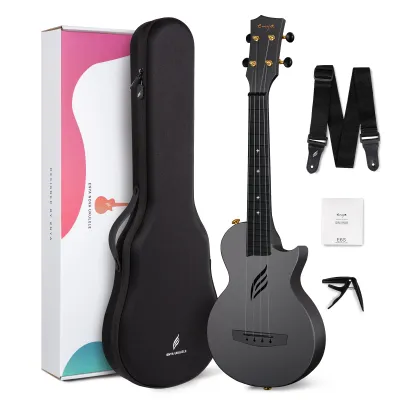
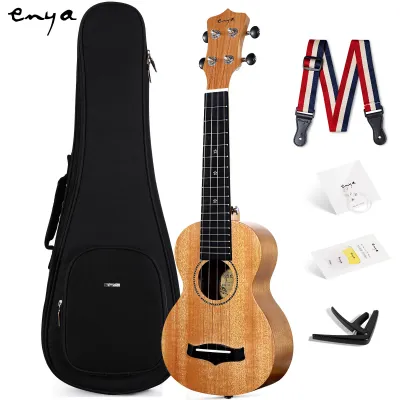
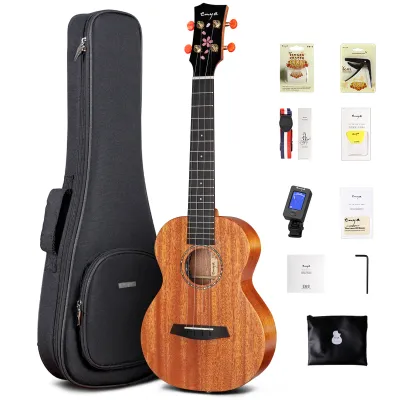
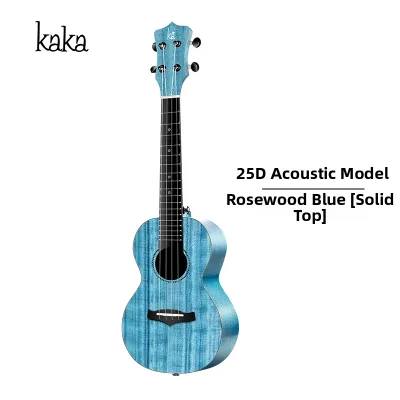
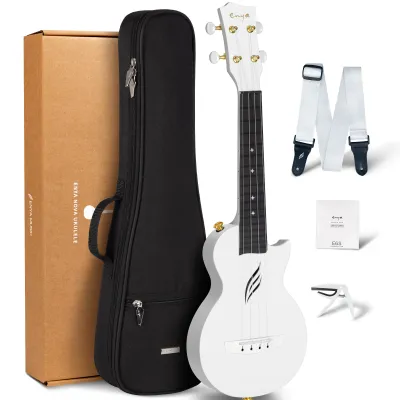
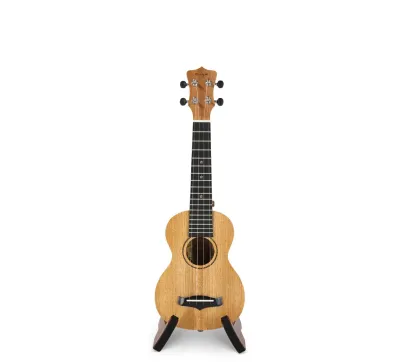
Prices are valid at publication and may change. Please refer to the product page for the latest price.
To keep your initial learning phase as simple and cost-effective as possible, it is wise to avoid models equipped with built-in electronics, preamps, or smart technology. These features add weight, increase the purchase price, and can distract you from developing fundamental acoustic playing skills. A pure acoustic instrument encourages you to listen closely to your natural tone, dynamics, and timing without relying on digital enhancements.
Matching Enya Ukulele Sizes to Your Comfort
Selecting the right ukulele size is primarily a matter of physical ergonomics and personal comfort. Enya offers instruments across all standard sizes, but the soprano and concert models are generally the most practical entry points for those new to stringed instruments.

The soprano size is the traditional, smallest standard ukulele, measuring approximately 21 inches in total length. It produces the classic, bright, and punchy sound that most people associate with the instrument. Because of its compact body and short scale length, the frets are spaced closely together, making it an excellent choice for younger players, individuals with smaller hands, or anyone seeking a highly portable travel companion. However, adults with broader fingers may find the tight fret spacing slightly cramped when attempting to crowd multiple fingers into complex chord shapes.
The concert size, measuring around 23 inches, represents a highly versatile middle ground that suits a wide range of adult beginners. With a slightly longer neck and wider fret spacing, the concert size provides more physical room to maneuver your fingers, reducing the likelihood of accidentally muting adjacent strings. The larger body volume also yields a warmer, deeper, and slightly louder acoustic projection compared to a soprano. This extra resonance can be highly encouraging for beginners, as it makes simple strumming patterns sound fuller and more satisfying.
When browsing specific Enya product listings on an online marketplace, it is essential to check the detailed physical specifications rather than relying solely on generic size labels. Look closely at the scale length, which is the distance between the nut and the bridge, as well as the nut width, which dictates the spacing between individual strings. A wider nut width can offer a more comfortable playing experience for those with larger hands. Additionally, verify the body depth and overall weight in the product description to ensure the instrument will feel balanced and secure when held against your chest without a strap.
Evaluating Enya's Alternative Materials for Beginners
Traditional ukuleles are crafted from thin sheets of tonewood, which can be highly sensitive to changes in temperature and humidity. Enya has gained widespread recognition for utilizing alternative materials that address these structural vulnerabilities, making them highly practical for first-time players.
High-Pressure Laminate, commonly referred to as HPL, is a composite material made by pressing layers of wood fibers and resins together under extreme heat and pressure. The resulting material is incredibly dense, tough, and virtually impervious to cracking or warping caused by dry air or high humidity. For beginners living in tropical climates or homes with fluctuating air conditioning, an HPL ukulele offers peace of mind. You can leave the instrument on a stand ready for spontaneous practice sessions without worrying about the wood splitting or the neck bending over time.
Another prominent material in Enya’s lineup is carbon fiber composite, often molded into a single-piece body and neck construction. Carbon fiber instruments are exceptionally lightweight yet structurally rigid, offering remarkable durability against accidental bumps, drops, or outdoor exposure. This rigidity also contributes to outstanding tuning stability, meaning the strings are less likely to slip out of pitch during a practice session. For a beginner, an instrument that stays in tune consistently is invaluable, as it helps train your ear to recognize correct pitches from the start.
While these alternative materials offer clear practical advantages, they do involve certain tonal trade-offs compared to traditional solid wood instruments. HPL and carbon fiber composites tend to produce a very bright, clear, and focused sound with a relatively fast decay. They may lack some of the complex, warm overtones and organic resonance that develop in high-quality solid tonewoods as they age. However, for a beginner focused on learning chord transitions and rhythm, the consistency, durability, and low-maintenance nature of these modern materials far outweigh any minor acoustic limitations.
Features to Skip on Your First Enya Purchase
As you explore the Enya catalog, you will encounter various models equipped with advanced features and modern technologies. While these innovations can be appealing, they are generally unnecessary for a complete beginner and can actually hinder your early progress.
Built-in pickups, preamps, and onboard effects units are common additions to mid-range and premium ukuleles. These electronic components allow you to plug the instrument into an amplifier or audio interface, and some systems even project effects directly from the soundhole without an external amp. However, unless you plan to perform live on stage or record music immediately, these electronics add unnecessary weight to the body, making the instrument harder to balance. They also require batteries, introduce extra wiring that can rattle, and significantly increase the initial purchase price.
Smart technology integrations, such as Bluetooth connectivity, built-in LED fretboards that light up to show finger placement, and companion mobile apps, are also featured on some modern models. While these tools promise to accelerate the learning process, they can easily become a distraction. Relying on flashing lights to guide your fingers can prevent you from developing proper muscle memory and spatial awareness of the fretboard. True progress comes from looking at standard chord charts, listening to the pitch of the strings, and training your hands to find the frets naturally.
Complex physical designs, such as deep cutaways in the body or specialized, non-standard bridge configurations, are other features to avoid on your first instrument. A standard, symmetrical body shape maximizes the internal air volume, providing the best possible acoustic projection for its size. Furthermore, traditional tie-on or simple pull-through bridge designs make the process of changing strings much more straightforward. As a beginner, you want to minimize any maintenance hurdles so that you can spend your time playing rather than troubleshooting complex hardware.
Pre-Purchase Verification Checklist
Before finalizing your purchase on any online marketplace or at a local music retailer, taking a few moments to verify specific details will ensure a smooth buying experience. Because product lines are updated periodically, a systematic check prevents unexpected surprises when the box arrives.
First, confirm the exact model generation and revision of the ukulele you are viewing. Manufacturers like Enya frequently update their product designs, sometimes changing the bracing pattern, the type of tuning pegs, or the neck profile while keeping the model name very similar. Carefully read the seller’s detailed specification list and compare it with the official manufacturer documentation to ensure you are receiving the latest, most refined version of the instrument.
Second, examine the contents of the product bundle thoroughly. Many beginner ukuleles are sold as packages that include essential accessories such as a padded gig bag, a digital clip-on tuner, a strap, a polishing cloth, and a spare set of strings. Verifying exactly what is included in the listed price helps you avoid the hidden costs of purchasing these items separately. A high-quality gig bag is particularly important for protecting your instrument during transport, while a reliable tuner is indispensable for daily practice.
Finally, review the seller’s return policy and warranty terms in detail. Even with highly durable composite materials, manufacturing defects or shipping damage can occasionally occur. Ensure the retailer offers a clear, hassle-free return window and that the manufacturer’s warranty covers structural issues like bridge separation or neck warping. Understanding these policies beforehand provides valuable protection for your investment and ensures you can start your musical journey with complete confidence.
Frequently Asked Questions (FAQ)
Do I need a solid wood Enya ukulele to start learning?
You do not need a solid wood ukulele to begin learning, and in many cases, starting with a laminate or composite instrument is actually highly advantageous. Solid wood instruments require careful humidity control, regular maintenance, and gentle handling to prevent the wood from cracking or warping. For a complete beginner, managing these environmental factors can add unnecessary stress to the learning process.
Laminate and composite materials are far more forgiving of accidental bumps, temperature fluctuations, and dry indoor air. They provide a highly stable and consistent platform that allows you to focus entirely on practicing your chords and strumming. As your playing skills progress and you develop a more refined ear for subtle tonal nuances, you can then consider upgrading to a solid wood instrument to enjoy its richer, evolving acoustic characteristics.
Will an Enya carbon fiber ukulele sound too synthetic?
An Enya carbon fiber ukulele does not sound artificial or metallic, but it does possess a distinct acoustic profile that differs from traditional wood. Carbon fiber instruments generally produce a very bright, clear, and highly articulate sound with excellent projection and sustain. The tone is clean and consistent across the entire fretboard, which can be very helpful for beginners learning to identify correct pitches.
While it may lack the deep, woody warmth and complex mid-range resonance of a high-quality mahogany or spruce instrument, the sound is highly pleasant and fully functional for all styles of music. To ensure the acoustic character aligns with your personal preferences, it is highly recommended to listen to high-quality, uncompressed audio demonstrations or video reviews of the specific model before making your purchase.
Community discussion
Share your experience or ask a question. Comments are reviewed before publication.