
Starting your musical journey is an exciting milestone, but stepping into the world of guitars can feel overwhelming. With a legacy spanning many decades, Fender and its family of brands offer an extensive lineup of electric and acoustic instruments. Finding the right instrument requires balancing your musical aspirations, physical comfort, and budget. For most complete beginners, the ideal starting point is a Squier model, which provides authentic Fender designs at an accessible price point, while those with a larger budget might opt for a standard Fender-branded instrument as a long-term investment.
To make an informed decision, you must understand how different models align with your goals. The right guitar should not only sound good but also feel comfortable in your hands, encouraging you to practice consistently. By evaluating the differences between electric and acoustic models, understanding key physical specifications, and learning how to care for your instrument, you can confidently select a guitar that will support your learning journey for years to come.
Understanding the Fender Family: Squier vs. Fender Branded Guitars
When browsing for a Fender guitar, the first distinction you will encounter is the relationship between Squier and the core Fender brand. Squier is Fender’s official subsidiary brand, established to offer classic Fender designs at a fraction of the cost. Rather than being unauthorized copies, Squier guitars are built to Fender’s exact design specifications, making them the official entry point for budget-conscious players and beginners alike.
Products mentioned in this guide
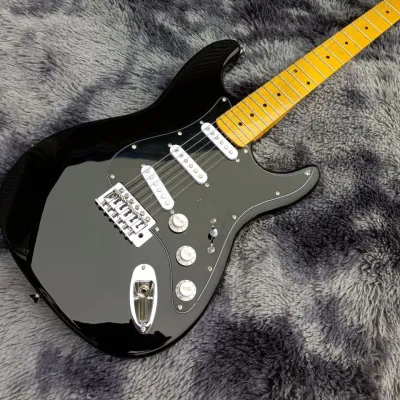
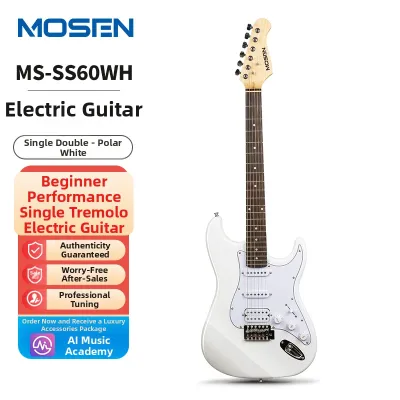
Prices are valid at publication and may change. Please refer to the product page for the latest price.
The primary differences between Squier and Fender-branded guitars lie in the materials used, manufacturing locations, and hardware specifications. Squier instruments are typically manufactured in Asian facilities (such as Indonesia and China) and utilize cost-effective tonewoods like poplar, nato, or pine. The hardware, including the tuning machines, bridges, and pickups, is designed for reliable basic performance but uses more economical metals and ceramic magnets.
In contrast, core Fender-branded guitars, such as the Player or American Professional series, are manufactured in Mexico or the United States. These instruments feature premium tonewoods like alder, ash, and maple, along with high-grade hardware and alnico magnet pickups. The manufacturing process for a core Fender involves tighter tolerances, more rigorous quality control, and extensive hand-finishing, particularly along the edges of the frets and neck.
For a complete beginner, choosing between Squier and Fender comes down to your budget and level of commitment. If you are on a strict budget or are still testing the waters to see if the guitar is the right instrument for you, a Squier is highly recommended. It allows you to experience authentic Fender playability and style without a significant financial commitment. On the other hand, if you have a flexible budget and are certain of your long-term commitment, investing in a core Fender guitar provides an instrument with superior tone, exceptional durability, and excellent resale value that will grow with you as your skills advance.
Electric vs. Acoustic: Which Fender Path Fits Your Goals?
Deciding between an electric and an acoustic guitar is one of the most critical choices a beginner must make. This decision should be guided by the genres of music you love, your physical comfort, and your practical living situation. Both paths offer distinct advantages and learning curves that will shape your early playing experience.

Fender electric guitars, such as the Stratocaster and Telecaster, are iconic symbols of rock, blues, pop, jazz, and country music. If your musical goals involve playing riffs, solos, or using effects pedals, an electric guitar is the natural choice. Physically, electric guitars are often easier for beginners to play. They feature thinner necks, lower string action (the distance between the strings and the fretboard), and lighter-gauge steel strings. This combination requires less finger strength and reduces the initial discomfort of building finger calluses.
However, electric guitars are not self-contained instruments. To hear them at their best, you must connect them to an amplifier or an audio interface. This means you will need to budget for additional accessories, including cables, headphones, and a practice amp. While this adds to the initial setup cost, it also offers the benefit of quiet practice, as you can plug headphones directly into most modern practice amps to play without disturbing others.
Fender’s acoustic guitar lines, such as the Classic Design or California series, offer a completely different experience. Acoustic guitars are highly portable and self-contained; you can pick them up and play anywhere without needing cables or electricity. This makes them the traditional choice for singer-songwriters, folk musicians, and fingerstyle players. The natural resonance of an acoustic guitar provides immediate physical feedback, as you can feel the body vibrate against your chest as you play.
The trade-off with acoustic guitars lies in their physical demands. Acoustic guitars use thicker steel strings under much higher tension than electric guitars. The bodies are also significantly larger and deeper, which can feel bulky or awkward to hold, especially for younger or smaller-framed players. Building the necessary finger strength and calluses on an acoustic guitar takes more time and patience, but many players find that starting on an acoustic makes transitioning to an electric guitar later feel incredibly easy.
Key Specifications to Evaluate for Beginner Playability
When evaluating different Fender and Squier models, looking at a specification sheet can feel like reading a foreign language. However, a few key physical and technical features directly impact how comfortable a guitar will feel to a beginner. Understanding these specifications will help you narrow down your choices based on your physical needs.
The neck profile and fretboard radius are crucial for hand comfort. The neck profile refers to the shape of the back of the neck. Most beginner-friendly Fender and Squier guitars feature a “Modern C” profile, which is a slim, rounded shape designed to fit comfortably in hands of almost any size. The fretboard radius refers to the curvature of the fingerboard surface. A smaller radius, such as 9.5 inches, is more curved, making it easier to wrap your hand around the neck to play chords. A larger radius, such as 12 inches, is flatter, which is often preferred for single-note lines and prevents notes from choking out when you bend strings.
Scale length and body weight also play a significant role in playability. Scale length is the distance between the nut (near the tuning pegs) and the bridge (where the strings attach to the body). Standard Fender electric guitars feature a 25.5-inch scale length. However, some models, like the Squier Sonic Mustang, feature a shorter 24-inch scale length. Shorter scale lengths place the frets closer together, reducing the physical stretch required for your fingers, and lower the overall string tension, making the strings much easier to press down. Additionally, lightweight body materials like poplar or basswood are easier on your shoulders and back during long practice sessions.
For electric guitars, the pickup configuration determines the tonal versatility of the instrument. Pickups are the magnets that capture string vibrations and send them to the amplifier. Single-coil pickups, found on traditional Stratocasters and Telecasters, produce a bright, clear, and articulate sound, but they can introduce a low hum when used with high-gain distortion. Humbucker pickups use two coils to cancel out this hum, producing a warmer, thicker, and heavier tone. Beginners often benefit from a versatile pickup configuration, such as an HSS setup (one humbucker in the bridge position and two single-coils), which allows you to explore a wide variety of musical genres on a single instrument.
Building Your Beginner Shortlist: Matching Budget and Style
To help you navigate the selection process, it is useful to categorize your options into distinct tiers based on budget and design. This structured approach allows you to match your financial limits with the specific features that will best support your learning style.
The entry-level budget tier is dominated by the Squier Sonic and Squier Affinity series. The Sonic series (which replaced the popular Bullet line) offers highly accessible, lightweight versions of classic Fender designs. These guitars feature slim neck profiles, ceramic pickups, and top-load bridges that make string changes simple for beginners. The Affinity series sits slightly above the Sonic line, offering upgraded hardware, synthetic bone nuts, and a wider variety of finish options. Both series provide excellent playability and are perfect for those who want to start learning immediately with minimal financial risk.
For those looking for a mid-range investment, the Squier Classic Vibe and Fender Player series are outstanding choices. The Classic Vibe series is highly praised by players of all levels for its vintage-inspired styling, alnico pickups, and exceptional build quality that punch far above its price point. If you want the Fender name on the headstock, the Fender Player series (made in Mexico) serves as the gateway to the core brand. These guitars feature professional-grade hardware, alder bodies, and modern electronics, offering an instrument that is fully capable of gigging, recording, and lasting a lifetime.
If you decide on an acoustic path, the Fender Classic Design (CD) series is an excellent place to start. When shopping for an acoustic, look for models with a solid wood top (indicated by an “S” in the model name, such as the CD-60S) rather than a laminate top. Solid wood tops vibrate more freely, producing a richer, louder, and more resonant tone that actually improves as the wood ages. Many of these models are available in beginner packs, which conveniently bundle the guitar with essential accessories like a gig bag, strap, picks, and a digital tuner.
When purchasing your guitar in Singapore, it is highly recommended to buy from authorized local retailers. This ensures you receive a genuine product, a valid manufacturer’s warranty, and access to professional support. Singapore’s tropical climate, characterized by high humidity and temperature fluctuations, poses unique challenges for wooden instruments. High humidity can cause the wood in your guitar to swell, leading to high string action, warped necks, or loose internal bracing on acoustic models.
To protect your investment in Singapore, you should store your guitar in a gig bag or hard case with silica gel packs or a dedicated instrument dehumidifier when not in use. Keeping the instrument in an air-conditioned room can also help maintain stable conditions. Finally, always ask your local retailer if they offer a professional setup service. A professional technician can adjust the truss rod, string height, and intonation, ensuring your new guitar is as easy and comfortable to play as possible right out of the box.
Frequently Asked Questions (FAQ)
Do I need to buy an amplifier if I choose a Fender electric guitar?
Yes, to experience the full tonal capabilities of an electric guitar, you will need an amplifier or an alternative listening solution. While you can practice an electric guitar unplugged, it will be very quiet, making it difficult to hear your dynamics, sustain, or mistakes. For beginners, a small practice amplifier (typically between 10 to 15 watts) or a headphone amplifier is ideal for home use. Alternatively, you can connect your guitar to a computer or mobile device using an audio interface and software. Many beginner bundles conveniently package the electric guitar with a practice amp, cable, strap, and picks to get you started immediately.
Are Fender acoustic guitars good for small hands?
Fender offers several acoustic guitar body shapes that are highly suitable for players with smaller hands. Traditional dreadnought acoustic guitars have large, deep bodies that can feel uncomfortable and difficult to reach over. Instead, look for concert, parlor, or travel-sized body shapes, such as the Fender CC series or Malibu models. These instruments feature smaller, shallower bodies and often have a shorter scale length. This design reduces the physical reach required between frets and lowers the overall string tension, making the instrument significantly more comfortable and easier to play.
Should I buy a used Fender guitar to save money as a beginner?
While buying a used guitar can save you money, it comes with significant risks for a complete beginner. Without experience, it is difficult to identify hidden structural issues such as a warped neck, worn-out frets, lifting bridges, or faulty electronics. Repairing these issues can easily cost more than the savings on the purchase price. For your first instrument, buying new or certified pre-owned from an authorized dealer is highly recommended. This ensures you receive a valid warranty, a proper setup, and an instrument in optimal playing condition, allowing you to focus entirely on learning to play.

Community discussion
Share your experience or ask a question. Comments are reviewed before publication.