
Choosing your first percussion instrument from Hluru requires balancing your musical goals, budget, and living environment. For most beginners, the choice comes down to a steel tongue drum or a handpan. While both instruments produce ethereal, meditative tones, they differ significantly in cost, playing technique, and physical size. Understanding these differences upfront ensures you select an instrument that fits your daily routine and keeps you motivated to practice. As meditative music and sound therapy grow in popularity, these instruments offer an accessible pathway to creative expression, requiring no prior musical background to produce beautiful, resonant sounds.
Handpan vs. Tongue Drum: Choosing the Right Starting Point
Tongue drums are highly accessible because they can be played with either soft mallets or bare fingers. Mallets offer an immediate, clear tone with minimal physical effort, making them ideal for absolute beginners who want to make beautiful sounds on day one. Handpans, on the other hand, are designed almost exclusively for hand play. Striking a handpan requires a specific, rapid finger-strike technique—often compared to touching a hot stove—to let the note ring out without dampening the vibration. This technique takes time and patience to master, representing a steeper initial learning curve. Beginners must practice wrist relaxation and precise finger placement to avoid producing dull, muted thuds instead of clear, singing tones.
In high-density living spaces, such as typical apartments in Singapore, volume control is a major consideration. Steel tongue drums generally produce a more focused, localized sound with moderate volume, especially when played with fingers. This makes them highly suitable for quiet indoor practice without disturbing neighbors. Handpans possess a much larger acoustic chamber, producing a rich, projecting sound with long sustain and high resonance. While beautiful, this volume can carry through concrete walls, meaning handpan players may need to consider dedicated practice times, soft rugs to absorb floor vibrations, or dampening accessories to manage the acoustic output.
Products mentioned in this guide
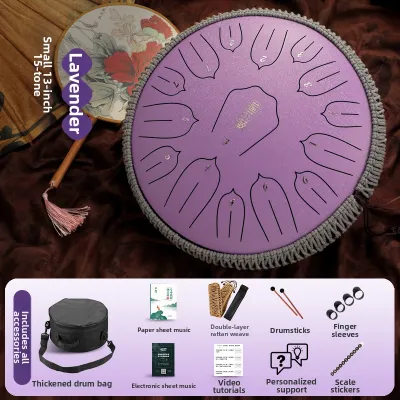

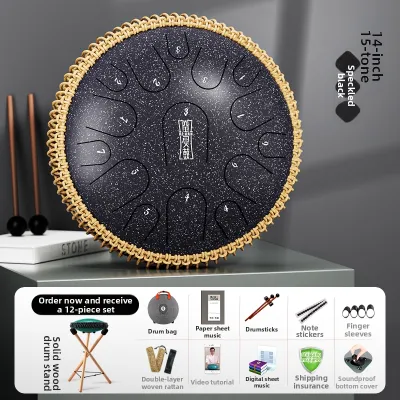
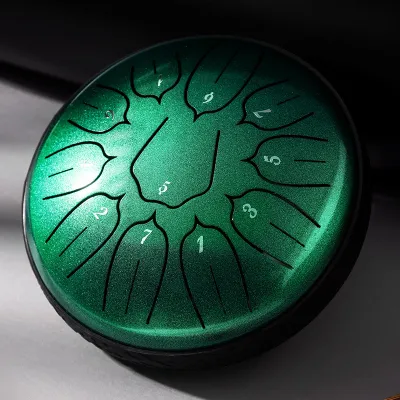
Prices are valid at publication and may change. Please refer to the product page for the latest price.
Tongue drums are compact, often ranging from 6 to 14 inches in diameter, and can easily sit on your lap or a small table. Their solid steel construction makes them durable and highly portable, fitting easily into a backpack for outdoor sessions. Handpans are significantly larger, typically measuring around 22 inches in diameter, and require a dedicated stand or a spacious lap to play comfortably. They are also more delicate; their thin, tuned shells are sensitive to physical impacts, requiring careful handling and a robust padded case during transport. A single accidental drop can knock a handpan out of tune, requiring professional repair.
Key Specifications to Check Before Buying a Hluru Instrument
The scale of your instrument determines the emotional character of the music you play. Beginners often face a choice between major, minor, and pentatonic scales. A pentatonic scale (five notes per octave) is highly recommended for beginners because it excludes dissonant intervals. This means any combination of notes will sound harmonious, allowing for stress-free, intuitive improvisation. Diatonic scales (seven notes per octave) offer a wider range of traditional melodies but require a bit more intentionality to avoid clashing notes. Common beginner scales include C Major for a bright, uplifting tone, or D Minor for a deeper, more meditative quality. Choosing a scale that aligns with your personal taste is crucial, as you cannot change the scale of the instrument once it is made.

Hluru instruments come in various configurations, such as 11, 13, or 15 notes. While a higher note count offers a broader musical range and more chord options, it also increases the complexity of the layout. For tongue drums, an 11-note or 13-note layout in a single key provides an excellent balance, offering enough notes to play familiar melodies without overwhelming your spatial memory. A 15-note drum provides a full two-octave range but features smaller, more closely packed tongues that require greater precision to strike cleanly. Beginners often find that starting with fewer, larger tongues helps them build accuracy and confidence before moving to complex layouts.
Do not rely solely on generic category names; instead, verify the specific alloy and treatment process. Hluru instruments are typically crafted from carbon steel, alloy steel, or stainless steel. Carbon steel offers a warm, grounded tone but is highly susceptible to rust if not treated. Stainless steel and nitrided steel provide superior corrosion resistance and a brighter, longer-lasting sustain. The finish—whether electroplated, spray-painted, or heat-treated—also plays a role in protecting the metal from moisture and sweat. Checking these material specifications is essential to ensure the instrument’s longevity, especially in humid climates where moisture can quickly degrade untreated steel.
Matching Your Budget to Your Musical Goals
Steel tongue drums are highly cost-effective, with quality entry-level models often ranging from S$50 to S$300. These instruments offer excellent tuning stability and are perfect for hobbyists testing their interest. Handpans are precision-engineered, hand-hammered instruments that require a much larger financial commitment. A reliable entry-to-mid-range handpan can cost anywhere from S$1,000 to over S$2,500. This price difference reflects the intensive labor required to tune multiple harmonic overtones (the fundamental, octave, and compound fifth) on each individual tone field. Attempting to buy ultra-cheap handpans from unverified sources often results in poorly tuned instruments that cannot be repaired.
When planning your purchase, avoid spending your entire budget on the instrument itself. Essential accessories are critical for protecting your investment and improving your playing experience. A high-quality, thickly padded carrying case is non-negotiable for protecting the delicate tuning of a handpan or the finish of a tongue drum. Additionally, investing in a sturdy, adjustable stand allows for comfortable playing postures, while specialized handpan oils or microfiber cloths are necessary for routine maintenance. Budgeting an extra S$100 to S$200 for these accessories ensures your instrument remains protected and playable for years.
Beginners should establish clear milestones before upgrading to a premium instrument. Rather than upgrading based on a set timeline, evaluate your physical technique and musical needs. If you find yourself limited by the note range of your tongue drum, or if you have mastered the finger-strike technique and desire the rich, multi-layered resonance of a handpan, it may be time to transition. An upgrade is justified when your current instrument can no longer express the musical ideas you wish to explore. This step-by-step progression prevents unnecessary spending and ensures you fully appreciate the capabilities of a higher-end instrument.
Pre-Purchase Checklist for Percussion Instruments
Before finalizing your order on any online marketplace or official store, carefully read the detailed product description. Do not rely on cover images, which may show a different size or note configuration than the one selected in the dropdown menu. Confirm the exact key (such as D minor or C major), the number of tongues or tone fields, and the specific metal alloy used. Many listings use generic titles that combine multiple models, making it easy to accidentally purchase the wrong version if you do not verify the selected options.
Ensure the listing explicitly states what is included in the package. A complete beginner set should ideally feature the instrument, a protective bag, mallets (for tongue drums), and a basic instructional booklet. Review the seller’s return policy and warranty terms. Because these instruments are sensitive to shipping impacts, a clear return policy for transit-related detuning is vital. A reputable seller will offer a guarantee that the instrument arrives in perfect tune and provide support if any notes are damaged during transit.
To ensure you receive an authentic Hluru instrument with valid after-sales support, purchase directly from official brand stores or authorized distributors. Avoid unverified third-party sellers on general ecommerce platforms, as counterfeit or poorly tuned imitation drums are common. Authentic instruments undergo strict quality control to ensure each note is tuned precisely to standard pitch (usually A4 = 440Hz or 432Hz). Buying from authorized channels also guarantees access to customer service if you need advice on maintenance or tuning in the future.
Frequently Asked Questions (FAQ)
Do I need to know how to read sheet music to play a tongue drum?
No, you do not need any prior musical training or the ability to read traditional sheet music to enjoy playing a tongue drum. Most beginner tongue drums come with numbered notation systems, where each tongue is marked with a number corresponding to a simplified songbook. Visual guides and color-coded stickers are also widely available to help you map out melodies quickly. Additionally, because these instruments are tuned to harmonious scales, you can play intuitively by experimenting with different patterns, making them highly accessible for self-taught players and non-musicians. Many players find that the intuitive nature of the instrument allows them to focus on the physical sensation of playing and the relaxing qualities of the sound, rather than worrying about complex music theory.
How should I store my handpan or tongue drum to prevent damage?
Proper storage is essential to maintain the tuning and prevent rust, especially in tropical climates with high humidity, such as Singapore. Always store your instrument in a dry, temperature-stable indoor environment, away from direct sunlight, air conditioning vents, or damp areas. After every playing session, wipe down the entire surface with a dry microfiber cloth to remove moisture, sweat, and natural skin oils. For long-term protection, apply a thin layer of specialized instrument oil or natural wax. While a padded bag is excellent for transport, avoid storing your instrument in a closed synthetic bag for extended periods, as trapped humidity can accelerate oxidation and lead to rust. Instead, display the instrument on a stand in a well-ventilated room where air can circulate freely around the metal.
Community discussion
Share your experience or ask a question. Comments are reviewed before publication.