
For an aspiring guitarist, selecting a first instrument is a pivotal decision that directly influences how often they practice and how quickly they progress. Martin Guitar, a brand with nearly two centuries of history, is highly regarded for its craftsmanship and iconic acoustic tone. However, navigating their extensive catalog can be overwhelming for a beginner. With options ranging from high-pressure laminates to premium solid woods, finding the right balance between playability, durability, and cost requires a clear understanding of what each series offers.
The ideal starting point for most new players is either the resilient X Series or the solid-topped Road Series. These instruments are designed to deliver the signature Martin feel and tone at a more accessible price point than the legendary Standard Series. While the Standard Series represents the pinnacle of traditional acoustic guitar manufacturing, its high cost and maintenance requirements often make it a less practical choice for someone just starting out. By focusing on how construction materials interact with your local environment and how specific neck profiles affect playing comfort, you can make an informed decision that supports your musical journey for years to come.
Decoding Martin's Beginner-Friendly Series: X vs. Road
To understand Martin’s entry-level lineup, one must first look at the fundamental differences in construction between the X Series and the Road Series. The X Series is built primarily using High-Pressure Laminate (HPL), a composite material made from wood fibers and resin pressed together under extreme heat. Many X Series models feature an HPL back and sides paired with either a solid spruce top or an HPL top. In contrast, the Road Series represents a step up into more traditional guitar building, utilizing solid wood tops paired with solid or fine-veneer back and sides. This structural difference directly impacts the weight, acoustic projection, and overall character of the instrument.
Products mentioned in this guide






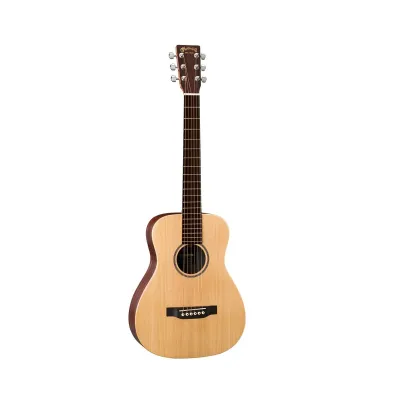
Prices are valid at publication and may change. Please refer to the product page for the latest price.
Living in a tropical climate like Singapore introduces unique challenges for acoustic guitar ownership. High relative humidity can cause solid wood to swell, which raises the string action, warps the neck, and can even cause the bridge to lift off the soundboard. Because HPL is highly resistant to temperature and humidity fluctuations, X Series guitars are incredibly stable and require far less environmental monitoring. For beginners who do not want to invest in dehumidifiers or worry about keeping their guitar in a climate-controlled room, the X Series offers excellent peace of mind and durability.
The Road Series, while requiring more careful humidity management, rewards the player with superior acoustic performance. Solid wood tops vibrate much more freely than laminate materials, producing a richer, warmer tone with greater volume and sustain. As you play a solid-wood guitar over time, the wood dries out and matures, a process known as “opening up” that gradually improves the instrument’s tonal depth. The Road Series is also generally lighter in weight than the X Series, making it more comfortable to hold during long practice sessions.
In terms of financial investment, these two series occupy distinct tiers within the market. X Series models typically range from the mid-to-high hundreds in S$, offering an affordable way to own a genuine Martin guitar. The Road Series steps into the low-to-mid four figures in S$, representing a more significant financial commitment. While both series offer excellent value, the X Series is highly cost-effective for casual players, whereas the Road Series is a better long-term investment for those committed to developing their skills.
Ultimately, your choice should align with your lifestyle and playing goals. The X Series is the ideal match for travelers, students living in shared spaces, and casual hobbyists who need a rugged, low-maintenance instrument. The Road Series is better suited for beginners who are highly committed to regular practice, plan to perform at open mics, or want to record their music, as the solid-wood construction provides the tonal nuance required for expressive playing.
Essential Playability and Feature Checks for New Players
For a beginner with uncalloused fingers and undeveloped hand strength, playability is the single most important factor in a guitar. Martin designs its modern neck profiles with comfort in mind, typically utilizing a Modified Low Oval shape with a High Performance Taper. This profile is relatively slim and flat, which reduces the distance your thumb and fingers must stretch to fret notes. This design helps minimize hand fatigue during long practice sessions and makes learning complex chord shapes significantly easier for new players.

Nut width is another critical dimension that affects how a guitar feels in your hands. Martin guitars generally feature a nut width of either 1-11/16 inches or 1-3/4 inches. A wider nut width of 1-3/4 inches provides more spacing between the strings, which is highly beneficial for fingerstyle playing and helps prevent beginners from accidentally muting adjacent strings with their fretting fingers. Conversely, a narrower 1-11/16-inch nut width brings the strings closer together, making it easier for players with smaller hands to wrap their fingers around the neck and execute clean chord transitions.
Factory action setup—the height of the strings relative to the fretboard—plays a massive role in how easy a guitar is to play. If the action is too high, you will have to press down incredibly hard to get a clean note, leading to finger pain and frustration. When evaluating a Martin guitar, you can perform a quick visual check of the action. Look at the gap between the bottom of the strings and the top of the 12th fret; a comfortable action for a beginner is typically around 2.0 millimeters for the high E string and 2.5 millimeters for the low E string.
It is also essential to check the string height at the first fret, which is determined by the depth of the slots in the nut. If the nut slots are too shallow, the strings will sit too high near the headstock, making basic open chords like F major or B minor incredibly difficult to press down. You can test this by pressing a string down at the third fret and observing the tiny gap between the string and the first fret; there should be just a hair’s width of clearance.
Finally, beginners must decide whether they need a model with built-in electronics. Many Martin guitars in the X and Road Series include onboard pickups and preamps, allowing you to plug directly into an amplifier or recording interface. If you plan to perform live, join a band, or record your progress on a computer, choosing an acoustic-electric model is highly practical. However, if you only intend to play unplugged at home, opting for a purely acoustic model can save you money or allow you to allocate your budget toward a model with better wood specifications.
Should a Beginner Consider the Martin Standard Series?
The Martin Standard Series, which includes legendary models like the D-18 and D-28, represents the benchmark for professional acoustic guitars worldwide. These instruments are handcrafted in Nazareth, Pennsylvania, using premium, all-solid tonewoods, traditional dovetail neck joints, and hand-scalloped bracing patterns. While these features result in an instrument of exceptional tonal complexity, projection, and beauty, they also come with a premium price tag that often exceeds several thousand S$.
One of the primary advantages of investing in a Standard Series guitar is its long-term value and tonal aging potential. Because these guitars are constructed entirely from high-grade solid woods, their tone will continuously evolve and improve over decades of play, developing a rich, resonant character that laminate guitars cannot replicate. Furthermore, Standard Series Martins hold their resale value exceptionally well on the used market, often retaining a high percentage of their original cost or even appreciating over time if properly maintained.
Despite these benefits, purchasing a Standard Series guitar as a first instrument is rarely necessary or practical for most beginners. The high financial barrier can put unnecessary pressure on a new player, and the delicate nature of all-solid wood construction requires strict humidity control and careful handling. For someone who is still learning basic chord shapes and strumming patterns, the subtle tonal advantages of a premium instrument may not be fully appreciated or utilized.
However, there are specific scenarios where a beginner might reasonably justify starting with a Standard Series model. If you have a highly flexible budget and are absolutely committed to a lifelong pursuit of the instrument, buying a Standard Series guitar ensures you are unlikely to outgrow your equipment. Additionally, if you are transitioning to acoustic guitar from another fretted instrument like classical guitar or electric guitar, you may already possess the technique and commitment to appreciate the nuances of a professional-grade instrument from day one.
Pre-Purchase Verification and Setup Requirements
Before finalizing your purchase, performing a thorough physical inspection of the guitar is crucial to ensure you are getting a structurally sound instrument. Start by checking the neck angle, which dictates the guitar’s long-term playability and adjustability. Sight down the edge of the fingerboard from the headstock toward the bridge; the line of the frets should point directly to the top edge of the wooden bridge. If the neck appears warped or bowed excessively, the guitar may require significant adjustment before it is comfortable to play.
Next, run your fingers gently along both sides of the fretboard to check for sharp fret ends. If the metal frets protrude past the edge of the wood, it indicates that the fingerboard has dried out and shrunk, a common issue in poorly humidified storage environments. You should also inspect the bridge area closely; ensure there are no gaps between the wooden bridge and the guitar’s top, as any lifting can lead to structural failure under string tension.
Even a brand-new Martin guitar straight from the factory can benefit immensely from a professional setup. Factory setups are designed to be middle-of-the-road to accommodate a wide variety of playing styles, but they are rarely optimized for a beginner’s hand strength. Taking your new guitar to a qualified technician to have the truss rod adjusted, the nut slots filed, and the saddle sanded down can transform a stiff, difficult instrument into one that is incredibly smooth and easy to play.
Finally, verify the credentials of the retailer you are purchasing from. Buying from an authorized Martin dealer ensures that the instrument is authentic and qualifies for the manufacturer’s limited warranty, which is vital for protecting your investment. Be sure to read the store’s return and exchange policies carefully, especially when purchasing online, so you have a clear path of recourse if the guitar arrives with any shipping damage or structural defects.
Frequently Asked Questions (FAQ)
Do Martin X Series guitars sound significantly worse than solid wood models?
Martin X Series guitars do not sound inherently bad, but they do possess a different tonal profile than their solid-wood counterparts. The High-Pressure Laminate (HPL) construction produces a highly consistent, clear, and direct tone that records well and sits cleanly in a mix. However, it lacks the deep bass response, complex overtones, and dynamic projection of a solid-wood guitar. For a beginner, this tonal difference is usually subtle and far less critical than the guitar’s playability, comfort, and ease of maintenance.
What string gauge is recommended for a beginner Martin acoustic?
For new players, light gauge strings (typically .012 to .053) or even extra-light strings (.011 to .052) are highly recommended. These lighter gauges exert significantly less tension on the guitar neck and require less finger pressure to fret, making them much gentler on uncalloused fingertips. Before changing your string gauge, always consult the manufacturer’s specifications or a technician to ensure the guitar’s bracing and nut slots can safely accommodate the change in tension.
Should I buy a Martin guitar with a cutaway body shape?
A cutaway body shape is designed to allow easier access to the higher frets, which is highly useful for playing lead solos and melodies high up on the neck. However, most beginners spend their first few years focusing on rhythm playing, open chords, and fingerpicking in the lower register, where a cutaway offers no functional advantage. Additionally, traditional non-cutaway bodies maximize the internal air volume of the guitar, which often results in a slightly fuller, more resonant bass response.
Community discussion
Share your experience or ask a question. Comments are reviewed before publication.