
Choosing the right tuner is one of the most fundamental decisions when building your instrument accessories setup. There is no single format that works perfectly for every musician; the ideal choice depends entirely on whether your instrument is acoustic or electric, the noise level of your playing environment, and your signal chain requirements. This guide breaks down the operational differences between clip-on, pedal, and app tuners to help you match the right tool to your specific musical needs.
By understanding how each format detects pitch, you can avoid common tuning frustrations and ensure your instrument always sounds its best. Whether you are practicing quietly at home, recording in a studio, or performing on a loud stage, selecting the appropriate tuning accessory is key to maintaining performance quality.
Understanding the Core Tuner Formats
To keep your instrument sounding its best, you must understand how different tuning devices capture pitch. While every tuner serves the same ultimate purpose, they rely on distinct physical mechanisms to analyze sound. These mechanisms dictate how well a tuner performs in noisy rooms, on loud stages, or during quiet home practice sessions.
Products mentioned in this guide
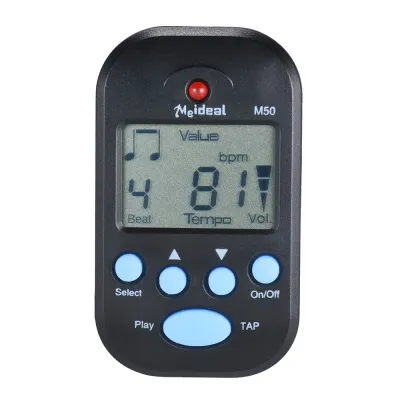
Prices are valid at publication and may change. Please refer to the product page for the latest price.
Clip-On Tuners
Clip-on tuners rely on a piezoelectric sensor to detect physical vibrations directly from the instrument. When you clip the device onto a guitar’s headstock, a violin’s pegbox, or the bell of a brass instrument, the sensor measures the mechanical resonance traveling through the material. Because it bypasses the air entirely, this vibration-sensing method is highly immune to ambient room noise. You can easily tune your instrument in a crowded room while other musicians are playing around you. However, clip-on tuners have physical limitations; they require a secure, flat surface to clamp onto, meaning they may not fit instruments with unusual shapes or thick frames.
Pedal Tuners
Pedal tuners process inline audio signals, making them a staple for electric and electro-acoustic setups. These devices sit directly within your signal chain, receiving an electrical signal via standard quarter-inch audio cables. Because they read the direct electronic output of your instrument’s pickups, they are completely unaffected by acoustic room noise. When choosing a pedal tuner, you will encounter two primary signal routing designs: true bypass and buffered bypass. True bypass completely disconnects the tuning circuitry from your signal path when the pedal is disengaged, preserving your natural tone. Buffered bypass actively drives the signal, which helps prevent high-frequency loss over long cable runs. Naturally, pedal tuners require instruments equipped with electronic pickups and cables to function.
App Tuners
App tuners utilize the built-in microphone of a smartphone, tablet, or computer to capture airborne acoustic waves. This software-based approach is highly accessible, as most musicians already own a compatible smart device. For improved accuracy, you can also connect an external audio interface to feed a direct signal into the app. The primary drawback of app tuners is their high susceptibility to background noise; a noisy air conditioner, chatter, or a nearby instrument can easily throw off the pitch detection. On the positive side, app tuners often leverage the processing power of smart devices to offer multi-functional features, such as integrated metronomes, recording capabilities, and tone generators for ear training.
Key Decision Factors for Your Setup
Selecting the right option from your collection of instrument accessories requires balancing several environmental and technical variables. The first major factor is the ambient noise level of your typical playing environment. If you frequently practice in busy classrooms, backstage areas, or lively community spaces, microphone-based app tuners will likely struggle to track your notes. In these scenarios, the physical isolation provided by a clip-on tuner’s vibration sensor or a pedal tuner’s direct cable input is essential for fast, frustration-free tuning.

Signal chain integrity is another critical consideration, particularly for live performers. A pedal tuner acts as a dedicated hardware mute switch. When you step on the pedal to tune, it cuts the audio signal to the amplifier or sound system, allowing you to tune silently. Tuning audibly through a public address system can disrupt the flow of a performance and sound unprofessional. Clip-on tuners and apps do not offer this inline muting capability, meaning you must manually turn down your instrument’s volume knob or mute your amplifier to achieve the same result.
You must also evaluate the physical footprint and weight distribution of the tuner. Clip-on tuners are incredibly lightweight, but adding even a small clamp to the headstock of a delicate acoustic instrument can slightly alter its balance or aesthetic. For pedalboards, real estate is always at a premium. A pedal tuner requires a dedicated slot, a reliable power source (such as a nine-volt battery or a multi-outlet power supply), and patch cables. App tuners require no physical space on your instrument or pedalboard, but you must have a secure, stable surface to place your phone where the microphone can clearly receive the sound.
Finally, display visibility plays a massive role in usability. Stage lighting can vary from pitch-black wings to blinding spotlights. Pedal tuners typically feature large, high-contrast LED or LCD screens designed specifically for dark stages and floor-level viewing. Clip-on tuners feature smaller screens that rotate on a swivel; while convenient, some budget models can wash out under bright outdoor sunlight. App tuners offer highly detailed, colorful interfaces, but their readability depends heavily on your smart device’s screen quality and battery level.
Matching the Tuner to Your Instrument
Different instrument families have unique physical characteristics that make certain tuner formats more practical than others.
For electric guitarists and bassists, pedal tuners are the industry standard. They integrate seamlessly into existing effects setups, handle low-frequency tracking (which is crucial for five-string basses or drop-tuned guitars), and provide the rugged durability needed for foot-controlled stage use. However, a clip-on tuner remains an excellent secondary accessory for electric players. It serves as a convenient tool for quick tuning checks on the couch or backstage before plugging into an amplifier.
Acoustic guitarists, ukulele players, and violinists generally find that clip-on tuners offer the best balance of convenience and performance. Because these instruments rely on acoustic resonance, clipping a piezo sensor directly to the headstock or bridge allows for rapid tuning without the risk of acoustic feedback. Feedback can easily occur if you attempt to tune an acoustic instrument using a microphone near an active amplifier. The clip-on format keeps the tuner securely attached to the instrument, making it highly portable for campfire sessions or acoustic rehearsals.
Brass, woodwind, and orchestral string players face different challenges. Many of these instruments lack a standard flat headstock, making traditional guitar clip-ons difficult or impossible to mount safely. For these musicians, specialized clip-on tuners with flexible necks or padded, wide-opening clamps are available to attach to brass bells or violin pegboxes. Alternatively, app tuners are highly favored by classical and orchestral musicians practicing in quiet studios. The advanced processing power of modern apps allows them to display complex pitch analysis, historical temperaments, and continuous drone tones, which are invaluable for practicing intonation and ear training.
Format Comparison Matrix
The table below summarizes the operational trade-offs of each tuner format to help you quickly evaluate which option fits your workflow.
| Tuner Type | Pickup Method | Ideal Environment | Primary Instruments | Main Limitations |
|---|---|---|---|---|
| Clip-On | Piezoelectric Vibration | Noisy or Quiet Rooms | Acoustic Guitar, Ukulele, Orchestral Strings | Requires physical mounting point; no inline mute |
| Pedal | Direct Cable Input | Live Stages, Rehearsals | Electric Guitar, Bass, Electro-Acoustic | Requires pickups, cables, and pedalboard power |
| App | Built-In Microphone | Quiet Practice Spaces | Brass, Woodwinds, Acoustic Instruments | Highly sensitive to background noise; no hardware mute |
When shopping for instrument accessories, remember to verify the exact cent-accuracy, tracking speed, and battery specifications on the manufacturer’s label or product manual. These specifications can vary significantly between individual models within the same category.
Final Verdict: Building Your Tuner Strategy
Your final choice should align with where and how you play your instrument. If you perform live with electric or electro-acoustic instruments, a pedal tuner is an indispensable asset that ensures silent, reliable tuning and clean signal routing. For acoustic players who need a lightweight, portable, and noise-immune tool for daily practice and casual gigs, a high-quality clip-on tuner is the most practical choice. If you primarily practice in quiet home environments, value multi-tool software features like metronomes, or play instruments that cannot easily accommodate a physical clip, an app tuner provides excellent utility without requiring extra hardware.
Before making a purchase, always verify if your specific instrument requires a specialized mount, adapter, or audio interface to connect to your chosen tuner format. Taking the time to match the tuner’s detection method to your instrument’s physical design will ensure a seamless, hassle-free tuning experience every time you play.
Frequently Asked Questions (FAQ)
Do I need to calibrate my tuner for standard pitch?
For the vast majority of modern musical genres, you should keep your tuner calibrated to the standard reference pitch of A4 equals 440 hertz. This is the universal tuning standard used by most contemporary bands, ensembles, and digital instruments. However, if you play in an orchestra, some classical ensembles calibrate to 442 hertz for a slightly brighter sound. Similarly, historical or period-instrument ensembles may tune to lower pitches, such as 415 hertz. If you need to adjust this, check your tuner’s settings menu to verify its calibration range limits and ensure it can support your ensemble’s specific reference pitch.
Can I use a clip-on tuner on an electric guitar during a live show?
While you can physically use a clip-on tuner on an electric guitar during a live performance, it is generally not recommended as your primary staging tool. From a practical standpoint, reading a small headstock display while standing under dynamic stage lights can be difficult. There is also a risk of the tuner getting knocked off during energetic movement. Most importantly, clip-on tuners lack a hardware mute switch. Unless you manually turn down your guitar’s volume knob or mute your amplifier, the audience will hear every string pluck as you tune, which can disrupt the performance.
Community discussion
Share your experience or ask a question. Comments are reviewed before publication.