
Preparing your child for their first year of formal primary education in Singapore is a significant milestone. With the Ministry of Education (MOE) removing formal mid-year and year-end examinations for lower primary levels to foster a holistic joy of learning, the role of practice papers has shifted. Today, Primary 1 assessments are typically bite-sized, low-stakes weighted assessments designed to check learning milestones rather than rank students. Consequently, there is no single “best” publisher for every child; the ideal choice depends entirely on your child’s current proficiency, learning pace, and subject-specific needs.
When evaluating primary 1 exam paper bundles, the core trade-off lies between standard format familiarity and advanced cognitive stretching. Some publishers design their materials to closely mirror the exact structure, font size, and difficulty of standard school-based weighted assessments. Other publishers focus on introducing complex heuristic problem-solving and non-routine questions early on. To support your child effectively, you must assess these bundles on a subject-by-subject basis rather than assuming a single publisher is universally superior across English, Mathematics, and Mother Tongue languages.
What Makes a Good MOE-Aligned Exam Paper?
An effective practice paper must align with the current MOE curriculum guidelines, which prioritize conceptual understanding and active application over rote memorization. In the past, exam preparation often relied on repetitive drilling of identical question structures. Modern classroom teaching in Singapore, however, encourages students to explain their thinking and apply concepts to real-world scenarios. A high-quality exam paper bundle must reflect this shift by presenting questions that test the same core concept in multiple, varied formats.
Products mentioned in this guide
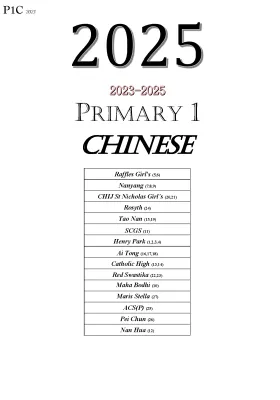
Prices are valid at publication and may change. Please refer to the product page for the latest price.
For a Primary 1 student, a good exam paper serves as a gentle bridge between play-based kindergarten learning and structured primary school academics. The layout should be clean, with large, readable fonts and ample spacing for young children who are still developing their fine motor skills and handwriting. Furthermore, the instructions must be clear and written in child-friendly language, allowing the student to understand the task independently whenever possible.
Question Variety and Heuristic Focus
At the Primary 1 level, heuristic problem-solving is not about complex algebraic equations but about developing foundational thinking strategies. In Mathematics, this includes techniques such as drawing a simple model, looking for patterns, making a systematic list, or acting out the problem. A well-designed exam paper will integrate these strategies naturally into word problems, encouraging children to think visually rather than relying solely on mental arithmetic.
For English, question variety should extend beyond simple vocabulary matching and grammar fill-in-the-blanks. Look for papers that include visual text comprehension, where children must interpret information from posters, flyers, or signs. This reflects the multi-literacy focus of the current MOE English Language syllabus. A balanced practice bundle will offer a progressive mix of foundational recall questions to build confidence, alongside higher-order application questions that challenge the child to think critically.
Quality of the Answer Key and Workings
Because parents frequently act as home tutors for lower primary students, the answer key is a critical component of any exam paper bundle. A basic list of final answers is highly insufficient for Primary 1 learning. The answer key must serve as an instructional tool, providing step-by-step visual workings, such as complete block models for Math questions and detailed grammatical explanations for English answers.
When reviewing a publisher’s answer key, check if it highlights common student mistakes or provides alternative solving methods. Understanding why a specific answer is incorrect is often more valuable for a child’s cognitive development than simply knowing the correct option. A detailed, explanatory answer key allows you to identify exactly where your child’s logic broke down, making your home revision sessions far more targeted and constructive.
Comparing Common Publisher Approaches in Singapore
Singapore’s educational publishing landscape is highly competitive, with several established brands offering distinct editorial styles. While some publishers are synonymous with high-difficulty enrichment, others focus on building foundational confidence through step-by-step progression. It is important to remember that publisher reputations are based on general market positioning and historical trends; editorial focuses can shift, so you must always verify the specific edition, subject, and publication year before purchasing.

Rather than viewing one approach as superior, parents should match the publisher’s philosophy to their child’s learning stage. Using an overly challenging paper too early can lead to academic anxiety, while using a paper that is too simple may fail to prepare a student for the cognitive demands of upper primary levels. Below is an overview of how different educational publishers typically structure their Primary 1 materials.
Publishers Emphasizing Advanced Problem-Solving
Publishers such as Singapore Asia Publishers (SAP) and specialized mathematical enrichment brands are widely recognized for their challenging, non-routine question structures. Their Primary 1 exam bundles and assessment books often introduce multi-step word problems and advanced heuristics early in the academic year. These materials are designed to stretch the capabilities of students who have already mastered the basic concepts taught in their school classrooms.
The target audience for these advanced bundles consists of students who find regular school homework straightforward and require additional intellectual stimulation. These papers often feature complex visual puzzles and logical reasoning questions that prepare students for competitive academic environments. However, parents must use these materials with care. Introducing highly demanding heuristic papers to a child who is still consolidating basic numeracy or reading skills can cause unnecessary frustration and damage their academic self-esteem.
Publishers Mirroring Standard School Assessments
Publishers like CASCO Publications, Educational Publishing House (EPH), and Marshall Cavendish Education typically focus on closely replicating the actual format, difficulty, and tone of standard school-based weighted assessments. Their papers are carefully structured to align with the typical pacing of the MOE syllabus, ensuring that the topics tested match what is being taught in classrooms at any given point in the school year.
These bundles are highly suited for students who need to build exam stamina, improve their time management, and become familiar with standard assessment layouts. By practicing with papers that look and feel like their actual school worksheets, children can reduce test anxiety and focus entirely on demonstrating their knowledge. These standard-format papers are excellent for establishing baseline competency and identifying fundamental gaps in a child’s understanding of the core syllabus.
Decision Framework: Which Publisher Should You Choose?
To select the right exam paper bundle for your child, avoid looking for a single “winning” publisher. Instead, analyze your child’s current academic profile and match it to the corresponding publisher type using the structured framework below.
Choose Advanced/Enrichment Publishers If…
- The child consistently excels in school tasks: If your child completes their daily school worksheets quickly, accurately, and without assistance, they are likely ready for advanced materials.
- The goal is to stretch critical thinking: Select these publishers if you want to expose your child to non-routine problem-solving methods and lateral thinking challenges early in their academic journey.
- You have the time to provide active guidance: Advanced papers often feature complex solutions that require a parent or tutor to sit down and explain the underlying logic step-by-step.
Choose Standard/Foundational Publishers If…
- Confidence building is the primary objective: If your child feels anxious about formal assessments or hesitates when facing new question formats, standard papers offer a reassuring and predictable practice environment.
- You need to identify basic conceptual gaps: These papers are ideal for pinpointing simple errors, such as basic calculation mistakes in Math or spelling and punctuation gaps in English, before they compound in Primary 2.
- Independent practice is preferred: The clear, straightforward layout and direct progression of standard papers make it easier for children to complete the exercises with minimal parental supervision.
Verify First If…
- Your child shows highly uneven performance across subjects: If your child is highly proficient in Mathematics but struggles with English grammar, do not buy a single multi-subject bundle. Instead, select subject-specific papers from different publishers to match their varying needs in each discipline.
- The full exam format feels completely overwhelming: If a full, multi-page practice paper causes immediate stress, step away from exam bundles entirely. Begin with topical assessment books that focus on one unit at a time, and gradually transition to full papers only when your child feels secure in their content knowledge.
Crucial Checks Before You Buy
Before purchasing any primary 1 exam paper bundle, performing a few practical quality checks will ensure you receive relevant, up-to-date, and highly effective learning materials.
- Verify Edition and Syllabus Alignment: Always check the publication or copyright year on the book's imprint page. The MOE syllabus undergoes periodic reviews to remain relevant. Never infer the actual contents of an edition solely from its cover or title. Ensure the bundle explicitly states alignment with the latest MOE syllabus to avoid practicing outdated topics or missing new focus areas.
- Confirm Content Completeness: Check that the bundle includes all necessary components for comprehensive practice. For language papers, verify if the package contains listening comprehension scripts, oral conversation prompts, and a complete answer key. A bundle missing its answer key or audio components loses a significant portion of its educational value.
- Assess Format and Physical Quality: For Primary 1 students, physical paper formats are highly recommended over digital downloads or screen-based practice. Young children must practice physical handwriting, spatial layout management (such as writing digits clearly within answer boxes), and the physical coordination of turning pages during a timed exercise. Look for high-contrast, clean printing with durable tear-out sheets.
- Check Authorized Sources and Retailers: Purchase your exam bundles from established local bookstores, authorized educational distributors, or the official online storefronts of the publishers. Avoid purchasing unauthorized photocopies or low-quality digital scans from unverified online marketplaces, as these often contain missing pages, illegible text, or incorrect answer keys.
Frequently Asked Questions (FAQ)
Are topical assessment books better than full exam papers for Primary 1?
Topical assessment books and full exam papers serve distinct educational purposes and are best used at different stages of the academic year. Topical books are designed for ongoing learning and consolidation; they allow a child to practice a specific concept, such as addition within 20 or nouns, immediately after it is taught in school. This builds a strong, focused foundation. Full exam papers are best reserved for end-of-term revision, as they test overall retention across multiple topics, require the child to switch between different cognitive tasks rapidly, and help build exam stamina and time management.
How do I verify if a bundle includes the latest MOE syllabus updates?
To verify syllabus alignment, check the book’s cover, introduction, or preface for explicit references to the current year and the latest MOE syllabus guidelines. Additionally, you can cross-reference the table of contents or the topical breakdown of the practice papers with the official subject syllabi documents available on the Ministry of Education Singapore website. Look specifically for the inclusion of current pedagogical terms and ensure that no topics moved to higher primary levels are present in the Primary 1 papers.
Community discussion
Share your experience or ask a question. Comments are reviewed before publication.