
Choosing the right communication book to read first depends entirely on the specific interpersonal friction you need to resolve. If you are navigating high-stakes, emotionally charged workplace dialogues where preserving a long-term working relationship is just as important as the outcome, Crucial Conversations is the ideal starting point. It provides a highly structured, real-time playbook for keeping dialogue flowing when safety is threatened and tempers flare.
While Crucial Conversations excels at real-time dialogue management, other classic texts are better suited for different professional challenges. For instance, if your primary goal is securing a higher salary or closing a deal, a tactical negotiation book is a more effective starting point. If you are trying to heal deep-seated personal resentment or build profound emotional empathy, an empathy-focused framework will serve you better. Understanding these distinctions ensures you invest your reading time and resources into the book that matches your immediate professional needs.
This guide breaks down the core methodologies of Crucial Conversations and contrasts them with alternative communication genres. By evaluating these frameworks side by side, you can make an informed decision on which book to purchase first to accelerate your professional development.
Products mentioned in this guide
![EBOOK Crucial Conversations Tools for Talking When Stakes Are High Second Edition [Full Version]](https://img.lazcdn.com/g/p/e01a4a651d8383c07f7cdd1d238b57e2.jpg_400x400q80.jpg_.webp)

Prices are valid at publication and may change. Please refer to the product page for the latest price.
The Core Focus of Crucial Conversations: What It Actually Teaches
Crucial Conversations defines its namesake scenario as a discussion between two or more people where stakes are high, opinions vary, and emotions run strong. The core premise of the book is that when these three conditions are met, human biology often betrays us, pushing us toward fight-or-flight responses rather than constructive dialogue. The authors argue that the key to successful outcomes lies in keeping the dialogue open, allowing all parties to contribute to what they call the “Pool of Shared Meaning.”
To achieve this, the book introduces a step-by-step methodology centered on psychological safety. When people feel safe, they do not resort to silence (withholding information, masking, or withdrawing) or violence (controlling, labeling, or attacking). The framework teaches readers how to identify when safety is at risk, how to step out of the content of a conversation to rebuild safety, and how to establish a Mutual Purpose and Mutual Respect. Once safety is restored, the conversation can return to the core issues without damaging the underlying relationship.
This book is specifically designed for managers, team leads, and professionals who must navigate complex organizational dynamics. It is highly effective for addressing chronic underperformance, delivering difficult upward feedback to leadership, or aligning diverse stakeholders around a controversial project. The focus is on collaborative problem-solving in environments where you must continue working with the other party long after the conversation ends.
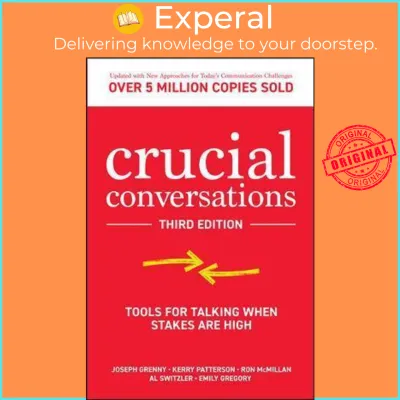
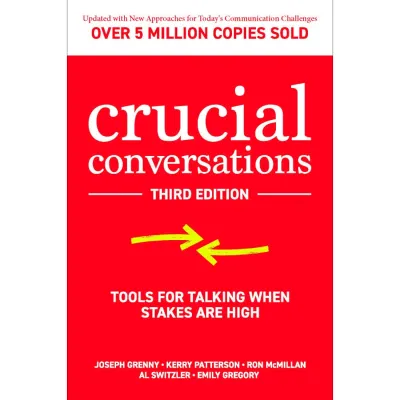
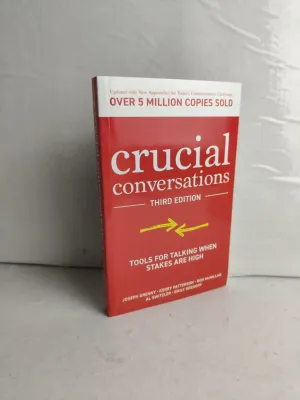
Before purchasing a copy, it is highly recommended to verify the specific edition you are buying. The third edition, for example, contains updated workplace examples, revised terminology, and modern digital communication scenarios that are not present in older versions. Ensuring you have the latest authorized edition guarantees that the case studies and practical exercises align with today’s hybrid and remote work environments.
How Other Classic Communication Books Differ in Approach
To determine if Crucial Conversations is your best first step, it helps to compare it against other major schools of thought in communication. These alternative books generally fall into three distinct categories, each prioritizing a different aspect of human interaction.

Empathy and Connection-Focused Approaches
Books in this category, such as those utilizing the Nonviolent Communication (NVC) framework, prioritize emotional needs and deep, empathetic listening over immediate business alignment or tactical resolution. The primary goal is to foster a deep human connection by translating observations, feelings, needs, and requests without judgment.
While Crucial Conversations focuses on creating safety to drive a practical decision or action, empathy-focused books dive deeper into internal emotional translation. They teach you to look past aggressive behavior to identify the unmet universal needs of the other person, making them highly effective for personal relationships or deeply entrenched interpersonal resentment.
If your primary struggle is managing intense personal conflicts, practicing active listening, or navigating situations where emotional validation is far more important than a concrete business outcome, starting with an empathy-focused book is highly recommended.
Negotiation and Tactical Persuasion Approaches
Negotiation-focused books, exemplified by frameworks like those in Never Split the Difference, approach communication through the lens of leverage, bargaining, and tactical empathy in high-stakes, sometimes zero-sum environments. The objective is not necessarily to build a shared pool of meaning, but to secure an advantageous agreement while managing risk.
These frameworks teach techniques such as mirroring, labeling emotions to defuse them, and using calibrated questions to guide the counterpart toward a specific outcome. This is a fundamental departure from Crucial Conversations, which assumes both parties ultimately want to collaborate toward a mutual purpose. In a tactical negotiation, the other party may have competing interests that they are actively trying to protect.
For professionals in sales, procurement, contract management, or those preparing for a tough salary discussion in a highly competitive market, a negotiation-first book is the superior starting point. It equips you with the tools to handle counterparts who may not be acting in good faith or who view the interaction as purely transactional.
Structural Conflict Resolution Approaches
Structural conflict books, such as Difficult Conversations (developed by the Harvard Negotiation Project), focus on dissecting the hidden, underlying layers of a conflict before you even open your mouth. This approach categorizes every tough discussion into three distinct internal dialogues: the “What Happened” conversation, the Feelings conversation, and the Identity conversation.
This framework excels at helping you untangle complex, long-standing misunderstandings where your own sense of self-worth or identity feels threatened. It encourages deep self-reflection to understand why a specific issue triggers such a strong reaction, helping you shift from a mindset of delivering a message to one of learning and exploration.
If you are preparing for a highly sensitive, historical conflict with a colleague or business partner where identity-level triggers are the primary barrier to progress, a structural conflict book is the best place to start. It provides the diagnostic tools needed to understand the anatomy of the conflict before you attempt to resolve it in real time.
Key Comparison Dimensions to Match Your Professional Needs
To help you decide which methodology aligns with your current professional challenges, the table below compares these four distinct communication approaches across critical operational dimensions.
| Dimension | Crucial Conversations | Empathy-Focused (e.g., NVC) | Negotiation-Focused (e.g., Never Split the Difference) | Structural Conflict (e.g., Difficult Conversations) |
|---|---|---|---|---|
| Primary Goal | Establish psychological safety to achieve mutual agreement and action. | Foster deep emotional connection and identify unmet human needs. | Secure advantageous terms and manage leverage in high-stakes deals. | Diagnose and untangle the hidden emotional and identity layers of conflict. |
| Ideal Scenario | Resolving team misalignment, addressing poor performance, or giving upward feedback. | Navigating deeply sensitive personal relationships or long-standing family friction. | Negotiating vendor contracts, closing sales, or conducting salary discussions. | Preparing for complex, historical disputes where self-identity is threatened. |
| Core Tool | The "Pool of Shared Meaning" and restoring Mutual Respect. | The four-step model: Observation, Feeling, Need, and Request. | Tactical empathy, calibrated questions, and emotional labeling. | Deconstructing the "Three Conversations" (What Happened, Feelings, Identity). |
| Learning Curve | Highly structured, step-by-step conversational scripts and triggers. | Requires a significant mindset shift toward non-judgmental listening. | Action-oriented, practical tactics that can be applied immediately. | Analytical and reflective, requiring deep self-examination before speaking. |
| Typical Format | Best in print or e-book to study the visual flowcharts and dialogue models. | Highly effective in print for reflective practice; audio works well for tone. | Excellent in audiobook format to hear the vocal inflections and delivery. | Best in print or e-book for annotating and mapping out personal conflicts. |
When purchasing any of these titles, readers should carefully consider the format that best supports their learning style. In Singapore, physical paperbacks and hardcovers are widely available through local bookstores and online retailers, typically ranging from S$18 to S$35 depending on the binding and edition.
If you prefer digital formats, ensure your e-reader is compatible with the publisher’s file type to avoid formatting issues with visual diagrams. Framework-heavy books like Crucial Conversations rely heavily on visual models, flowcharts, and side-by-side dialogue comparisons. While audiobooks offer excellent convenience for commuting, they can make it difficult to reference these visual aids unless they come with an authorized supplementary PDF companion. Always verify the completeness of the digital package before finalizing your purchase.
Decision Framework: Which Book to Buy First?
To finalize your purchasing decision, evaluate your immediate professional context against these clear, conditional scenarios.
Choose Crucial Conversations if:
- You manage a team or projects: You need to address poor performance, keep projects on track across departments, or manage daily friction between team members.
- You need to speak up to leadership: You have critical, high-stakes feedback to deliver to a senior stakeholder or regional director, and you cannot afford to damage the professional relationship.
- You want highly structured scripts: You prefer clear, step-by-step frameworks that tell you exactly what to look for and what to say when a conversation starts to derail.
Choose an empathy-focused book if:
- Your primary struggle is emotional regulation: You find yourself reacting defensively to criticism or struggling to empathize with colleagues whose communication styles differ from yours.
- You are navigating highly sensitive personal conflicts: The friction you face is primarily in your personal life or with close business partners where emotional alignment is the primary goal.
Choose a negotiation-focused book if:
- Your role is transactional: You work in sales, procurement, real estate, or vendor management, where your success is measured by the terms of the deals you close.
- You are preparing for a salary review: You need practical, high-leverage tactics to navigate a compensation discussion in a highly competitive corporate environment.
Choose a structural conflict book if:
- You are facing an ongoing, historical dispute: You need to address a complex, multi-layered conflict that has persisted for months or years, where previous attempts at simple dialogue have failed.
- The conflict feels deeply personal: The situation threatens your professional identity, reputation, or sense of self-worth, requiring deep internal analysis before you engage.
Verify organizational alignment first:
Before buying any communication book for professional development, check if your organization already mandates or sponsors a specific feedback or communication framework. Many multinational corporations and public sector organizations in Singapore align their internal training with specific methodologies. Prioritizing the book that matches your company’s internal vocabulary can immediately enhance your peer-to-peer collaboration and performance reviews.
Frequently Asked Questions (FAQ)
Is the audiobook version effective for learning these communication frameworks?
Audiobooks are highly convenient for busy professionals commuting across Singapore, but their effectiveness depends heavily on the book’s structure. For tactical negotiation books, audio is excellent because hearing the narrator’s tone, pacing, and vocal inflections helps you understand how to deliver the techniques in real life.
However, for framework-heavy books like Crucial Conversations, print or e-book formats are generally superior. These books rely on visual flowcharts, comparison tables, and structured scripts that are difficult to digest purely through audio. If you do purchase the audiobook, verify that it includes an authorized companion PDF containing all the diagrams and visual models, as these are essential for studying and applying the methodology effectively.
Can I apply Crucial Conversations frameworks to written communication like emails?
Yes, the core principles of Crucial Conversations translate well to written communication, such as emails, Slack, or Microsoft Teams, though with some important modifications. In written communication, you must be exceptionally deliberate about establishing safety and mutual purpose, as the recipient cannot hear your tone of voice or see your body language.
When writing a high-stakes email, avoid absolute language, state your positive intent clearly at the outset, and explicitly invite the other party’s perspective to keep the virtual pool of meaning open. However, if you notice the exchange is devolving into defensiveness or passive-aggressive responses, you should immediately stop writing. The lack of real-time feedback in digital text makes it highly prone to misinterpretation. In these moments, transition the discussion to a live video call or a face-to-face meeting to restore safety and resolve the issue constructively.
Community discussion
Share your experience or ask a question. Comments are reviewed before publication.