
The Short Answer: Mapping Czerny's Major Études to Skill Levels
Carl Czerny remains a monumental figure in classical piano pedagogy, bridging the Classical and Romantic eras as a student of Beethoven and the teacher of Liszt. His pedagogical works provide a structured pathway for developing technical facility. Among his hundreds of opus numbers, three collections stand out as the definitive backbone of classical piano training: Op. 849 (Introduction to Velocity), Op. 299 (The School of Velocity), and Op. 740 (The Art of Finger Dexterity). Choosing the correct collection is essential for steady progress and preventing physical strain.
To map these works to your current playing ability, consider this direct progression:
- Czerny Op. 849 bridges beginner to early intermediate levels. It focuses on establishing fundamental finger independence, evenness of tone, and basic coordination.
- Czerny Op. 299 targets intermediate to late-intermediate pianists, introducing sustained velocity, rapid thumb tucks, and longer musical phrases to build physical stamina.
- Czerny Op. 740 is an advanced, diploma-level collection demanding virtuosic speed, complex polyphonic voicing, double-note control, and octave endurance, serving as a stepping stone to major Romantic literature.
Selecting the right collection requires an honest assessment of physical technique rather than the ability to simply read the notes. Playing these studies with physical tension defeats their pedagogical purpose and can lead to injury. Consequently, choosing an appropriate sheet music edition and utilizing high-quality reference recordings are critical steps in ensuring your practice remains productive and safe.
Products mentioned in this guide

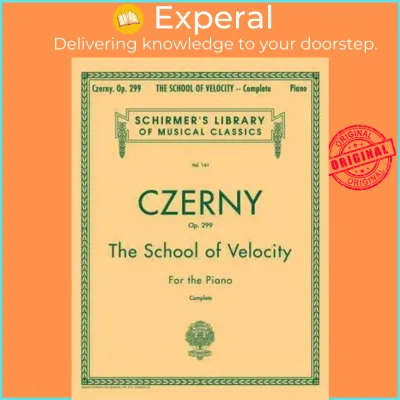




Prices are valid at publication and may change. Please refer to the product page for the latest price.
Core Differences in Technical and Musical Demands
The transition through Czerny’s major opus numbers represents a deliberate shift in physical mechanics and musical complexity. Initially, the primary challenge is achieving basic finger independence. As a student progresses, demands shift from short, isolated technical figures to sustained, high-speed execution across the keyboard. Understanding how these three collections differ across key pedagogical dimensions allows you to align your practice goals with the specific technical milestones of each book.

In Op. 849, the musical phrases are relatively short, typically spanning two to four measures before a brief physical rest or a change in pattern. This structure allows early intermediate students to reset their hand position and release any accumulated tension. The technical patterns are straightforward, consisting of basic five-finger patterns, short scales, and simple broken chords.
As you step up to Op. 299, the musical sentences lengthen significantly. Here, the primary objective is to maintain a high tempo over extended passages without allowing the wrist or forearm to stiffen. The technical vocabulary expands to include rapid arpeggios, intricate thumb-tuck maneuvers, and rapid repeated notes. The physical demand shifts from isolated finger action to coordinated arm-weight distribution and active wrist rotation.
At the pinnacle of this progression, Op. 740 demands complete mastery over the physical mechanism of the hand. The technical hurdles are no longer isolated to single-note runs; instead, they require the simultaneous execution of complex double notes (such as rapid thirds and sixths), interlocking polyphonic lines, wide leaps, and powerful octave passages. The musical demands also elevate, requiring sophisticated voicing where a single hand must project a lyrical melody while executing a delicate, high-speed accompaniment.
To help visualize these differences, the table below outlines the core technical profiles of each collection:
| Opus Number | Target Skill Milestone | Primary Technical Focus | Typical Endurance & Tempo Demand |
|---|---|---|---|
| Opus 849 | Early Intermediate | Finger independence, evenness of touch, basic coordination | Moderate tempos, short phrases with built-in physical releases |
| Opus 299 | Late Intermediate | Sustained velocity, fluid thumb-tucks, rapid repeated notes | Fast allegro tempos, extended runs requiring forearm relaxation |
| Opus 740 | Advanced / Diploma | Double notes, rapid octaves, polyphonic voicing, wide leaps | Virtuosic speeds, sustained physical endurance, complex voicing |
Czerny Op. 849: Building the Early Intermediate Foundation
Often titled 30 New Studies in Mechanism or Introduction to Velocity, Czerny Op. 849 is designed for pianists who have completed foundational method books—such as Czerny Op. 599 or standard preparatory courses—and are ready to develop structured technical control. At this early intermediate stage, the primary goal is not raw speed, but rather the cultivation of a clean, even, and articulate touch.
The collection consists of 30 relatively brief études, each focusing on a specific technical pattern. One of the most critical functions of Op. 849 is teaching the hand to remain quiet and stable while the fingers move independently. Many of the studies feature continuous sixteenth-note patterns in the right hand against a simple, supportive left-hand accompaniment. This structure helps students learn to balance the hands dynamically, ensuring that the melodic material in the active hand is not overshadowed by the accompaniment.
Key focus areas in Op. 849 include:
- Evenness of tone: Ensuring that every note in a run sounds identical in volume and duration, avoiding the common 'lumpy' sound caused by weak fourth and fifth fingers.
- Basic scale and arpeggio patterns: Introducing standard fingerings in practical musical contexts, helping the student build muscle memory for major and minor keys.
- Introductory hand coordination: Developing the ability to play legato in one hand while the other plays staccato or holds sustained chords.
When using reference audio recordings to study Op. 849, it is vital to listen critically to the articulation and phrasing. Many historic or professional recordings are performed at blistering tempos that may not be pedagogically appropriate for an early intermediate student. Instead of trying to match these professional speeds immediately, use the recordings to analyze how the performer shapes the phrases, where they breathe, and how they maintain a crisp, sparkling tone. The goal at this level is absolute clarity and musicality; speed will follow naturally once the physical movements are refined and tension-free.
Czerny Op. 299: Developing Intermediate Velocity and Endurance
Commonly known as The School of Velocity (Die Schule der Geläufigkeit), Op. 299 represents a significant leap in physical and mental demands. Consisting of 40 études divided into four books, this collection is a staple of intermediate piano pedagogy worldwide. It is specifically designed to train the hand to execute rapid passages with absolute ease, precision, and velocity.
The primary physical challenge of Op. 299 is the length and continuity of the fast passages. Unlike the brief patterns in Op. 849, these études require the pianist to maintain a continuous stream of sixteenth or thirty-second notes across several pages. To achieve this without fatigue or pain, the student must learn to utilize the natural weight of the arm and maintain a highly flexible, relaxed wrist. Any gripping or stiffness in the forearm will quickly result in physical exhaustion, making it impossible to complete the étude.
The technical hurdles introduced in Op. 299 are diverse and demanding:
- Rapid repeated notes: Requiring quick, light finger substitution to keep the keys speaking clearly at high speed.
- Intricate thumb-tucks: Mastering the seamless passage of the thumb under the hand during long scale and arpeggio runs, which is crucial for maintaining a smooth legato line.
- Wider leaps and lateral shifts: Training the eyes and hands to coordinate rapid movements across different registers of the keyboard without breaking the rhythmic flow.
Studying Op. 299 is highly practical, as it directly prepares the fingers for the classical sonata repertoire. The technical patterns found throughout these 40 studies are identical to the passage work in the sonatas of Haydn, Mozart, and early Beethoven. By mastering these études, you build the physical stamina and keyboard familiarity required to approach these masterworks with confidence, ensuring that your performances are characterized by brilliance and classical elegance rather than technical struggle.
Czerny Op. 740: Mastering Advanced Finger Dexterity
For advanced pianists, Czerny Op. 740, titled The Art of Finger Dexterity (Die Kunst der Fingerfertigkeit), represents the ultimate test of classical technique. Comprising 50 highly sophisticated studies, this collection is designed for conservatory-level students, university music majors, and advanced diploma candidates. It is not merely a book of exercises; it is a collection of musically rich works that demand a virtuoso approach to the instrument.
The technical requirements of Op. 740 are exceptionally broad. While Op. 299 focuses primarily on linear velocity, Op. 740 introduces complex multidimensional challenges. Pianists must navigate intricate double-note passages, such as rapid thirds, fourths, and sixths, which require superb finger independence and precise alignment of the hand. It also features extensive octave work, requiring a strong, stable wrist and the ability to project a powerful, resonant sound without harshness.
Furthermore, Op. 740 places a heavy emphasis on polyphonic voicing. In many of these études, a single hand is tasked with executing a lightning-fast technical pattern while simultaneously highlighting a melodic line or maintaining a counter-melody. This requires an advanced level of physical control, as the pianist must vary the key speed and finger pressure within the same hand to achieve the correct balance.
This collection serves as the essential bridge to the demanding Romantic virtuoso literature. The physical and musical challenges of Op. 740 directly mirror those found in the concert études of Frédéric Chopin, Franz Liszt, and Sergei Rachmaninoff.
Important Safety Warning: Rushing into Op. 740 without a thoroughly established, tension-free physical foundation is highly dangerous. The extreme velocity and repetitive movements can easily lead to repetitive strain injuries (RSI), tendinitis, or chronic wrist pain. If you experience any discomfort, tightness, or pain while practicing these studies, stop immediately. It is imperative to work under the guidance of a qualified piano instructor who can analyze your physical movements and ensure you are playing with a relaxed, healthy technique.
Selecting Sheet Music Editions and Reference Recordings
When purchasing classical piano music in Singapore—whether visiting specialized music bookshops in the central region or ordering from international publishers—selecting the right physical edition is a crucial decision that directly impacts your study. In the realm of classical sheet music, editions generally fall into two categories: scholarly/urtext editions and traditional student/performance editions.
- Scholarly and Urtext Editions: These publications present the music exactly as the composer wrote it, stripped of historical editorial additions. They feature clean layouts with minimal fingerings, phrasing curves, or dynamic markings. For advanced students and teachers, an Urtext edition is highly valuable because it provides an unadorned canvas for making analytical decisions. However, this requires a solid understanding of historical performance practice to devise effective fingerings.
- Traditional Student and Performance Editions: These editions are heavily annotated by prominent historical editors or pedagogues (such as Germer, Buonamici, or Mugellini). They include extensive suggested fingerings, detailed phrasing marks, pedal indications, and metronome markings. For early intermediate and intermediate students working on Op. 849 or Op. 299, these annotations are incredibly helpful, providing a reliable guide to hand positioning and physical execution.
Before purchase, verify edition, language of any introductory notes, medium or file format, regional restrictions, device compatibility for digital versions, content completeness, and authorized source. Never infer edition contents from a title or cover, as some publications may contain only selections.
Similarly, when choosing reference recordings, look for authorized, high-quality releases by reputable classical pianists or educational labels. When listening to these recordings, use them as analytical tools to understand structural phrasing, voicing, and articulation, rather than trying to prematurely match a professional pianist’s metronome speed. Attempting to match professional speeds before your hand is physically prepared will inevitably introduce tension, undoing the very technical benefits these études are designed to provide.
Decision Framework: Which Collection Matches Your Current Ability?
To help you determine which Czerny collection aligns with your current technical development, review the following practical guidelines. Choosing the correct starting point ensures steady, injury-free progress.
Choose Op. 849 if:
- You have recently completed basic piano method books or preparatory courses.
- You can read sheet music comfortably but struggle with unevenness or 'lumpiness' in your fast runs.
- You need to build fundamental hand coordination, such as playing a smooth legato melody against a light, detached accompaniment.
- Your current repertoire consists of early classical sonatinas (e.g., by Clementi, Kuhlau, or Diabelli).
Choose Op. 299 if:
- You can play major and minor scales and arpeggios comfortably at a moderate tempo with correct fingerings.
- You possess a tension-free basic technique but find that your hands tire or stiffen during longer, continuous fast passages.
- You are preparing to study standard intermediate classical repertoire, such as the moderate sonatas of Mozart or Beethoven.
- You can easily execute the studies in Op. 849 with clarity and physical ease.
Choose Op. 740 if:
- You have successfully completed a significant portion of Op. 299 without experiencing physical tension or fatigue.
- You are preparing for advanced conservatory auditions, professional diploma exams, or major classical competitions.
- You need to develop specific advanced mechanics, such as rapid double thirds, octaves, and complex polyphonic voicing.
- You are transitioning into virtuoso Romantic literature, including the works of Chopin, Liszt, Schumann, or Brahms.
Verify first if:
- You experience any physical tightness, fatigue, or pain in your fingers, wrists, forearms, or shoulders while practicing. If any of these symptoms occur, do not attempt to progress to a more difficult opus. Stop practicing immediately and consult a qualified piano teacher. A professional instructor can assess your physical alignment, identify the root cause of the tension, and help you rebuild a healthy, relaxed approach to the keyboard.
Frequently Asked Questions (FAQ)
Is it necessary to complete every étude in an opus before moving on?
No, it is rarely necessary or pedagogically advisable to play every single étude in a Czerny collection from cover to cover. Each opus contains dozens of studies, and many target similar technical patterns. A qualified piano teacher will typically select a curated sequence of études tailored to your specific technical weaknesses and artistic goals. For example, if your scales are fluid but your arpeggios are weak, your teacher might assign studies focusing heavily on thumb-tucks and lateral shifts while skipping those focusing on repeated notes. This targeted approach keeps practice efficient and prevents burnout, allowing you to progress once the core technical milestones are met.
Can adult learners skip Op. 849 and start directly with Op. 299?
While adult learners often possess the cognitive skills to quickly understand the musical structure of Op. 299, they must still respect the physical conditioning of their hands. Adult muscles and tendons are generally less flexible than those of young children, making them more susceptible to strain if subjected to sudden, intense physical demands. Skipping directly to Op. 299 is only advisable if you already possess a secure, tension-free foundation. If you have any doubts about your physical alignment, spend time with selected studies from Op. 849 first to build coordination and ease at a moderate tempo. Alternatively, begin with the first few studies of Op. 299 at a highly controlled, comfortable tempo while keeping your wrists flexible and shoulders relaxed.
Community discussion
Share your experience or ask a question. Comments are reviewed before publication.