
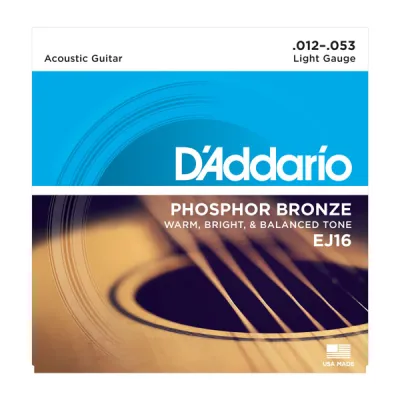
The D’Addario EJ16 is widely recognized as a standard light gauge (.012-.053) phosphor bronze acoustic guitar string set. For a beginner, these specifications translate to a balanced compromise between finger comfort and acoustic volume. Understanding what these numbers and materials actually mean will help you decide if this set matches your current finger strength, playing style, and guitar setup, ensuring your first upgrade supports your learning progress rather than hindering it. Selecting the right strings can significantly reduce early playing frustration, making it easier to press down notes cleanly while still producing a rich, satisfying tone from your instrument.
Understanding the .012-.053 Light Gauge for Finger Comfort
The numbers “.012-.053” represent the thickness, or gauge, of the strings in inches, measured from the thinnest high E string (.012) to the thickest low E string (.053). For a beginner, string thickness is the single most critical factor influencing how much physical effort is required to press the strings down against the frets. Light gauge strings like the EJ16 serve as a middle ground in the acoustic guitar world, offering a balance that accommodates developing hand strength.
When you compare these to other options, the physical differences become clear. Extra-light strings (typically starting at .010 or .011) require less finger pressure, making them highly forgiving for brand-new players who are still building calluses. However, they can feel overly loose and may buzz if you strum with a heavy hand. On the other end, medium strings (starting at .013) offer a much fuller, louder sound but demand significantly more finger strength and tension, which can quickly fatigue a beginner’s hand and lead to poor fretting technique.
Products mentioned in this guide


Prices are valid at publication and may change. Please refer to the product page for the latest price.
Choosing a light gauge set involves a direct trade-off between playability and acoustic projection. While a lighter string is easier to bend and press, it has less mass, meaning it transfers less vibrational energy to the guitar’s soundboard. This results in a slight loss of overall volume and bass response compared to medium strings. For most beginners, this minor reduction in volume is a highly acceptable trade-off for the massive increase in physical comfort and playing endurance.
Phosphor Bronze Material: Tone Profile and String Lifespan
The material composition of a string dictates both its acoustic voice and how long it will sound good before needing a replacement. Phosphor bronze, which is an alloy of copper with tin and a small amount of phosphorus, is highly regarded for its warm, dark, and rich tonal characteristics. It emphasizes the mid-range and bass frequencies, providing a smooth, full-bodied sound that helps smooth out the harsh high frequencies often produced by inexperienced strumming.

In contrast, alternative materials like 80/20 bronze (composed of 80% copper and 20% zinc) deliver a much brighter, crisper initial tone. While some players prefer that immediate sparkle, 80/20 bronze strings tend to lose their brightness relatively quickly as they oxidize. Phosphor bronze strings generally maintain their balanced, warm tone for a longer period because the phosphorus content helps resist corrosion from the natural oils and sweat on your fingertips.
For a beginner, this tonal profile is highly versatile. Whether you are practicing basic open-chord strumming patterns or experimenting with early fingerstyle arrangements, phosphor bronze adapts well to various dynamics. The strings undergo a brief break-in period of a few hours of playing, during which the initial metallic edge softens into a stable, consistent acoustic voice that remains reliable for weeks of daily practice.
String Tension and Guitar Compatibility Checks
Every set of strings exerts a specific amount of physical pull on the guitar’s neck and body, known as tension. Light gauge strings exert moderate tension—typically around 160 to 165 pounds of total force across the entire set. This tension interacts directly with the guitar’s truss rod, which is the internal metal rod that keeps the neck straight. If your guitar was originally set up for extra-light strings, switching to a light gauge will slightly increase the forward bow (neck relief) of the neck.
Before installing a new set of strings, it is wise to perform a few basic physical checks on your instrument. Inspect the bridge area where the strings meet the body; the wooden top of the guitar should be relatively flat, with only a very slight, natural dome shape. If you notice the bridge lifting or the wood bulging excessively behind the bridge, the guitar may be reacting poorly to the string tension. Additionally, look down the edge of the neck from the headstock to see if it appears straight or has a noticeable curve.
If the strings feel incredibly high off the fretboard after installation, or if you experience severe buzzing that makes the instrument unplayable, do not attempt to force adjustments. These symptoms indicate that your guitar’s setup needs to be calibrated to match the tension of the new gauge. In such cases, it is best to stop and take your instrument to a qualified guitar technician at a local music shop for a professional setup, which typically involves adjusting the truss rod and saddle height.
Is the EJ16 the Right Upgrade for Your Playing Style?
The combination of a light gauge and phosphor bronze material makes this type of string set an excellent fit for a wide range of beginners. It is particularly well-suited for players who split their time between strumming with a plectrum and practicing fingerstyle techniques. The moderate tension provides enough resistance for clean flatpicking without being so stiff that it discourages fingerpicking exercises or early chord transitions.
However, this set might not be ideal for every scenario. If you own a small-bodied travel guitar or a parlor guitar, these instruments are sometimes designed specifically for extra-light strings to avoid overstressing their delicate bracing. Conversely, if you plan to practice tuning your guitar down to lower alternate tunings, light strings may become too slack and floppy, meaning a heavier gauge would be more appropriate to maintain proper tension.
When purchasing your strings from an online marketplace or local retailer, always inspect the packaging before opening. Ensure the outer plastic packaging is completely sealed and free of punctures, as exposure to air and humidity can cause the strings to begin oxidizing before they ever reach your guitar. Storing spare sets in a cool, dry place inside their original sealed packaging will ensure they remain fresh and ready for your next string change.
Frequently Asked Questions (FAQ)
How often should a beginner change phosphor bronze strings?
As a general rule, active beginners should consider changing their strings every six to eight weeks, or after approximately 30 to 40 hours of playing time. You can easily identify when it is time for a change by looking for visual signs of wear, such as dark discoloration, rust spots, or a rough texture under your fingers. Tonally, old strings will sound dull, muddy, and lifeless, and you may find that the guitar struggles to stay in tune even during short practice sessions. Wipe down your strings with a clean, dry cloth after every session to help extend their lifespan.
Will switching to light gauge strings cause fret buzz?
Switching to light gauge strings can sometimes cause fret buzz, especially if your guitar was previously set up for a heavier gauge. The lower tension of lighter strings allows the guitar neck to straighten out slightly, which reduces the clearance between the strings and the frets. If you experience buzz, allow the guitar to settle for a day or two under the new tension, as the wood often takes time to adjust. If the buzzing persists, consult a professional technician to adjust the neck relief rather than attempting to make irreversible modifications to the nut or saddle yourself.

Community discussion
Share your experience or ask a question. Comments are reviewed before publication.